Come through is an intransitive phrasal verb with two everyday jobs: something expected arrives, as in a test result coming through, or somebody delivers when it counts, as in a friend coming through with help. Because it never takes a direct object, the sentence supplies the context around it.
Come through at a glance
- Come through is an intransitive phrasal verb; its forms are comes through, came through and coming through.
- The main senses are arrive, deliver when needed, survive an ordeal and show through.
- The particle cannot be separated from come, so nothing is ever placed between the two words.
- A person who is helped is marked with for, and a delivered resource with with.
- The commonest error is using come through where go through is meant.
What does come through mean?
Come through is an intransitive phrasal verb meaning to arrive as expected, to deliver what is needed, or to survive a difficult experience. The Cambridge entry for come through groups the arrival and success senses together, and the difference matters because only the success sense makes the subject a person who proved something. Where the subject merely endures an experience, go through is the better verb. A second, quieter sense describes a quality that a reader can perceive in writing or speech.
| Sense | Plain meaning | Example sentence |
|---|---|---|
| Arrive as expected | Something awaited or promised is received | The passport came through in nine days. |
| Deliver when needed | Meet a demand at the decisive moment | The reserve goalkeeper came through for the club. |
| Survive an ordeal | Pass through danger and emerge intact | The village came through the storm with one broken fence. |
| Show through | Be perceptible in writing, speech or a recording | Her relief comes through in every sentence. |
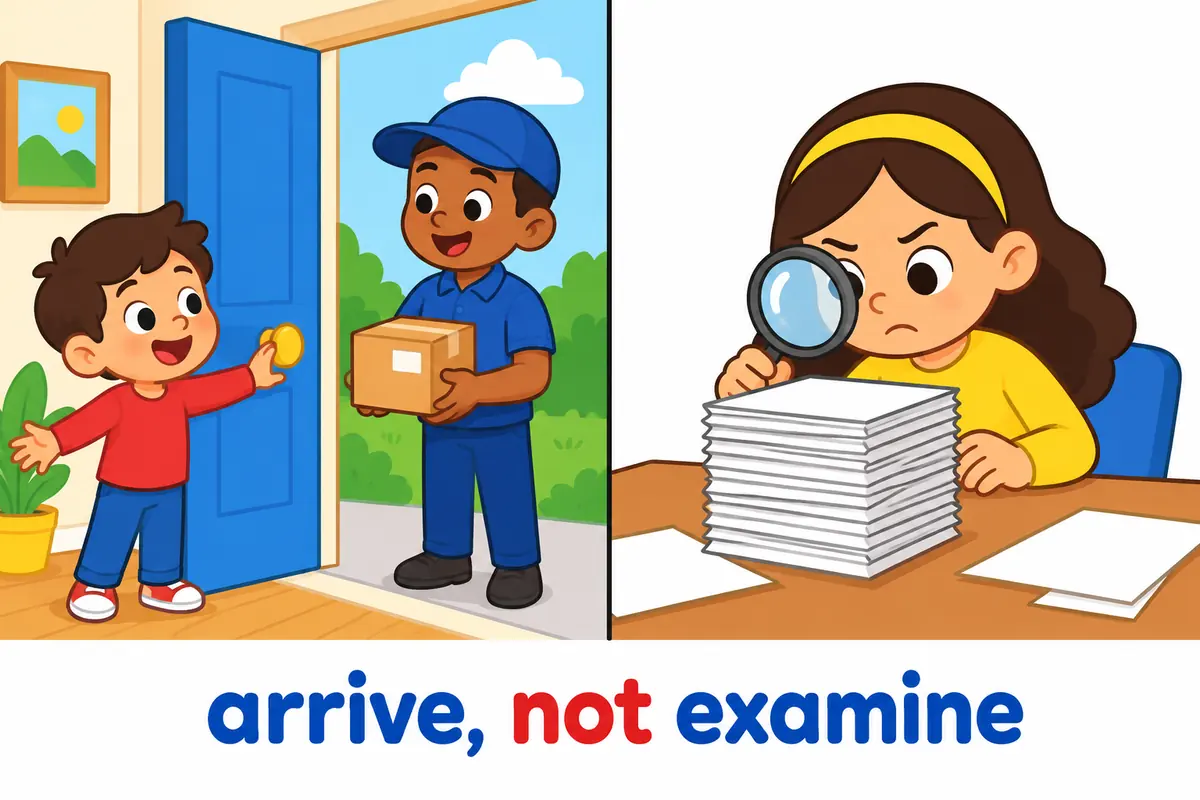
One limitation is worth stating plainly. Come through implies a test, a delay or a need that was met, so it sounds odd about a routine win when nothing was ever in doubt; plain succeed or finish reads better there. The verb also never means to review or examine a document, which is a job for go through. Register shifts with the sense: in conversation the verb usually carries relief, while a news report uses it as plain fact.
How do you use come through in a sentence?
Put the awaited thing or the person at the front and let the verb stand alone or take for or with. Five patterns cover almost every real sentence, and the for pattern is the one that carries warmth because it names who benefited.
| Pattern | Example | What it signals |
|---|---|---|
| come through, no object | The survey results came through this morning. | Something awaited simply arrives; the sentence stops after the verb. |
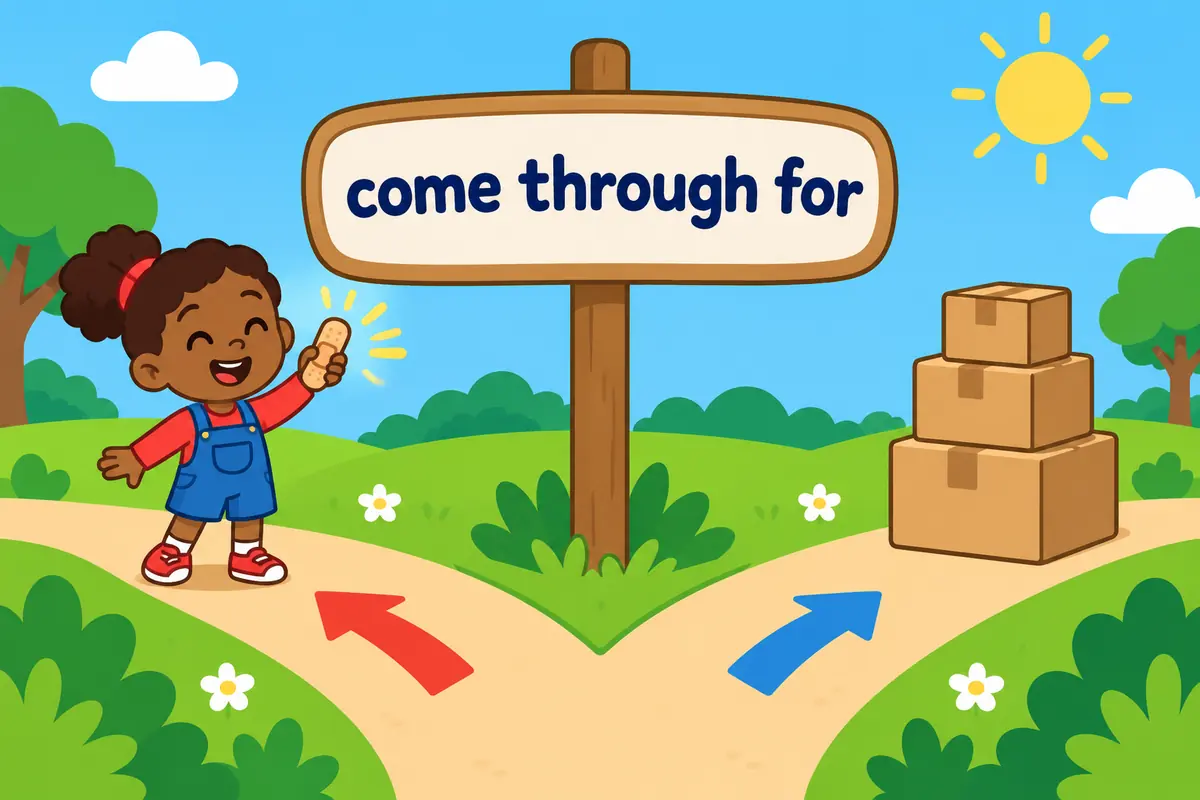
| come through for + person | The neighbours came through for the family after the fire. | Support given to a named person at a moment of need. |
| come through with + thing | The council came through with the funding. | A promised resource is actually delivered. |
| come through + ordeal | The team came through the playoff final. | Emergence from a hard experience rather than mere experience of it. |
| is coming through | Your video is coming through clearly now. | Something is being received at this moment, common about signals and sound. |
The practitioner rule is simple: if you can replace the phrase with arrived on time or did what was needed, come through fits.
Come through in a sentence: examples across contexts
Come through keeps its meaning while the register shifts. The thirteen sentences below move from a classroom to a film review, and each names the thing that arrives or the person who is helped.
| Context | Example sentence | Why this works |
|---|---|---|
| Classroom | The permission slip came through just before the trip. | A small awaited document suits the arrive sense. |
| Workplace email | The budget approval came through on Thursday afternoon. | Formal subjects such as approvals are typical of the verb. |
| News report | Aid came through the mountain pass after the landslide. | Movement plus arrival is the pattern reporting favours. |
| Healthcare | The scan results came through overnight. | Results are the commonest thing that comes through. |
| Science writing | The signal came through at a frequency of twenty-one centimetres. | Technical subjects use the receive sense. |
| Sports report | The substitute came through for his team in the last minute. | The for pattern names exactly who benefited. |
| Customer service | Your refund came through this morning. | Money is an expected arrival in a service message. |
| Emergency work | The trapped climbers came through the night safely. | The ordeal sense with a clear, reassuring outcome. |
| Conversation | I knew she would come through with the tickets. | The with pattern is the casual, spoken form. |
| Academic prose | The theme of exile comes through across all three novels. | The show-through sense describes a quality a reader perceives. |
| Volunteer group | The pledged donation came through on the morning of the fair. | A promised sum reaching a community on time is the arrival sense. |
| Film review | The director loves this small town, and it comes through in every shot. | The show-through sense applied to an artistic quality. |
| Parent note | The school report came through on the last day of term. | A routine official document suits the arrival sense. |
Notice how few of these sentences add an object. The verb resists one, and the two patterns with for and with do the work that an object would otherwise do.
Come through vs go through, pull through and fall through
Four phrases built on through are easy to mix up because they share a shape but not a job. go through describes the experience or the review, pull through describes recovery from illness, and fall through describes a plan that never happens.
| Attribute | come through | go through | pull through |
|---|---|---|---|
| Core job | Arrive, deliver or survive well | Experience or examine | Recover from serious illness |
| What it stresses | The result | The process | The recovery |
| Typical subject | Results, money, a person, a signal | A person or a group | A patient |
| Direct object | Never | Always, such as an ordeal or a report | Never |
| Register | Neutral, common in speech and news | Neutral to formal | Neutral, often medical |
Verdict: choose come through when a result, a resource or a rescue arrives, go through when you describe the experience itself, and pull through when a sick person recovers. A project that fails to happen falls through, and a task finished properly is one you follow through.
Word forms and grammar of come through
Come through inflects regularly, and the whole phrase moves together. Come is one of the busiest verbs in English, so a different particle changes the meaning completely: come across means to find by chance or to give an impression, while come back means to return.
| Form | Part of speech | Example |
|---|---|---|
| come through | base phrasal verb | The decision should come through tomorrow. |
| comes through | third person singular | Her honesty comes through in the report. |
| came through | past tense | The loan came through at last. |
| come through | past participle after have | The results have come through. |
| coming through | present participle | A call is coming through now. |
| come-through | not a standard noun | Writers wrongly treat come-through as a noun. |
Common mistakes with come through
- Incorrect:
The proposal came through the committee last week.Correct: The proposal went through the committee last week. Rule: Processing or examining something is go through; come through takes no object. - Incorrect:
My aunt came through me when I lost my job.Correct: My aunt came through for me when I lost my job. Rule: The person supported is marked by for, never by a bare object. - Incorrect:
The results have came through.Correct: The results have come through. Rule: After have, use the past participle come, not the past tense came. - Incorrect:
She came through across the old letters.Correct: She came across the old letters. Rule: Finding something by chance is come across, which never combines with through.
Practice using come through
Work through the six items, then check the reasoning rather than only the answer.
- Fill the gap: The funding finally ______ after three months of waiting.
- Choose the better word: The manager decided to (come through / go through) the figures before signing.
- Correct the error: The good news have come through.
- Build a sentence: use come through for about a neighbour who helps during a power cut.
- Spot the register: which belongs in a news bulletin, The trapped miners came through the night, or The trapped miners totally came through the night?
- Rewrite with no object: The family came through the recession.
Answers
- came through – the funding is an awaited arrival, and the past tense marks a finished event.
- go through – the manager is examining the figures, which needs an object and a process verb.
- The good news has come through – good news is singular, so it takes has, and have needs the participle.
- Model answer: Our neighbour came through for us when the power cut lasted all night.
- The trapped miners came through the night – a bulletin avoids the casual intensifier totally.
- The family came through – removing the object leaves the intransitive verb complete on its own.
The bottom line
Use come through in a sentence when something awaited arrives, when somebody delivers under pressure, or when a difficulty is survived. The two details that decide most sentences are that the verb takes no direct object and that the person helped is marked with for, as in come through for a friend. If you mean the experience itself rather than the outcome, choose go through instead.
Frequently asked questions about come through
Is come through one word or two?
As a verb it is always two words, come through. The hyphenated form come-through is not a standard noun, so writing a late come-through is a spelling error. Keep the two words separate in every tense: comes through, came through and coming through.
What is the difference between come through and go through?
Come through means something arrives or a person succeeds, and it takes no direct object. Go through means to experience or examine something and always needs an object, as in go through the accounts. A result comes through, but a person goes through a difficult period.
Can you come through with something?
Yes. Come through with names the thing that is delivered, as in the supplier came through with the parts. The pattern is common in business and everyday speech and usually suggests a promise kept. Come through for names the person who benefits instead, as in come through for a teammate.
Does come through mean survive?
In one sense, yes. Come through can mean to emerge safely from danger or difficulty, as in the crew came through the storm. It stresses a good outcome after a real test, so it suits a flood better than a mild inconvenience. Plain survive is stronger when death was a genuine risk.