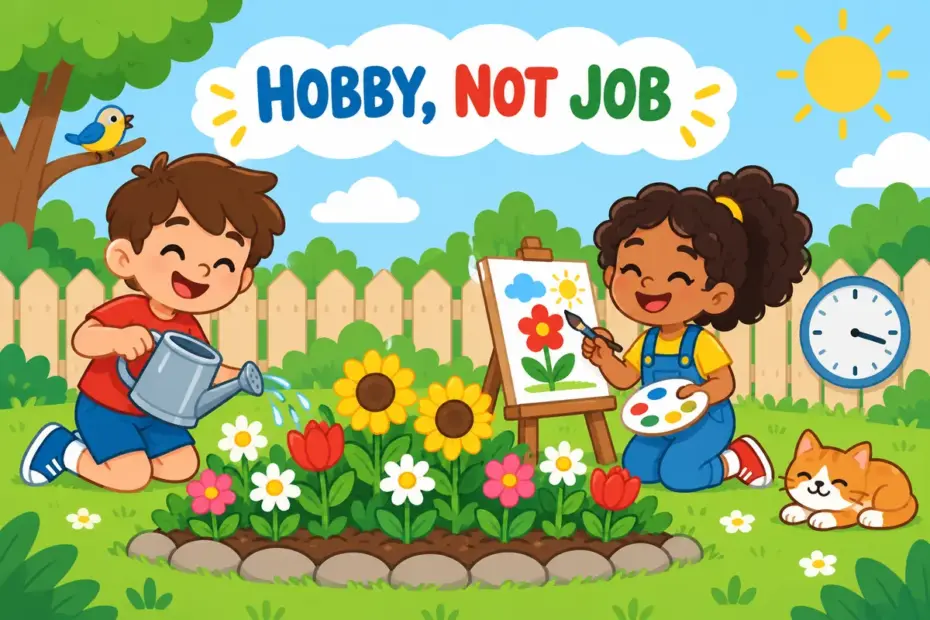
An avocation is a hobby or minor occupation that a person pursues for pleasure, in contrast to the vocation that pays the bills. To use avocation in a sentence, treat it as a countable noun and give it a possessive or an article: “Birdwatching is her avocation.” The word is formal, so it belongs mainly in writing.
Avocation at a glance
- Avocation is a countable noun; its plural is avocations and its adjective is avocational.
- The core contrast is with vocation, the paid work that a person feels called to do.
- It usually follows a possessive determiner, as in her avocation, or the phrase as an avocation.
- The register is formal and slightly old-fashioned, so hobby replaces it in speech.
- The commonest error is reversing avocation and vocation and describing a career as a hobby.
What does avocation mean?
Avocation is a noun meaning a hobby or minor occupation that someone does for enjoyment rather than for a living. The Cambridge entry for avocation gives the hobby sense, and the word once carried a stronger idea: an occupation that called a person away from their main work. That history explains the modern contrast, because a vocation is the work you feel summoned to, while an avocation is the work you choose on the side. For everyday sentences, simply a hobby is the plain and safer choice.
| Sense | Plain meaning | Example sentence |
|---|---|---|
| Hobby or pursuit | An activity done for pleasure, not pay | Gardening is his chief avocation. |
| Secondary occupation | A minor role beside the main one | She is a lawyer by vocation and an editor by avocation. |
| Historical diversion | Something that drew a person away from duty | In older usage, cards were a gentleman’s avocation. |
One limitation deserves stating plainly. Avocation is not a synonym for a side business that earns money, because the word insists on pleasure rather than profit. A weekend Etsy shop that pays the rent is a second job, not an avocation. The word is also formal enough that it can sound affected in casual speech, where hobby does the same work without the raised eyebrow.
How do you use avocation in a sentence?
Avocation behaves like any countable noun, so it needs a determiner, and it usually appears after a possessive or in the fixed phrase as an avocation. The list below shows the patterns that sound natural, and the final row shows the elegant pairing that separates the hobby from the career.
| Pattern | Example | What it signals |
|---|---|---|
| possessive + avocation | Photography is her avocation. | The most common pattern; the owner is named. |
| as an avocation | He paints as an avocation. | Marks the activity as a hobby rather than a job. |
| pursue + possessive + avocation | She pursues her avocation at weekends. | A deliberate, ongoing commitment. |
| adjective + avocation | Beekeeping became a lifelong avocation. | Notes duration, not income. |
| by avocation | He is a teacher by vocation and a potter by avocation. | Sets the hobby beside the paid calling. |
| the avocation of + gerund | They share the avocation of restoring boats. | A formal way to name the shared activity. |
Two related words sit close by and are worth keeping apart. A paid vocation is the work a person feels called to do, and a pleasant pastime is any light way to pass the time. Avocation sits between them: more committed than a pastime, more personal than a career.
One further habit marks the word as formal. Writers often place avocation in a list of attributes, as in a painter by avocation and a teacher by trade, where the parallel structure does the explaining. In a plain sentence the same idea needs a full clause and sounds heavier, which is one more reason hobby so often wins.

Avocation in a sentence: examples across contexts
Avocation changes company more than it changes meaning. The eleven sentences below move from a classroom to a retirement magazine, and each one keeps the hobby sense clear.
| Context | Example sentence | Why this works |
|---|---|---|
| Classroom | The teacher asked each pupil to name an avocation, and most chose football. | A concrete activity makes the abstract noun easy to handle. |
| Professional bio | Outside the laboratory, her avocation is long-distance swimming. | The contrast with work is stated in the same line. |
| Personal essay | Letterpress printing began as an avocation and quietly became a small studio. | Traces change over time without claiming a career. |
| News feature | The mayor’s avocation is restoring vintage bicycles. | Shows a public figure in a private, unpaid role. |
| Conversation | I would call wine a pursuit rather than an avocation. | Uses the word in speech but marks it as a careful choice. |
| Academic writing | Print collecting was a common avocation among nineteenth-century doctors. | Fits a formal historical register. |
| Retirement magazine | For many retirees, an avocation replaces the structure of paid work. | Links the hobby to a life stage. |
| Job interview | My avocation is choral singing, which taught me to listen closely. | Turns a hobby into transferable evidence. |
| Letter of reference | His avocations include chess and mountain walking. | Uses the plural to gather several hobbies. |
| Book review | The memoir records an avocation pursued for forty years without a penny of profit. | Underlines the no-pay condition of the word. |
| Local history | Bell-ringing was the avocation of the entire village. | Applies the singular noun to a shared, unpaid practice. |
Every row keeps the activity outside paid work, which is the one condition the word will not give up. That is why a profitable side business fits none of these sentences.
Avocation vs vocation
Avocation and vocation differ by a single letter and by an entire philosophy of work. A vocation is the calling a person treats as their main occupation, while an avocation is the pursuit they choose for pleasure on the side.
| Attribute | avocation | vocation |
|---|---|---|
| Core meaning | A hobby or minor pursuit | A main calling or profession |
| Money | Done for pleasure, often unpaid | Usually the source of income |
| Commitment | Personal and voluntary | Central to identity and duty |
| Typical sentence | Hiking is her avocation. | Nursing is her vocation. |
| What it implies | An escape from work | A purpose that orders a life |
A third word, leisure activities, is broader still and covers rest and entertainment as well as hobbies. Verdict: choose vocation for what a person does for a living or feels born to do, and avocation for the unpaid pursuit that keeps them interested.
Word forms and grammar of avocation
Avocation is a noun, so all its grammar is the grammar of nouns. Its adjective covers anything related to hobbies, and the derived forms are rare enough that a learner will meet them mostly in formal writing.
| Form | Part of speech | Example |
|---|---|---|
| avocation | noun, singular | Woodwork is his avocation. |
| avocations | noun, plural | Her avocations include sailing and chess. |
| avocational | adjective | He joined an avocational choir. |
| avocationally | adverb, rare | She studies birds avocationally. |
| vocation | noun, different word | Teaching is her vocation. |
| vocational | adjective, different word | He took a vocational course. |
Common mistakes with avocation
- Incorrect:
Teaching was his avocation, and it paid his salary for thirty years.Correct: Teaching was his vocation. Rule: Work that supplies the income is a vocation, because an avocation is unpaid. - Incorrect:
She avocation is painting.Correct: Her avocation is painting. Rule: Avocation is a noun, so it takes a possessive determiner, not a subject pronoun. - Incorrect:
He is a doctor by avocation.Correct: He is a doctor by vocation and a pianist by avocation. Rule: By avocation names the hobby, so it cannot label the main profession. - Incorrect:
My avocation is to run.Correct: My avocation is running. Rule: The noun is completed by a gerund or a noun, not by an infinitive. - Incorrect:
He enjoys an avocational hobby.Correct: He enjoys an avocational pursuit. Rule: Avocational already means hobby-related, so the two words together repeat themselves.
Practice using avocation
Work through the seven items, then read the reasons rather than only the answers.
- Fill the gap: After she retired, gardening became her chief ______.
- Choose the better word: For the surgeon, operating was a (vocation / avocation), not a job.
- Correct the error: She avocation is restoring old clocks.
- Build a sentence: use as an avocation about playing the cello.
- Spot the register: which fits a formal biography — his avocation is fell running, or he really likes running up hills?
- Rewrite with the plural: Chess is one of her hobbies. Use avocations.
- Fix the inversion: He is a painter by vocation and an accountant by avocation.
Answers
- avocation — gardening is an unpaid pursuit, which is the hobby sense.
- vocation — the surgeon was paid for operating, so it was a calling, not a hobby.
- Her avocation is restoring old clocks — the noun needs a possessive determiner.
- Model answer: She plays the cello as an avocation.
- His avocation is fell running — a biography keeps the formal noun and avoids the chatty phrase.
- Model answer: Chess is one of her avocations.
- Corrected: He is an accountant by vocation and a painter by avocation — the paid work takes vocation.
The bottom line
Use avocation in a sentence for an unpaid hobby that a person chooses, and reserve vocation for the work that pays or that they feel called to do. The two nuances that settle most sentences are these: an avocation must be countable, so it needs a determiner, and it must stay outside paid work, because a profitable side business is a second job. In everyday writing, outdoor recreation or plain hobby will often read more naturally.
Frequently asked questions about avocation
Is avocation a common word?
Avocation is uncommon in everyday speech, where hobby does the same work. It survives mainly in formal writing, speeches and biographies, often paired with vocation for contrast. Using it in an essay or a profile adds precision, but using it in a text message would sound unusually stiff.
What is the plural of avocation?
The plural is avocations, as in her avocations include sailing and chess. Because the noun is countable, the singular also needs a determiner such as her, his or an. Never write she enjoys avocation without one, since the bare singular sounds unfinished in English.
Can an avocation make money?
Only incidentally. The word centres on pleasure rather than profit, so an activity pursued mainly for income is a second job or a small business instead. A hobby that earns a little money can still be called an avocation, but once payment becomes the point, the label no longer fits.
What is the adjective form of avocation?
The adjective is avocational, meaning related to a hobby, as in an avocational choir. A rarer adverb, avocationally, appears in formal prose. Do not use avocational beside hobby, because the two words mean the same thing and the phrase becomes repetitive.