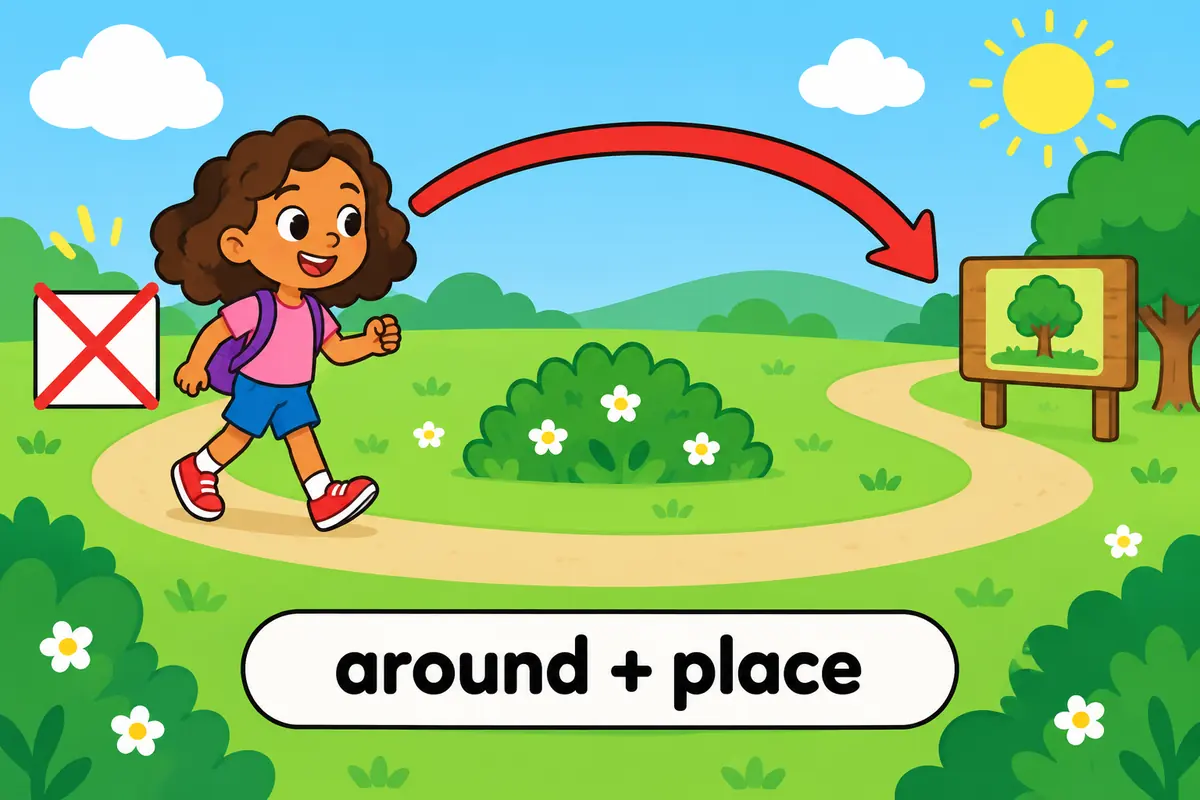
Wander around means to walk slowly about a place with no fixed route or clear purpose. To use wander around in a sentence, name the place as a phrase after the verb: “We wandered around the old town all afternoon.” The phrasal verb is intransitive, so no object ever follows, and the particle around never moves.
Wander around at a glance
- Wander around is an intransitive phrasal verb, so it never takes an object.
- It describes slow movement with no fixed route, purpose or deadline.
- The subject may be one person or a group, which makes it more flexible than mill around.
- The particle around stays attached to the verb in every tense.
- The usual learner error is confusing wander with wonder, or adding around to a stated destination.
What does wander around mean?
Wander around is a phrasal verb meaning to move slowly about a place without a set direction, usually because the walker is exploring, waiting or simply unhurried. The Cambridge entry for wander around records the sense of walking with no clear purpose, and a place phrase such as around the market normally follows the verb. The subject may be one person, which sets wander around apart from the crowd-only verb mill around.
| Sense | Plain meaning | Example sentence |
|---|---|---|
| Explore a place | Walk about without a route | They wandered around the market for an hour. |
| Kill time | Move about with nothing to do | I wandered around the station until the train came. |
| Be lost or unsure | Move without knowing the way | The visitors wandered around the campus looking for room four. |
| Roam as a group | A band moves loosely together | Deer wandered around the field at dusk. |
One limitation is worth stating plainly. Wander around is physical and unhurried, so it is the wrong verb for reaching a destination. If a place is the goal, get around the city is closer to the meaning, because getting around implies solving a route rather than drifting without one.
How do you use wander around in a sentence?
Start with the person or group, add the verb, then add a place as a phrase: people wander around a place. Because the verb is intransitive, the place sits behind a preposition and never becomes a direct object. Five patterns cover almost every natural line.
| Pattern | Example | What it signals |
|---|---|---|
| person + wander around | She wandered around the garden alone. | One subject is enough; no crowd is required. |
| wander around + place | We wandered around the museum for hours. | The place arrives as a prepositional phrase. |
| wander around + looking for | He wandered around looking for the exit. | A second verb supplies a mild purpose. |
| group + wander around | Students wandered around the courtyard. | A plural subject makes the roaming shared. |
| be wandering around | They were wandering around the fairground. | The continuous form keeps the motion open. |
Wander around in a sentence: examples across contexts
Wander around keeps the same unhurried pace in every register, but the setting and the subject change the mood. The twelve sentences below move from a school trip to a travel essay, and each one leaves the route open.
| Context | Example sentence | Why this works |
|---|---|---|
| Classroom | Pupils wandered around the gallery in small groups. | A plural subject and a place set the scene quickly. |
| School trip | We wandered around the castle until lunchtime. | A time limit keeps the drifting plausible. |
| Conversation | I just wandered around town for an hour. | Just signals the absence of a plan. |
| Travel writing | Travellers wander around the old quarter at sunset. | A time of day adds atmosphere without a goal. |
| News report | Guests wandered around the lobby after the alarm. | The cause of the loose movement is stated. |
| Workplace email | I wandered around the venue to check the signs. | A mild purpose justifies the slow walk. |
| Nature writing | Sheep wandered around the hillside in twos and threes. | An animal subject roams without direction. |
| Academic prose | Visitors wandered around the exhibit at their own pace. | The phrase names the freedom the walker has. |
| Story scene | He wandered around the empty house, remembering. | A participle adds reflection to the motion. |
| City guide | Wander around the lanes and follow your nose. | An imperative invites the reader to drift. |
| Hotel review | Guests can wander around the gardens after dinner. | Can marks permission for a slow, optional walk. |
| Diary entry | I wandered around for ages before I found the bakery. | The lost feeling explains the length of the walk. |
Two habits hold across every row. The verb never takes a direct object, and the walk is always slow, so the sentence loses its meaning the moment speed or a fixed destination enters.
A useful test is to ask whether the walker had a route. Where the answer is no, wander around fits; where the answer names a target, the verb should change to walk, head or reach.
Wander around vs mill around
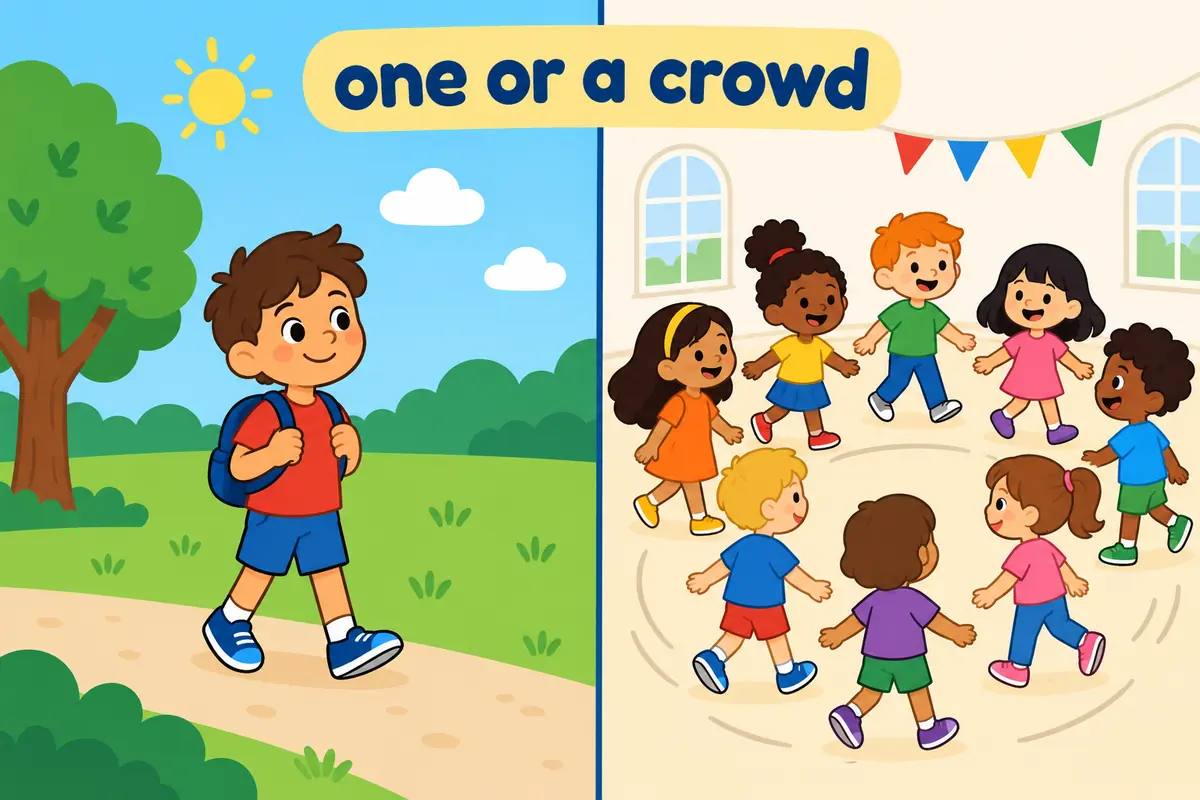
Wander around and mill around both describe loose, unhurried movement, but they differ in who moves and why. Wandering suits one person exploring or drifting, while milling needs a crowd with a shared reason to wait.
| Attribute | wander around | mill around |
|---|---|---|
| Number of people | One person or a group | Always a group |
| Reason for moving | Exploring or passing time | Waiting or lingering together |
| Route | Open, often changing | Loose circles in one place |
| Typical subject | A visitor, a child, a deer | A crowd, guests, students |
| Typical setting | A town, garden, gallery | A hall, gate, lobby |
Verdict: choose wander around for one unhurried walker or a relaxed group on the move, and mill around for a restless crowd that is going nowhere in particular. If the same person simply stays in one place instead, hang around is the honest verb, because it reports waiting rather than roaming. A visitor who is mainly watching rather than walking may look around the room before choosing a seat.
Word forms and grammar of wander around
Wander around inflects like a regular verb and keeps its particle in every tense. The table also sets it beside the related nouns and the plain verb wander, which behaves differently when it takes an object.
| Form | Part of speech | Example |
|---|---|---|
| wander around | phrasal verb, base form | Do not wander around after dark. |
| wanders around | phrasal verb, third person singular | He wanders around the park each Sunday. |
| wandered around | phrasal verb, past tense | They wandered around the fair. |
| wandering around | phrasal verb, present participle | She was wandering around the shops. |
| wander | verb, literary transitive | He wandered the streets at night. |
| wanderer | noun | The wanderer stopped at the gate. |
The double life of plain wander is the useful point here: in literary writing it can take a place directly, as in wander the streets, but the phrasal verb cannot, so wander around the streets is the only natural form with around. The related noun wanderlust names the urge to travel that sits behind the verb, and a wandering mind is the same idea turned inward.
Common mistakes with wander around
- Incorrect:
He wandered the museum around.Correct: He wandered around the museum. Rule: the particle stays after wander, and the place follows the whole verb. - Incorrect:
She wandered around to the station.Correct: She walked to the station. Rule: around signals no fixed route, so it clashes with a single destination. - Incorrect:
They wandered around at home all day.Correct: They stayed at home all day. Rule: wander around means moving through a place, not remaining in one spot. - Incorrect:
He wandered around to find the answer.Correct: He searched for the answer. Rule: wander around is physical movement, not a mental search. - Incorrect:
I wandered around the idea for a while.Correct: I toyed with the idea for a while. Rule: a direct object after wander around breaks its intransitive grammar. - Incorrect:
We wonder around the market.Correct: We wander around the market. Rule: wonder means to ask or marvel; wander is the walking verb.
Practice using wander around
Work through the eight items, then check the reasoning rather than only the answer.
- Fill the gap: The children ______ around the park after lunch.
- Choose the better word: A single tourist (wandered around / milled around) the narrow streets.
- Correct the error: We wandered the market around for an hour.
- Build a sentence: use were wandering around about visitors in a museum.
- Spot the register: which suits a travel guide — wander around the lanes at your leisure, or wander around real good?
- Rewrite without around: They wandered the lanes. Keep the sense of roaming with no route.
- Fill the gap with the right verb: I ______ around the idea of moving abroad. (wander / wonder)
- Correct the error: He wandered around to the exit quickly.
Answers
- wandered — the past tense matches the finished outing, with the place after the verb.
- wandered around — one person roams; milling needs a crowd.
- We wandered around the market for an hour — the particle stays after wander.
- Model answer: Visitors were wandering around the museum at closing time.
- Wander around the lanes at your leisure — a guide avoids slang and keeps the verb calm.
- Wander around the lanes stays the natural form, because plain transitive wander is literary.
- wonder — the mental sense belongs to wonder, while wander is physical.
- He walked to the exit quickly — around conflicts with a stated destination.
The bottom line
Use wander around in a sentence for slow, unhurried movement with no fixed route, and keep the place behind a preposition. The two points that settle most sentences are the open route and the intransitive grammar: a wanderer has nowhere to be, and the verb never takes an object. When the walker has a destination, replace it with walk or head instead.
Frequently asked questions about wander around
Is wander around one word or two?
Wander around is two words: the verb wander plus the particle around, which together form a phrasal verb. A single spelling wanderaround does not exist, and the particle stays attached to the verb in every tense, so a writer should never place the object between wander and around.
Is wander around transitive?
No. Wander around is intransitive, so it never takes a direct object. The place being walked appears behind a preposition, as in wander around the market, and the sentence is complete with just a subject and the verb. Adding a bare object after around breaks the grammar and reads as a clear error.
What is the difference between wander and wonder?
Wander means to walk about slowly, while wonder means to ask yourself something or to marvel at it. They differ by a single vowel, which is why they are so often mixed up. In wander around the market, the walking word is correct; in I wonder around the answer, wonder is the mental word and around does not belong.
Can wander around describe a group?
Yes. Unlike mill around, which needs a crowd, wander around works for one person or for a group. A single child, a pair of travellers and a herd of deer can all wander around a place. The only constant is the unhurried movement, not the number of walkers in the sentence.