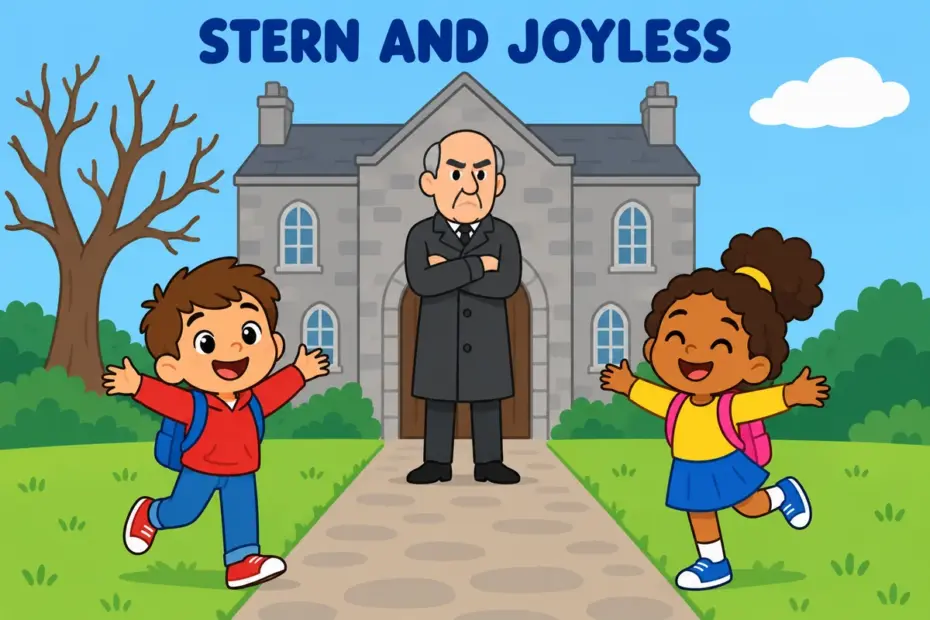
Dour describes a person, expression or place that is stern, gloomy and unfriendly. To use dour in a sentence, let it modify a face, a manner or a landscape: “The dour landlord answered without looking up.” The adjective is usually negative, signalling coldness rather than simple seriousness.
Dour at a glance
- Dour is an adjective meaning stern, gloomy and unsmiling.
- Its comparative forms are dourer and dourest; the adverb is dourly and the noun is dourness.
- It usually describes a person, an expression, a voice or a place.
- Dour is common in journalism and fiction, and less so in casual speech.
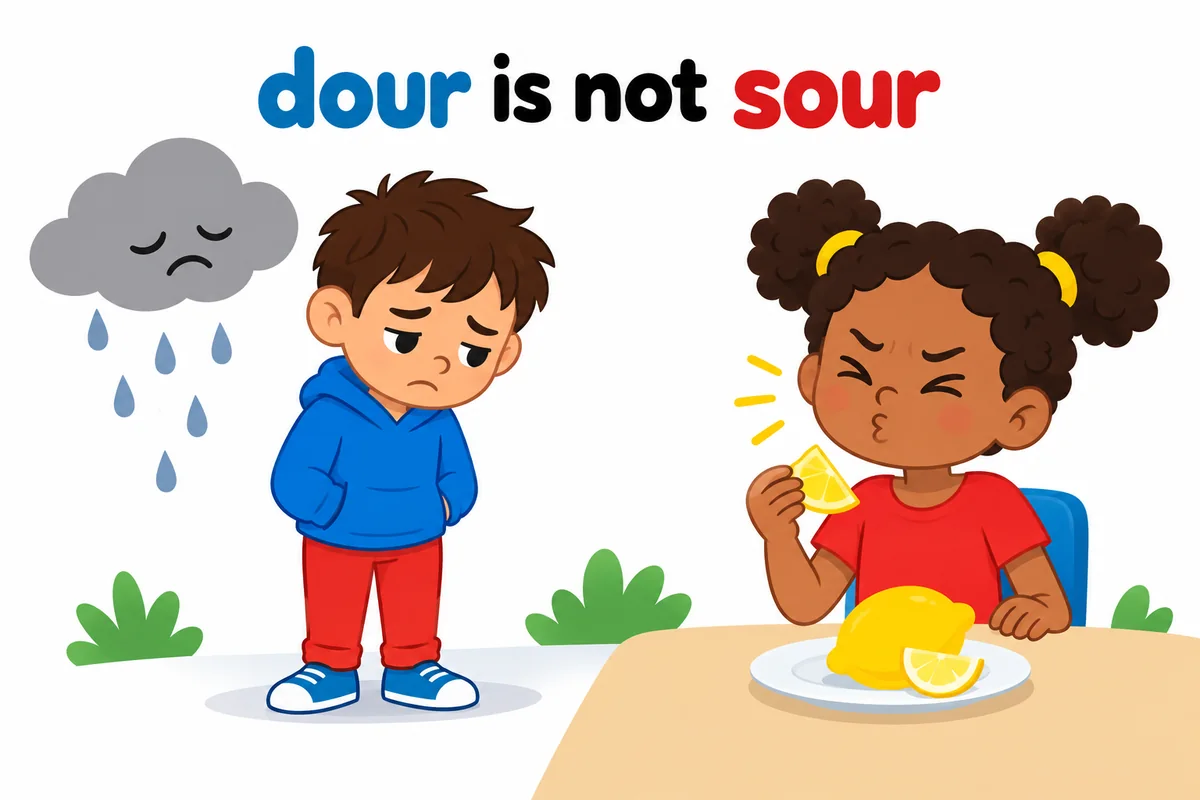
- The commonest error is confusing dour with sour, which means bitter or acidic.
What does dour mean?
Dour is an adjective meaning stern and gloomy in appearance or manner. The Cambridge entry for dour keeps the senses close: a dour person looks severe and unfriendly, while a dour place looks bleak and forbidding. The word rarely means angry; it suggests a settled coldness, a face that gives nothing away.
| Sense | Plain meaning | Example sentence |
|---|---|---|
| Person or manner | Stern and unsmiling | The coach stayed dour even after the win. |
| Expression or voice | Grave and joyless | A dour expression met the joke. |
| Place or landscape | Bleak and forbidding | A dour granite coastline stretched ahead. |
One limitation matters here. Dour is a strong word and an easy insult. It does not simply mean serious or quiet: a thoughtful colleague is not dour, and a shy one is not either. Where you want a neutral term, reserved or serious serves better, because dour implies that warmth is missing.
How do you use dour in a sentence?
Dour is an adjective, so it sits before the noun it describes or after a linking verb such as be, seem or remain. It takes no object and does not change for gender, only in degree. The exact attention in stern is close, but stern adds discipline rather than gloom.
| Pattern | Example | What it signals |
|---|---|---|
| dour + noun | A dour receptionist took my form. | Attributive use, the commonest pattern. |
| linking verb + dour | The manager seemed dour all week. | Predicative use after be, seem or remain. |
| remain / stay + dour | He remained dour through the applause. | Emphasises a manner that does not change. |
| dour + place noun | They crossed a dour moor. | Extends the meaning to landscapes. |
| rather / very + dour | The room felt rather dour. | Gradable with intensifiers; dourer and dourest are rare. |
Dour collocates with face, expression, mood and landscape. A phrase such as a dour weather sounds wrong, because dour attaches to people and places, not to the weather itself.
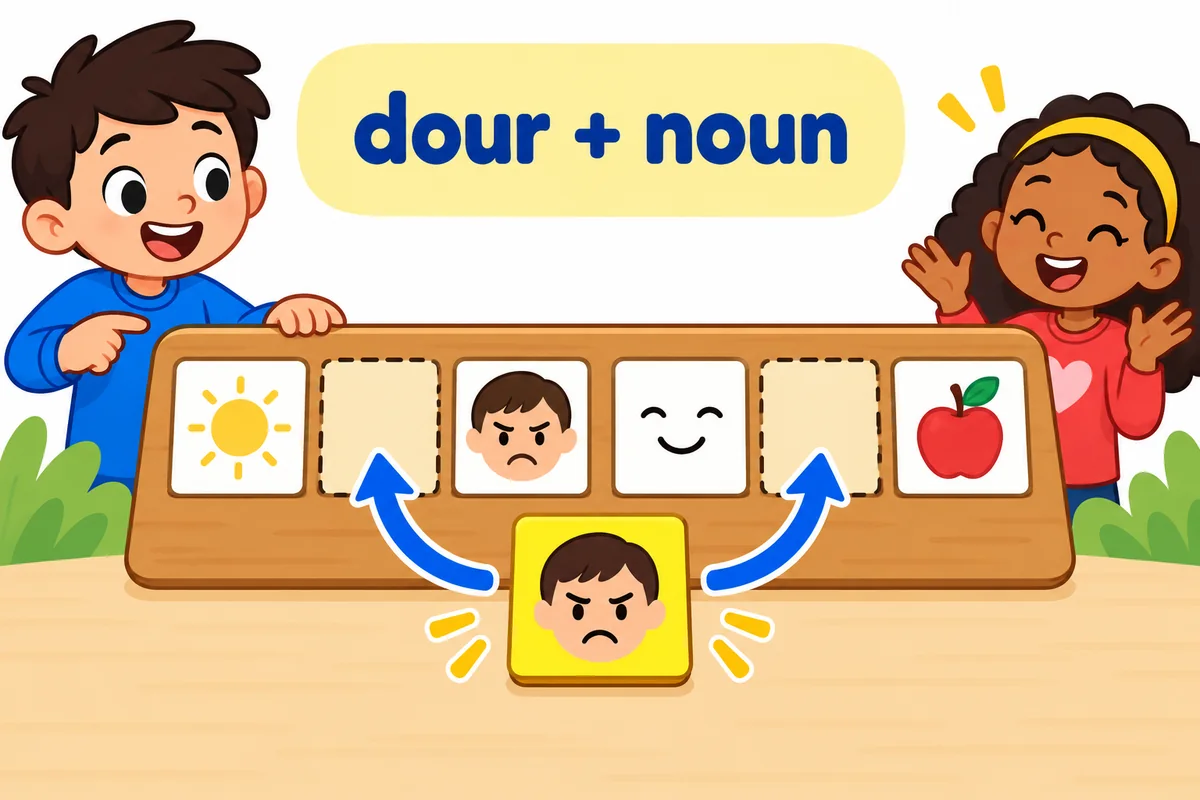
Dour in a sentence: examples across contexts
The twelve sentences below keep dour in one grammatical role while changing the setting, from a match report to a memoir. Each one shows what the adjective attaches to and why that choice reads naturally.
| Context | Example sentence | Why this works |
|---|---|---|
| Classroom | Our usually dour head teacher smiled at the concert. | Contrasts the adjective with an unexpected action. |
| Workplace email | The client was dour on the call, so we sent a written summary. | Describes manner neutrally in a professional note. |
| News report | The minister’s dour tone matched the latest figures. | Pairs the adjective with an abstract noun in reporting. |
| Sports writing | A dour defensive display earned the team a point. | Common collocation in match reports. |
| Fiction | A dour housekeeper showed us to a cold room. | Character sketch in narrative prose. |
| Travel writing | The dour cliffs loomed over the harbour. | Extends the sense to a landscape. |
| Restaurant review | The dining room felt dour despite the bright menu. | Evaluates an atmosphere rather than a person. |
| Diary or memoir | My father’s dour moods were hard to read. | Personal, reflective register. |
| Business analysis | Analysts painted a dour outlook for the quarter. | Abstract use for forecasts and prospects. |
| Conversation | He is not rude, just a bit dour until you know him. | Softened with a qualifier in speech. |
| Academic history | A dour puritanism shaped the town’s early rules. | Formal, abstract noun use. |
| Poetry | Dour winter kept its grip on the valley. | Literal landscape sense in verse. |
| Drama review | A dour stage set framed the tragedy without a single bright colour. | Applies the adjective to a designed atmosphere. |
| Project update | The team stayed dour after the funding news, saying little. | Groups, like people, can be described collectively. |
Only two of the fourteen sentences use dour for a person’s mood; the rest attach it to a tone, a display, a place or a forecast. That spread is why the adjective feels literary rather than everyday. A writer who wanted a plain tone would reach for serious or grim, and one who wanted to judge rather than describe would reach for unpleasant; dour sits between the two, cool and unimpressed.
Dour vs stern and sour
Dour overlaps with two words and matches neither exactly. Stern adds discipline and authority, while sour adds bitterness; dour adds gloom and an absence of warmth. Comparing the look-alike gloomy helps separate mood from manner.
| Attribute | dour | stern | sour |
|---|---|---|---|
| Core meaning | Gloomy and unfriendly | Serious and strict | Bitter or acidic |
| Main subject | Person, face, place | Person, authority, rule | Food, mood, tone |
| What it implies | Coldness, no warmth | Discipline, control | Sharpness or resentment |
| Describes a landscape? | Yes | No | No |
| Typical register | Journalistic, literary | Neutral to formal | Everyday |
| Gradable forms | dourer, dourest | sterner, sternest | sourer, sourest |
Verdict: choose stern for a strict manner or rule, sour for bitterness or a turned taste, and dour when warmth is simply absent. A sullen, moody person is closer to morose, which stresses low spirits rather than coldness. In practice, dour is the safer choice when the tone is cold rather than hostile: it criticises an absence of warmth, not an attack. A grim expression threatens, while a dour one merely withholds, and that quiet difference decides which word a careful writer picks.
Dour or dreary? Describing places and weather
Dour can describe a place, but not the weather on its own. A dour town looks bleak and unwelcoming, almost as if it disapproves; a dreary afternoon is merely dull. For weather, plain words work better, and for a harsh climate austere often fits the tone. The test is simple: if the subject is a landscape or a building, dour may work; if it is rain, cloud or wind, it will not. A dour place also suggests a settled character, not a passing condition, so a town that merely looks grey on one wet morning is dreary, while one that has felt unwelcoming for years can fairly be called dour. Grim is the stronger alternative when the bleakness carries a threat rather than a chill.
Word forms and grammar of dour
Dour inflects like a short adjective, and its adverb and noun are regular. The table also places the near neighbour glum, which describes a temporary low mood rather than a settled manner.
| Form | Part of speech | Example |
|---|---|---|
| dour | adjective | A dour waiter took our order. |
| dourer | comparative adjective | His second reply was dourer still. |
| dourest | superlative adjective | That was the dourest face in the room. |
| dourly | adverb | She answered dourly and left. |
| dourness | noun | The dourness of the building surprised me. |
| day-our | non-standard | Not used: dour is one syllable in careful writing. |
Common mistakes with dour
- Incorrect:
The weather was dour all weekend.Correct: The weather was dreary all weekend. Rule: Dour describes people and places, not weather itself; use dreary or gloomy. - Incorrect:
He is very dourly.Correct: He is very dour. Rule: Dour is an adjective and follows a linking verb; dourly is the adverb. - Incorrect:
She dourly refused the offer.Correct: She flatly refused the offer. Rule: Dourly describes a manner of speaking or acting, not a decision; choose flatly or coldly. - Incorrect:
The dour film made everyone laugh.Correct: The dour film left everyone silent. Rule: Dour implies an absence of cheer, so it clashes with laughter. - Incorrect:
a dour of people.Correct: a dour group of people. Rule: Dour is an adjective and needs a noun, never of. - Incorrect:
His mood grew more dourer.Correct: His mood grew dourer. Rule: Dourer is already comparative, so it never takes more.
Practice using dour
These eight items mix recognition with production; the answers give the reason as well as the word.
- Fill the gap: The inspector gave a ______ nod and wrote nothing down.
- Choose the better word: After the defeat, the captain looked (dour / sour) but said nothing bitter.
- Correct the error: The sky was dour before the storm.
- Build a sentence: use dour to describe a silent, unwelcoming receptionist.
- Spot the register: which belongs in a novel — a dour housekeeper, or a really unfriendly person?
- Change the form: rewrite A dour mood hung over the office using the adverb dourly.
- Make it a comparison: rewrite The second speech was dour using dourer.
- Choose the better word: The empty hall felt (dour / dreary) on one wet Monday.
Answers
- dour — the nod is stern and joyless, which is exactly what the adjective covers.
- dour — the captain is cold rather than bitter, and sour would suggest resentment.
- The sky was dreary before the storm — dour does not describe weather on its own.
- Model answer: A dour receptionist waved me toward the waiting chairs without speaking.
- A dour housekeeper — a novel favours the precise adjective over a vague phrase.
- The staff waited dourly through the announcement — the adverb describes how they waited.
- The second speech was dourer than the first — the comparative takes than, not that.
- dreary — a single dull afternoon is dreary, while dour implies a settled, unwelcoming character.
The bottom line
Use dour in a sentence for a stern, joyless manner or a bleak, unwelcoming place, and keep it away from ordinary weather. Two nuances decide most sentences: it describes a settled absence of warmth rather than passing sadness, and it can judge an atmosphere as readily as a person. Where you mean strict rather than gloomy, severe or stern is the plainer choice.
Frequently asked questions about dour
Does dour mean angry?
No. Dour describes a cold, joyless manner rather than anger. An angry person is heated and expressive, while a dour one is closed and unrevealing. That is why a dour face can sit through an argument without raising its voice or showing much at all.
Is dour a rude word to use about a person?
It can be, because the adjective is negative. Calling a colleague dour suggests they lack warmth, which many people would resent. In neutral writing, reserved or serious carries the same observation without the judgement, and is safer in a professional note.
How is dour pronounced?
Dour is usually one syllable, rhyming with poor in British speech and often with tour in American speech. Both are accepted, and some speakers use a longer form that rhymes with power. The spelling never changes, whatever the pronunciation, and listeners rarely notice the choice because the context makes the meaning clear.
Can dour describe a place?
Yes. A dour building, town or coastline looks bleak and unwelcoming, as if it disapproves of visitors. The place sense is common in travel writing and fiction. What dour cannot describe is weather alone, so rain and cloud call for dreary instead.