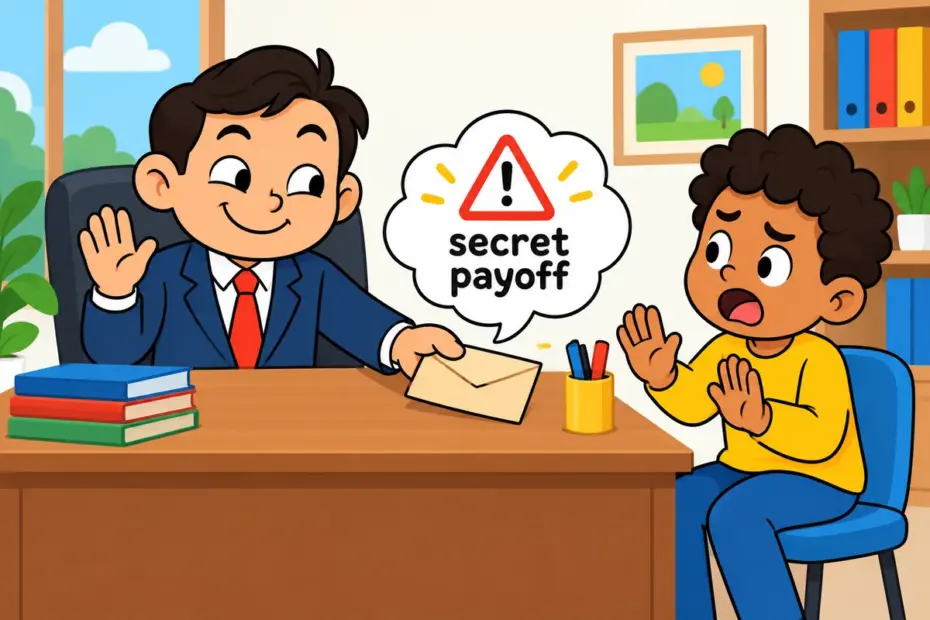
Buy off is a transitive phrasal verb meaning to pay someone, often dishonestly, to stop them opposing you or to win their silence. To use buy off in a sentence, name the payment and the person: the company bought off the inspector. It is separable, so a pronoun must split the verb.
Buy off at a glance
- Buy off is a transitive, separable phrasal verb; its forms are buy off, buys off, bought off and buying off.
- It means to pay a person, usually secretly or unfairly, to remove their opposition or buy their silence.
- Its usual objects are people: officials, witnesses, neighbours, critics, guards and voters.
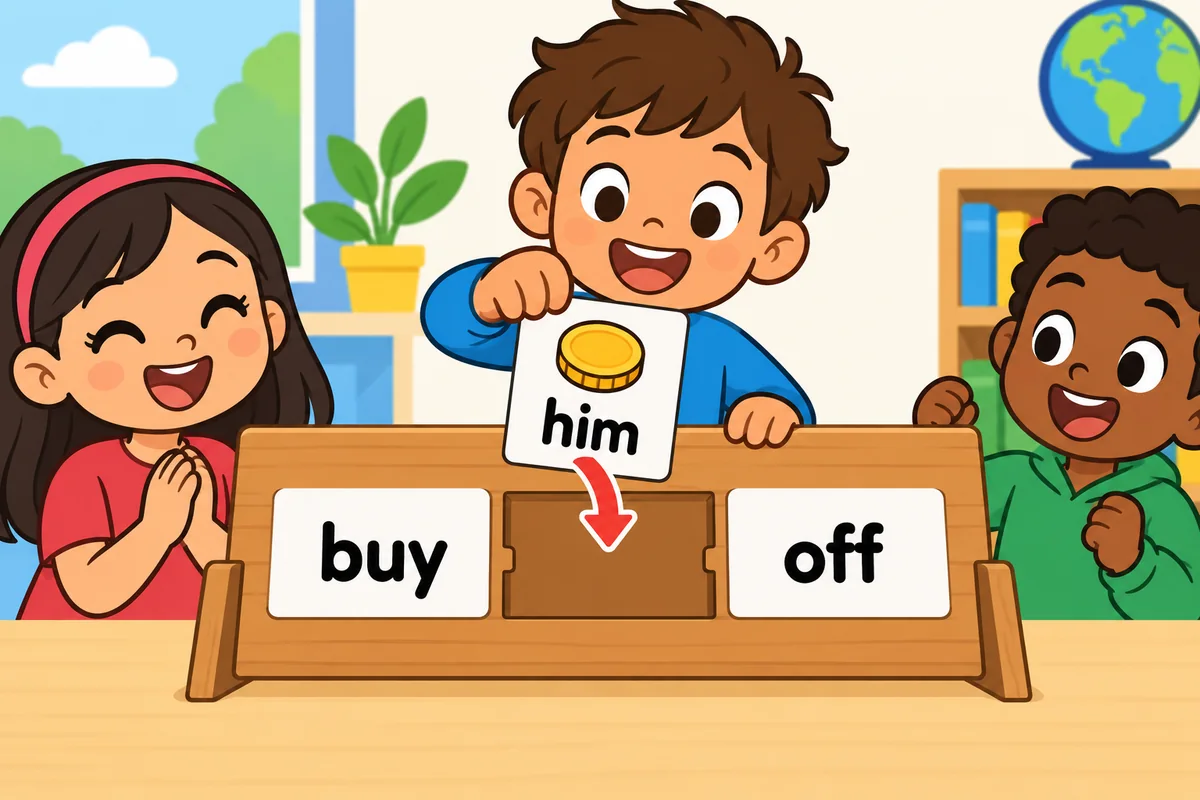
- A short object sits between the parts, so buy him off is right and buy off him is wrong.
- The register is informal and often journalistic, and the tone nearly always implies wrongdoing.
- The commonest error is confusing buy off with buy out, which means purchasing a company or a share.
What does buy off mean?
Buy off is a phrasal verb meaning to pay someone to stop them causing trouble, opposing a plan or telling what they know. The Cambridge entry for buy off records the sense of paying someone to do something dishonest, and the verb carries that hint of impropriety in almost every use. The payment might be cash, gifts, a job or a favour, but the purpose is always to neutralise a person who stands in the way.
| Sense | Plain meaning | Example sentence |
|---|---|---|
| Pay to stop opposition | Remove an obstacle with money or favours | The developer bought off the neighbours with free repairs. |
| Pay for silence | Stop a person from speaking out | They tried to buy off the only witness. |
| Win loyalty by payment | Secure support with gifts or cash | The campaign bought off a few local critics. |
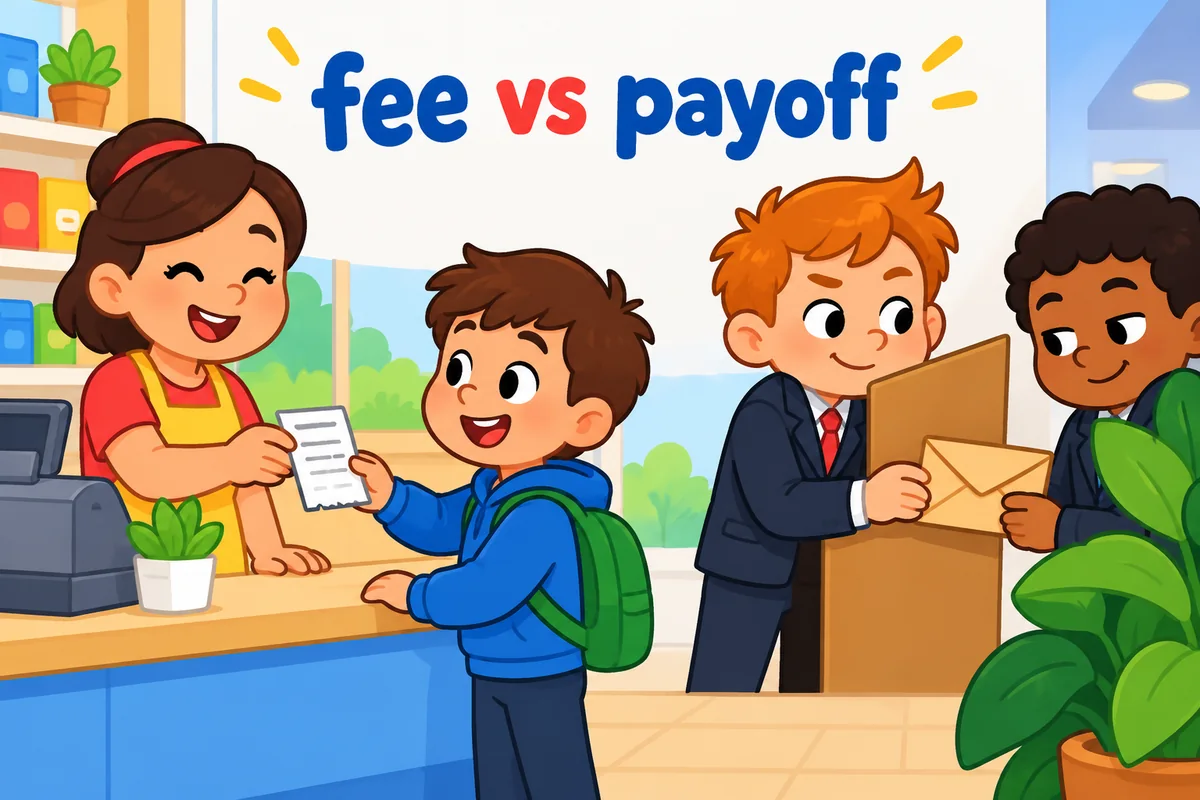
Buy off is not the same as paying someone fairly. A salary, an invoice or a licence fee is an honest transaction, whereas buy off implies that the payment is meant to corrupt a decision. The noun an act of bribery names the offence, while buy off names the quieter, everyday act of removing opposition. The verb also never applies to a debt, because paying off a loan is a different phrasal verb.
How do you use buy off in a sentence?
Buy off takes a person as its direct object and, like many phrasal verbs built on off, it separates when the object is short. A manager who corrupts a safety officer has bought off the one person who could stop the work, and the verb keeps the focus on that neutralised individual.
| Pattern | Example | What it signals |
|---|---|---|
| buy off + person | They bought off the guard. | A person follows the whole verb. |
| buy + person + off | They bought the guard off. | A noun object sits between the two parts. |
| buy + pronoun + off | They bought him off. | A pronoun must split the verb; buy off him is wrong. |
| buy off + object + with + noun | They bought him off with cash. | Names the payment used to neutralise him. |
| be + bought off | The witness was bought off. | Passive focus on the person silenced. |
Buy off in a sentence: examples across contexts
The verb suits any scene where a payment quietly removes an obstacle, from a council meeting to a factory floor, and it often appears beside words such as entice a customer or tempt a clerk, which name the offer rather than the outcome.
| Context | Example sentence | Why this works |
|---|---|---|
| News report | The firm was accused of buying off local officials. | Public corruption in a formal register. |
| Workplace | Do not think you can buy the auditor off with lunch. | The split form with a person object. |
| Conversation | They bought him off with a company car. | Spoken tone naming the payment. |
| Legal writing | Attempting to buy off a witness is a serious offence. | Formal warning about interference. |
| Politics | Critics said the party had bought off the small unions. | Collective object in a political report. |
| Business ethics | A payoff that buys off a regulator destroys trust. | Connects the act to its consequence. |
| Local community | The builder bought off the noisiest neighbours. | Everyday dispute with a clear target. |
| Sport | A referee who is bought off ruins the match. | Passive form in a sporting context. |
| Academic analysis | Firms may buy off opposition instead of fixing the problem. | Abstract subject in an analytical frame. |
| Historical writing | Commanders bought off rival tribes with gifts. | The with phrase names the payment. |
| Media criticism | A columnist claimed readers were bought off with free samples. | Extends the verb from people to a readership. |
| Family life | You cannot buy your brother off with sweets every time. | Light spoken use with a pronoun splitting the verb. |
Buy off vs bribe
To bribe a clerk and to buy off a clerk describe the same dishonest act from different angles, and the choice depends on whether the sentence stresses the offer or the result. The table separates the two.
| Attribute | Buy off | Bribe |
|---|---|---|
| Meaning | Neutralise a person with a payment | Give money to influence a decision |
| Part of speech | Phrasal verb only | Verb and noun, a bribe |
| Register | Informal, journalistic | Neutral and legal |
| Focus | The person removed from the way | The illegal offer itself |
| Typical object | A witness, critic or official | A decision, a vote or an official |
Use buy off when the emphasis falls on the person who is silenced and bribe when the emphasis falls on the illegal exchange; where the payment persuades someone to do a task, suborn a witness is the narrower legal verb.
Word forms and grammar of buy off
The verb family is small and regular once the irregular past form is learned, and it is easy to confuse with the noun buyout, which describes the purchase of a company rather than the silencing of a person.
| Form | Part of speech | Example |
|---|---|---|
| buy off | base phrasal verb | They buy off critics each season. |
| buys off | third-person singular | He buys off anyone who complains. |
| bought off | past and past participle | The manager bought off the inspector. |
| buying off | present participle and gerund | Buying off a witness is a crime. |
| buy-off | attributive noun or adjective | The paper described a buy-off scheme. |
| bought-off | attributive adjective | A bought-off official is worse than a silent one. |
Learners often reach for buy off when they mean buy out, because both verbs involve money changing hands. A buyout transfers ownership of a company or a share, while a buy-off transfers nothing and leaves the target poorer in reputation rather than richer in assets. Keeping buyout as one unhyphenated noun and buy off as a split verb also prevents a common spelling slip in headlines and court reports.
Common mistakes with buy off
Incorrect: They tried to buy off him. Correct: They tried to buy him off. Rule: a pronoun object must sit between buy and off.
Incorrect: The witness was bought. Correct: The witness was bought off. Rule: without off the verb turns into an ordinary purchase, so the particle carries the meaning.
Incorrect: The group bought off the small company. Correct: The group bought out the small company. Rule: buy off silences a person, while buy out purchases a business or a share.
Incorrect: She bought off the debt by June. Correct: She paid off the debt by June. Rule: debts are paid off, and only people can be bought off.
Incorrect: He was bought off from the committee. Correct: He was bought off by the committee. Rule: the agent of a passive verb takes by, and buy off needs no from.
Practice using buy off
- Fill in the blank: The developer tried to ______ the planning officer ______ with a free holiday.
- Choose the better word: The board (bought off / bought out) the founder shares.
- Correct the error: They attempted to buy off from the inspector.
- Build a sentence: use buy off + a pronoun about silencing a noisy neighbour.
- Spot the register: Which suits a legal report, buy off a witness or suborn a witness?
- Fill in the blank: A referee who is ______ ruins the match.
- Correct the error: She bought off the loan before the deadline.
- Choose the better word: A fair fee is not a payoff, so a salary does not (buy off / employ) staff.
Answers
- bought / off. The split form keeps a short object inside the verb.
- bought out. A company share is purchased, not silenced.
- They attempted to buy off the inspector. Buy off takes no from.
- They bought him off with a new fence. The pronoun splits the verb.
- suborn a witness. The precise legal verb suits a formal report.
- bought off. The passive needs the full phrasal verb.
- She paid off the loan before the deadline. Debts are paid off, not bought off.
- buy off. A legitimate payment employs staff rather than buying them off.
The bottom line
Buy off means to pay a person, usually quietly and unfairly, so that they stop opposing a plan or telling the truth. It takes a person as its object, it is separable, and a pronoun must split the verb, as in buy him off. Use buy off in a sentence when the payment removes an obstacle; choose bribe to stress the illegal offer and buy out to describe purchasing a company.
Frequently asked questions about buy off
Is buy off separable?
Yes. Buy off is separable, so the object may follow the whole verb or sit between the parts: buy off the inspector or buy the inspector off. A pronoun must always split it, so buy him off is correct and buy off him is wrong. The particle off never strands at the end of the clause on its own.
What is the difference between buy off and pay off?
Buy off is used for people and means silencing or neutralising them with a payment. Pay off is used for debts and for efforts that succeed, as in pay off a loan or the risk paid off. The two verbs share the sense of money changing hands but point in completely different directions.
Is buy off always illegal?
Not always, but it nearly always implies something improper. Paying a neighbour to drop a fair complaint may be legal yet still feel like a buy-off, because the payment replaces an honest process. When the payment is meant to influence an official decision, the act becomes bribery and is a criminal offence.
What is the past tense of buy off?
The past tense and past participle are both bought off, following the irregular verb buy, and the present participle is buying off. The third-person singular is buys off. The particle off stays unchanged in every tense, as in the company bought off the inspector last year.