Extemporaneous is an adjective describing a speech or performance delivered without notes but usually after some preparation. To use extemporaneous in a sentence, place it before the noun it describes: “an extemporaneous answer” or “an extemporaneous speech.” The word is formal and precise, and it is not the same as unprepared.
Extemporaneous at a glance
- Extemporaneous is an adjective meaning spoken or done without notes, though often after preparation.
- Its related forms are the adverb extemporaneously and the rare noun extemporaneousness.
- It describes speech, answers and performances, not people in general.
- It usually appears before the noun: an extemporaneous remark.
- The word is formal and suits academic and public-speaking contexts rather than chat.
- The commonest error is treating it as a synonym for unprepared or improvised.
What does extemporaneous mean?
Extemporaneous is an adjective meaning spoken or performed without notes, usually with the speaker drawing on knowledge prepared in advance. The Cambridge entry for extemporaneous stresses the absence of a written script rather than a lack of preparation, which is why a careful speaker can be extemporaneous and still fluent. The word belongs to the vocabulary of debating and public speaking, where it names a whole event: a contestant draws a topic and speaks on it after a short, fixed period of preparation. Where a writer means made up on the spot, improvised is the plainer word.
| Sense | Plain meaning | Example sentence |
|---|---|---|
| Without notes | Spoken from memory rather than read | She gave an extemporaneous summary. |
| Made for the occasion | Composed to fit a particular moment | An extemporaneous toast suited the evening. |
| Prepared on the spot, old use | Compounded where it was needed | The apothecary made an extemporaneous remedy. |
One limitation is worth stating. Extemporaneous does not mean careless or unprepared, because it specifically signals delivery without a script. It is also reserved for speech and performance, so a haphazard report is not extemporaneous, and applying the word to a person, as in she was extemporaneous, sounds strange where fluent or unscripted would fit. A careful writer keeps the word for the material delivered aloud and chooses another adjective the moment the subject is a written report or a general habit of mind.
How do you use extemporaneous in a sentence?
Extemporaneous is a long adjective, so it sits before its noun in almost every natural sentence, and comparison uses more rather than the -er ending. The opposite is a prepared script read aloud, which is why the word so often names a contest or a defence. Because it cannot take the short comparative, a writer says more extemporaneous, never extemporaneouser, and the superlative follows the same pattern.
| Pattern | Example | What it signals |
|---|---|---|
| extemporaneous + noun | An extemporaneous reply impressed the panel. | The usual attributive position. |
| linking verb + extemporaneous | The whole session was extemporaneous. | Predicative use after be, seem or become. |
| more / most extemporaneous | Her second talk was more extemporaneous. | Comparison, since the adjective is long. |
| extemporaneous + speech, answer, remark | An extemporaneous answer to a hostile question. | The three collocations that sound native. |
| extemporaneous + performance | The extemporaneous performance held the room. | Extends the idea from speech to music or drama. |
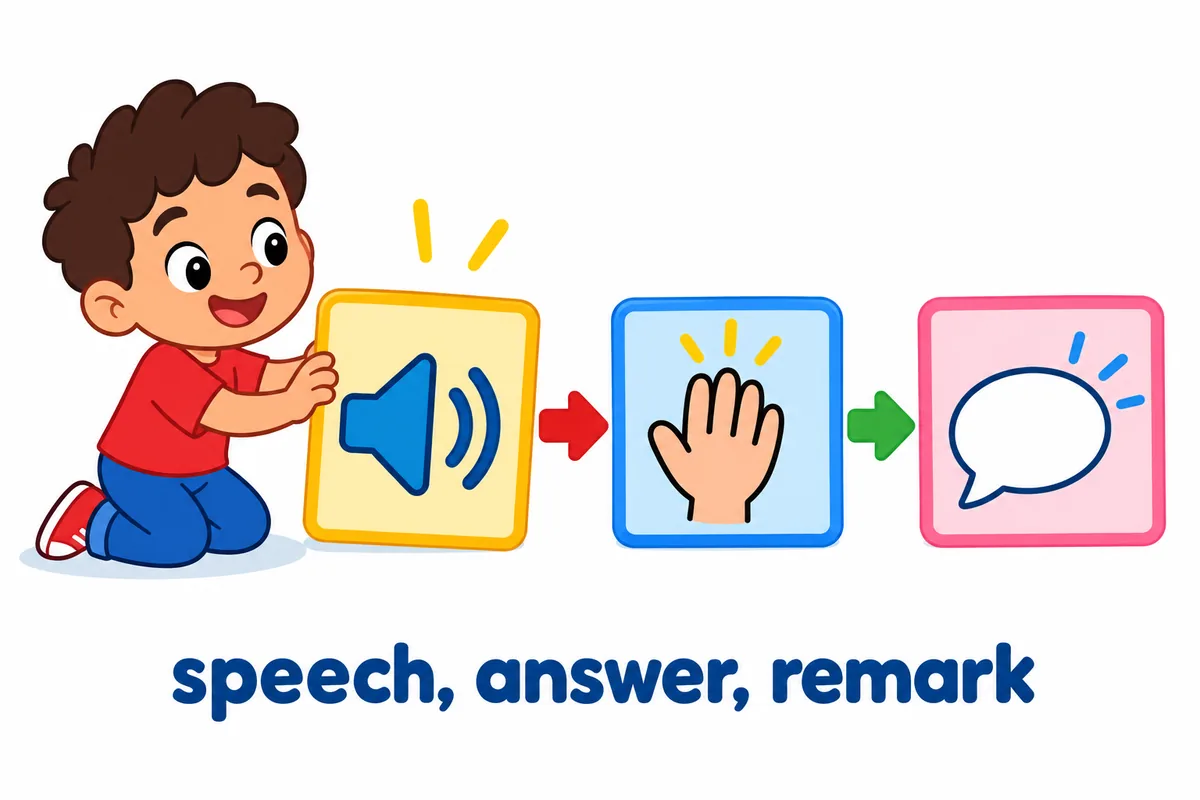
The three nouns that follow it most naturally are speech, answer and remark, and each keeps the same idea of fluent delivery without a text. A performance can be extemporaneous too, which is how the word reaches music and drama without losing its meaning. Learn the word alongside its frame, extemporaneous plus a noun of speech, and the formal register will look after itself.
Extemporaneous in a sentence: examples across contexts
The examples below keep the without-notes sense while moving from a debate final to a news report. An offhand remark is merely casual, and a spontaneous cheer needs no preparation at all, so neither captures what extemporaneous means. Read each sentence for the noun that follows the adjective, because that noun is what turns a general idea into a usable phrase.
| Context | Example sentence | Why this works |
|---|---|---|
| Debate final | Her extemporaneous speech won the final round. | Names the formal event that rewards speaking without notes. |
| Job interview | He gave an extemporaneous answer to the last question. | Shows a reply prepared in substance but not scripted. |
| Academic defence | The candidate’s extemporaneous defence impressed the examiners. | Uses the word for fluent, unread formal talk. |
| Teaching | A good teacher can offer an extemporaneous example on request. | Highlights quick, unscripted explanation. |
| Music | The extemporaneous passage sounded composed, not accidental. | Extends the word to performed music. |
| News report | The mayor delivered an extemporaneous address at the vigil. | A formal public speech with no written text. |
| Training guide | Practise extemporaneous speaking by answering unseen questions. | Turns the adjective into a study skill. |
| Radio interview | The host preferred extemporaneous conversation to a script. | Contrasts unscripted talk with a prepared text. |
| Conference | Her extemporaneous closing remarks were the highlight. | Shows that preparation and no notes can coexist. |
| Oral exam | Her extemporaneous answers showed how well she knew the subject. | Connects the adjective to unscripted examination talk. |
| Awards night | The winner gave a short extemporaneous thank-you. | A brief, warm speech with no written notes. |
Across all nine contexts the same pattern holds: the adjective describes material delivered aloud without a text, and the surrounding sentence supplies the occasion. That is why extemporaneous fits a contest, a defence and a broadcast equally well, while it resists any sentence about a written document or a quiet, private habit.
Extemporaneous vs impromptu
Extemporaneous and impromptu are constantly confused because both describe something done without a fixed text. The difference is preparation: extemporaneous usually means the speaker prepared the material but delivered it from memory, while impromptu means almost nothing was arranged beforehand. Keep the pair apart by asking whether the speaker knew the topic in advance; if they did, extemporaneous is the accurate word.
| Attribute | extemporaneous | impromptu |
|---|---|---|
| Preparation | Usually prepared, delivered without notes | Little or no preparation |
| Typical noun | Speech, answer, performance | Visit, party, remark, concert |
| Register | Formal and academic | Neutral to informal |
| What it implies | Rehearsed knowledge, no script | Spur-of-the-moment action |
| Typical events | Talks, debates, defences | Social events and quick decisions |
| Risk of misuse | Confused with unprepared | Confused with rehearsed |
Verdict: use extemporaneous for a formal talk delivered without notes, and impromptu for an event or remark that nobody planned at all.
Word forms and grammar of extemporaneous
Extemporaneous has a full but formal family. The related extempore can act as an adjective or an adverb, and the verb extemporize means to speak or perform in this way, though it is stilted in conversation. The adverb extemporaneously is the safest of the family because it can modify any verb of speaking without demanding a particular noun.
| Form | Part of speech | Example |
|---|---|---|
| extemporaneous | adjective | He gave an extemporaneous lecture. |
| extemporaneously | adverb | She answered extemporaneously, without notes. |
| extemporaneousness | noun, rare | Prefer extemporaneity in formal prose. |
| extempore | adjective and adverb, related | He spoke extempore for ten minutes. |
| extemporize | verb, related | Use speak off the cuff in everyday speech. |
| extemporaneous speech | fixed collocation | The final is an extemporaneous speech. |
Common mistakes with extemporaneous
- Incorrect:
The extemporaneous party was fun.Correct: The impromptu party was fun. Rule: Extemporaneous describes formal spoken delivery, not spontaneous social events. - Incorrect:
She was very extemporaneous.Correct: She spoke very extemporaneously. Rule: The adverb describes the manner; the adjective describes the speech. - Incorrect:
He extemporaneoused the whole report.Correct: He wrote the whole report off the cuff. Rule: There is no verb; extemporize exists but is stilted. - Incorrect:
An extemporaneous essay was hard to mark.Correct: A rough essay was hard to mark. Rule: Extemporaneous applies to spoken or performed material, not written work in general. - Incorrect:
Extemporaneous means unprepared.Correct: Extemporaneous means delivered without notes. Rule: The word does not rule out preparation, so it is not a synonym for unprepared.
Practice using extemporaneous
Work through the six items, then check the reasoning rather than only the answer.
- Fill the gap: The final round asks each student to give an ______ speech.
- Choose the better word: With no warning, they threw an (extemporaneous / impromptu) party in the staff room.
- Correct the error: She was very extemporaneous during the interview.
- Build a sentence: use extemporaneous answer about a surprise question.
- Spot the register: which belongs in a school speech guide — Learn to give an extemporaneous talk, or Just wing it?
- Rewrite with the adverb: He replied without notes. Use extemporaneously.
Answers
- extemporaneous — the formal contest rewards speaking without a script.
- impromptu — nothing was prepared and the event was social.
- She spoke very extemporaneously during the interview — the adverb suits the manner.
- Model answer: His extemporaneous answer showed he had understood the topic.
- Learn to give an extemporaneous talk — a formal guide keeps the formal word.
- He replied extemporaneously — the adverb replaces the whole phrase.

The bottom line
Use extemporaneous in a sentence for formal speech or performance delivered without notes, and keep it before a noun such as speech, answer or remark. The two facts that decide most uses are that it implies preparation without a script and that it is reserved for spoken or performed material. The word rewards precision: reach for it when you mean no script, and leave it alone when you mean no preparation. For anything genuinely unplanned, impromptu is the right word.
Frequently asked questions about extemporaneous
Is extemporaneous a formal word?
It is formal and largely academic, which is why it clusters around speech contests, debates and public addresses. In everyday talk people say off the cuff or without notes instead. Using extemporaneous in a casual message sounds studied, while in a programme or a report it sounds exactly right and precise.
What is the difference between extemporaneous and extempore?
They are close relatives, and extempore can be both an adjective and an adverb, as in he spoke extempore. Extemporaneous is the fuller adjective and usually attaches to a noun such as speech or answer. Both stress delivery without notes, but extempore sounds a little more abrupt and literary in modern use.
Can extemporaneous describe writing?
Rarely, and only with care. The word was built for speech and performance, so an extemporaneous speech, answer or solo makes sense. A written report is normally planned and drafted, so calling it extemporaneous stretches the word; unplanned, rough or off the cuff is the clearer choice for prose.
Is an extemporaneous speech prepared in advance?
Usually it is prepared in substance even though it is delivered without notes. A speaker may research the topic and rehearse the structure, then talk from memory. That is the key difference from an impromptu speech, which is composed on the spot with almost no preparation at all.