100 rainy day activities for kids turn a wet afternoon into a set of small, easy projects. The list groups ideas by materials, space and noise, so a parent can pick one in seconds. A simple start is “Build a pillow fort, then read inside it.”
100 rainy day activities for kids at a glance
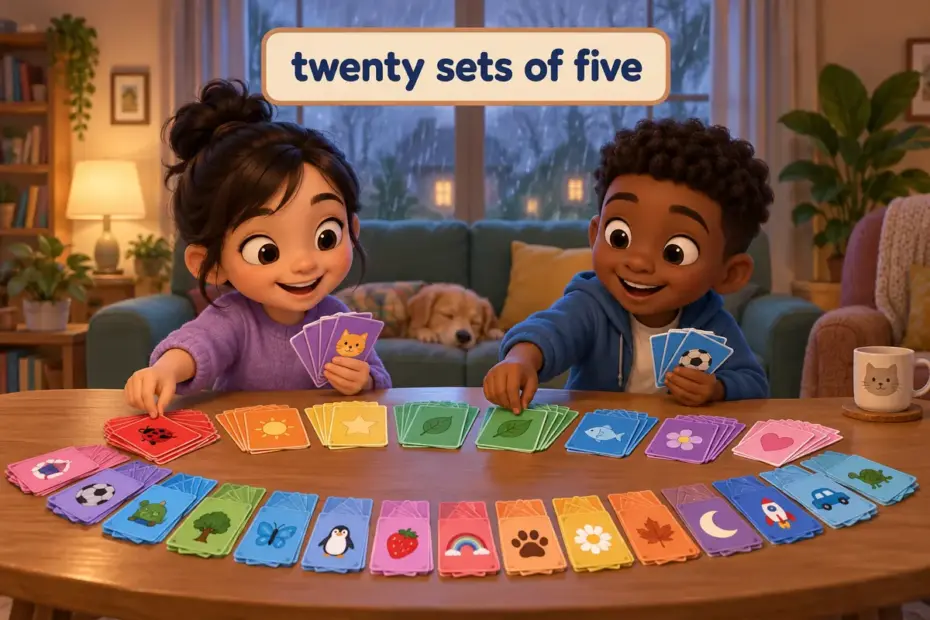
- The hundred ideas group into twenty sets of five activities.
- Each set needs common home materials, not a shopping trip.
- Some sets are loud and active; others are calm and quiet.
- Match the set to the child’s age, energy and the space you have.
- The commonest mistake is picking an activity with too many fiddly parts.
What are rainy day activities for kids?
Rainy day activities for kids are indoor projects and games that use what a home already has. They matter because a wet day can drain energy and patience unless children have a plan. Good activities need little setup, fit the room you have, and suit the noise level the house allows.
| Kind of activity | Examples | What it needs |
|---|---|---|
| Craft | Collage, bead bracelet, sock puppet | Paper, glue, a table |
| Active | Obstacle course, dance party, balloon keep-up | Floor space and clear objects |
| Quiet | Journal, jigsaw, read aloud | A calm corner |
| Learning | Spelling bee, flash cards, map puzzle | A few minutes of attention |
| Helping | Tidy toys, set the table, water plants | A small real job |
100 rainy day activities grouped in sets of five
The twenty sets below hold one hundred activities in total. Read the set, choose the one that fits the room and the mood, and keep the rest for the next wet afternoon.
| Activity set | Five examples | Skill it builds |
|---|---|---|
| 1. Paper crafts | collage, origami boat, sock puppet, bead bracelet, cardboard castle | Fine motor skills |
| 2. Drawing | self-portrait, comic strip, leaf rubbing, texture hunt, colour mixing | Observation |
| 3. Building | block tower, domino run, pillow fort, marble maze, cardboard tunnel | Problem solving |
| 4. Kitchen fun | no-bake cookies, fruit skewers, sandwich faces, lemonade, popcorn | Measuring |
| 5. Story time | puppet show, story dice, audio book, family tale, comic ending | Language |
| 6. Music | kitchen drum, shaker eggs, sing-along, dance freeze, rhythm clap | Rhythm |
| 7. Simple science | baking soda volcano, sink or float, slime, colour walk, rain gauge | Curiosity |
| 8. Reading | picture book, poetry, word hunt, read aloud, library corner | Vocabulary |
| 9. Puzzles | jigsaw, crossword, number grid, memory cards, riddle jar | Focus |
| 10. Board games | snakes and ladders, ludo, chess, card games, dominoes | Turn taking |
| 11. Indoor movement | obstacle course, balloon keep-up, yoga, dance party, treasure hunt | Balance |
| 12. Quiet writing | journal, dream drawing, gratitude list, letter to a friend, sticker book | Expression |
| 13. Pretend play | doctor set, shop keeper, tea party, space mission, safari tent | Imagination |
| 14. Quick learning | spelling bee, tables race, map puzzle, flash cards, family quiz | Memory |
| 15. Sensory play | play dough, water beads, rice bin, sand tray, texture bag | Touch |
| 16. Screen and tech | coding game, drawing app, photo story, typing game, virtual museum | Digital skills |
| 17. Helping out | tidy toys, sort laundry, water plants, dust shelves, set the table | Responsibility |
| 18. Nature indoors | seed jar, leaf press, bug box, herb pot, weather chart | Care for life |
| 19. Group games | hide and seek, charades, karaoke, talent show, storytelling circle | Teamwork |
| 20. Calm down | breathing star, quiet reading, warm bath, slow puzzle, cuddle time | Calm |
Loud or quiet: choosing the right set
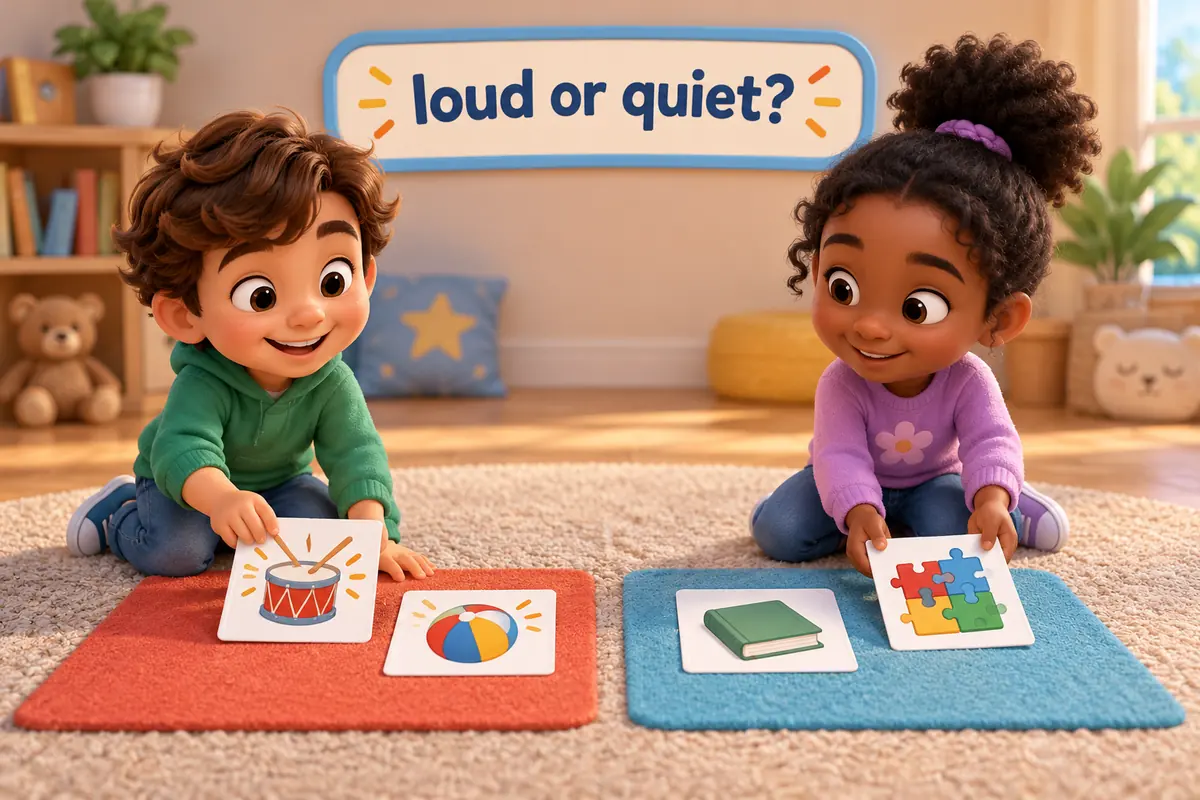
Half the battle on a wet day is matching the activity to the moment. A loud set suits a burst of energy after lunch, while a quiet set fits the hour before dinner. Alternating the two keeps a long indoor day from tipping into restlessness.
| Moment | Good set | Why it fits |
|---|---|---|
| High energy | Indoor movement | Burns off stored energy safely. |
| Before a meal | Helping out | Ends with a real, useful job. |
| After lunch | Quiet writing or reading | Slows the pace calmly. |
| Grumpy hour | Sensory play | Calms hands and minds together. |
| Two or more kids | Group games | Needs cooperation to work. |
Frames for talking about the rainy day itself are easy to borrow from rainy day in a sentence, and a darker storm suits adjectives for rainy weather. Younger children can spell new labels with a words for kids, while adjectives for kids add describing words, and an activity that lasts the whole afternoon matches all day long in a sentence.
Which rainy day activity suits which age?
The best set changes with age, because small hands need big pieces and older children need a real challenge. Pick one set above the child’s usual level to keep the interest alive, then step back and let them lead.
| Age | Good sets | Because |
|---|---|---|
| Toddlers | Sensory play, music | Big pieces and simple sounds suit small hands. |
| Age four to six | Paper crafts, pretend play | Imagination is strong and gluing is fun. |
| Age seven to nine | Board games, quick learning | Rules and small challenges hold attention. |
| Age ten and up | Simple science, screen and tech | Steps and results reward real effort. |
Words for planning a rainy day
A short set of words helps a child name what they are doing and helps a parent organise the day.
| Word | Part of speech | Example in a plan |
|---|---|---|
| indoor | adjective | Pick an indoor game for the afternoon. |
| supplies | noun | Gather the supplies on the table first. |
| rotate | verb | Rotate the sets so nothing grows stale. |
| supervise | verb | Supervise the kitchen set near the stove. |
| cosy | adjective | A cosy corner suits the quiet set. |
Common mistakes on a rainy day
Most hard afternoons share one of a few faults, and each fault has a quick fix.
- Incorrect:
We are having many activities all at once.Correct: We are starting with one activity. Rule: one set at a time keeps the day calm. - Incorrect:
The activity is needing scissors and glue.Correct: The activity needs scissors and glue. Rule: state facts in the simple present. - Incorrect:
We done the puzzle.Correct: We did the puzzle. Rule: use the correct past form of the verb. - Incorrect:
The children is playing quietly.Correct: The children are playing quietly. Rule: a plural subject takes a plural verb. - Incorrect:
Let’s do a activity.Correct: Let’s do an activity. Rule: use an before a vowel sound.
Practice planning a rainy day
Try each task, then read the reason beside the answer to check your thinking.
- Fill in the blank: Gather the ________ on the table before you start.
- Fill in the blank: Let’s do ________ activity from the quiet set.
- Choose the better set: a grumpy toddler after lunch needs the movement set or the sensory set?
- Correct the error: The children is playing quietly.
- Build a set: name one quiet activity and one loud activity for the same day.
- Spot the fit: which set suits two children who must cooperate?
- Build a plan: write one sentence that puts three sets in a sensible order.
Answers
- supplies, because supplies are the materials you gather first.
- an, because activity begins with a vowel sound.
- The sensory set, because calm hands settle a tired child better than running games.
- The children are playing quietly: a plural subject takes the plural verb are.
- Sample: Read a picture book quietly, then hold a dance party.
- The group games set, because those games need cooperation to work.
- Sample: Start with quiet writing, move to indoor movement, then finish with helping out.
The bottom line
Use 100 rainy day activities for kids as twenty sets of five, so a wet afternoon never runs out of options. Match a loud set to high energy and a quiet set to the calm hour, and gather the supplies before you begin. One set at a time keeps the day cheerful rather than chaotic.
Frequently asked questions about rainy day activities
How do I stop children getting bored indoors?
Plan two or three sets in advance and switch between them when interest drops. Move from an active set to a quiet one so the change feels fresh rather than forced. A child who helps choose the next set stays engaged far longer than one who is simply told.
What if we have very little space?
Choose the craft, quiet or sensory sets, because they work on a single table or on the floor by a bed. Keep the active set for a hallway or a cleared patch. Small spaces suit focused activities better than running games, so pick sets that fit the room.
Do these activities need special materials?
Most sets use common home items such as paper, glue, blocks, kitchen tools and old clothes. A few science sets need baking soda or food colouring, and a few tech sets need a tablet. Check the five examples in each set and pick one that matches what you have.
How long does one activity usually last?
A single activity often runs from fifteen minutes to half an hour, though building sets and story sets can last longer. Let the child decide when to stop and start another. Rotating through the sets is what fills a whole wet day.