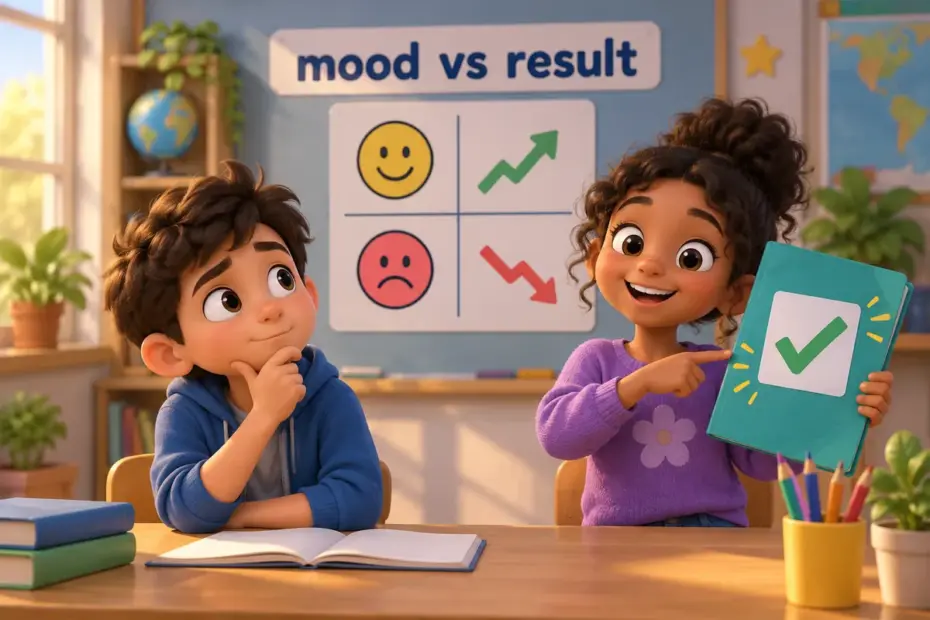
Affective vs effective share almost every letter, but affective belongs to emotion, while effective means producing the result you want. “Affective disorder” is a technical term for a mood condition; “an effective remedy” is one that works. Only effective appears in everyday writing.
Affective vs Effective at a glance
- Affective and effective are both adjectives, so the difference is meaning, not grammar.
- Affective means relating to feelings and moods, and appears mostly in technical writing.
- Effective means producing the result you want, and appears everywhere.
- Affective pairs with disorder, domain and response; effective pairs with method, dose and date.
- The commonest error is using affective where the plain word effective belongs.
What does affective mean and what does effective mean?
Affective is an adjective meaning relating to moods and emotions, used chiefly in psychology and education; effective is an adjective meaning producing the intended result or being in force. The Cambridge entry for affective and the Cambridge entry for effective mark this split, and one line shows it: an affective response is a feeling, while an effective response gets the job done.
| Sense | Word | Plain meaning | Example |
|---|---|---|---|
| Relating to emotion | affective | A technical term about mood | The study measured affective responses. |
| Producing a result | effective | That works as intended | The treatment was effective. |
| In force | effective | Starting on a set date | The rule is effective from May. |
| Striking in effect | effective | Making a strong impression | The poster was simple but effective. |
| Emotion in learning | affective | The feeling side of a skill | Teachers track affective factors too. |
What is the difference between affective and effective?
The difference is meaning and register at once: affective is a technical word about emotion, while effective is a general word about success and force. A familiar look-alike pair such as ade vs aid vs aide fails for the same reason, because a single letter points to a different word with a different job.
| Test | Affective | Effective |
|---|---|---|
| Core meaning | about feelings | producing a result |
| Register | technical, psychology | general and workplace |
| Frequency | rare | very common |
| Typical partner | disorder, domain, response | method, dose, date |
| Opposite | no common opposite | ineffective |
| Quick test | if the topic is emotion, use affective | if the meaning is works, use effective |
Choose effective whenever you could replace the word with successful or workable, and reserve affective for a sentence that is genuinely about feelings.
How do you use affective and effective in a sentence?
Each word follows fixed patterns, and the partner word is a faster test than the meaning; to watch effective work with nouns, read sentences using effective.
| Pattern | Example | What it signals |
|---|---|---|
| affective + abstract noun | Affective factors shape learning. | emotion as a subject |
| be effective at + noun or -ing | She is effective at leading teams. | success at a task |
| effective + noun | An effective plan saves time. | a result-producing thing |
| become effective | The law becomes effective in June. | entering force |
| effective immediately | The ban is effective immediately. | a start date |
| prove effective | The method proved effective. | confirmed success |
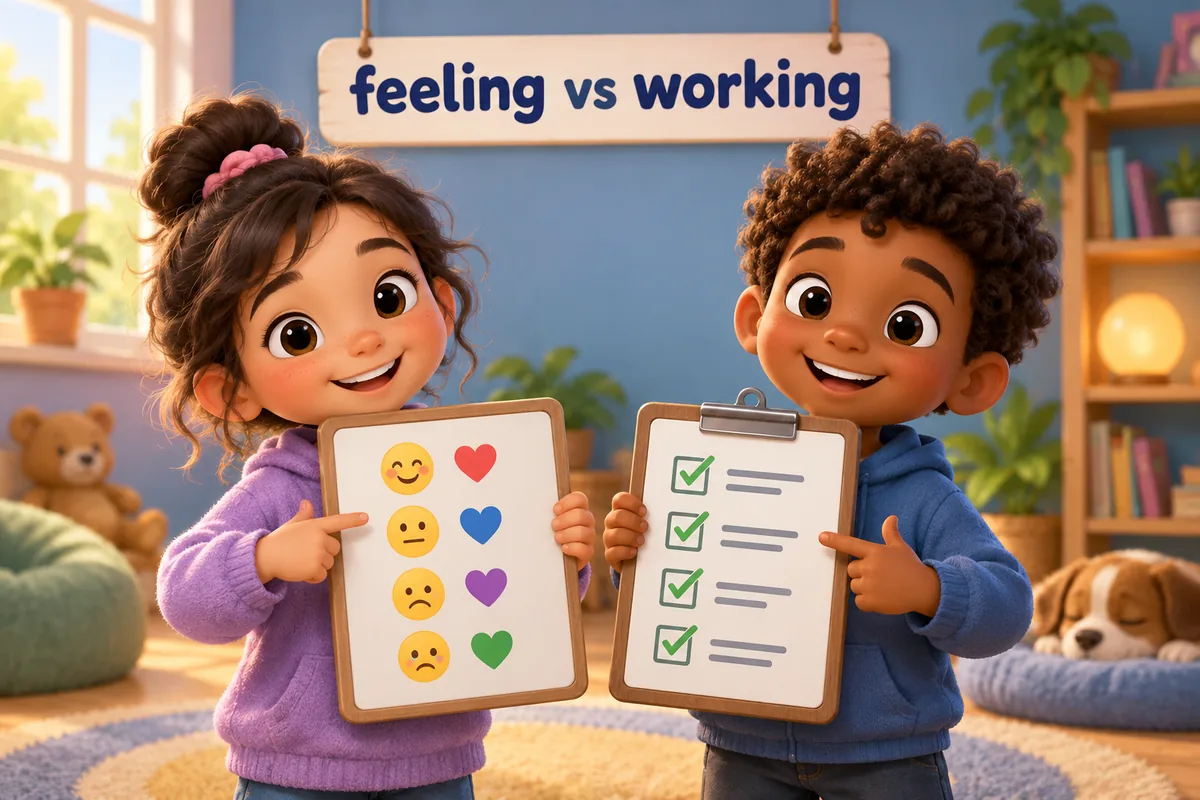
Affective and effective in a sentence: examples across contexts
Reading the pair in different registers makes the choice automatic, and more frames for the look-alike pair sit in abel vs able.
| Context | Example sentence | Why this works |
|---|---|---|
| Classroom | Group work supports the affective side of learning. | affective belongs to emotion |
| Workplace email | A shorter agenda proved effective last week. | effective means it worked |
| News report | The new rules are effective from Monday. | effective marks a start date |
| Psychology | Clinicians assess affective symptoms carefully. | affective stays technical |
| Everyday speech | That was a simple, effective fix. | effective is plain and common |
| Academic writing | The paper separates cognitive from affective goals. | affective names a domain |
| Public health | The campaign was effective at cutting smoking. | effective at plus a task |
| Business | We need an effective, low-cost process. | effective means workable |
| Teaching | Affective factors can block progress. | affective as a technical modifier |
| Project update | The repair is effective immediately. | a fixed official formula |
Which should you use?
Match the word to the topic: feelings take affective, and results or force take effective.
| Situation | Use | Example |
|---|---|---|
| Naming emotions | affective | Affective needs come first. |
| Judging success | effective | A cheap and effective method. |
| Starting a rule | effective | Effective on the first of July. |
| Describing a feeling state | affective | An affective disorder affects mood. |
Register is the second test. Affective signals a specialist audience and sounds out of place in a note to a colleague, while effective fits almost any context. Neither word replaces the other, so the honest limit is this: a sentence about success cannot use affective, and a sentence about mood cannot use effective.
Word forms and grammar of affective and effective
The two families grow from different roots, and another letter-swap mix-up, addition vs edition, is resolved the same way once each word is doing its own job.
| Form | Part of speech | Example |
|---|---|---|
| affect | verb | Noise affects concentration. |
| affection | noun | She showed real affection. |
| affective | adjective | Affective training builds empathy. |
| affectively | adverb | The class responded affectively. |
| effect | noun | The effect was small. |
| effective | adjective | The drug is effective. |
| effectively | adverb | She led the team effectively. |
| effectiveness | noun | They measured the tool’s effectiveness. |
Common mistakes with affective and effective
Mistake 1: affective for a working method. Incorrect: This is an affective way to save time. Correct: This is an effective way to save time. Rule: something that works takes effective.
Mistake 2: effective for a mood topic. Incorrect: The test measured effective responses. Correct: The test measured affective responses. Rule: feelings take affective.
Mistake 3: adding a wrong noun. Incorrect: The plan had an affective start date. Correct: The plan had an effective start date. Rule: start dates and force take effective.
Mistake 4: using effective with no clear result. Incorrect: She is effective. Correct: She is effective at solving disputes. Rule: effective usually names the task it succeeds at.
Mistake 5: dropping the root word. Incorrect: The drop in sales had an affective cause. Correct: The drop in sales had an affect as its cause. Rule: the noun-like sense belongs to effect; the adjective for a working cause is effective.
Practice using affective and effective
- Fill in the blank: The low-cost filter is ___ at removing dust.
- Choose the better word: The survey recorded the children’s (affective / effective) reactions to the story.
- Correct the error: We found an affective way to cut costs.
- Build a sentence: use effective to say a new rule begins in October.
- Spot the register: which line suits a psychology journal, (a) The kids felt good, or (b) Affective measures improved?
- Fill in the blank: An ___ apology names the harm done and how it will stop.
Answers
- effective, because it names a proven result.
- affective, because reactions are feelings.
- We found an effective way to cut costs; a working method takes effective.
- The new rule is effective in October.
- (b), because affective measures suit technical writing.
- effective, because it describes an apology that works.

The bottom line
The affective vs effective choice turns on meaning rather than spelling, since affective is a technical word about emotion and effective is the everyday word for something that works. Keep affective for psychology and teaching, and reach for effective whenever you mean successful, workable, or in force. The partner word is the quickest test: disorders and domains take affective, while methods, dates and doses take effective.
Frequently asked questions about affective and effective
Is affective a real word?
Yes. Affective is a genuine adjective meaning relating to moods and emotions, and it is standard in psychology and education. It is far less common than effective, which is why it looks like a spelling error. In general writing, the word you almost always want is effective.
What is the difference between affective and effective?
Affective concerns feelings, as in an affective response or affective disorder. Effective concerns results and force, as in an effective method or a rule effective from Monday. Both are adjectives, so grammar does not separate them; only meaning and context do.
Can effective mean something is in force?
Yes. In legal and official writing, effective means the rule has started to apply, as in the law is effective from June. That sense has nothing to do with emotion, which is a further reason to keep effective away from any sentence about feelings.
How do I remember affective and effective?
Link the middle vowel to the topic. Affective carries the a of affect, the verb for influencing emotion, so it stays with feelings. Effective carries the e of effect, the noun for a result, so it stays with success. The shared root explains the shared spelling.