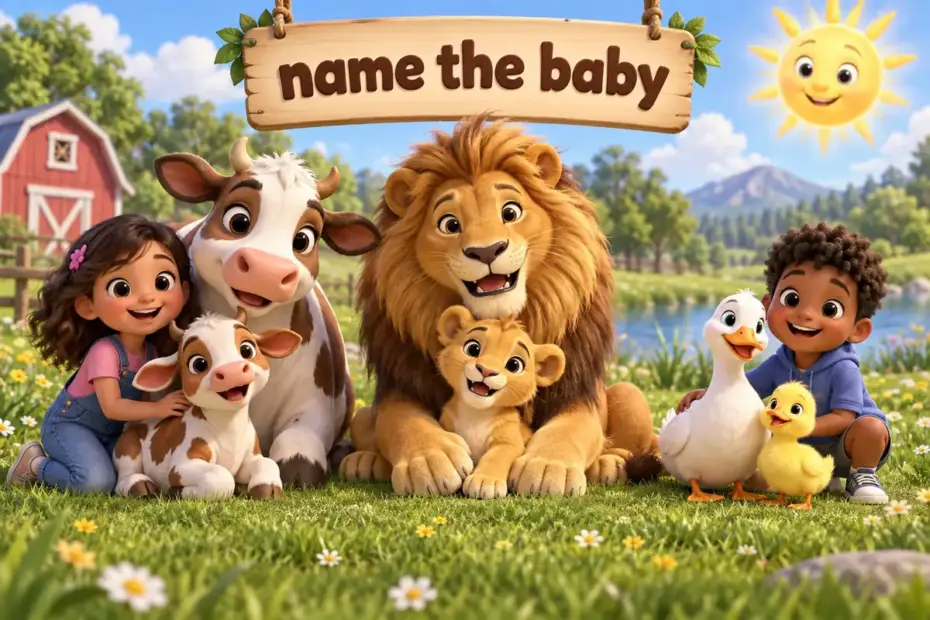
Baby animal names with pictures make the fastest way to learn words such as calf, cub and duckling. English gives many young animals their own name instead of reusing the adult one. A foal is a young horse, a joey is a young kangaroo, and a cygnet is a young swan.
Baby animal names at a glance
- Many young animals have their own name, such as calf, cub, kitten, foal and duckling.
- Some baby names are shared across species: cub covers bears, lions, tigers and foxes.
- Other baby names belong to one species only, such as cygnet for a swan or gosling for a goose.
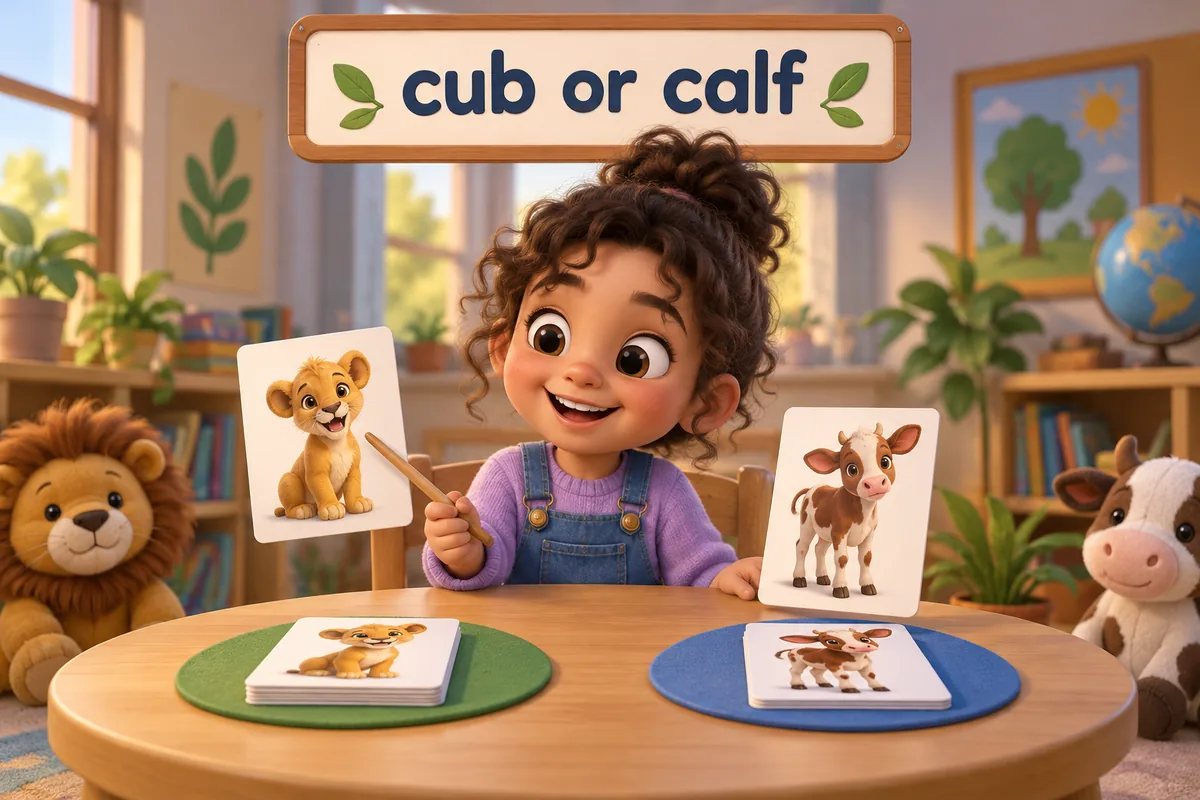
- Pictures help because a calf and a cub look similar but belong to different animals.
- The commonest error is calling every young animal a baby instead of using its real name.
What are baby animal names?
Baby animal names are the special words English uses for the young of a species, such as calf for cattle, lamb for sheep and puppy for a dog. Some are shared, some are unique, and a few come straight from farming, where a farmer needs a quick word for each animal on the farm. For the base word behind the whole list, see animal in a sentence, and the farming setting appears in animal husbandry in a sentence.
| Adult animal | Young animal | Note |
|---|---|---|
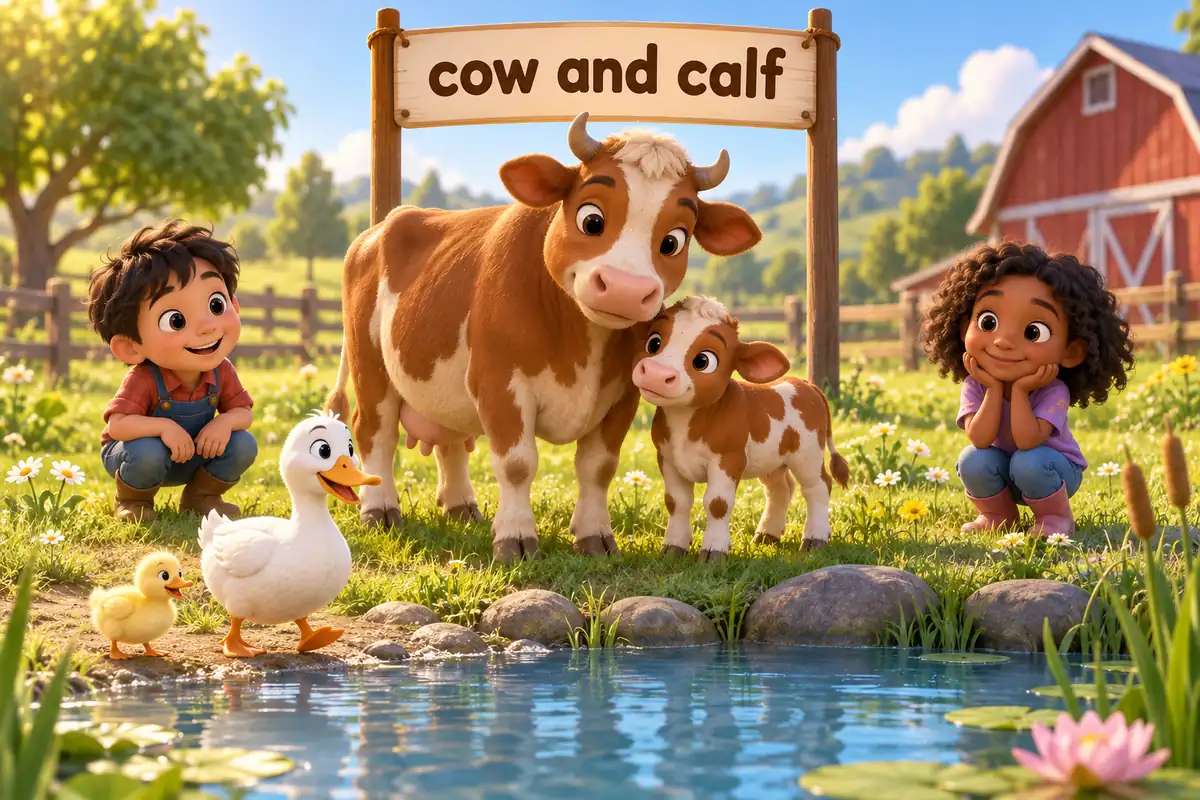
| Cow | calf | A young cow or bull. |
| Horse | foal | A female foal is a filly. |
| Sheep | lamb | Also used for the meat. |
| Pig | piglet | A litter can hold ten or more. |
| Dog | puppy | The plural is puppies. |
| Cat | kitten | A young cat is a kitten until about a year. |
| Duck | duckling | A duckling follows its mother in a line. |
| Goose | gosling | A gosling is grey and fluffy. |
| Swan | cygnet | Cygnets are grey before turning white. |
| Lion | cub | The same word covers bears, foxes and tigers. |
| Kangaroo | joey | A joey rides in the mother’s pouch. |
| Frog | tadpole | A tadpole loses its tail as it grows. |
| Deer | fawn | A fawn has spotted fur for hiding. |
| Rabbit | kit | Also called a kitten or a bunny. |
One honest limit belongs beside this table. The young of many animals simply have no special name, so people say a baby shark or a young eagle; the absence of a word is normal, not a gap in your English.
How do you use baby animal names in a sentence?
Each name slots into a small set of patterns, and the definition frame is the one that teachers and dictionaries use most.
| Pattern | Example | What it signals |
|---|---|---|
| a + baby name | A calf stays close to the cow. | one young animal |
| the baby name of + adult | The baby name of a horse is a foal. | a definition |
| plural baby names | Three ducklings followed the mother. | a group of young |
| baby name + of + species | A joey of the red kangaroo leaves the pouch. | species detail |
| called + name | A young goat is called a kid. | naming |
Baby animal names with pictures: examples across contexts
The names change their company as the setting changes, from a farmyard to a picture book caption. Another everyday baby word appears in examples of baby carriage in a sentence.
| Context | Example sentence | Why this works |
|---|---|---|
| Classroom | Match each baby animal name with the picture of its parent. | a matching task |
| Farm report | The calf was born healthy and fed within the hour. | one animal at a time |
| Picture book | A fluffy duckling paddled behind its mother. | a simple caption |
| Pet care leaflet | A puppy needs its first injections before twelve weeks. | advice |
| Nature magazine | A kangaroo joey stays in the pouch for months. | a factual detail |
| Conversation | Did you see the new kittens next door? | everyday news |
| Quiz | Which baby animal is a cygnet? | a test question |
| Dictionary entry | A gosling is a young goose. | a definition |
| Zoo sign | The lion cubs are fed at noon. | a visitor notice |
| Story | The fawn hid in the tall grass until the sun went down. | narration |
Which baby animal name should you use?
Choose the name that belongs to the right parent, because a shared word such as cub still carries a group meaning.
| Situation | Pick | Example |
|---|---|---|
| A farm animal | calf | A farmer feeds the calf twice a day. |
| A household pet | puppy or kitten | The puppy chews everything in sight. |
| A wild cat | cub | The lion cub plays in the shade. |
| A water bird | duckling | A duckling paddled across the pond. |
When in doubt, name the adult first and let the young follow: a gosling of a goose, a joey of a kangaroo. That frame removes the guesswork and never sounds wrong, even when a species has no special young name.
Word forms and grammar of baby animal names
Most of these words are countable nouns, and a few build unusual plurals that trip up learners. To describe the youngest animals, borrow adjectives for baby, and for more baby vocabulary browse baby items that start with A.
| Form | Part of speech | Example |
|---|---|---|
| baby | noun or adjective | A baby rabbit is also called a kit. |
| young | adjective or collective noun | The young stay near the nest. |
| calf / calves | noun singular / plural | Two calves grazed in the field. |
| puppy / puppies | noun singular / plural | The puppies slept in a basket. |
| duckling | noun | One duckling broke from the line. |
| joey | noun | A joey is small enough to ride in a pouch. |
| fawn | noun | The fawn stood still in the grass. |
Common mistakes with baby animal names
Mistake 1: giving cattle the wrong word. Incorrect: A baby cow is a cub. Correct: A baby cow is a calf. Rule: cub names the young of bears, lions, tigers and foxes, not cattle.
Mistake 2: a regular plural on an irregular noun. Incorrect: Two calfs in the field. Correct: Two calves in the field. Rule: calf pluralises as calves with a -ves ending.
Mistake 3: baby used where the real name exists. Incorrect: A baby goose swam across the lake. Correct: A gosling swam across the lake. Rule: English keeps a special word, so use the special word when you know it.
Mistake 4: mixing up look-alike species. Incorrect: The farmer fed the duckling in the barn. Correct: The farmer fed the calf in the barn. Rule: a duckling belongs to a duck, so match the young name to the parent.
Mistake 5: treating baby as a noun before another noun. Incorrect: The babies dog barked. Correct: The baby dog barked, or The puppy barked. Rule: baby works as an adjective in front of a noun, or you can use the single word.
Practice using baby animal names
- Fill in the blank: A young horse is a ___.
- Choose the better word: The (tadpole / duckling) will grow into a frog.
- Correct the error: Two calfs stood in the field.
- Build a sentence: use the baby name of to define a young swan.
- Spot the register: which line suits a dictionary, (a) A joey is a baby kangaroo, or (b) A joey is, like, a tiny kangaroo?
- Fill in the blank: A young sheep is a ___.
Answers
- foal, because a foal is the young of a horse.
- tadpole, because a tadpole becomes a frog, not a duck.
- Two calves stood in the field; calf takes the plural calves.
- The baby name of a swan is a cygnet.
- (a), because a dictionary states the fact plainly and without slang.
- lamb, because a lamb is the young of a sheep.
The bottom line
Baby animal names with pictures turn a list of words into a memory game of parents and young. Some names are shared, such as cub for lions and bears, and some belong to a single species, such as cygnet for a swan. Learn the parent with the young name and you will rarely mix a calf with a cub.
Frequently asked questions about baby animal names
What is a baby horse called?
A baby horse is called a foal. A young female horse under one year may also be called a filly, and a young male a colt. Foal is the safe general word, and it stays correct whether you know the animal’s sex or not.
Why do baby animals have different names?
Many young animal names come from farming, where herders needed a short, clear word for each animal on the land. Others came from hunting and country life. The separate word let people name the young animal without adding an adjective every time they spoke.
Is a joey always a kangaroo?
No. A joey is the young of any marsupial, so koalas, wallabies and possums also have joeys. The word simply means a baby that rides in a pouch, which is why it appears across several Australian animals rather than only one species.
How can pictures help you learn these names?
Pictures link the young animal to its parent in one glance, so the word attaches to an image instead of a translation. A calf beside a cow and a cub beside a lion show the pairing instantly, which makes the list easier to remember and harder to confuse.