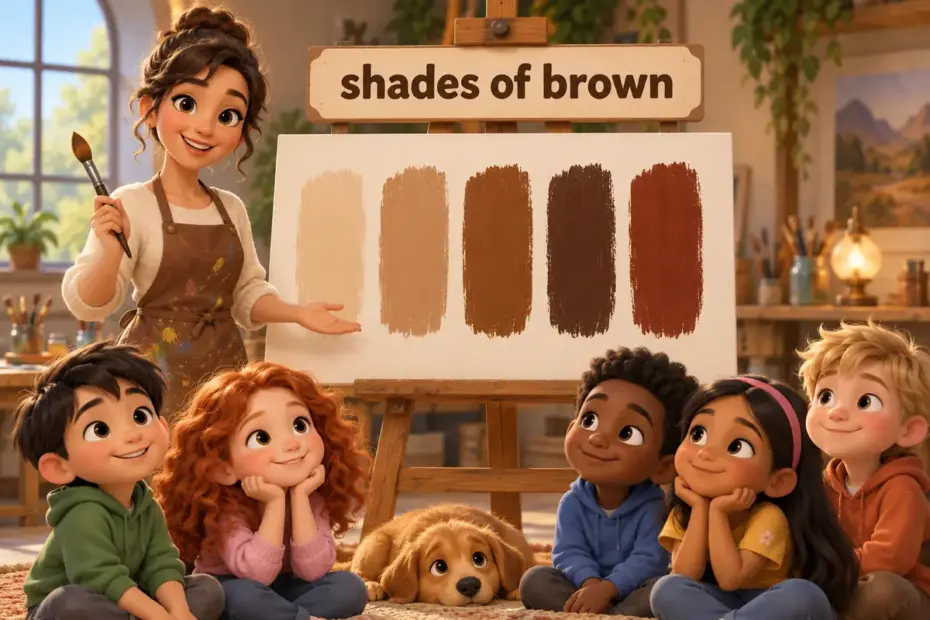
Brown color names in English cover a warm, earthy family that ranges from pale beige to deep chocolate. The plain word brown is the base, and named shades such as chestnut, tan, caramel and russet each add a picture of warmth, age or texture. A set of related describing words sits in adjectives for brown.
Brown color names at a glance
- Brown works as an adjective, a noun and even a verb, as in brown the meat.
- Named shades borrow from food, wood and earth: chocolate, walnut, ochre and umber.
- Some names lean red, such as auburn and russet, and some lean pale, such as beige and tan.
- Brown rarely takes a plural, so a colour adjective stays brown, not browns.
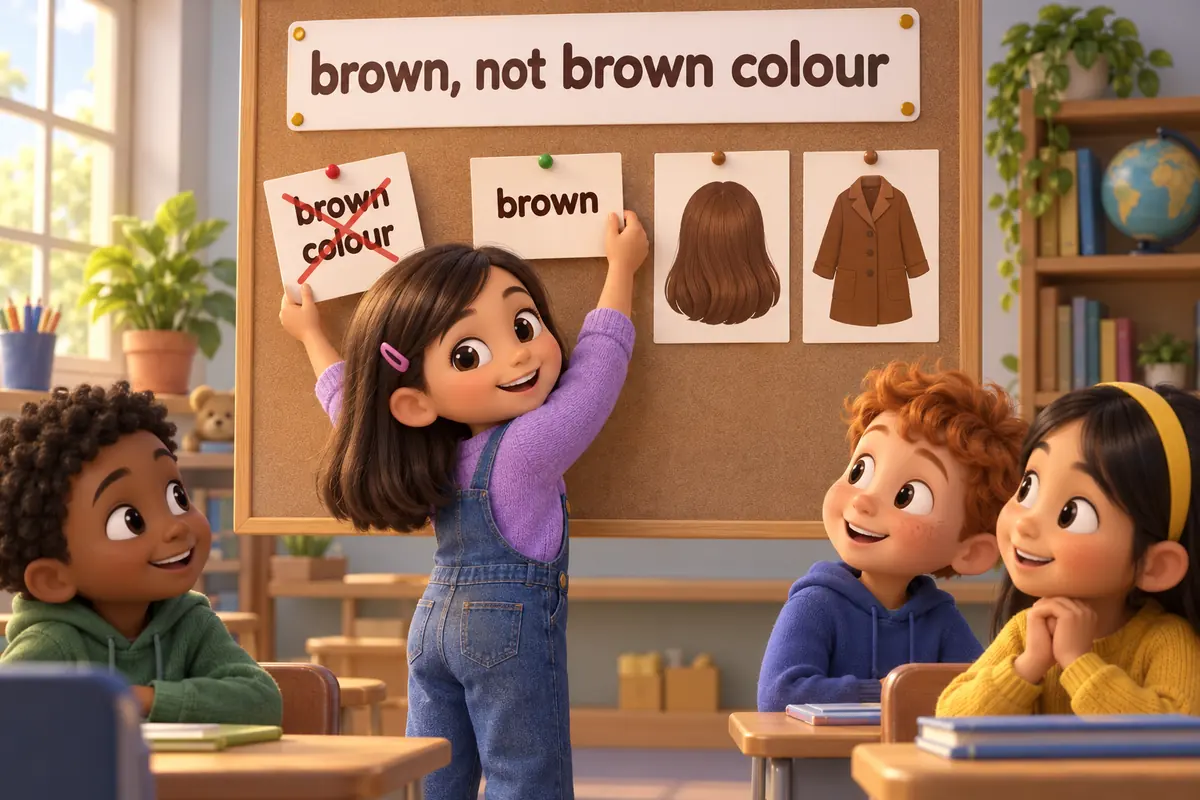
- The commonest error is adding colour after the word, as in brown colour.
What are brown color names in English?
Brown color names in English are the words for a wide family of earthy, warm tones, from the plain adjective brown to specific shades taken from food, wood and soil. Chocolate and coffee name food, chestnut and walnut name trees, and ochre and umber name natural earth pigments, so each shade carries a small picture with the colour. The adjective forms appear in color adjectives.
| Name | Shade it suggests | Example |
|---|---|---|
| Brown | the plain word for earth tones | She wore a brown coat. |
| Chocolate | rich dark brown | Chocolate-brown hair shone in the sun. |
| Chestnut | warm reddish brown | Chestnut leaves fell in October. |
| Coffee | dark grey-brown | A coffee-coloured sofa filled the corner. |
| Caramel | golden brown | Caramel tones warmed the room. |
| Tan | light yellowish brown | He wore tan shoes. |
| Beige | pale sandy brown | Beige curtains let in soft light. |
| Hazel | greenish brown | Hazel eyes change with the light. |
| Mahogany | deep reddish brown | A mahogany desk stood by the window. |
| Walnut | mid dark brown | The walnut floor felt warm underfoot. |
| Auburn | reddish brown hair | Auburn hair caught the afternoon sun. |
| Sepia | faded grey-brown | The sepia photograph looked very old. |
| Fawn | pale yellowish brown | A fawn coat hung on the hook. |
| Russet | reddish autumn brown | Russet apples ripened in the orchard. |
| Ochre | earthy yellow-brown | Ochre paint covered the wall. |
| Umber | dark earthy brown | Umber shadows filled the corner. |
| Khaki | dull brownish green | Khaki trousers suit a long walk. |
One honest limit belongs here. These names describe warm, natural tones rather than measured values, so a printer or a paint mixer uses coded references; the names below are for writing and everyday speech. Browns sit between red and yellow on a colour wheel, which is why the warm browns lean red and the pale ones lean yellow.
How do you use brown color names in a sentence?
Brown is an adjective first, but it also works as a noun and a verb, and the shade names follow a few set patterns.
| Pattern | Example | What it signals |
|---|---|---|
| brown + noun | A brown dog slept by the fire. | a plain colour adjective |
| a shade + noun | He bought a tan leather bag. | a named shade |
| as brown as + noun | Her hands were as brown as autumn leaves. | a simile |
| brown + noun (verb) | Sear the meat to brown the outside. | a change of colour |
| the + name + of + noun | The chestnut of the horse matched the saddle. | naming a specific tone |
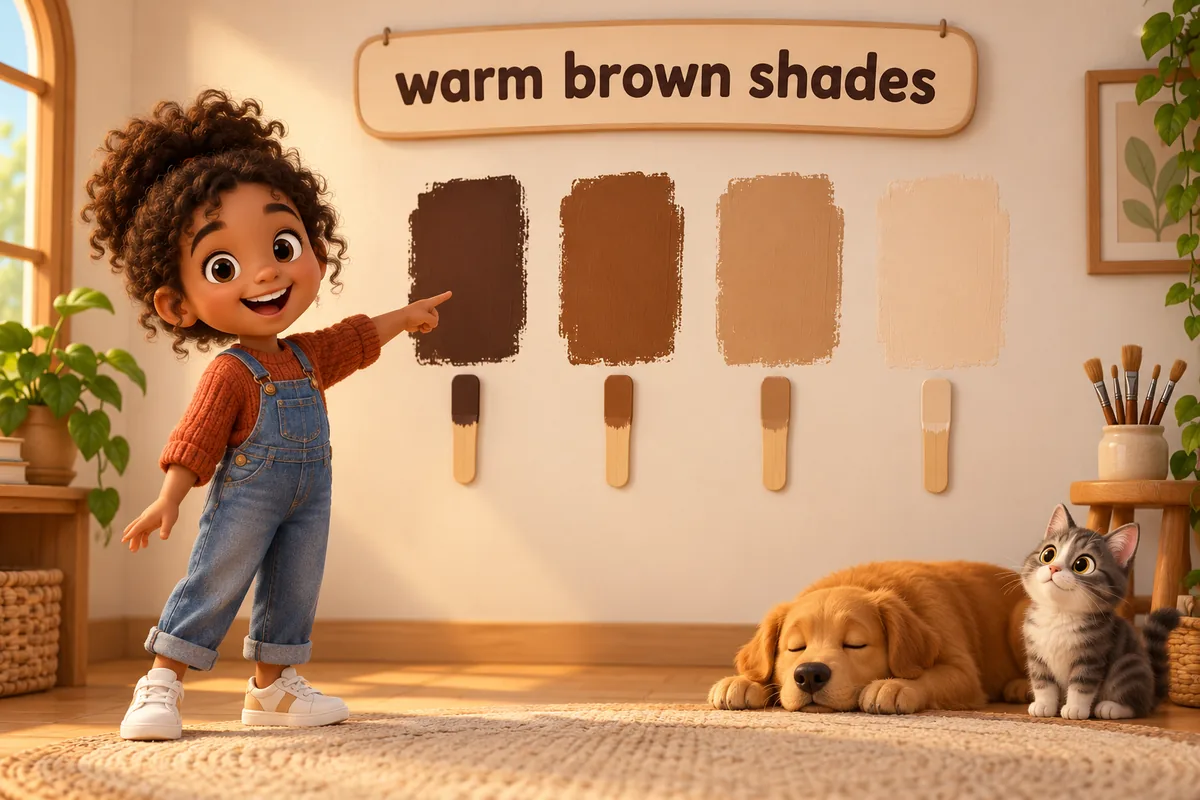
Brown color names in English: examples across contexts
The shades move from a hair-colour note to an interior design sheet, and each setting draws on a different word. The verb sense of colour appears in change color in a sentence.
| Context | Example sentence | Why this works |
|---|---|---|
| Classroom | Sort the brown shades from lightest to darkest. | a simple ordering task |
| Hair colour | Her auburn hair looked redder in bright light. | a colour detail |
| Interior design | Warm walnut tones calm a busy room. | a design choice |
| Conversation | Is that jacket beige or tan? | an everyday question |
| Cooking | Brown the onions before adding the stock. | a kitchen instruction |
| Art caption | The artist used ochre and umber for the soil. | a studio detail |
| Photography | A sepia filter gave the portrait an old look. | an editing note |
| Fashion note | Chestnut boots pair well with denim. | a style tip |
| Nature writing | Russet leaves drifted across the path. | atmosphere |
| Product listing | Available in tan, cocoa and fawn. | a colour range |
Which brown shade should you use?
Match the shade to the surface and the mood, because a pale name and a deep name never read the same way.
| Situation | Pick | Example |
|---|---|---|
| Warm and classic walls | beige | Beige walls make a small room feel calm. |
| Reddish hair | auburn | Auburn hair has a warm red glow. |
| Deep, formal wood | mahogany | A mahogany desk suits a study. |
| Autumn colours | russet | Russet apples fill the orchard in October. |
| Outdoor clothing | khaki | Khaki fabric hides dust on a long walk. |
Choose beige or tan for large light surfaces, chocolate or mahogany for deep formal pieces, and auburn or russet when the tone should lean red; the full palette reads best when the shades are planned as one set, as in a color scheme in a sentence.
Word forms and grammar of brown color names
Brown is unusual among colour words because it moves easily between three parts of speech.
| Form | Part of speech | Example |
|---|---|---|
| brown | adjective | A brown dog slept by the fire. |
| brown | noun | Brown suits the autumn palette. |
| brown | verb | Sear the meat to brown it. |
| brownish | adjective | The sky had a brownish tint. |
| brownness | noun | The brownness of the bread showed it was well baked. |
| brunette | noun or adjective | A brunette with brown eyes joined the table. |
Brown also combines with other colour words, as in brown-grey or reddish-brown, and a hyphen keeps the two parts together when they act as a single description before a noun.
Common mistakes with brown color names
Mistake 1: colour after the colour word. Incorrect: Her hair is brown colour. Correct: Her hair is brown. Rule: a colour adjective needs no extra colour word after it.
Mistake 2: a plural colour adjective. Incorrect: a browns coat. Correct: a brown coat. Rule: colour adjectives do not take a plural ending.
Mistake 3: a plural mass noun. Incorrect: She has brown hairs. Correct: She has brown hair. Rule: hair as a mass noun stays singular.
Mistake 4: a verb form without -s. Incorrect: The toast brown quickly. Correct: The toast browns quickly. Rule: a third person singular verb takes -s.
Mistake 5: the wrong adjective order. Incorrect: a leather brown old bag. Correct: an old brown leather bag. Rule: English orders adjectives opinion, age, colour and material.
Practice using brown color names
- Fill in the blank: The autumn leaves looked ___ in the late sun.
- Choose the better word: Pale sandy brown curtains are best described as (beige / chocolate).
- Correct the error: Her eyes are brown colour.
- Build a sentence: use brown as a verb about cooking onions.
- Spot the register: which line suits an interior design sheet, (a) Loads of brownish stuff, or (b) Warm walnut tones calm a busy room?
- Fill in the blank: Reddish-brown hair is called ___.
Answers
- russet, because russet names a reddish autumn brown.
- beige, because beige is a pale sandy brown and chocolate is dark.
- Her eyes are brown; a colour adjective needs no extra colour word.
- Brown the onions before adding the stock.
- (b), because a design sheet uses precise descriptive wording.
- auburn, because auburn names reddish-brown hair.
The bottom line
Brown color names in English give a writer a warm, earthy palette, from pale beige and tan to deep chocolate, mahogany and walnut. Use the named shades when the surface matters, lean red with auburn and russet, and keep the grammar simple by dropping the extra colour word. Brown also works as a verb, so a cook can brown onions while a designer chooses a brown fabric. For brown hair specifically, see adjectives for brown hair.
Frequently asked questions about brown color names
What are some brown color names in English?
Brown color names in English include chocolate, chestnut, coffee, caramel, tan, beige, hazel, mahogany, walnut, auburn, sepia, fawn, russet, ochre, umber and khaki. Each name borrows from food, wood or earth, so the shade carries a hint of warmth, age or texture alongside the colour itself.
What colour is beige?
Beige is a pale, sandy brown with a soft, neutral warmth. It sits at the light end of the brown family, close to cream but with a little more yellow and grey. Designers often choose beige for walls and large surfaces because it feels calm and hides small marks.
What does auburn mean?
Auburn describes a reddish-brown colour, and it is used most often for hair. The tone sits between brown and red, so auburn hair looks warm in sunlight and darker indoors. The word names a colour rather than a style, so it can describe a person or the shade itself.
Is brown a warm or cool colour?
Brown is generally a warm colour, because most browns carry yellow, orange or red within them. Cooler browns trend towards grey or green, as in taupe and khaki. Designers use the warm browns for cosy, welcoming rooms and reserve the cooler ones for calm, neutral spaces.