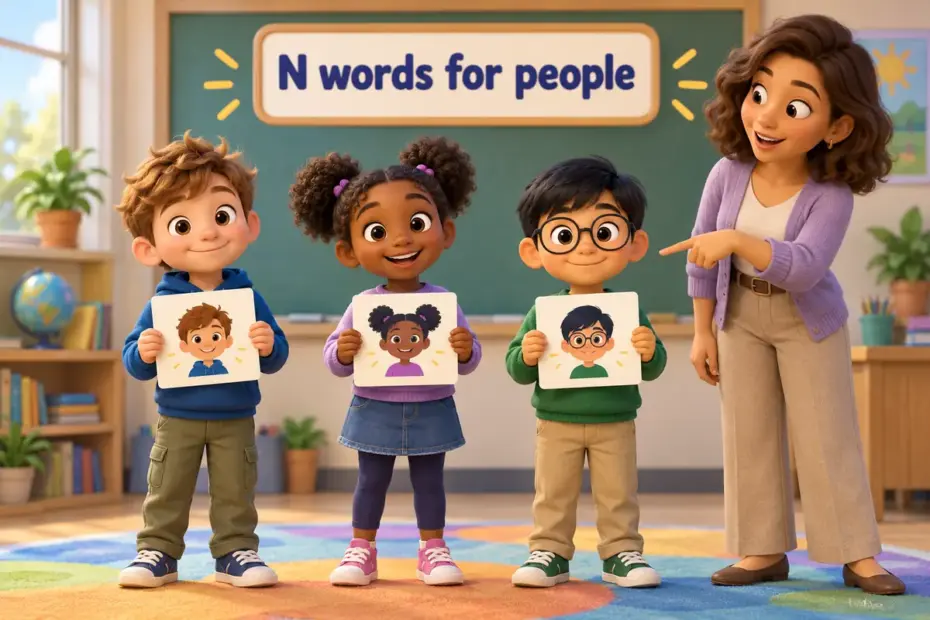
Describing words that start with n for a person range from the warm nice to the sharp nosy, and they describe character, mood and manner in a single word. Learn the positive words first, then add the negative and the neutral ones. A simple example is the sentence the noble neighbour helped without being asked.
Describing words that start with n for a person at a glance
- Describing words that start with n for a person include nice, noble, nervous and nosy.
- The set covers positive, negative and neutral character words.
- Most of these words are adjectives, and a few build an adverb with -ly, as in nervously.
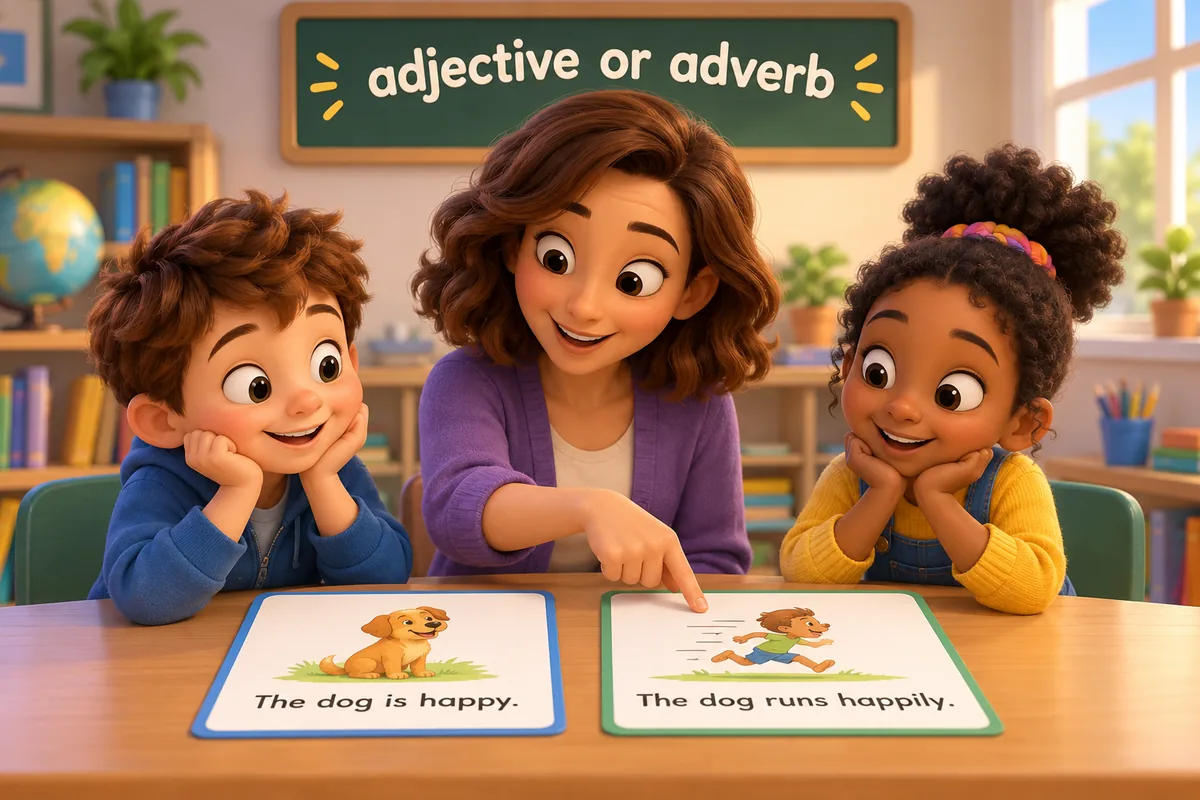
- An adjective describes the person, while an adverb describes how the person acts.
- The commonest slip is choosing a cruel word where a neutral one would be fairer.
What kinds of n describing words fit a person?
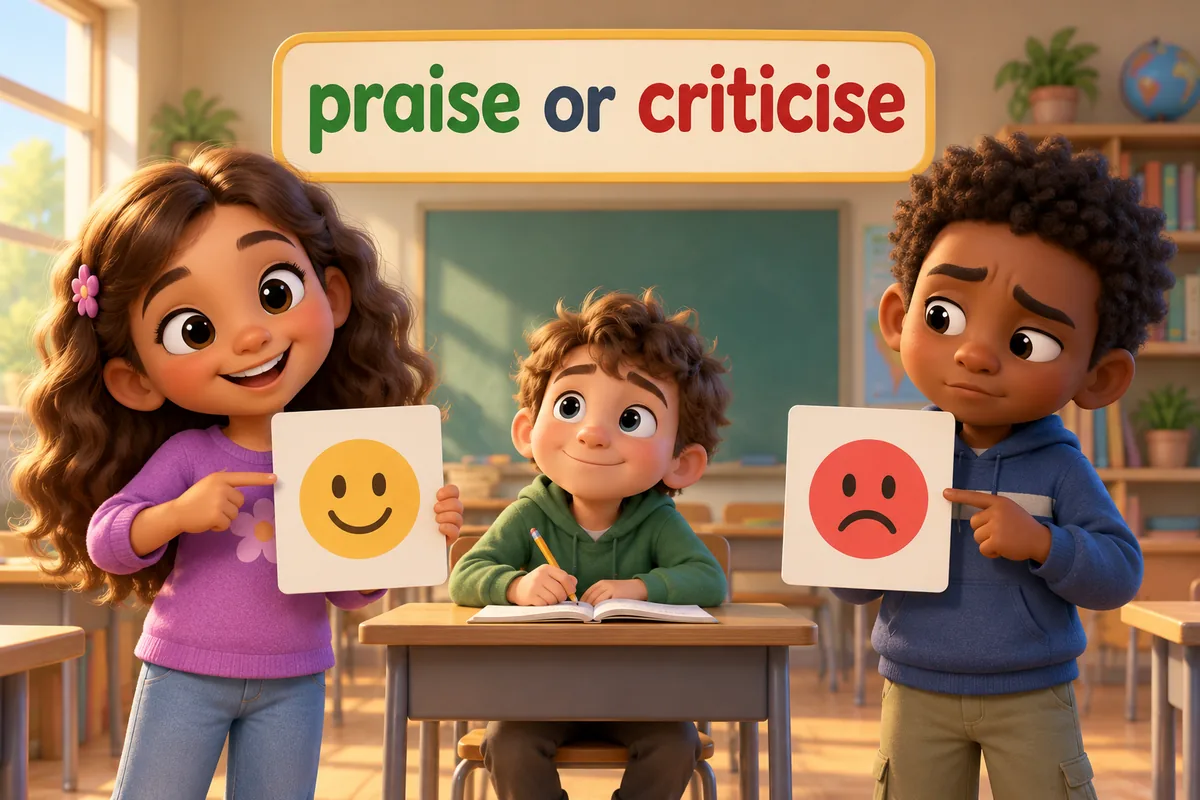
Describing words that start with n divide into groups by the impression they give. Some praise, some criticise, and some simply report, so the table below sorts the main n words for a person and shows the sense behind each one.
| Group | Example words | What the word suggests |
|---|---|---|
| praising | nice, noble, nurturing | warmth, honour or care for others |
| critical | nosy, nasty, notorious | a fault or a bad reputation |
| feeling or mood | nervous, nostalgic | an inner state rather than a trait |
| neutral | neat, normal, nonchalant | an ordinary, calm description |
| easy to misread | naive | trusting to the point of being fooled |
How do you use an n describing word for someone?
An n describing word fits two main positions. It can sit before a noun, as in a noble leader, or after a linking verb, as in she feels nervous. The adjectives for a person follow these same patterns, so the grammar transfers straight across.
| Pattern | Example | What it signals |
|---|---|---|
| adjective before a noun | The noble leader spoke plainly. | the quality belongs to the person |
| adjective after a linking verb | She felt nervous before the test. | describes the person, not the action |
| adverb after a verb | He answered nervously. | describes how the person acted |
| negative word for a trait | The nosy neighbour read the letters. | criticises a lasting habit |
| comparative form | Today she seems nicer than yesterday. | compares a feeling across time |
The position test decides most choices: a word before a noun or after be, seem or feel is an adjective, while a word describing how someone acted takes -ly and becomes an adverb.
N describing words for a person: examples across contexts
The sentences below place one n describing word in a different register each time, from a school report to a short story. Each row names the context, gives the sentence, and explains what the sentence does.
| Context | Example sentence | Why this works |
|---|---|---|
| School report | Nina is a neat, organised pupil who keeps her desk tidy. | uses praising adjectives in a formal note |
| Reference letter | He is a noble colleague who gives credit to others. | describes character with one strong word |
| Job interview note | The candidate seemed nervous but answered every question. | reports a feeling without judging |
| Story opening | A nosy neighbour watched from behind the curtain. | uses a critical word for a minor character |
| Diary entry | I felt nostalgic about my old school today. | names a personal mood |
| News report | The notorious fraudster appeared in court this morning. | uses a reputation word factually |
| Friendly message | Thanks for being so nice about the mix-up. | uses a warm word in casual talk |
| Sports column | The young player stayed nimble on a wet pitch. | describes a physical quality |
| Parenting article | A nurturing adult gives a child room to try. | uses a praising word with a reason |
| Character sketch | He was nonchalant about the prize he had just won. | describes a calm manner |
| Teacher feedback | Her work was normal for the first week, then improved. | uses a neutral word honestly |
| Safety talk | Never give a naive child the door code. | uses a cautionary word for a real risk |
For words that describe a wider range of people, see the adjectives for a person. Comparing several character words makes the praise and criticism easier to keep apart. When the description turns negative, examples of a bad person in a sentence show how to keep the tone fair.
Which n describing words should you learn first?
The best first word depends on what the writer needs. A praising word suits a reference or a message, a feeling word suits a diary or a story, and a neutral word suits a plain report.
| Situation | Best choice | Why |
|---|---|---|
| A warm message to a friend | nice | common, safe and clearly positive |
| A reference for a colleague | noble | praises character with weight |
| A diary about a memory | nostalgic | names a precise personal feeling |
| A plain school report | neat | a neutral, observable quality |
| A story about a snoop | nosy | a critical word that fits a minor character |
As the words grow stronger, the risk of sounding unfair grows too. A full set of people words sits in the adjectives for a hard-working person when a task rather than a mood is the point.
Word forms and grammar of n describing words
These words change shape to fit their job. The table shows the forms a learner needs most, including the adverb, the noun and the comparative. A wider set of the same part of speech appears in the adjectives that start with n, and words such as noble work best as absolute adjectives rather than in a comparison.
| Form | Part of speech | Example |
|---|---|---|
| nervous | adjective | The speaker was nervous before the talk. |
| nervously | adverb | The speaker glanced nervously at the notes. |
| nervousness | noun | Her nervousness faded after the first minute. |
| nice and nicer | comparative | That answer was nicer than the first one. |
| noble | adjective | A noble person shares the credit. |
| naive | adjective | A naive buyer trusts every advert. |
Common mistakes with n describing words
These are the errors that appear most often in school writing. Each one shows the wrong version, the corrected version, and the rule behind the fix.
Mistake 1: a noun where the sentence needs an adjective. Incorrect: He is a nobility man. Correct: He is a noble man. Rule: the position before a noun and after a linking verb calls for an adjective, not a noun.
Mistake 2: an adjective where the sentence needs an adverb. Incorrect: She spoke nervous to the class. Correct: She spoke nervously to the class. Rule: an adverb describes the verb spoke, so the word takes the -ly ending.
Mistake 3: a misspelled describing word. Incorrect: The leaflet is for a naieve reader. Correct: The leaflet is for a naive reader. Rule: copy the spelling from a dictionary rather than sounding the word out.
Mistake 4: the wrong article before the word. Incorrect: He is an neighborly man. Correct: He is a neighborly man. Rule: use an before a vowel sound and a before a consonant sound.
Mistake 5: a critical word where a fair one is needed. Incorrect: My nosy teacher helped me after class. Correct: My curious teacher helped me after class. Rule: nosy carries criticism, so a neutral word such as curious is fairer for someone who simply showed interest.
A final read catches most of them: check whether the person or the action is being described, and ask whether the word praises, reports or criticises.
Practice using n describing words
- Fill in the blank with an adjective: The new pupil looked ___ on the first day.
- Choose the correct word: She greeted us (nice / nicely).
- Write the adverb form of nervous.
- Correct the error: He is a nobility man.
- Build a sentence: use nurturing before the noun adult.
- Spot the register: which sentence suits a reference letter, (a) The intern was really nosy, or (b) The intern was noble and shared credit?
Answers
- nervous, because a linking verb takes an adjective that describes the pupil.
- nicely, because the word describes how she greeted us, so it is an adverb.
- nervously, formed by adding -ly to the adjective nervous.
- He is a noble man; the position before a noun needs an adjective.
- A nurturing adult gives a child room to try; the adjective sits before the noun it describes.
- (b), because a reference letter should praise fairly rather than criticise with a word like nosy.
The bottom line
The describing words that start with n for a person cover praise, criticism and plain description, from nice and noble to nervous and nosy. Match each word to the job it does, using the position test to choose between an adjective and an adverb. Watch the tone, because a critical word used carelessly can sound unfair.
Frequently asked questions about describing words that start with n
Are all n describing words for a person positive?
No. The set runs from clearly positive words such as nice and noble to clearly negative words such as nosy and nasty, with neutral words such as neat in between. Choosing the tone is part of the writing, not just the word.
Is nervous a description of a person or of a mood?
Nervous can do both, because it names a temporary feeling rather than a fixed trait. A sentence such as she felt nervous describes a mood, while a phrase such as a nervous first-year describes the person at that particular moment in time.
What does naive mean when it describes a person?
Naive describes someone who trusts too easily or lacks experience, so it is milder than the word foolish but still a criticism. In careful writing it should be supported by an example, such as a naive buyer who trusts every advert.
How do you turn an n word into an adverb?
For most n adjectives, add -ly: nervous becomes nervously and nice becomes nicely. A few words do not take -ly comfortably, so writers use a phrase instead, as in in a noble way, rather than forcing an adverb that sounds wrong.