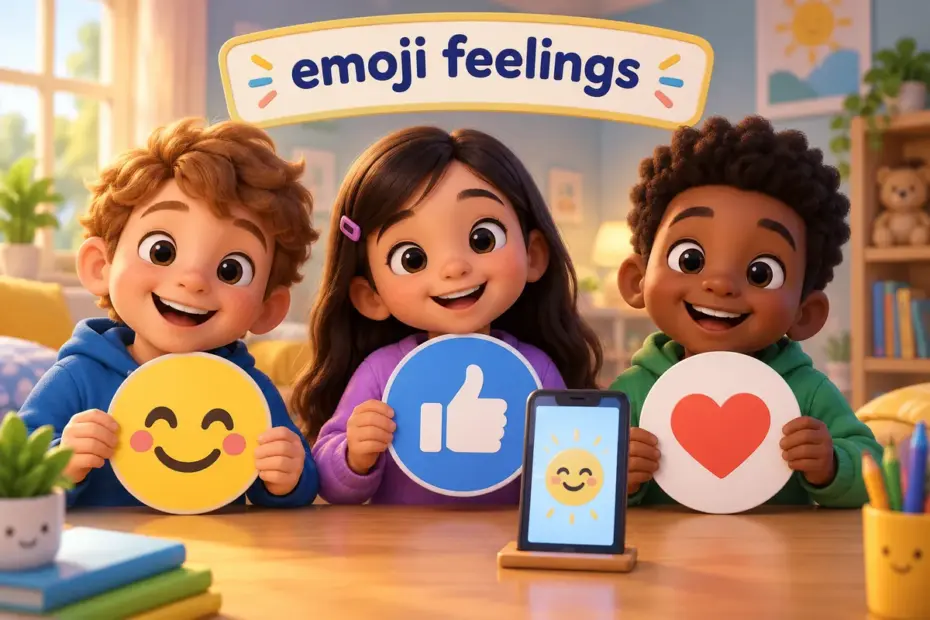
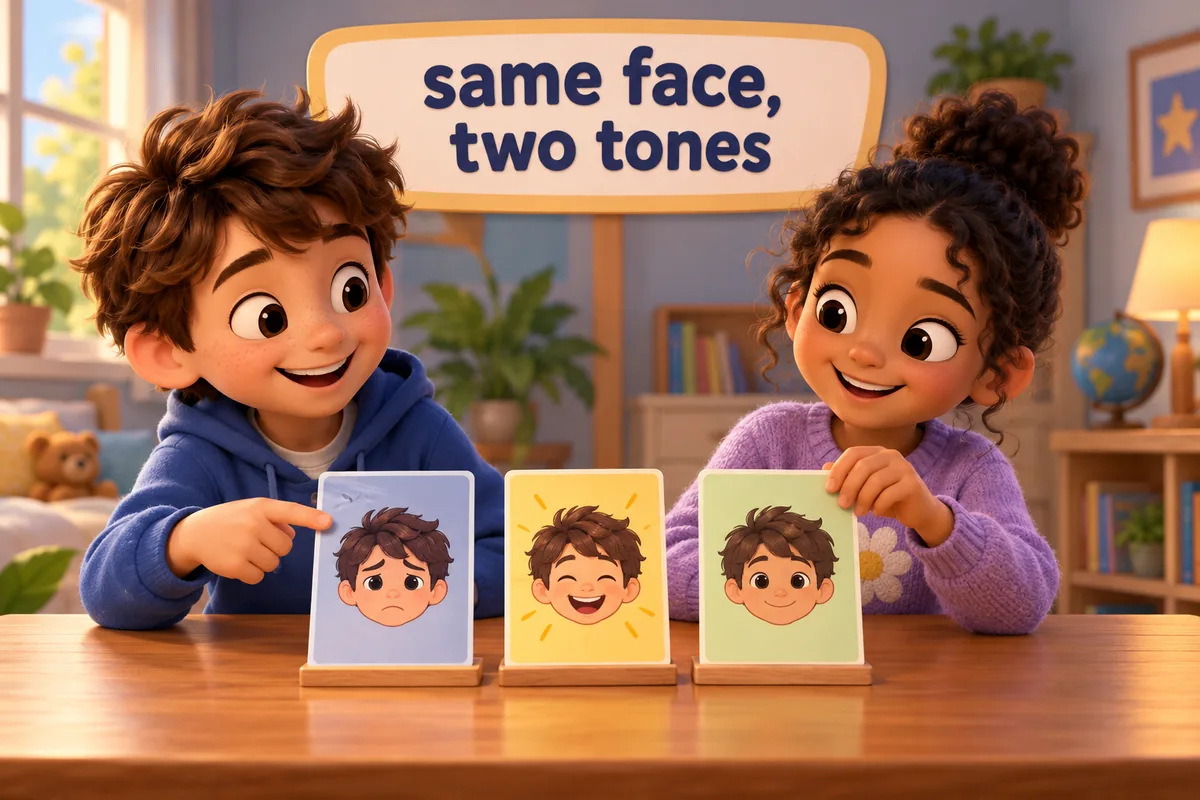
Emoji meanings are not fixed like dictionary definitions, because the same face can shift with the message around it. A grinning face shows happy agreement, while the same face sent alone can read as polite or dry. A simple example is a thumbs up, which means well done in one chat and fine, whatever in another.
Emoji meanings at a glance
- An emoji is a small picture that carries a feeling or an idea.
- Most emoji meanings depend on the words around them.
- The same emoji can be warm in one chat and cool in another.
- Faces, hands and hearts form the core of everyday use.
- The commonest mistake is trusting an emoji to carry a serious message alone.
What are emoji meanings?
Emoji meanings are the feelings and ideas that small picture symbols carry in a message. A face, a hand or a heart stands in for a mood or a gesture, and the reader works out the exact sense from the words nearby. The table below shows ten everyday examples and the feeling each one usually adds.
| Emoji | Symbol | Common meaning |
|---|---|---|
| grinning face | 😀 | happiness |
| face with tears of joy | 😂 | laughing hard |
| thumbs up | 👍 | approval |
| folded hands | 🙏 | thanks or please |
| red heart | ❤️ | romantic love |
| thinking face | 🤔 | doubt |
| loudly crying face | 😭 | sadness |
| fire | 🔥 | excellent |
| sparkles | ✨ | glow and excitement |
| waving hand | 👋 | hello or goodbye |
How do you read an emoji in a message?
An emoji rarely stands alone, so a reader looks at the words first and then at the symbol. A reader also weighs who sent the message, because the same face from a close friend and a stranger can land very differently. The patterns below show how placement changes the sense of the same picture.
| Pattern | Example | What it signals |
|---|---|---|
| emoji softens a line | Sorry, running late 👍 | It keeps the note friendly. |
| emoji adds feeling | That is amazing 🔥 | It strengthens the praise. |
| emoji replaces words | 👍 | It answers with one gesture. |
| emoji changes tone | Okay 🙄 | It adds annoyance to a plain word. |
| emoji marks a joke | Great, another Monday 😂 | It shows the line is not serious. |
Common emoji meanings by group
The everyday set falls into three groups, and the tables below give each one a symbol and a common meaning so a learner can match the picture to the feeling.
Face emoji meanings
| Emoji | Symbol | Common meaning |
|---|---|---|
| grinning face | 😀 | general happiness |
| face with tears of joy | 😂 | laughing hard |
| smiling face with heart eyes | 😍 | strong affection |
| winking face | 😉 | a playful joke |
| thinking face | 🤔 | doubt or thought |
| loudly crying face | 😭 | sadness or happy tears |
| face with steam from nose | 😤 | frustration |
| sunglasses smiley | 😎 | cool confidence |
| pleading face | 🥺 | a soft plea |
| face with rolling eyes | 🙄 | mild annoyance |
Hand emoji meanings
| Emoji | Symbol | Common meaning |
|---|---|---|
| thumbs up | 👍 | approval or well done |
| folded hands | 🙏 | thanks or please |
| clapping hands | 👏 | praise |
| raised hands | 🙌 | celebration |
| handshake | 🤝 | an agreement |
| waving hand | 👋 | hello or goodbye |
| ok hand | 👌 | that is fine |
| flexed biceps | 💪 | strength or effort |
| victory hand | ✌️ | peace or two |
| pointing up | ☝️ | look up or note this |
Heart and symbol emoji meanings
| Emoji | Symbol | Common meaning |
|---|---|---|
| red heart | ❤️ | romantic love |
| blue heart | 💙 | friendship and trust |
| black heart | 🖤 | dark humour or support |
| purple heart | 💜 | care and admiration |
| broken heart | 💔 | heartbreak |
| sparkling heart | 💖 | excited affection |
| fire | 🔥 | excellent or intense |
| sparkles | ✨ | glow and excitement |
| hundred points | 💯 | perfect score |
| party popper | 🎉 | celebration |
Emoji meanings across contexts
One emoji can fit a warm chat and sound cold in another, so the setting decides the reading. Each example below shows an emoji working well in one place.
| Context | Example message | Why this works |
|---|---|---|
| Friend chat | See you soon 😀 | It warms a short note. |
| Team chat | Great work 👏 | It praises the group. |
| Birthday post | Happy birthday 🎉 | It matches a happy event. |
| Sympathy note | Thinking of you 🙏 | It shows gentle care. |
| Group project | Done ✔️ | It confirms a finished task. |
| Sports chat | What a goal 🔥 | It adds excitement. |
| Family message | Dinner is ready ❤️ | It carries warm affection. |
| Formal email | Thank you for your reply. | A formal message needs no emoji. |
| Joke | My alarm did it again 😂 | It shows the line is not serious. |
| Silly mix-up | Okay 🙄, very funny 😂 | It plays with a joking tone. |
One emoji, two meanings compared
The same picture can point two ways, and the words beside it decide which one a reader takes.
| Emoji | Warm reading | Cool reading |
|---|---|---|
| thumbs up | well done, great job | fine, whatever |
| smiling face | happy and friendly | polite and a little distant |
| folded hands | thank you sincerely | please, I am asking |
| fire | this is excellent | this is intense |
| sparkles | a happy glow | something is a bit much |
| party popper | a real celebration | a dry, ironic cheer |
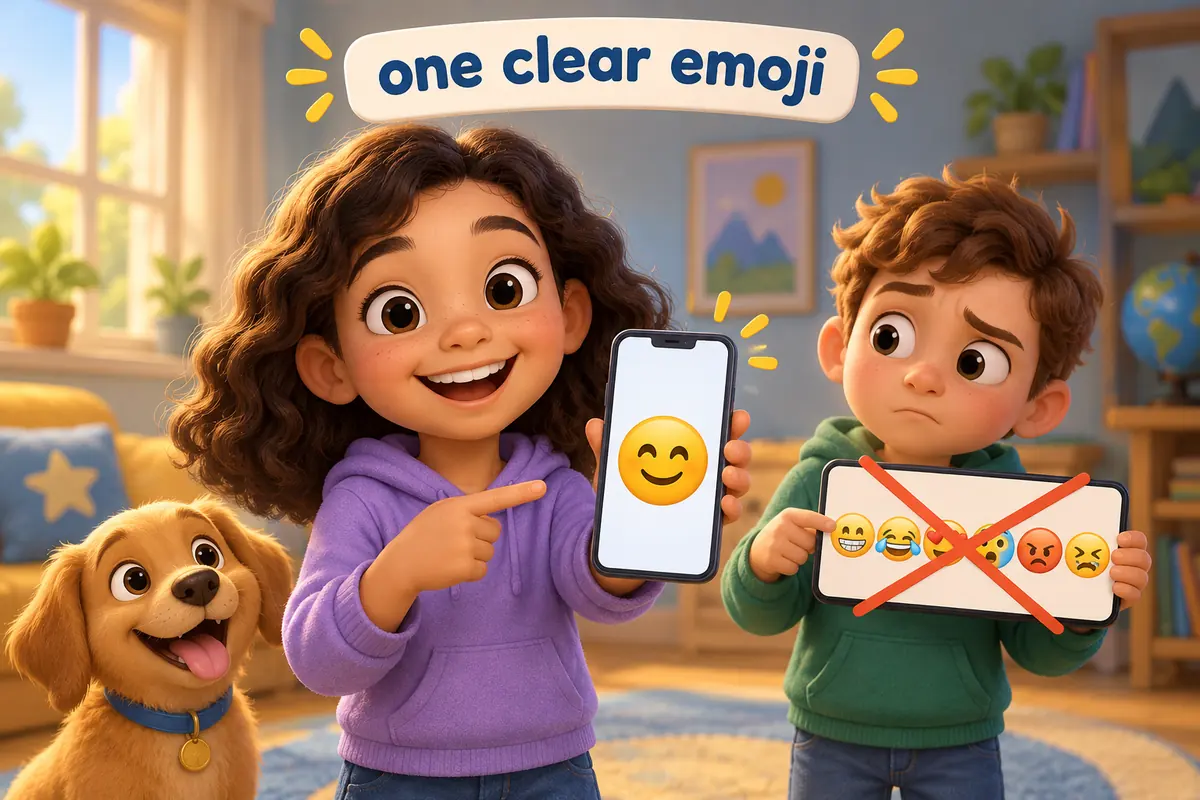
When a message matters, add words so the warm reading wins, because an emoji alone can be taken both ways.
Word forms and grammar of emoji talk
The word emoji keeps the same form for one or many, and the words around it follow ordinary English rules.
| Form | Rule | Example |
|---|---|---|
| emoji | the same form for singular and plural | one emoji, three emoji |
| emojis | a common spoken plural | She sent three emojis. |
| as a verb | used informally | He emojied a heart. |
| with a noun | names the picture | a fire emoji |
| with a feeling | describes the tone | a friendly emoji |
| with a place | names the app | emoji in the chat |
The plain side of each term sits beside it, so a learner can check a vocabulary sentence for a new word. A fixed phrase works the same way, as an idiom sentence shows, and the casual register matches a slang sentence.
Common mistakes with emoji meanings
Most errors come from tone, because one emoji can read two ways. These five slips cover the trouble.
- Incorrect:
Dear Sir, I am writing 🙏.Correct: Dear Sir, I am writing to apply. Rule: formal writing uses no emoji. - Incorrect:
I am so sorry for your loss 😂.Correct: I am so sorry for your loss 🙏. Rule: match the emoji to the feeling. - Incorrect:
Okay 👍😀🔥✨🎉.Correct: Okay 👍. Rule: one emoji reads better than five. - Incorrect:
I quit. 🙄Correct: I have decided to leave. Rule: a serious message needs words, not a face. - Incorrect:
great, thanks, happy, good 👍 and cool and fine.Correct: Great, thanks 👍. Rule: keep the words clear and the emoji light.
Practice reading emoji meanings
Try each item, then read the reason beside the answer to check your thinking.
- Fill in the blank: a red heart usually means ________ love. (romantic / friendly)
- Fill in the blank: folded hands often mean ________ or please. (thank you / goodbye)
- Choose the better emoji: a note of sympathy for a friend. (🙏 / 🎉)
- Correct the error: I am so sorry for your loss 😂.
- Build a message: use one emoji to soften a short apology.
- Spot the tone: which is warmer, “See you soon 😀” or “See you soon.”?
Answers
- romantic, because the red heart carries romance.
- thank you, because folded hands show thanks or a request.
- 🙏, because folded hands fit a gentle note of care.
- I am so sorry for your loss 🙏: the emoji must match the sad feeling.
- Sample: Sorry, running late 🙏. The emoji keeps the note warm.
- See you soon 😀, because the smile adds a friendly tone.
The bottom line
Emoji meanings come down to context: a face, a hand or a heart adds a feeling, and the words around it decide the exact sense. Use one emoji where it helps, match it to the feeling, and keep it out of formal writing. When a message matters, add words so the warm reading is the one a reader takes.
Frequently asked questions about emoji meanings
Do emoji have one fixed meaning each?
No. The picture suggests a feeling, and the words around it fix the exact sense. A thumbs up can mean well done or fine, whatever, depending on the message. That is why a serious note needs words, because the emoji alone can be taken two ways.
Why do older and younger people read an emoji differently?
Emoji habits grow with the groups that use them, so the same face can feel warm to one age group and cool to another. A smiling face that reads friendly in one circle can read formal or distant in another. Adding a few words keeps the meaning clear across the gap.
Which emoji are safest for a new learner?
The most stable and widely understood are the simple faces and gestures, such as the grinning face, the thumbs up and the red heart. These appear across many groups and rarely change sense. A new learner can start with a small set and add others as they meet them.
Should emoji be used in school writing?
No. School reports, essays and formal letters use plain words with no emoji. An emoji may appear in a story quote or a text between characters to show tone, but the surrounding writing stays standard. As a rule, keep emoji for casual messages.