Example sentences of zero conditional sentences use if with the present simple in both halves to state something always true. The pattern is short: name the condition, then the certain result, as in “If you heat ice, it melts.” Learning the frame keeps general facts clear and rule-like.
Example sentences of zero conditional sentences at a glance
- The zero conditional joins a condition to a result that always follows it.
- Both clauses use the present simple, with no will and no would.
- If and when are interchangeable when the meaning is a general truth.
- A comma separates the clauses only when the if-clause comes first.
- The commonest error is putting will inside the if-clause.
What is the zero conditional?
The zero conditional is a sentence that pairs a condition with a result and keeps both clauses in the present simple. It describes something always or generally true, such as a scientific law, a household rule, or a habit that never changes. The if-clause sets the condition and the main clause gives the fixed outcome. The same present-tense certainty appears in plain zero in a sentence statements that need no condition at all.
| Part | Form | Example |
|---|---|---|
| If-clause | if + present simple | If you heat ice, |
| Result clause | present simple | it melts. |
| Reversed order | result first, then if-clause | Ice melts if you heat it. |
| When variant | when + present simple | When it rains, the streets flood. |
| General truth | both clauses present, no will | Plants die if they get no light. |
How do you form a zero conditional sentence?
Forming a zero conditional is a matter of keeping both verbs in the present and choosing the right order. The five patterns below cover the common shapes, from a plain fact to an instruction that depends on a condition.
| Pattern | Example | What it signals |
|---|---|---|
| If + present, present | If you mix red and blue, you get purple. | a general rule |
| When + present, present | When the sun sets, it gets dark. | a repeated situation |
| If + present, imperative | If the alarm rings, leave the building. | an instruction tied to a condition |
| If + present, modal | If you finish early, you can go home. | a permitted result |
| Present, if + present | Water freezes if the temperature drops. | a result stated first |
Example sentences of zero conditional sentences across contexts
The zero conditional suits any statement that holds true whenever the condition is met, which is why it appears in science, cooking, and sport alike. Ten examples follow, each with a different setting and a reason it fits.
| Context | Example sentence | Why this works |
|---|---|---|
| Science | If you cool steam, it turns to water. | a natural law in two present clauses |
| Cooking | If the oil smokes, the pan is too hot. | a reliable kitchen rule |
| Health | If you skip breakfast, you feel tired by noon. | a general effect |
| Travel | If the gate closes, you miss the flight. | a rule with a fixed result |
| Weather | If the temperature falls below zero, the pond freezes. | a condition and its certain result |
| Sport | If the ball crosses the line, the referee points to the corner. | a rule of the game |
| Classroom | If a student is late, the teacher marks the register. | a routine procedure |
| Gardening | Plants wilt if you forget to water them. | a general truth with the result first |
| Driving | If the light turns red, you must stop. | a rule with a modal result |
| Home | If the kettle boils, the switch clicks off. | a mechanical fact |
Zero conditional or first conditional?
Choosing between the zero and the first conditional depends on whether the sentence describes a general rule or one particular future event. The zero conditional states what always happens; the first conditional predicts what may happen on a single occasion. Once the two-part rule is steady, adjective clauses in complex sentences add further description to the same frame.
| Feature | Zero conditional | First conditional |
|---|---|---|
| When it applies | always true | one real future possibility |
| If-clause tense | present simple | present simple |
| Result tense | present simple | will + verb |
| Example | If you heat water, it boils. | If it rains tomorrow, we will stay in. |
| Meaning | a rule or a fact | a prediction about one event |
Use the zero conditional for a rule that never changes, and the first conditional for a single event still to come.
Word forms and grammar of the zero conditional
The zero conditional keeps its two-clause shape while the content changes, so a learner can vary the subject, add a modal, or move the result to the front. Confusingly, the phrasal verb in to zero in on a target has nothing to do with this grammar, which is why the name is best treated as a label.
| Form | Example | Note |
|---|---|---|
| Standard | If you press the button, the door opens. | both clauses in the present |
| Negative | If you do not water it, the plant dies. | do-support in the if-clause |
| Question | Does the machine stop if you open the door? | asks about the rule itself |
| Modal result | If you are late, you must sign in. | the result may take a modal |
| Reversed | Ice melts if you heat it. | no comma when the result comes first |
Common mistakes with the zero conditional
Five slips appear when learners build a zero conditional, and each one breaks the present-tense rule. Reading the wrong version beside the right one makes the fix clear.
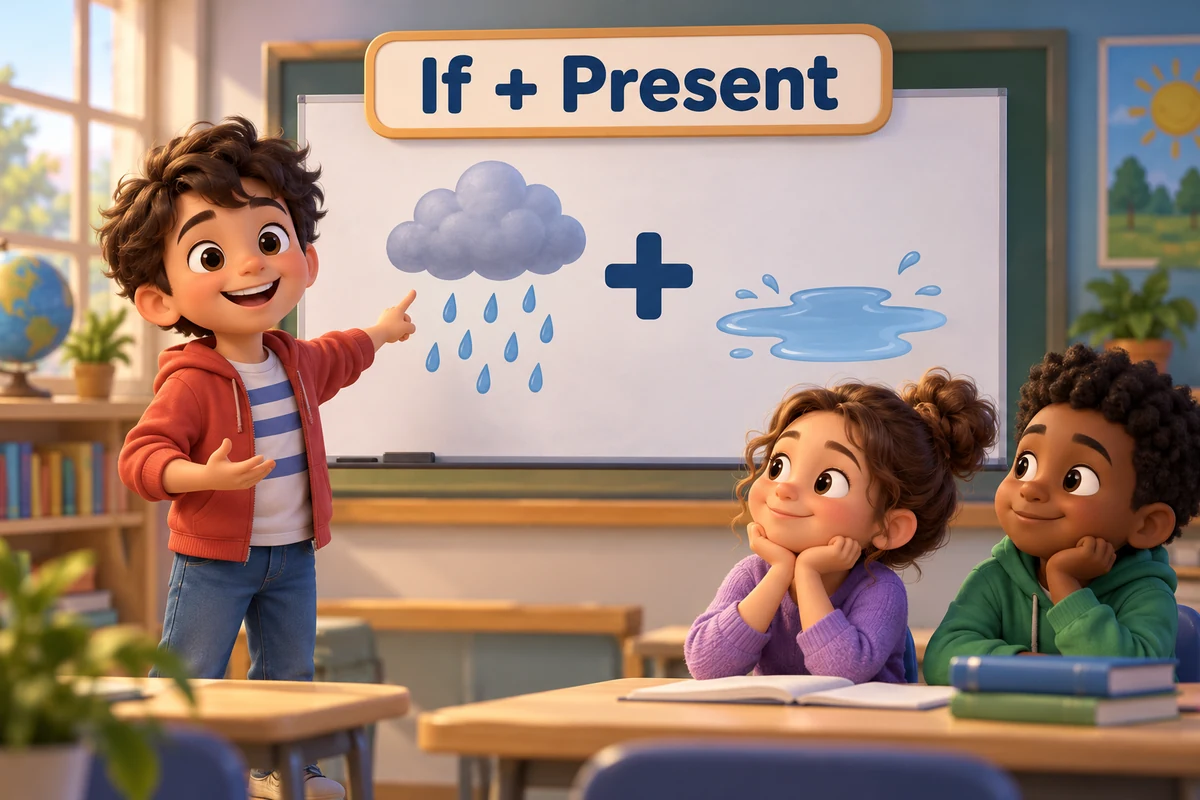
Mistake 1: will in the if-clause. Incorrect: If you will heat ice, it melts. Correct: If you heat ice, it melts. Rule: the zero conditional keeps both clauses in the present.
Mistake 2: would for a fact. Incorrect: If you would mix these colours, you get green. Correct: If you mix these colours, you get green. Rule: a general truth takes no would.
Mistake 3: the missing comma. Incorrect: If you heat water it boils. Correct: If you heat water, it boils. Rule: a comma separates the if-clause when it comes first.
Mistake 4: the continuous in the condition. Incorrect: If you are heating ice, it melts. Correct: If you heat ice, it melts. Rule: a permanent fact uses the present simple, not the continuous.
Mistake 5: agreement in the result. Incorrect: If you water the plants, it grows. Correct: If you water the plants, they grow. Rule: the result verb agrees with its own subject.
Practice using example sentences of zero conditional sentences
- Fill in the blank: If you ___ water to 100 degrees, it boils.
- Choose the better form: If it (rains / will rain), the match is cancelled.
- Correct the error: If you will drop a glass, it breaks.
- Build a sentence: write a zero conditional about a rule at a swimming pool.
- Spot the error: which is a zero conditional, (a) If it rains tomorrow, we will cancel, or (b) If it rains, the ground gets wet?
- Fill in the blank: the zero conditional uses the ___ simple in both clauses.
Answers
- heat, because a general fact keeps the if-clause in the present.
- rains, because the zero conditional takes no will.
- If you drop a glass, it breaks, because a general truth uses the present simple.
- If you run by the pool, the lifeguard blows the whistle, because the result always follows.
- (b), because it states what always happens rather than one future event.
- present, because both clauses share the present simple.
The bottom line
Example sentences of zero conditional sentences always join a condition to a result with both clauses in the present simple, and that doubling is what marks a general truth. Keep will and would out of the if-clause, add a comma only when the if-clause comes first, and reach for the first conditional instead when the event, not the rule, is the point. The test is simple: does the sentence describe what always happens?
Frequently asked questions about the zero conditional
Why is it called the zero conditional?
The label zero marks it as the base form, before any future or unreal condition is added. It carries no will, no would, and no past, so it sits at the start of the conditional list. Once this present-tense frame is clear, the first, second, and third conditionals build on it.
Does the zero conditional use will?
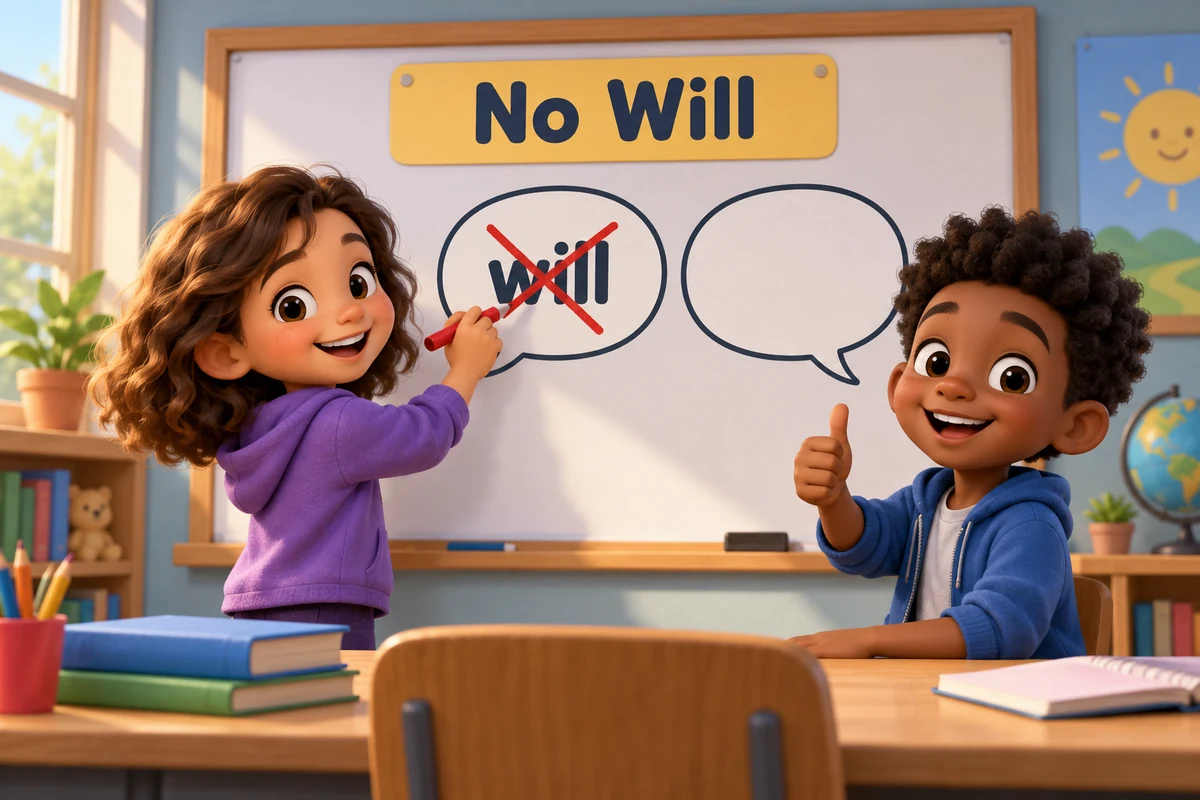
No. Both clauses stay in the present simple, so the sentence reads If you heat water, it boils. Adding will to the if-clause, as in If you will heat water, is a common error. Will belongs to the first conditional, where it marks a prediction about the future.
Can the zero conditional start with when instead of if?
Yes, and when often sounds more natural for a situation that is certain to happen, as in When the sun sets, it gets dark. The grammar is identical: present simple in both clauses. Use if when the condition is one possibility among others, and when for something routine.
What is the difference between the zero and first conditional?
The zero conditional states what is always true, while the first conditional predicts one real future event. Compare If you heat ice, it melts with If it snows tomorrow, we will build a snowman. The first describes a rule; the second describes a single occasion still to come.