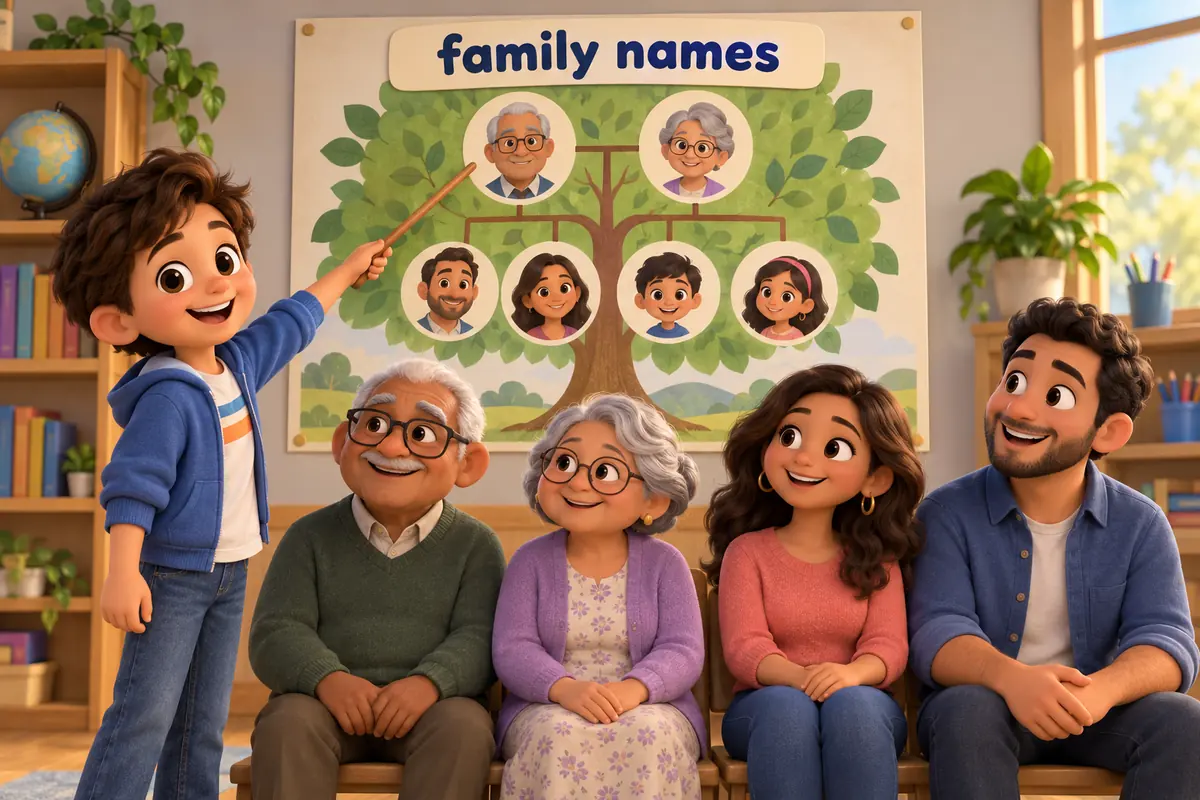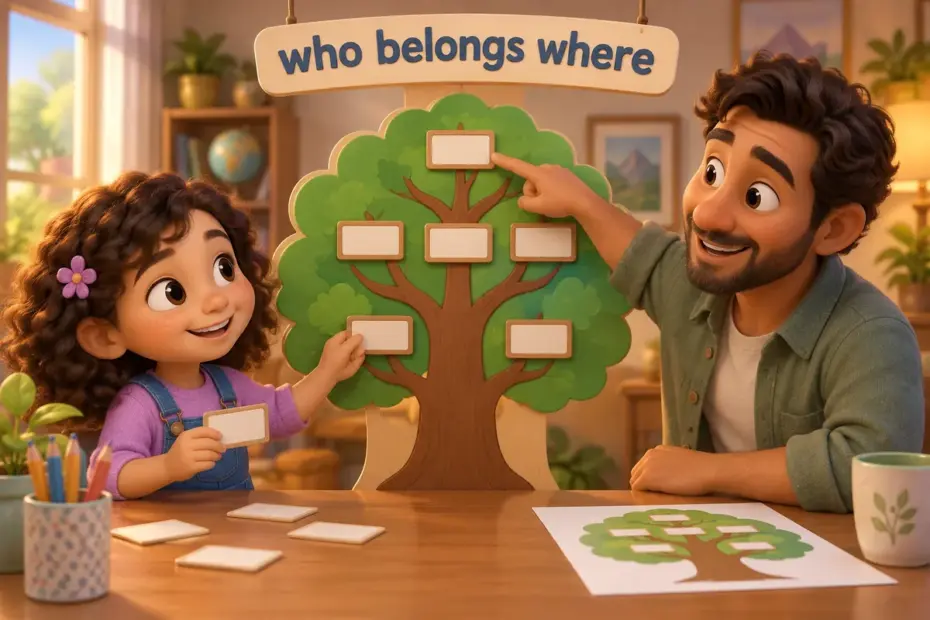
A family tree for kids with pdf turns a list of relatives into a picture that shows who belongs where. Each person sits in a row or branch, and lines join parents to children so the pattern is easy to see. A printable chart lets a child fill in names one at a time.
Family tree for kids with pdf at a glance
- A family tree is a diagram that shows how relatives are connected.
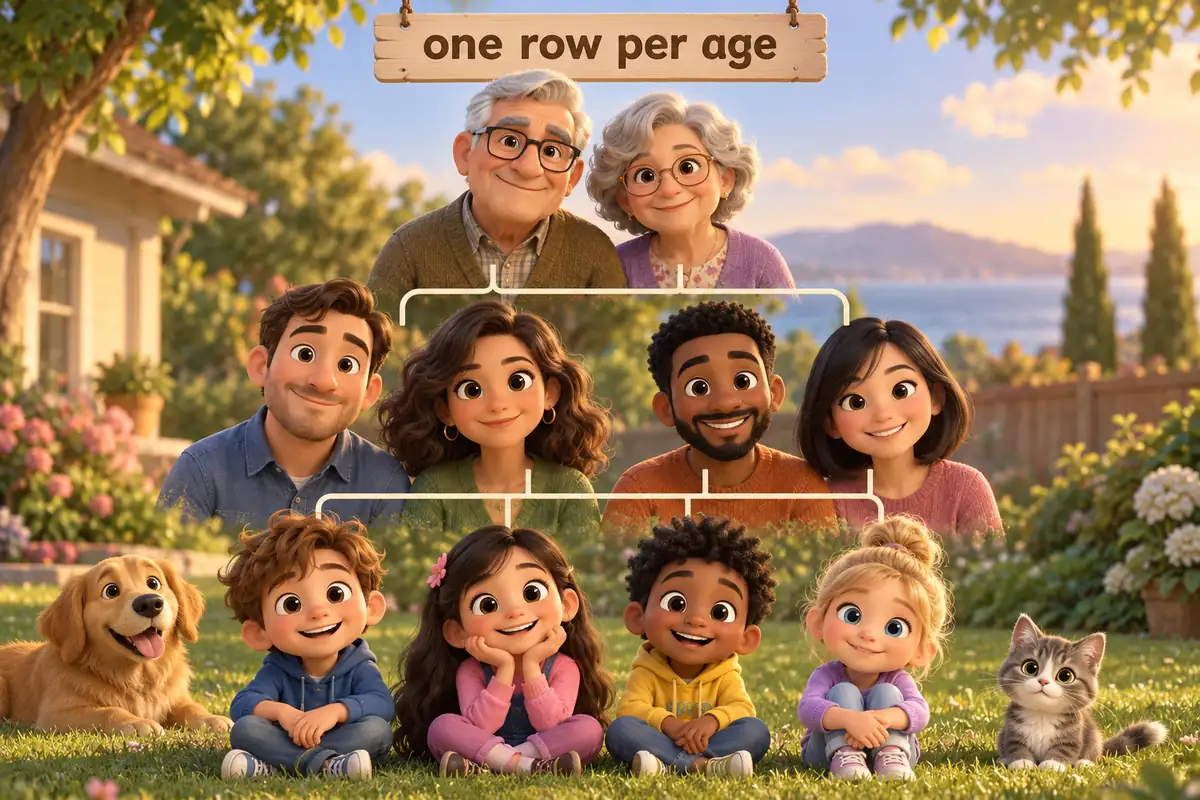
- Children usually sit at the bottom and older generations above them.
- Lines join parents to their children.
- Trees differ for every family, including step and adoptive families.
- A printable chart keeps the names neat while a child builds it.
What is a family tree?
A family tree is a diagram that shows family members and the links between them, often with the youngest person at the bottom and older generations above. The shape makes relationships visible, so a child can see at a glance who is a parent, a grandparent or a cousin. The table below names the relatives children add first.
| Relative | Who it is | Example |
|---|---|---|
| Parents | A mother and a father | Amara and Ben |
| Grandparents | The parents of a parent | Rosa and Tom |
| Siblings | Brothers and sisters | Lina and Omar |
| Aunts and uncles | The siblings of a parent | Aunt May and Uncle Joe |
| Cousins | The children of an aunt or uncle | Cousin Sam |
| Great-grandparents | The parents of a grandparent | Ella and Ray |
How do you build a family tree with the PDF?
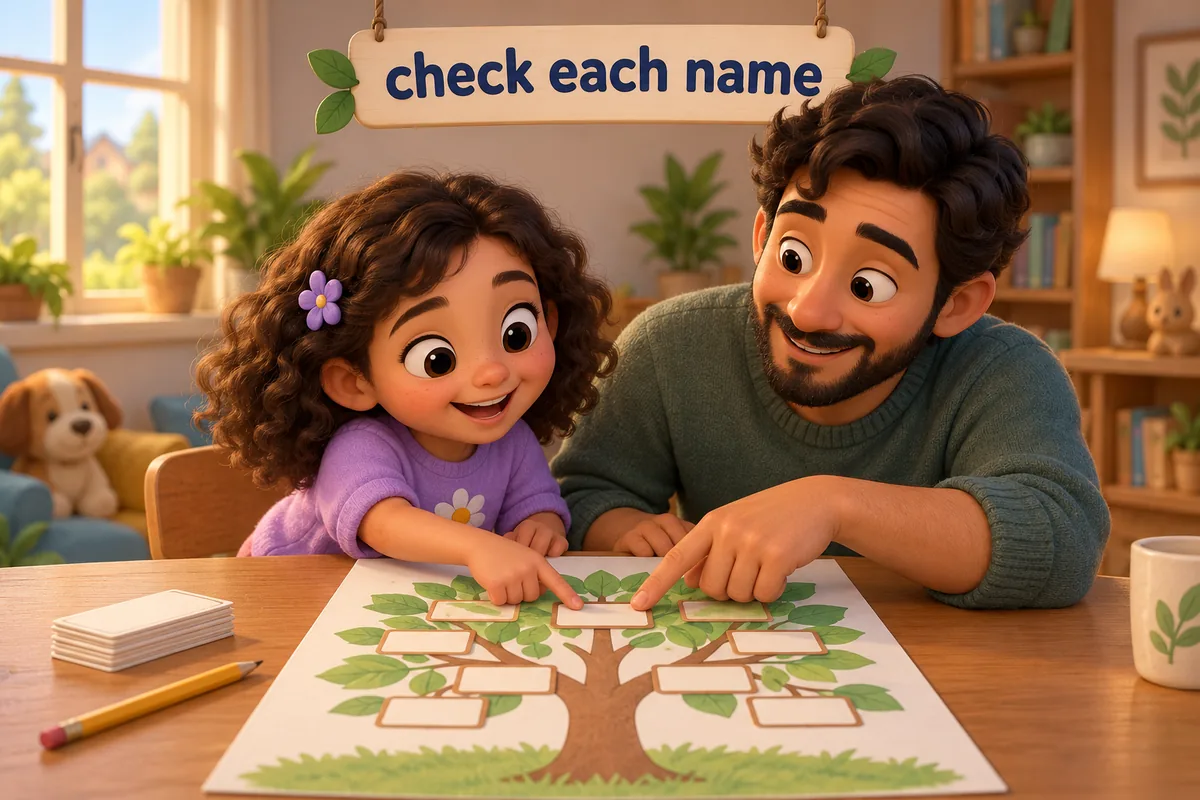
Building a tree on paper starts with the child in the middle and works outward. Fill in one generation at a time, checking names with an adult before writing them down. A short list of adjectives for family can help a child describe each person beside the name.
| Step | What to do | Example |
|---|---|---|
| Start | Write the child in the middle | Me, Lina |
| Add up | Write the parents above | Mum and Dad |
| Add wider | Write grandparents on the top row | Granny Rosa and Grandad Tom |
| Join | Draw a line from parents to each child | A line joins Mum and Dad to Lina |
| Check | Read the names back with an adult | Is this spelling right? |
Family tree for kids with pdf across family settings
Every family looks a little different, and a good chart can show them all. The examples below place the tree in real settings where children build one. A page about the family tree in a sentence gives extra examples to read aloud.
| Context | Example | Why it works |
|---|---|---|
| Home project | Fill in parents and siblings first. | The closest relatives are easiest to name. |
| Classroom | Share one branch with the class. | Children compare how families differ. |
| Grandparents visit | Interview a grandparent for names. | Older relatives know the deep history. |
| Adoption talk | Show birth and adoptive branches side by side. | Every branch is a real branch. |
| Step family | Add step parents on their own line. | The chart can hold more than one shape. |
| Photo album | Paste a photo beside each name. | A picture helps a child recall the person. |
| Holiday craft | Cut leaf shapes for each name. | A paper tree makes the project a keepsake. |
| Interview night | Ask each relative one question. | Answers add a story to each name. |
A family tree or a family timeline
| Point | Family tree | Family timeline |
|---|---|---|
| What it shows | How relatives relate | When events happened |
| Shape | Branches with rows | A single line of dates |
| Main order | By generation | By time |
| Best question | Who is related to whom? | What happened first? |
| Good for | Names and relationships | Births, moves and milestones |
A family tree answers who is related to whom, while a timeline answers what happened when, so the two can sit side by side in one project to tell a fuller family story.
Family words children learn
These words appear in almost every family tree task, so children should meet them early and use them while they build the chart. A themed a words for kids list adds more words for the same project.
| Word | Meaning | Example |
|---|---|---|
| generation | One step of family age | Grandparents are one generation up. |
| sibling | A brother or sister | My sibling is younger than me. |
| ancestor | A relative from long ago | A great-grandparent is an ancestor. |
| descendant | A relative born later | I am a descendant of my grandparents. |
| relative | Anyone in the family | A cousin is a relative. |
| branch | One side of the family | The mother side is one branch. |
More family tree words to add
As a chart grows, children meet more words for relatives. Learning the pairs helps, because many of these words come in matching sets. The table below lists a few pairs worth teaching together.
| Word pair | Who they are | Example |
|---|---|---|
| nephew and niece | The children of a sibling | My brother has a son, a nephew. |
| uncle and aunt | The siblings of a parent | My uncle lives nearby. |
| grandson and granddaughter | The children of your child | She is a proud grandmother. |
| step and half | Relatives joined by a second marriage | My step brother shares my room. |
| in-law | A relative gained by marriage | My aunt by marriage is an in-law. |
| godparent | An adult chosen to support a child | My godparent sends a card. |
| brother and sister | Siblings who share the same parents | My sister is older than me. |
| mother and father | The two parents of a child | Mum and Dad are my parents. |
| twin brother and twin sister | Siblings born at the same time | The twins share a birthday. |
Teaching these pairs side by side helps a child place each relative on the chart without mixing the terms.
Mistakes children make with family trees
A cousin is a sibling.Correct: A cousin is the child of an aunt or uncle. Rule: Siblings share the same parents, and cousins do not.A grandparent is a parent.Correct: A grandparent is the parent of a parent. Rule: One generation up changes the word.Every family tree looks the same.Correct: Family trees take many shapes. Rule: Step, adoptive and foster branches are all real branches.Names can be guessed.Correct: Names should be checked with an adult. Rule: A wrong spelling makes the chart hard to read later.The chart needs everyone at once.Correct: The chart grows one generation at a time. Rule: Adding relatives in steps keeps the project calm.
Practice using family tree words
Try each item before reading the answers below. The tasks mix fill in the blank, choosing the right relative word and building a branch.
- Fill in the blank: The parents of a parent are ________.
- Fill in the blank: The child of an aunt or uncle is a ________.
- Choose the better word: A brother or sister is a (cousin / sibling).
- Correct the error: “A grandparent is the same as a parent.”
- Build a line that connects a parent to two children in a family tree.
- Spot the register: Which label fits a neat chart? A) granny lol. B) Grandmother: Rosa.
Answers
- Grandparents, because they sit one generation above the parents.
- Cousin, because cousins are the children of aunts and uncles.
- Sibling, because a sibling shares the same parents as the child.
- A grandparent is the parent of a parent, because the two words name different generations.
- Mum and Dad connect to Lina and Omar, because the line shows both children belong to the parents.
- Label B, because a chart uses clear full words rather than slang.
The bottom line
A family tree for kids with pdf makes relationships visible and gives a child a place to record each name. Starting with parents and grandparents, then adding aunts, uncles and cousins, keeps the chart clear and the family words memorable.
Frequently asked questions about family trees
What is a family tree for children?
A family tree is a chart that shows how relatives are connected. Boxes or leaves hold the names, and lines join parents to their children. Children usually sit near the bottom, with older generations above them, so the shape reads like a growing tree.
How many generations should a child include?
Three generations suit most children: the child, the parents and the grandparents. Older children can add great-grandparents for a fourth row. Starting with three keeps the chart clear and gives the project a natural stopping point before it feels too big.
Can a family tree show step and adoptive families?
Yes. A family tree can show step parents, adoptive parents and foster families on their own lines. There is no single correct shape, because every family is real in its own way. The chart simply records who belongs to whom.
What questions should a child ask relatives?
Good questions include the full name of each relative, where they were born and one memory they want to share. The answers add a story to each box. Writing the answers down as they are given keeps the detail for later.