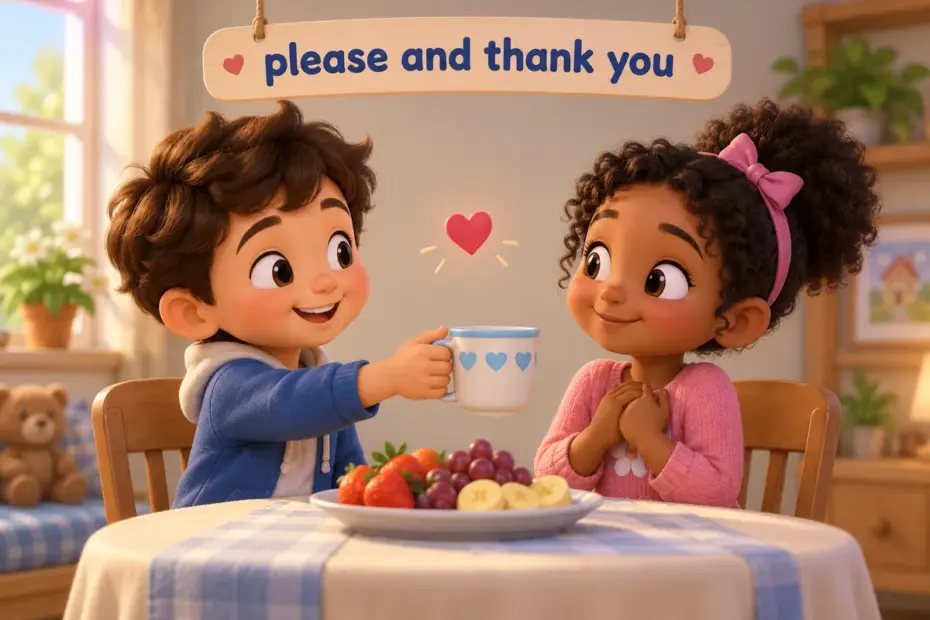
Good manners for kids begin with small habits, such as saying please, waiting your turn and listening while another person speaks. These habits show respect and make daily life smoother at home, at school and at the table. They are learned by practice rather than by a single lesson.
Good manners for kids at a glance
- Good manners are the polite habits that show respect for other people.
- The first words to learn are please, thank you and excuse me.
- Manners include waiting your turn, listening and sharing.
- Table manners and greetings belong to the same set.
- Children learn manners best when adults model them.
What are good manners?
Good manners are the small, polite habits that help people get along, such as greeting others, saying thank you and waiting for a turn. They show respect in a way anyone can see, so they matter at home, in class and in public. The table below lists the first habits children learn.
| Habit | What it looks like | Example |
|---|---|---|
| Saying please | Ask politely for something | Please pass the salt. |
| Saying thank you | Show gratitude | Thank you for the gift. |
| Waiting your turn | Let others go first | I will wait for my go. |
| Listening | Stay quiet while someone speaks | Nod while a friend talks. |
| Saying excuse me | Get attention gently | Excuse me, may I pass? |
| Sharing | Let others use something too | You can have the next turn. |
How do you teach good manners for kids?
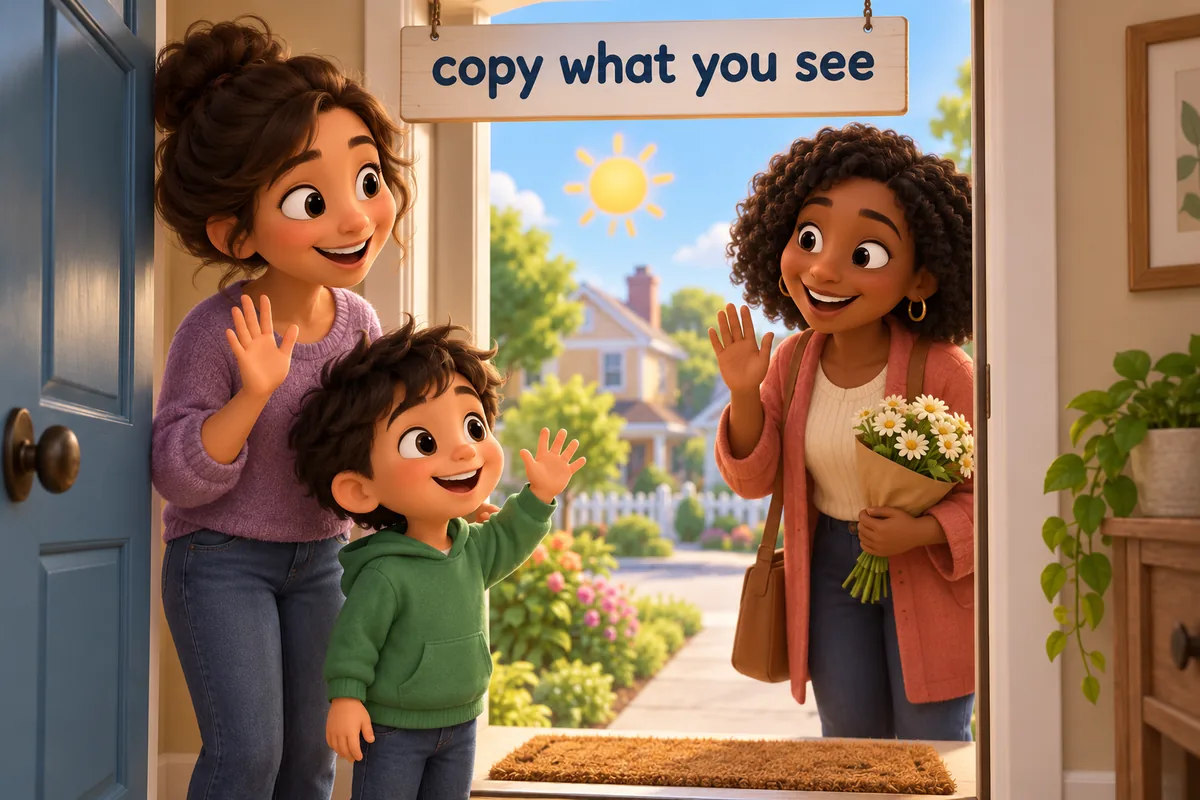
Children learn manners through daily practice, not from a single talk, so the best lessons are short and repeated. Model the habit, name it, then let the child try it in a real moment. A page of good manners in a sentence gives ready made examples to read aloud.
| Step | What to do | Example |
|---|---|---|
| Model | Use the habit yourself | Say please as you ask for a spoon. |
| Name | Tell the child the word | That is called waiting your turn. |
| Practise | Let the child try it | Ask for the book politely. |
| Praise | Notice the polite moment | Thank you for waiting so kindly. |
| Repeat | Return to it often | Try it again at dinner tonight. |
Good manners for kids across situations
The same habits travel from home to school to the dinner table. The examples below show a situation, the polite words and why they help. A list of adjectives for good helps children describe what kindness looks like.
| Context | Example | Why it works |
|---|---|---|
| Table | Please pass the water. | It asks for help without a demand. |
| Classroom | May I borrow your ruler? | It respects the other child belongings. |
| Doorway | Excuse me, after you. | It lets an adult go first. |
| Phone call | Hello, this is Sam speaking. | It announces who is calling. |
| Birthday | Thank you for the present. | It shows real gratitude. |
| Playground | It is your turn next. | It keeps the game fair. |
| Visit | Please may I have some water? | It asks politely in a new home. |
| Apology | I am sorry I bumped you. | It takes responsibility. |
Manners or rules
| Point | Good manners | Rules |
|---|---|---|
| What it is | A way of showing respect | A fixed requirement |
| Who decides | Shared kindness | Adult or authority |
| If broken | A polite repair | A set consequence |
| Feeling | Warm and voluntary | Often firm and formal |
| Example | Saying thank you | Wearing a seat belt |
Manners and rules both shape behaviour, but manners come from kindness while rules come from authority, so teaching the reason behind a habit helps a child keep it without being told.
Polite words children learn
These words appear in almost every manners lesson, so children should meet them early and use them in daily life. A list of adjectives for kids helps children describe polite and kind behaviour.
| Word | Meaning | Example |
|---|---|---|
| please | A polite word when asking | Please may I have some water? |
| thank you | A polite word for gratitude | Thank you for your help. |
| excuse me | A polite way to get attention | Excuse me, may I pass? |
| sorry | A word for apologising | I am sorry I was late. |
| respect | Care for other people feelings | We show respect by listening. |
| polite | Using kind and careful words | She gave a polite reply. |
More good manners to practise
A short list of extra habits gives a child something new to try each week. Add them one at a time and notice the moments when they are used. Children respond well to a single focus, so pick one habit to practise together and praise it when it appears. Small, repeated practice is what turns a habit into a routine.
| Habit | What it looks like |
|---|---|
| Knock before entering | Wait for an answer before going in. |
| Cover your mouth | Cover a cough or sneeze with an elbow. |
| Hold the door | Let the next person through first. |
| Look when spoken to | Pause and meet the speaker eyes. |
| Say goodbye | End a visit with a warm goodbye. |
| Tidy your space | Put things away after use. |
| Wait to be served | Let others go before you at a table. |
| Ask before borrowing | Check first, then say thank you. |
| Cover a yawn | Turn away and use a hand. |
| Walk indoors | Move calmly in shared rooms. |
| Offer help | Notice when someone needs a hand. |
| Greet people warmly | Say hello with a smile. |
| Pause a screen to talk | Give full attention to the speaker. |
| Return what you borrow | Give it back on time and in good order. |
| Say well done | Notice and praise another person effort. |
Each habit above takes seconds to use and leaves a lasting impression of respect, so a child who practises a few of them daily will soon use them without a reminder.
Mistakes children make with manners
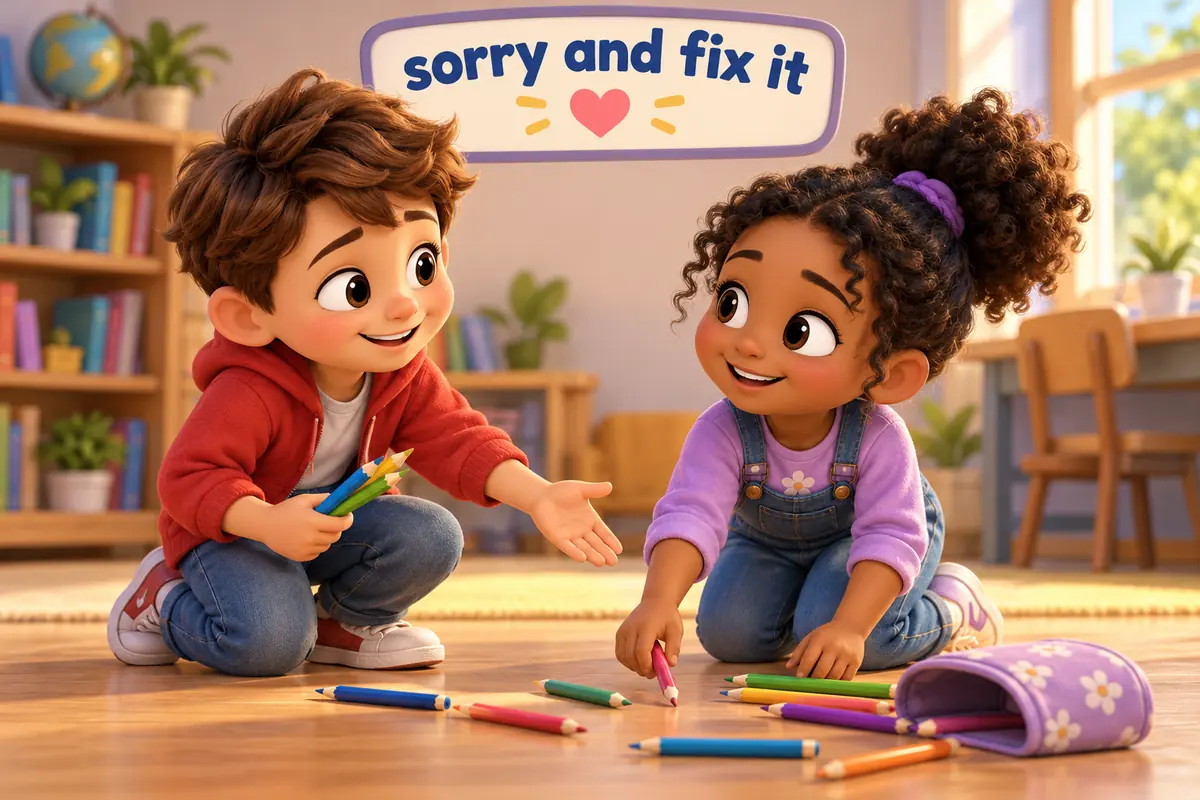
Say please only when an adult is watching.Correct: Use please every time you ask. Rule: A habit is real when it is used whether or not someone is watching.Interrupt to get attention.Correct: Say excuse me and wait. Rule: Giving the other person a moment shows respect.Forget to say thank you.Correct: Thank the person for the help. Rule: Gratitude is the habit that keeps kindness going.Push ahead in a line.Correct: Wait your turn in the line. Rule: Waiting shows that everyone matters equally.Say sorry without meaning it.Correct: Say sorry and put it right. Rule: A real apology includes a change in action.
Practice using good manners
Try each item before reading the answers below. The tasks mix fill in the blank, choosing the polite line and building a polite request.
- Fill in the blank: When you ask for something, you should say ________.
- Fill in the blank: When someone helps you, you say ________.
- Choose the polite line: (Give me that now. / Please may I have that?).
- Correct the error: “I pushed to the front of the line.”
- Build a polite request for a glass of water at a friend home.
- Spot the register: Which line belongs in a classroom? A) Move it, kid. B) Excuse me, may I pass?
Answers
- Please, because please marks a request as polite rather than a demand.
- Thank you, because gratitude shows that you noticed the help.
- The second line, because it adds please and phrases the request as a question.
- I waited my turn in the line, because waiting shows respect for others.
- Please may I have a glass of water, because it asks politely in someone else home.
- Line B, because it uses excuse me and may I, which suit a polite classroom.
The bottom line
Good manners for kids grow from a few daily habits, such as saying please, waiting a turn and listening. Practising them at home, at school and at the table makes respect a routine rather than a lesson.
Frequently asked questions about good manners
What are the most important manners for children?
The most important manners are saying please, thank you and excuse me, waiting your turn and listening when someone speaks. These habits cover most everyday moments, from a greeting to a goodbye. Sharing and apologising honestly follow close behind them.
At what age should children learn manners?
Children can start learning polite words as soon as they can speak, and the habits grow through the primary years. Young children copy adults, so modelling a habit is the first step. Repetition matters far more than a single lesson.
How do you teach manners without nagging?
Name the habit, model it, then praise the child when they use it. Keep the reminder short and warm. Repeating the habit in real moments teaches it far better than a long talk, and praise makes the child want to repeat it.
Why are good manners important?
Manners show respect and make daily life smoother, so people are more willing to help and listen in return. They also help children make friends, share fairly and take part in groups. The same habits carry into adult life, study and work.