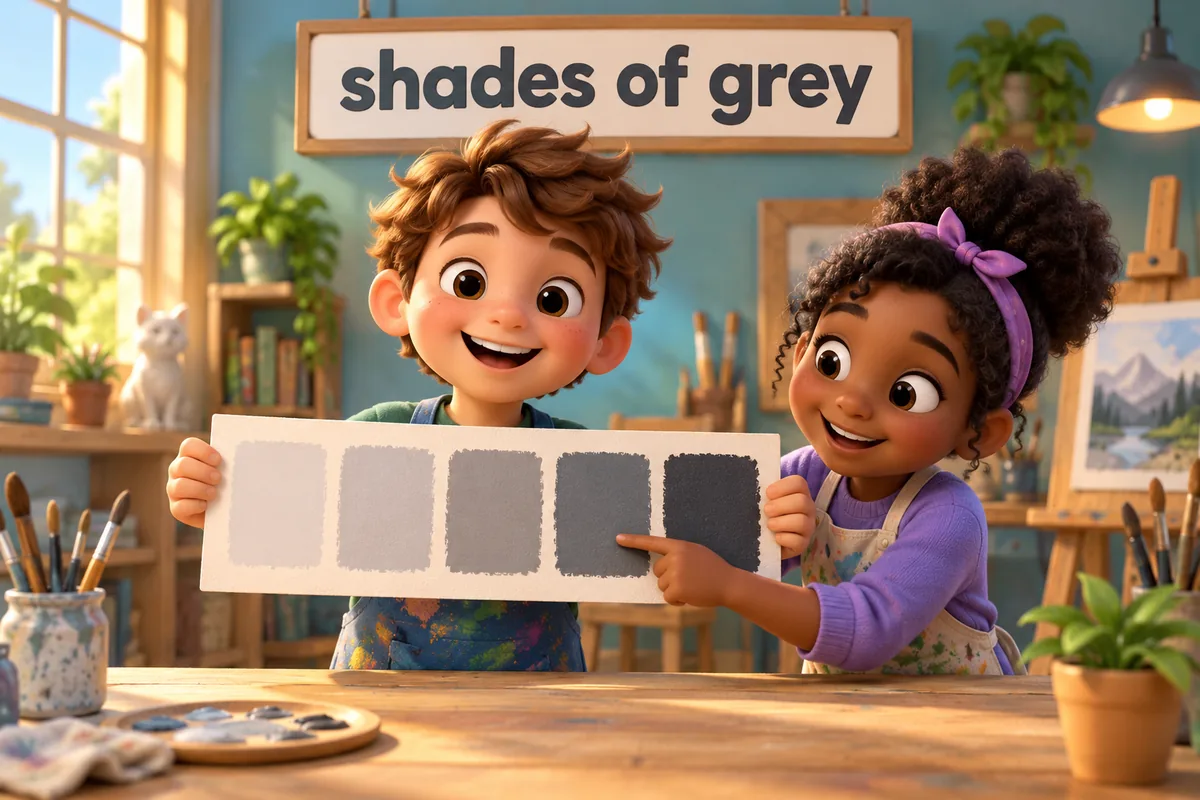
Grey vs gray is the same word with two accepted spellings, not two meanings. Grey is the usual form in British English, while gray is the usual form in American English, and both name the colour between black and white. A London sky is grey, and a New York street is gray.
Grey vs Gray at a glance
- Grey and gray mean the same thing: the colour between black and white.
- Grey is the standard spelling in British English.
- Gray is the standard spelling in American English.
- Both spellings are correct, and readers understand either one.
- The commonest issue is mixing the two spellings inside one document.
What do grey and gray mean?
Grey and gray are two spellings of one adjective meaning the colour halfway between black and white. The meaning never changes; only the spelling and the variety of English do. The Cambridge entry for grey and the Cambridge entry for gray list the two forms together, and one line shows it: a grey sky in London matches a gray sky in New York.
| Sense | Word | Plain meaning | Example |
|---|---|---|---|
| The colour | grey / gray | Between black and white | a grey coat; a gray coat |
| Dull or dreary | grey / gray | Without brightness | a grey morning |
| Unclear or neutral | grey / gray | Not clearly one or the other | a grey area |
| Hair losing colour | grey / gray | Turning white with age | grey hair |
| To become grey | greyed / grayed | To turn the colour of ash | The sky greyed at dusk. |
Because the two forms are variants rather than separate words, the choice is a matter of house style and audience, not of meaning. A British writer keeps grey throughout, and an American writer keeps gray, and each set of readers finds the page normal.
What is the difference between grey and gray?
The difference is only the variety of English, because the two spellings name the same colour. British and Commonwealth writing prefers grey, and American writing prefers gray. A spelling pair such as ad vs add reminds a writer that a single letter can carry a whole convention.
| Criterion | Grey | Gray |
|---|---|---|
| Core meaning | the colour | the colour |
| Variety | British and Commonwealth | American |
| Typical places | the UK, Ireland, Australia, Canada | the United States |
| Likely compounds | grey area, greyhound | gray area, grayscale |
| Proper names | Grey, as a surname | Gray, as a surname |
| Letter pattern | e before y | a before y |
| Common issue | mixed within one document | mixed within one document |
Choose grey for a British audience and gray for an American one, then keep that spelling everywhere.
How do you use grey and gray in a sentence?
The two forms follow exactly the same patterns, so the only decision is which convention the document follows; to watch one form in use, read gray in a sentence.
| Pattern | Example | What it signals |
|---|---|---|
| grey + noun | a grey coat | the British spelling |
| gray + noun | a gray coat | the American spelling |
| a grey area | a legal grey area | a fixed phrase for uncertainty |
| grey matter | Use your grey matter. | a fixed phrase for the brain |
| grow grey / gray | His hair grew grey. | describing ageing |
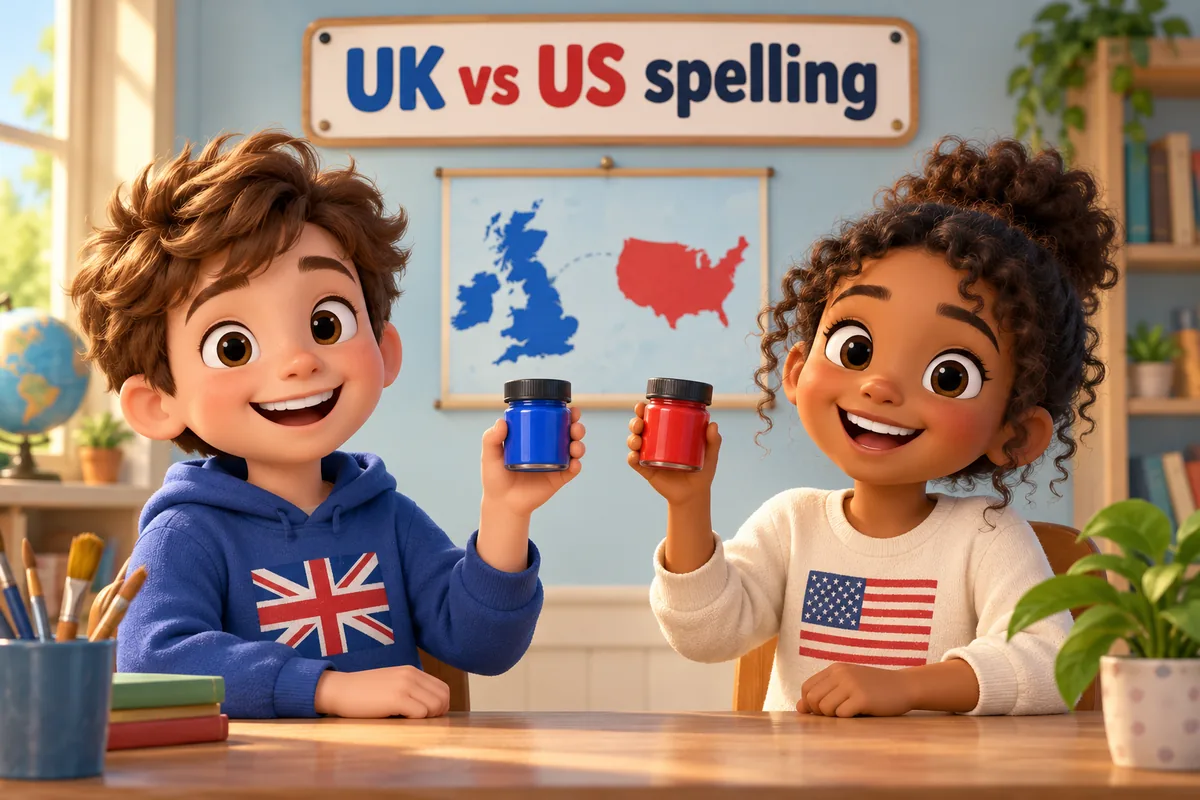
Grey and gray in a sentence: examples across contexts
Each register settles on one spelling, and a related one-letter pair such as addition vs edition follows the same pattern.
| Context | Example sentence | Why this works |
|---|---|---|
| British news | The grey clouds hung over the coast all afternoon. | British writing uses grey |
| American news | The gray clouds hung over the coast all afternoon. | American writing uses gray |
| Weather report | A grey morning gave way to bright sun. | grey describes a dull sky |
| Legal writing | The rule leaves a grey area for small firms. | a fixed phrase for uncertainty |
| Technical writing | Convert the photo to grayscale before printing. | American compounds use a |
| Nature writing | A gray heron stood still in the shallows. | the colour of a bird’s feathers |
| Fashion | She wore a grey coat with a bright scarf. | grey describes clothing |
| Everyday speech | His beard had turned gray by forty. | the colour of ageing hair |
| Art writing | The artist mixed a soft grey from black and white. | grey names a tint |
| Business email | Please use gray for the chart labels. | a house style choice |
| Photography | He edited the photo into soft grey tones. | grey names a photographic tint |
Which should you use?
Match the spelling to the audience, then keep it consistent.
| Situation | Use | Example |
|---|---|---|
| Writing for a British audience | grey | a grey sky |
| Writing for an American audience | gray | a gray sky |
| A UK legal document | grey | a grey area |
| A US technical manual | gray | grayscale mode |
| A global style guide | pick one | use gray throughout |
Consistency is the real test. A page that uses grey in one sentence and gray in the next looks careless even though both spellings are correct, so a writer should choose the form that fits the publication and apply it to every compound, inflection and proper name in the text. A quick search of a finished draft, looking for the rival spelling, catches most of the slips before a reader does.
Word forms and grammar of grey and gray
| Form | Part of speech | Example |
|---|---|---|
| grey / gray | adjective | a grey sky |
| greyer / grayer | comparative | a greyer cloud |
| greyest / grayest | superlative | the greyest day |
| greyness / grayness | noun | the greyness of the mist |
| greyed / grayed | verb, past | The sky greyed at dusk. |
| greyscale / grayscale | noun; adjective | a grayscale image |
| greyhound | noun | a racing greyhound |
Common mistakes with grey and gray
Mistake 1: mixing the two spellings. Incorrect: a gray sky beside a grey coat in one paragraph. Correct: keep one spelling throughout. Rule: within one document, keep British grey or American gray.
Mistake 2: a British compound with an American spelling. Incorrect: a legal gray area in a British report. Correct: a legal grey area. Rule: match each compound to the document’s variety.
Mistake 3: an American text with a British inflection. Incorrect, in a US manual: the greyer cloud. Correct: the grayer cloud. Rule: American English keeps a through the whole word family.
Mistake 4: an American technical compound with e. Incorrect: grey scale in a US guide. Correct: grayscale. Rule: American fixed compounds use a.
Mistake 5: treating the two as different shades. Incorrect: The wall is grey, not gray. Correct: The wall is grey. Rule: the two spellings describe one colour, not two shades.
Practice using grey and gray
- Fill in the blank: In British English we write a ___ sky.
- Choose the better word: An American newspaper would print (grey / gray) hair.
- Correct the error: The US manual used gray in one line and greyer in the next.
- Build a sentence: use grey area to describe an unclear rule.
- Spot the register: which suits a British report, (a) a grey area, or (b) a gray area?
- Fill in the blank: In a British novel: a ___ mist covered the lane.
Answers
- grey, because British English keeps the e spelling.
- gray, because American English uses the a spelling.
- The US manual used gray in one line and grayer in the next; American English keeps a throughout.
- The contract leaves a grey area that neither side expected.
- (a), because British English prefers grey in the fixed phrase.
- grey, because the novel is British and keeps the e spelling.

The bottom line
The grey vs gray choice is a question of convention, not meaning, because the two spellings name the same colour. British and Commonwealth writing keeps grey, and American writing keeps gray, and each form covers compounds, inflections and proper names alike. Pick the spelling that suits your readers, then apply it consistently, since a mixed page looks careless even though both forms are correct.
Frequently asked questions about grey and gray
Is grey or gray correct?
Both are correct, and the difference is regional rather than grammatical. Grey is the usual spelling in British English, and gray is the usual spelling in American English. Choose the one that matches your audience, and a reader from either country will understand the other without difficulty.
Why are there two spellings of grey?
The two forms grew side by side in earlier English, and American dictionaries settled on gray while British ones kept grey. The variation is settled convention rather than a rule of grammar. Because both spellings are standard, no dictionary treats one of them as an error.
Does gray ever mean a different colour from grey?
No. Gray and grey name the same colour, the shade between black and white, and neither word marks a separate tint. A grey sky and a gray sky describe exactly the same thing. Only in a few brand names or technical terms does one spelling become fixed by convention.
Which spelling should I use for a mixed audience?
For a global audience, pick British grey or American gray according to your main readers and keep it everywhere in the document. Consistency matters more than the choice itself. If a house style guide names one spelling, follow it, because mixed spellings look careless even when both forms are correct.