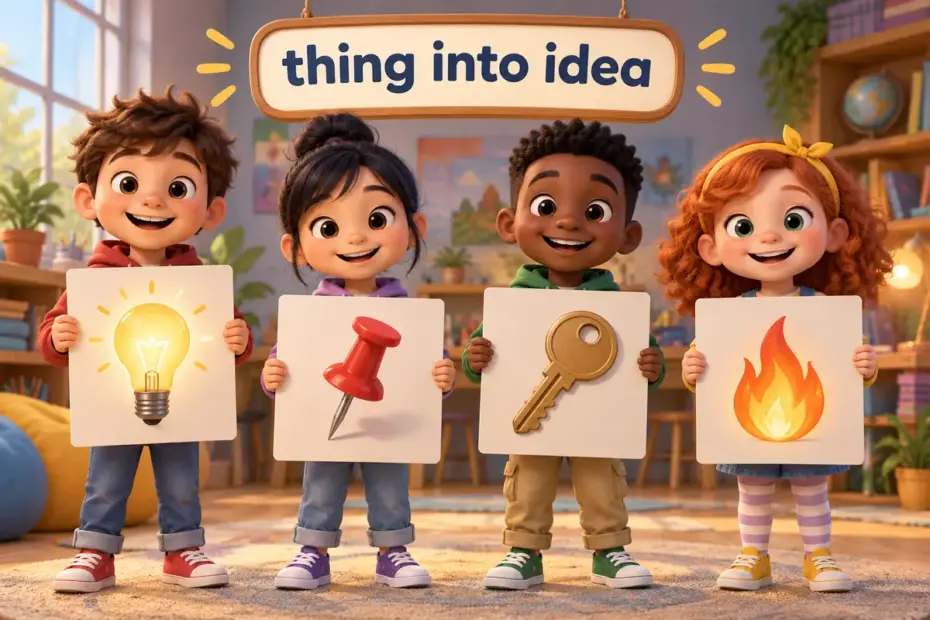
Object emoji meanings cover the everyday things, from the hundred points for a perfect score to the light bulb for a new idea. Each object carries a ready-made metaphor, so a small icon can stand in for a whole opinion. The objects below are the ones that appear most in ordinary messages.
Object emoji meanings at a glance
- An object emoji uses a physical thing to carry an idea, so the picture hints at the meaning.
- The hundred points mark means full marks or total approval.
- The light bulb signals a new idea or a useful tip.
- The pin means save this or remember it, not decoration.
- The commonest mistake is sending an object whose metaphor does not match the words.
What do object emoji mean?
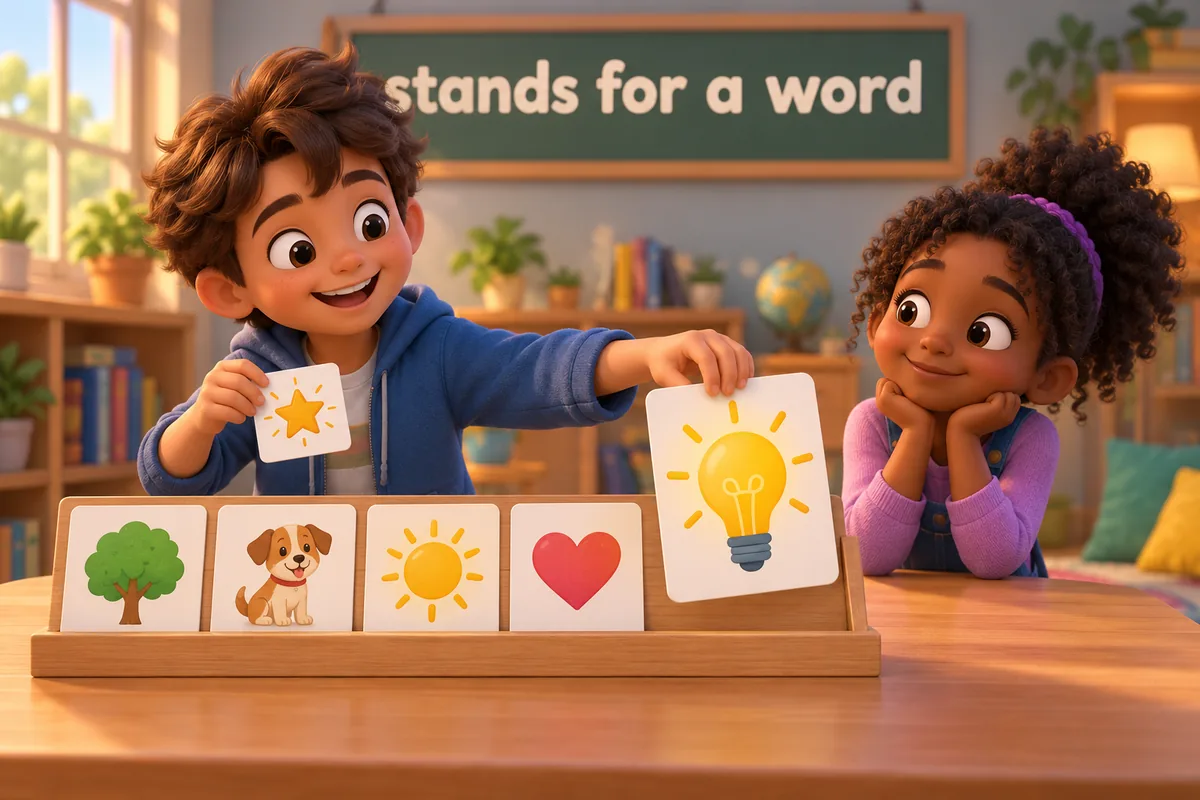
Each object stands for an idea that people agreed on, so a light bulb is an idea rather than a lamp. An emoji can stand for a thing and a mood at once, and object used in a sentence shows the noun doing two jobs. For a classroom word hunt, objects that start with a gives a ready list.
| Object | Emoji | Plain meaning | Everyday example |
|---|---|---|---|
| Hundred points | red hundred | a perfect score or total approval | Great test result, hundred points |
| Fire | flame | impressive, hot or trending | New single is fire |
| Light bulb | bulb | a new idea or a tip | Try this shortcut, bulb |
| Pin | pushpin | remember or mark this | Pin it for later |
| Key | key | access, a solution or a secret | The key to good sleep |
| Gift | wrapped present | a present or a surprise | Birthday surprise, gift |
| Mobile phone | phone | mobile, or call me | Text me later, phone |
| Bullseye | dart and board | exactly right | That answer hit the bullseye |
| Gear | cogwheel | settings, work or a machine | Check the settings, gear |
An object emoji is a poor fit for a formal notice, a legal document or a sensitive message, where a metaphor can look puzzling or glib. It also fails when the object replaces the key fact, because a reader still needs the detail in words.
How do you use an object emoji in a sentence?
An object emoji usually sits where a short phrase would go, so it caps a line or marks a step. The same method works for objects that start with s when you build a themed set.
| Pattern | Example | What it signals |
|---|---|---|
| Object at the end of a line | Great work today, hundred points | Praise across the whole line |
| Object as a bullet | a bulb then a tip, repeated down a list | A tidy list of ideas |
| Object replacing a word | This shortcut is a bulb | The shortest praise for an idea |
| Object as a flag | Pin it for later | A save or bookmark cue |
| Object in a question | Key or lock for the answer? | Sets up a puzzle |
Object emoji meanings across contexts
The same object shifts weight with the setting, so read the message before you send it. Describing an icon needs care, and the adjectives for objects help pin down size and texture.
| Context | Sentence | Why it works |
|---|---|---|
| Text to a friend | That burger was fire | Casual praise in one mark |
| Study chat | Your notes are a bulb, thank you | Names a helpful idea |
| Work thread | Marking this for later, pin | A tidy save cue |
| Classroom note | Find five objects that start with a, bulb | Ties the task to a hint |
| Recipe post | Secret is one more chilli, key | Points to the crucial step |
| Birthday message | A little something for you, gift | Warm without a long line |
| Group poll | Team A or Team B, bullseye | Invites a quick vote |
| Product review | Setup took two minutes, gear | Signals a technical note |
| Travel post | Sunset spot on the map, pin | Shows a saved place |
| Formal report | no object emoji at all | Keeps the record clear |
Which object emoji should you use?
Match the object to the point you want to make, then to the setting.
| Situation | Best object | Why |
|---|---|---|
| Praising a perfect result | Hundred points | Full marks in one mark |
| Calling something impressive | Fire | Praises how it looks or feels |
| Sharing a useful idea | Light bulb | Names a bright thought |
| Saving a link for later | Pin | A clear bookmark cue |
| Hinting at the crucial step | Key | Points to what unlocks the rest |
| A formal notice | No object emoji | Keeps the message plain |
Pick the object that matches the point, and keep the key facts in words so the metaphor never carries the whole message alone.
How object emoji are named and written
Each object has an official name, a nickname and sometimes a shortcode. The name describes the picture, while the meaning comes from how people use it.
| Form | What it is | Example |
|---|---|---|
| Pictured object | The object shown in the message | a red hundred mark |
| Official name | The long label used in official lists | hundred points symbol |
| Nickname | The short name people say | the hundred |
| Shortcode | The colon form some tools accept | colon one hundred colon |
| Combination | An object joined to a face for a mood | bulb beside a smiling face |
Common mistakes with object emoji
Most object emoji errors come from a metaphor that fights the words or from a symbol the reader will not recognise.
Incorrect: Fire on a sad post Correct: a folded hands mark on a sad post Rule: match the object to the mood of the message
Incorrect: A hundred points used to mean a price Correct: a hundred points used to mean a perfect score Rule: use the mark for the meaning most readers know
Incorrect: A pin used to mean the location is wrong Correct: a pin used to mean save this for later Rule: use the cue for the action it actually signals
Incorrect: A legal notice decorated with object marks Correct: a legal notice written in plain words Rule: a formal document keeps to clear language
Incorrect: A message where the object replaces the key fact Correct: a message that keeps the key fact in words Rule: symbols support words but do not carry essential detail
Practice using object emoji
Six short tasks check whether you can match an object to a meaning and to a setting.
- Fill in the blank: a friend nails a difficult test and you want to praise the result, so send blank.
- Choose the better object: for a bright new idea, a light bulb or a pin?
- Correct the error: Sorry for the loss, fire.
- Build a sentence: write a study-chat line that thanks a friend for a helpful tip with one object.
- Spot the register: which suits a formal notice, a plain sentence, or a row of object marks?
- Fill in the blank: to save a link for later, send blank.
Answers
- hundred points, because the mark names a perfect score.
- a light bulb, because the bulb signals a new idea while a pin signals saving something.
- Sorry for the loss, folded hands, because a bright object clashes with grief.
- Your notes are a bulb, thank you, because the bulb names the helpful idea.
- a plain sentence, because a formal notice keeps to clear language.
- a pin, because the pin cues a save for later.
The bottom line
Object emoji meanings turn everyday things into ideas, so a light bulb is a thought, a pin is a save and a hundred points is a perfect score. The picture is a metaphor rather than a literal object, and it works best when the words carry the facts. Match the object to the moment and keep the essentials in plain language.
Frequently asked questions about object emoji
What does the hundred points emoji mean?
The hundred points mark means full marks, a perfect score or total approval, so it fits a great result or a strong opinion. People also use it to agree completely with someone. It finishes a compliment rather than starting one, so it usually lands at the end of a line.
What does the light bulb emoji mean?
The light bulb signals a new idea, a bright thought or a useful tip. It often follows an explanation to mark the moment something clicked. Because it stands for the idea rather than the lamp, it works in a message where no object appears at all.
Why do some objects mean something different online?
People give an object a metaphor because the picture reminds them of an idea, so a flame becomes praise and a pin becomes a save. Those meanings spread through use rather than design, which is why a mark can carry a sense the literal object never had.
Are object emoji suitable for formal writing?
Usually not. A formal notice or a legal document keeps to plain words, because an object mark can look puzzling or too casual. Save the objects for everyday messages, social posts and friendly threads where the reader shares the shorthand.