Old English pronouns change their shape for case, number and person, so ic means I as a subject while me or mec marks the object. The set also kept a dual form for exactly two people. This guide gives the main tables with the modern words they became.
Old English pronouns at a glance
- Pronouns change for case, so one word has a nominative, accusative, genitive and dative form.
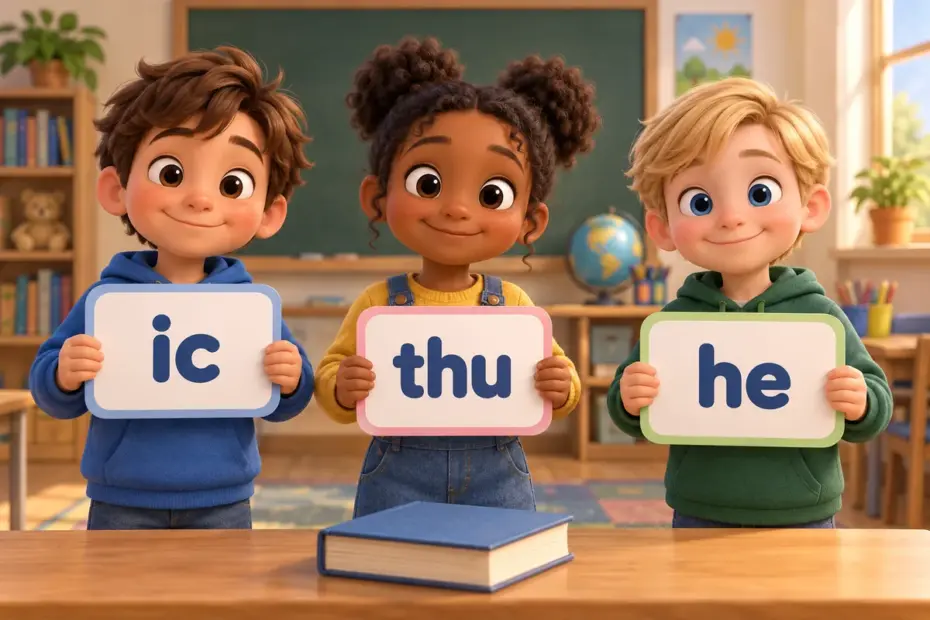
- The main singular pronouns are ic, thu, he, heo and hit.
- The plural set is we, ge and hie, close to the modern we, ye and they.
- Old English kept a dual form for two people: wit and git.
- The commonest error is using the subject form where the object form belongs.
What are Old English pronouns?
Old English pronouns are the words that stand in for a noun in the language spoken from about 450 to 1150, and they change their form more than any other word class. Ic means I as the subject of a clause, while the object form is me or mec, so the ending carries the grammar.
The set is built on three persons, two numbers and four main cases, with a dual number added for pairs. Because the endings do so much work, a pronoun can move around a clause without losing its meaning.
Because the endings do so much work, a pronoun can move around a clause without losing its meaning.
That freedom is the main thing a modern learner notices, since today the order of words does most of the work. In Old English the ending decided whether a pronoun was the doer or the receiver, so a poet could place it early or late for rhythm and still be understood. The grammar lived in the word itself.
| Person | Singular | Dual | Plural |
|---|---|---|---|
| First | ic | wit | we |
| Second | thu | git | ge |
| Third | he, heo, hit | none | hie |
The demonstratives that often did the work of the article sit beside the pronouns, and a related page on adjectives for old shows how describing words changed alongside them. Both word classes relied on the same set of endings.
How do Old English pronouns change for case?
Each pronoun has a different form for each case, and the table below shows the first and second person across the singular, dual and plural.
| Case | First singular | Second singular | First plural |
|---|---|---|---|
| Nominative | ic | thu | we |
| Accusative | me, mec | the, thec | us |
| Genitive | min | thin | ure |
| Dative | me | the | us |
Notice how the modern pairs I and me, or you and your, grew out of these older sets. The genitive form min became the modern mine and my, and thin became thine and thy.
The accusative and dative often shared a single form in the pronouns, so me served as both the direct and the indirect object. Where two forms existed, such as me and mec, the longer one was the older and the shorter one won out over time. That trimming of endings is the story of the whole pronoun set.
Old English pronouns across the three persons
The third person is the fullest part of the set, and it kept the old genders of masculine, feminine and neuter.
| Case | Masculine | Feminine | Neuter |
|---|---|---|---|
| Nominative | he | heo | hit |
| Accusative | hine | hie | hit |
| Genitive | his | hire | his |
| Dative | him | hire | him |
The feminine and neuter subjects sit close to the modern forms, so heo became she over time while hit became it. A fixed phrase about growing wise early, such as an old head on young shoulders sentence, borrows the same idea of age that these old words still carry.
The neuter pronoun hit is worth a second look, because it could refer to a person as easily as to a thing. Gender belonged to the noun that hit stood for rather than to the person, so the same pronoun served a child or a ship according to the noun behind it. Modern English keeps only a trace of this in the pronoun it.
Which pronouns had a dual form?
Only the first and second persons kept a dual, used for exactly two people, and the table shows the pair against the plural.
| Person | Dual | Plural | Modern sense |
|---|---|---|---|
| First | wit | we | we two against we all |
| Second | git | ge | you two against you all |
The dual faded away before the modern period, so the language kept only the singular and plural sets. A trace of the older habit survives in fixed phrases and in regional speech, though not as a full grammatical number.
The dual forms sit close to the ordinary plural in sound, which is one reason they were easy to lose. Wit and we both begin with the same glide, and git and ge share an opening letter, so a speaker could drift from one to the other. Over time the plural simply absorbed the pair, and the modern language has no dual at all.
Word forms and grammar of the pronouns
The demonstratives sit beside the personal pronouns and often did the work of the modern article.
| Form | Part of speech | Example |
|---|---|---|
| se | demonstrative, masculine | se cyning (the king) |
| seo | demonstrative, feminine | seo cwen (the queen) |
| thaet | demonstrative, neuter | thaet hus (the house) |
| his | possessive | his nama (his name) |
| hire | possessive | hire modor (her mother) |
| hine | reflexive use | he hine waescode (he washed himself) |
A much earlier habit of speech lingers in an old-fashioned expression, and old fashioned sentence shows how such phrasings carry an older grammar inside them. The pronoun forms are one of the clearest places to see it.
Reflexive meaning was shown with the ordinary object form, so a verb such as wash took hine to mean himself. Old English had no separate set of reflexive pronouns like the modern myself and himself. The object pronoun simply pointed back to the subject when the sense required it.
Common mistakes with Old English pronouns
The errors come from reading the old forms with modern habits, and each has a clear fix.
Mistake 1: one form for every case. Incorrect: Use ic as both subject and object. Correct: Use ic as subject and me as object. Rule: each pronoun keeps separate case forms.
Mistake 2: expecting a modern you. Incorrect: Use thu for both one person and a group. Correct: Use thu for one person and ge for several. Rule: the number changes the form.
Mistake 3: guessing gender from meaning. Incorrect: Expect hit to name only a thing. Correct: Learn that hit is the neuter pronoun whatever it refers to. Rule: gender belongs to the word.
Mistake 4: ignoring the dual. Incorrect: Use we for exactly two people. Correct: Use wit for two people. Rule: a dual form covered pairs.
Mistake 5: treating a demonstrative as a pronoun only. Incorrect: Read se as a standalone pronoun in every sentence. Correct: Read se as a demonstrative that also did the work of the. Rule: the same word served two jobs.
Practice using Old English pronouns
Complete each item, then read the reason to confirm the form.
- Fill in the blank: The subject form meaning I is ________ . (ic / me)
- Fill in the blank: The plural form meaning we is ________ . (we / wit)
- Choose the better word: the dual pronoun for two people is (wit / we).
- Correct the error: The pronoun hit is masculine in Old English.
- Build a sentence: name the feminine third-person subject pronoun and its modern descendant.
- Spot the register: which fits an Old English grammar note, se cyning, or the king?
Answers
- ic. Ic is the nominative form that means I.
- we. We is the plural subject form, while wit means we two.
- wit. The dual pronoun wit covers exactly two people.
- The pronoun hit is neuter in Old English. He is the masculine form.
- Sample: heo, which became the modern she. It is the feminine subject form.
- Se cyning. An Old English grammar note uses the older demonstrative.
The bottom line
Old English pronouns carry case, number and person in their endings, so one word such as ic has a full set of forms beside it. Learn the subject, object, genitive and dative rows together, note the dual pair wit and git, and the older sentences become readable. The demonstratives se, seo and thaet complete the picture.
Frequently asked questions about Old English pronouns
Did Old English have a word for you in the plural?
Yes, Old English kept a full set: thu for one person, git for exactly two, and ge for three or more. Modern English lost the distinction and uses you for all of them. The plural ge lies behind the older English word ye, which survives in some set phrases.
What is the dual number in Old English?
The dual is a grammatical number used for exactly two people or things, sitting between the singular and the plural. Only the first and second person pronouns kept it, as wit for we two and git for you two. It faded from the language before the modern period.
Why does hit become it in modern English?
The form hit lost its opening h over time and settled into it, while keeping its neuter sense. The change is one of many small sound shifts that trimmed the older endings. The related forms his and him kept their h and stayed close to the old shapes.
Were se, seo and thaet pronouns or articles?
They were demonstratives that could stand alone as pronouns or sit before a noun like the modern article, so se cyning meant the king. Old English had no separate word for the, and these forms filled the gap. The neuter thaet became the modern that.