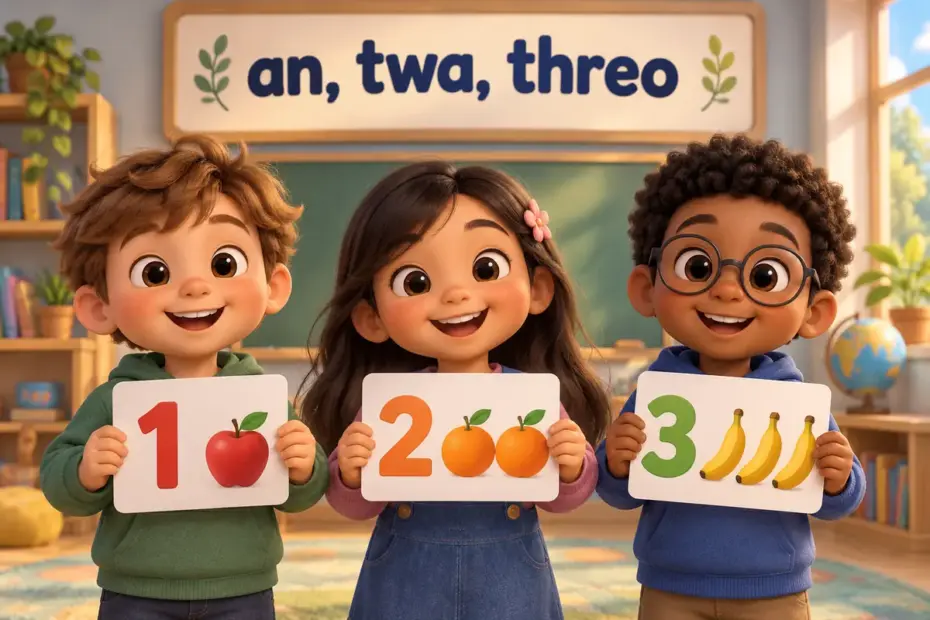
Old English numbers are the counting words used before about 1150, and they run an for one, twa for two and tien for ten. The first three numbers change form with gender, while the rest hold one shape, and the teens and tens build from fixed endings. The tables below list each form and the pattern behind it.
Old English numbers at a glance
- The numbers one to twelve each have their own word, from an to twelf.
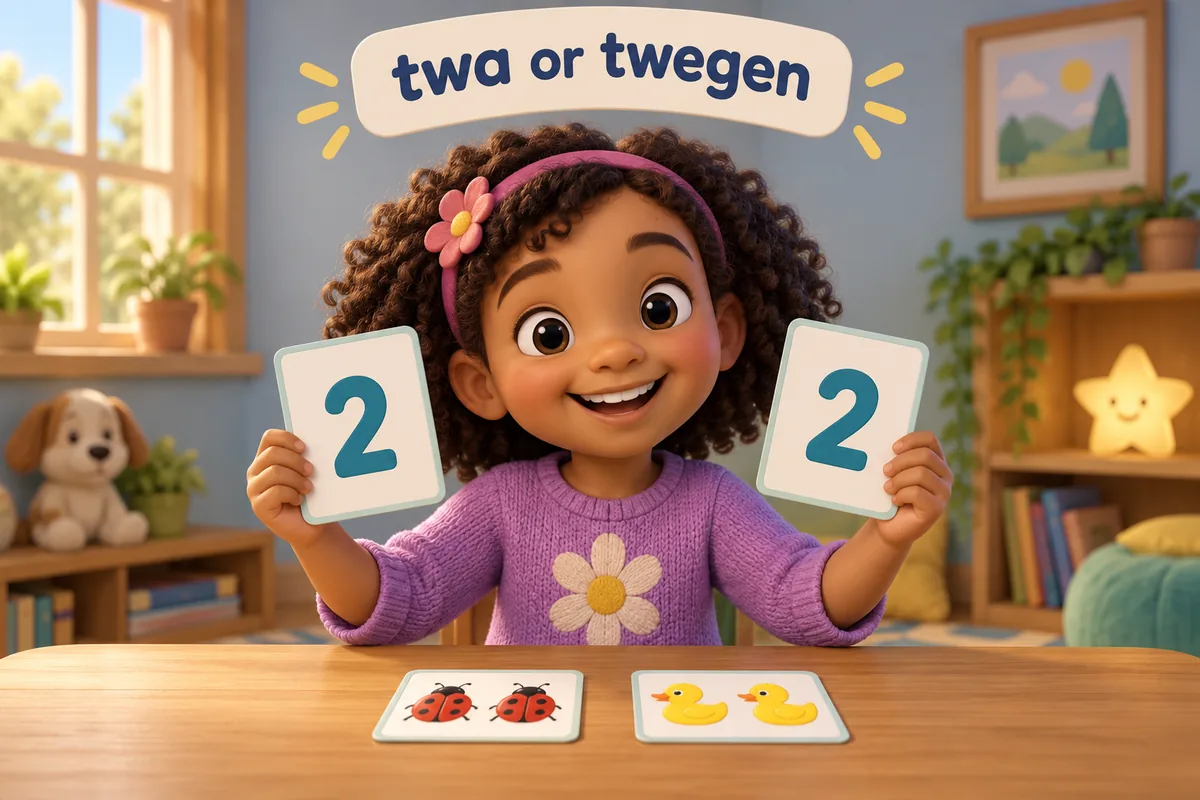
- Only the numbers one, two and three change with grammatical gender.
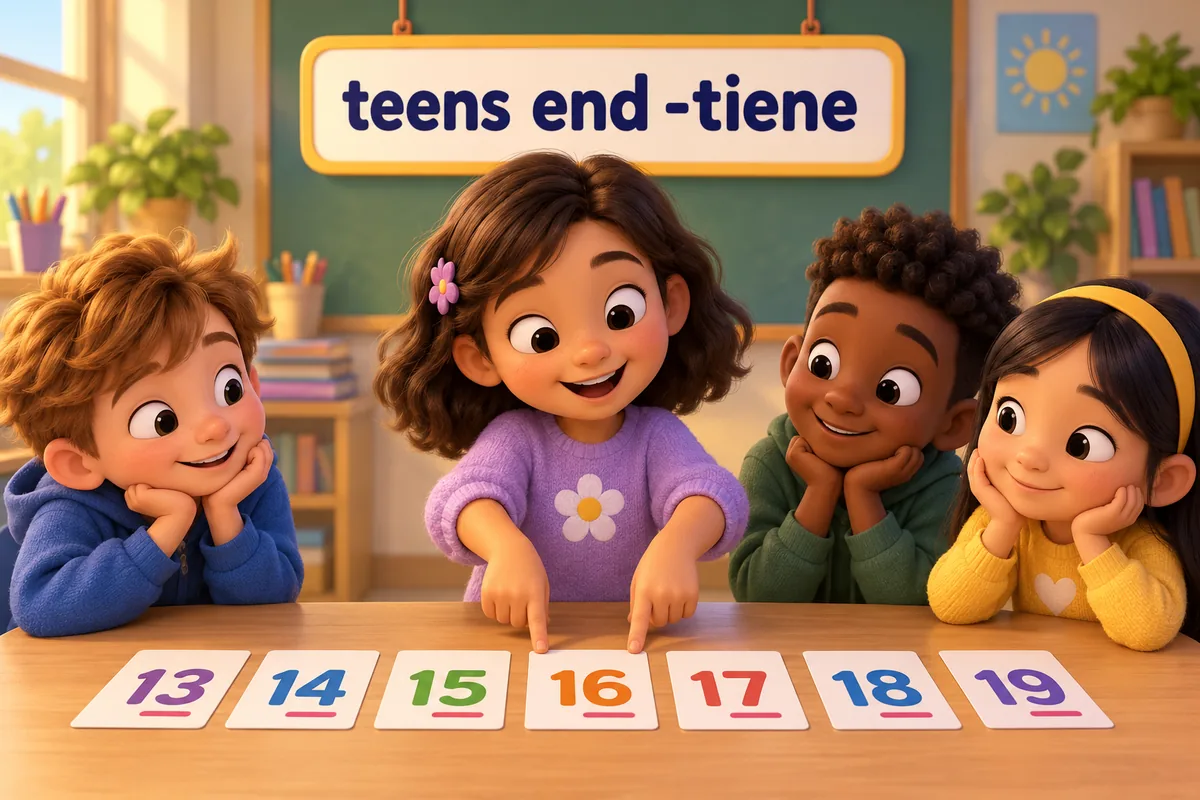
- The teens add the ending -tiene to the word for ten.
- The tens add the ending -tig, as in twentig for twenty.
- The commonest error is treating an as the only word for one in every context.
What are Old English numbers?
Old English numbers are the cardinal words for counting, and they sit close to the modern forms in both sound and shape. The wider set of counting words appears in numbers in a sentence, and old itself survives in many later phrases examined in adjectives for old. The table lists one to twelve with a note on each form.
Because the numerals stay close to their modern relatives, the list doubles as a bridge between the two stages of the language, and a reader can often guess a form before learning it from the chart.
| Number | Old English | Note |
|---|---|---|
| 1 | an | one form in the oldest texts |
| 2 | twa, twegen | twa is neuter and feminine, twegen masculine |
| 3 | threo, thrie | threo is neuter and feminine, thrie masculine |
| 4 | feower | one form |
| 5 | fif | one form |
| 6 | siex | also written syx |
| 7 | seofon | one form |
| 8 | eahta | one form |
| 9 | nigon | one form |
| 10 | tien | one form |
| 11 | endleofan | one form, also spelled endlefan |
| 12 | twelf | one form |
The two lowest numbers carry the most variation, because twa and threo match the neuter and feminine while twegen and thrie match the masculine. Numbers from feower upward keep one form for every gender, which makes the middle of the list much easier to learn and to translate.
How are the higher numbers built?
The larger numbers follow two endings and one compound, so a reader can build a dozen forms from a small set of parts. A word that has fallen out of everyday use is often called old-fashioned in a sentence.
| Pattern | Example | What it signals |
|---|---|---|
| single word for each value | fif | a base number with its own form |
| gender variant | twa and twegen | two forms for the value two |
| ten plus a small number | threotiene | the value thirteen |
| ten times a small number | twentig | the value twenty |
| round group | hundred | ten groups of ten |
| ordinal ending | thridda | a position in a line, not a count |
A reader can test the two groups quickly by comparing the teen and ten forms, since threotiene and thritig share a first element. That shared element is the same small number, whether it stands before -tiene for a teen or before -tig for a ten.
Old English numbers across contexts
The numerals appear in history lessons, translation tasks and language study, and each setting calls for a different level of detail. A later idiom that leans on the same word appears in good old days in a sentence.
| Context | Example sentence | Why this works |
|---|---|---|
| History lesson | The word an means one in the oldest English texts. | states a plain meaning |
| Translation task | Turn fif into its modern form. | asks for the match |
| Language blog | The teens add -tiene, as in threotiene for thirteen. | shows the shared ending |
| Glossary | Twentig means twenty and uses the ending -tig. | defines the tens group |
| Story | The old tale names twelf companions at the table. | uses the number in a scene |
| Classroom | Only one, two and three change with gender. | marks the exception |
| Exam question | Give the Old English word for ten. | asks for one form |
| Pronunciation note | The letter f in fif stays voiceless. | ties spelling to sound |
| Poetry | He counted eahta sails along the coast. | uses the number in verse |
| Grammar chart | The masculine two is twegen, the other form is twa. | labels the variants |
Which form should you use?
The choice turns on whether a writer counts things or ranks them, and on the gender of the noun for the smallest numbers. A phrase about distant history appears in as old as the hills in a sentence.
| Situation | Better choice | Why |
|---|---|---|
| Counting objects | a cardinal such as fif | a cardinal names how many |
| Ranking an item | an ordinal such as thridda | an ordinal names a position |
| Two before a masculine noun | twegen | twegen matches a masculine noun |
| Two before other nouns | twa | twa matches the neuter and feminine |
| A round amount | hundred | the word names a group of ten tens |
| A very large amount | thusend | the word names a thousand |
A writer who only needs the modern value can take the base word and add the ending that matches the group, but a translation exercise usually wants the exact historical form with its gender. When in doubt, the cardinal form is the safer start, because an ordinal can always be built from it.
Word forms and grammar of the numerals
The numerals behave mostly like adjectives, and the first three agree with the noun they count.
| Form | Part of speech | Example |
|---|---|---|
| an | numeral | an means one |
| twegen | numeral, masculine | twegen before a masculine noun |
| twa | numeral, neuter and feminine | twa before other nouns |
| -thiene | ending | threotiene, feowertiene |
| -tig | ending | twentig, thritig |
| forma | ordinal | forma means first |
| thridda | ordinal | thridda means third |
The ordinal set is small, so forma, other and thridda cover the first three positions and later ordinals build from the cardinals. A careful reader keeps the count words and the rank words in separate columns, since mixing them is the quickest way to lose a mark.
Common mistakes with the numerals
Mistake 1: using twegen for every noun. Incorrect: twegen before a neuter noun. Correct: twa before a neuter noun. Rule: twegen is the masculine form and twa covers the other genders.
Mistake 2: treating the ordinal as a count. Incorrect: thridda apples means three apples. Correct: thridda means third, a position. Rule: an ordinal ranks an item and a cardinal counts.
Mistake 3: dropping the teen ending. Incorrect: tien-threo means thirteen. Correct: threotiene means thirteen. Rule: the teen form adds -tiene to the smaller number.
Mistake 4: using -tiene for a ten. Incorrect: tientiene means twenty. Correct: twentig means twenty. Rule: the tens use -tig, not -tiene.
Mistake 5: reading the numeral as a noun. Incorrect: The fif walked home. Correct: Fif wolves walked home. Rule: the numeral counts a noun and does not stand alone as a person.
Practice using the numerals
- Fill in the blank: The Old English word for ten is ___.
- Choose the better form: Before a masculine noun, two is (twa / twegen).
- Correct the error: Tientiene means twenty.
- Build a sentence: use fif with a plural noun.
- Spot the register: which suits a translation task, (a) the word for ten, or (b) tien?
- Fill in the blank: The ordinal thridda means ___.
Answers
- tien, because it is the base word for the value ten.
- twegen, because twegen is the masculine form.
- Twentig means twenty; the tens take the ending -tig.
- Fif ships sailed from the harbour at dawn.
- (b), because a translation task gives the exact word.
- third, because an ordinal names a position rather than a count.
The bottom line
Old English numbers run from an and twa to twelf, and only the first three change with gender. The teens add -tiene and the tens add -tig, so a reader can build threotiene and twentig from the same parts. Keep the cardinal for counting and the ordinal for ranking, and the list stays accurate.
Frequently asked questions about the numerals
How do you say one in Old English?
The word is an, and it names the value one. In the oldest texts it keeps a single form, though later use shows agreement with a noun. A writer who wants the modern match can simply read an as one and keep the counting sense.
Did Old English numbers change with gender?
Yes, but only for the lowest numbers. One, two and three showed different forms for masculine and for the other genders, as twegen and twa show. Numbers from four upward kept a single form, which is why feower and fif never change.
How are the teens formed in Old English?
The teens add the ending -tiene to the smaller number, so thirteen is threotiene and fourteen is feowertiene. The same pattern a speaker uses in modern English, where thir-teen and four-teen carry a shared ending, survives in the older form.
What is the Old English word for twenty?
The word is twentig, and it uses the ending -tig that marks the tens. The same ending builds thritig for thirty, so the pattern is easy to extend. The form is close to modern twenty, which keeps the same shape.