Phrases for asking questions let a speaker check, clarify, and find out more without sounding blunt. English offers direct forms, such as “where is the station?,” and softer ones, such as “could you tell me where the station is?”. The frame decides how the sentence is built.
Phrases for asking questions at a glance
- Question phrases fall into yes or no questions, question-word questions, and indirect questions.
- A direct question inverts the subject and the auxiliary verb.
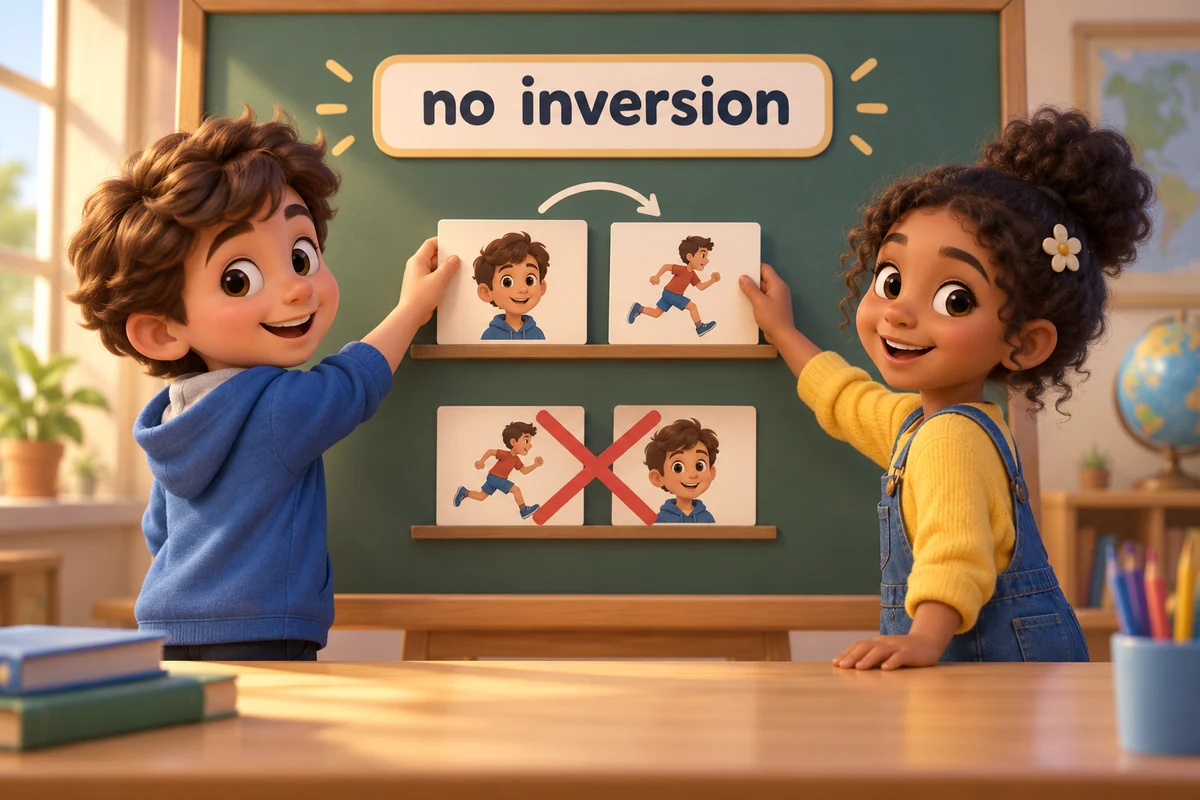
- An indirect question keeps statement order and drops the inversion.
- Polite openers such as could you or I was wondering soften the request.
- The commonest error is inverting the verb inside an indirect question.
What are phrases for asking questions?
Phrases for asking questions are the fixed openings, question words, and softeners that English speakers use to request information. The phrase sets the tone, so the same request can sound direct, neutral, or polite depending on which frame carries it.
| Category | Pattern | Example |
|---|---|---|
| Yes or no question | auxiliary + subject | Are you ready? |
| Question-word question | question word + auxiliary + subject | Where is the bus? |
| Indirect question | polite opener + statement order | Could you tell me where the bus is? |
| Tag question | statement + short tag | You are coming, aren’t you? |
| Clarifying question | short opener + repeat request | Sorry, could you say that again? |
An honest limit matters here: an indirect question is not more accurate than a direct one, only softer. When speed matters, a plain “what time is it?” beats a long polite frame, so the choice is about tone rather than correctness.
Questions often lean on descriptive words, and the guide to adjective phrases and how to use them shows how those word groups attach to a noun.
How do you form a polite question?
Most polite questions use a fixed opener, a subject, and a verb in statement order, which removes the inversion that marks a direct question.
| Pattern | Example | What it signals |
|---|---|---|
| Could you + base verb | Could you help me? | a polite request for action |
| Could you tell me + statement order | Could you tell me where it is? | a polite request for information |
| Do you know + if or whether | Do you know if it is open? | a polite yes or no question |
| Would you mind + -ing | Would you mind waiting? | a formal, gentle request |
| I was wondering + if clause | I was wondering if you could help. | a very soft opener |
| Question word + is it + statement | How is it done? | a direct question-word form |
A polite frame often changes the word order as well as the tone, because the request for information slides inside a statement. The listener hears one sentence rather than a bare demand, and the softened shape is what makes could you tell me feel gentler than tell me.
Polite question frames are built the same way as other fixed phrases, as in the page on adjectives with prepositions.
Phrases for asking questions across contexts
The register changes the frame more than the meaning, and the setting usually decides how polite the opener should be. The examples below move from a classroom to a seminar, showing the same question wearing different clothes.
| Context | Example sentence | Why this works |
|---|---|---|
| Classroom | Could you explain that step again? | a polite request for detail |
| Workplace email | Would you mind checking the figures? | a formal, indirect request |
| News interview | What happened next, in your view? | a direct but open question |
| Everyday speech | Where are you going? | a plain question-word question |
| Customer service | Do you know your account number? | a simple yes or no check |
| Academic seminar | Could you say more about your method? | a scholarly soft opener |
| Travel | Excuse me, is this seat taken? | a short polite opener |
| Clarification | Sorry, what do you mean by that? | a direct request to repeat |
| Telephone | Could I speak to the manager? | a polite request for access |
| Meeting | Shall we take a short break? | a suggestion framed as a question |
| Small talk | How was your weekend? | an open question-word opener |
| Health check | How long have you had this? | a precise question-word form |
A question earns a clearer answer when its descriptive words are exact, which is what the guide to how to use adjectives in sentences and phrases sets out.
Direct vs polite questions
The two versions ask for the same thing, so the choice rests on the situation and the listener rather than the information.
| Feature | Direct question | Polite question |
|---|---|---|
| Word order | subject and auxiliary invert | statement order, no inversion |
| Opener | question word or auxiliary first | could, would, or do you know |
| Tone | neutral or blunt | soft and respectful |
| Length | short | longer, with a frame |
| Typical setting | friends, speed, equal footing | strangers, work, service |
| Example | Where is the station? | Could you tell me where the station is? |
Choose the direct form when speed and equality matter, and the polite frame when the listener is a stranger, a senior colleague, or a customer, because the softer opener costs nothing and avoids sounding abrupt. The polite frame also buys time in a difficult exchange, since its extra words give the listener a moment before the request lands.
Word forms and grammar of question phrases
| Form | Rule | Example |
|---|---|---|
| Yes or no question | auxiliary comes first | Did she call? |
| Question-word question | question word, then auxiliary | Why did she call? |
| Embedded yes or no | do you know + if or whether | Do you know if she called? |
| Embedded question word | statement order, no inversion | Do you know why she called? |
| Tag question | a short opposite tag at the end | She called, didn’t she? |
| Reported question | tense shifts back, order stays | He asked why she had called. |
The embed rule explains almost every hard case: once a question sits inside a longer sentence, the subject comes before the verb again, and the auxiliary no longer leads. Reported questions add a second change, because the tense of the embedded verb moves one step further back as well.
Common mistakes with question phrases
Mistake 1: inversion inside an indirect question. Incorrect: Could you tell me where is the station? Correct: Could you tell me where the station is? Rule: an embedded question keeps statement order.
Mistake 2: two auxiliaries in one clause. Incorrect: Do you can swim? Correct: Can you swim? Rule: a question uses one auxiliary, so do drops out when can is present.
Mistake 3: no inversion in a question-word question. Incorrect: Where you are going? Correct: Where are you going? Rule: a direct question-word question inverts the subject and verb.
Mistake 4: an embedded yes or no question with no if or whether. Incorrect: Do you know is it open? Correct: Do you know if it is open? Rule: an embedded yes or no question needs if or whether.
Mistake 5: a blunt frame in a polite setting. Incorrect, to a stranger: Tell me the time. Correct: Could you tell me the time? Rule: an indirect opener softens the request.
Practice using phrases for asking questions
- Fill in the blank: Could you tell me where the library ___?
- Choose the better form: Do you know (if it is / is it) open today?
- Correct the error: Can you tell me where is the bus stop?
- Build a sentence: turn “what time does it start” into a polite indirect question.
- Spot the register: which line suits a stranger, (a) Where is the bank?, or (b) Could you tell me where the bank is?
- Fill in the blank: ___ you mind closing the window?
Answers
- is, because an embedded question keeps statement order after where.
- if it is, because an embedded yes or no question needs if or whether.
- Can you tell me where the bus stop is; the embedded clause does not invert.
- Could you tell me what time it starts?
- (b), because the indirect frame is polite to a stranger.
- Would, because would you mind is the fixed polite opener.
The bottom line
Phrases for asking questions range from direct yes or no forms and question-word forms to soft indirect frames such as could you tell me. The single rule to hold is that an embedded question keeps statement order, so the verb never jumps in front of the subject. Match the opener to the listener, and the same request can be blunt, neutral, or warm.
Frequently asked questions about phrases for asking questions
How do I make a question sound more polite?
Add an opener such as could you, would you mind, or I was wondering, and switch to statement order. That single change softens a request without changing its meaning, so what time is it becomes could you tell me what time it is.
When do I use if and when do I use whether?
Both introduce an embedded yes or no question, as in do you know if it is open or whether it is open. Whether is the safer choice before or, and both work elsewhere. Neither appears in a question-word question such as where it is.
What is a tag question and how does it work?
A tag question adds a short opposite tag to a statement, as in you are coming, aren’t you. The tag echoes the auxiliary and flips its polarity, so a positive statement takes a negative tag. Tags invite agreement rather than request new information.
Why does an indirect question not invert?
Because the question is no longer the main clause but part of a longer statement, so it follows statement order. That is why where the station is is correct inside a sentence, while where is the station stands only as a direct question on its own.