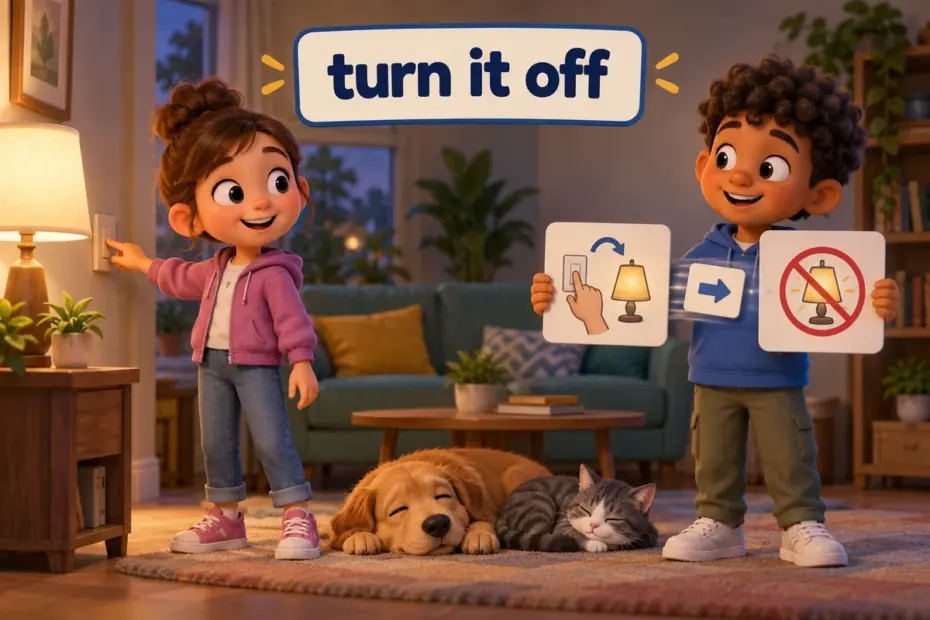
Phrasal verbs combine a verb with one or two small words, called particles, to make a single new meaning. The parts are easy to spot but the sense often cannot be guessed. In “she turned the radio off,” the verb and particle work as one unit meaning switch off.
Phrasal verbs at a glance
- A phrasal verb is a verb plus a particle, or two, forming one meaning.
- Some are separable, so the object may sit between the verb and the particle.
- Others are inseparable, and the object must follow the whole unit.
- Three-part phrasal verbs such as put up with are fixed and never split.
- The commonest error is splitting a three-part verb or moving a pronoun the wrong way.
What are phrasal verbs?
A phrasal verb is a combination of a verb and one or more particles that behaves as a single verb with its own meaning. The particle changes the sense so much that the whole unit has to be learned as a new word, not read off its parts.
| Type | Pattern | Example |
|---|---|---|
| Transitive separable | the object may go between verb and particle | She turned the radio off. |
| Transitive inseparable | the object follows the whole unit | He looked after his sister. |
| Intransitive | no object, the particle stays fixed | The plane took off. |
| Three-part | verb plus two particles, never split | I put up with the noise. |
| Idiomatic sense | the meaning is not literal | They gave up the search. |
A fair caution belongs here: not every verb-plus-particle pair is a phrasal verb. In “she walked into the room,” the word into simply marks direction, and the meaning is literal, so it is a preposition rather than part of an idiom. The test is meaning rather than shape, because a genuine phrasal verb cannot be worked out from the verb alone.
The base verb is the same one that appears in the list of verbs that start with b, so a phrasal verb always begins with an ordinary verb.
How do you use phrasal verbs in a sentence?
The deciding question is whether the verb takes an object and whether the object is a noun or a pronoun, because the pronoun rule is the strictest of all.
| Pattern | Example | What it signals |
|---|---|---|
| verb + particle, no object | The car broke down. | intransitive, particle fixed |
| verb + particle + noun | She picked up the book. | separable, one accepted order |
| verb + noun + particle | She picked the book up. | separable, object between |
| verb + pronoun + particle | She picked it up. | pronoun must sit between |
| verb + particle + particle + noun | They put up with the delays. | three-part, fixed |
| verb + particle + noun (fixed) | He ran into an old friend. | inseparable, idiomatic |
When a noun object is long, the separable order with the particle first usually reads more smoothly, while a short pronoun always forces the split.
Phrasal verbs sit beside other verb patterns, and the guide to adjectives with linking verbs shows how a verb and its partner words build one meaning.
Phrasal verbs across contexts
The same combinations move between speech and writing, and the register shifts with them. A verb that sounds lively in a message can look out of place in a report, so the setting often decides the choice before the meaning does.
| Context | Example sentence | Why this works |
|---|---|---|
| Classroom | Please hand in your books before the bell. | a routine separable verb |
| Workplace email | Could we bring the meeting forward? | polite and still informal |
| News report | The talks broke down after two hours. | an intransitive, vivid verb |
| Storytelling | She set off at dawn and never looked back. | two intransitive verbs in a row |
| Everyday speech | Can you pick me up at six? | the pronoun splits the verb |
| Customer service | We will follow up on your request. | a three-word business staple |
| Formal writing | The committee postponed the vote. | a single verb replaces the idiom |
| Academic writing | The study refers to earlier findings. | a formal single-word choice |
| Diary entry | I woke up late and rushed out. | two separable forms in sequence |
| Instructions | Turn the oven off before you leave. | a separable verb with a noun |
| Complaint | I cannot put up with this noise. | a fixed three-part verb |
| Sports report | The team pulled ahead in the final minute. | an idiomatic intransitive |
Many phrasal verbs turn back into single-word verbs of Latin origin, and the list of verbs as descriptors shows the same verb working in another role.
Phrasal verb vs single-word verb
Many phrasal verbs have a one-word twin of Latin origin, and the pair differs mainly by register rather than meaning.
| Feature | Phrasal verb | Single-word verb |
|---|---|---|
| Register | often informal | often formal |
| Form | verb plus particle or particles | one word |
| Example | put off | postpone |
| Separability | some types allow a split | never split |
| Typical setting | speech and casual writing | reports and essays |
| Meaning fit | idiomatic and vivid | literal and neutral |
Choose the phrasal verb when the tone is conversational, and its single-word twin when the writing must sound formal, because the meaning stays the same while the register changes. A report that mixes the two, swapping put off beside postpone in the same paragraph, reads as uneven rather than merely casual.
Word forms and grammar of phrasal verbs
| Form | What happens | Example |
|---|---|---|
| Base | the plain combination | turn off |
| Third person | -s moves to the verb | turns off |
| Past | the verb takes the past form | turned off |
| -ing form | the verb takes -ing | turning off |
| Noun form | many become a noun | a breakdown, a takeover |
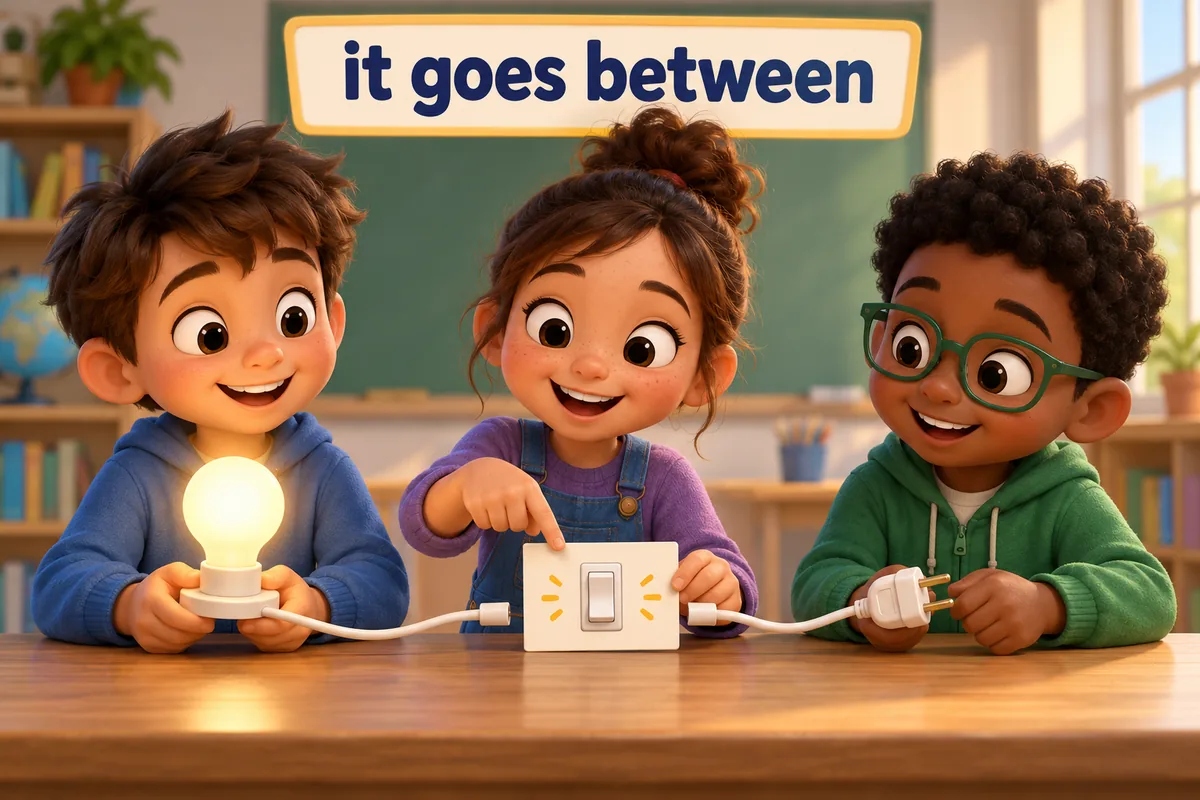
| Separable noun object | the noun may go either side | turn the light off |
| Separable pronoun object | the pronoun must go between | turn it off |
| Three-part verb | never split at all | put up with it |
The particle never takes the tense or the -s ending, so all the grammar of the unit sits on the verb. That single fact explains why turns off and turned off change at the front while off never moves.
The plain verbs behind these combinations fill the early alphabet, as the list of verbs that start with a shows.
Common mistakes with phrasal verbs
Mistake 1: splitting a three-part verb. Incorrect: put up the noise with. Correct: put up with the noise. Rule: three-part phrasal verbs are fixed.
Mistake 2: a pronoun after the particle. Incorrect: turn off it. Correct: turn it off. Rule: a pronoun object goes between the verb and the particle.
Mistake 3: separating an inseparable verb. Incorrect: look him after. Correct: look after him. Rule: inseparable verbs keep the object after the whole unit.
Mistake 4: the wrong register in formal writing. Incorrect, in a report: we will put off the vote. Correct: we will postpone the vote. Rule: formal writing prefers the single-word verb.
Mistake 5: reading the meaning literally. Incorrect: give up means to hand something upward. Correct: give up usually means to quit. Rule: a phrasal verb carries an idiomatic sense.
Practice using phrasal verbs
- Fill in the blank: Please turn the television ___ before you go to bed.
- Choose the better form: she picked (up it / it up) from the floor.
- Correct the error: I cannot put up the noise with.
- Build a sentence: use look after with the pronoun him.
- Spot the register: which line suits a formal report, (a) We put off the launch, or (b) We postponed the launch?
- Fill in the blank: The plane took ___ an hour late.
Answers
- off, because turn off is a separable phrasal verb.
- it up, because a pronoun object goes between the verb and the particle.
- I cannot put up with the noise; a three-part verb is never split.
- She looked after him while his parents were away.
- (b), because a formal report prefers the single-word verb.
- off, because take off is intransitive and the particle stays fixed.

The bottom line
Phrasal verbs join a verb with one or more particles to create a new, often idiomatic meaning, and the type decides how the sentence behaves. Keep the object between the verb and the particle for a pronoun, leave inseparable verbs whole, and never split a three-part combination such as put up with. Match the register by swapping the phrasal verb for its single-word twin in formal writing.
Frequently asked questions about phrasal verbs
How can I tell if a phrasal verb is separable?
Test it with a pronoun. If the sentence still works with the pronoun between the verb and the particle, as in turn it off, the verb is separable. If the pronoun must follow the whole unit, as in look after him, the verb is inseparable and stays whole.
Are phrasal verbs too informal for writing?
Not always, but many read as conversational, so formal reports and essays often prefer the single-word twin: postpone instead of put off, or tolerate instead of put up with. Speech and friendly writing welcome them, and a mixed register is usually the problem rather than the verb itself.
What is a three-part phrasal verb?
A three-part phrasal verb is a verb plus two particles that act as one unit, such as put up with, look forward to, or get along with. These combinations are fixed, so no object may slip inside, which makes put up with it correct and put up it with wrong.
Why does the meaning of a phrasal verb differ from the verb?
The particle reshapes the sense, so the pair becomes a new unit rather than a verb plus a direction. That is why give up means quit rather than hand upward. Because the link is idiomatic, each phrasal verb has to be learned with a sentence attached.