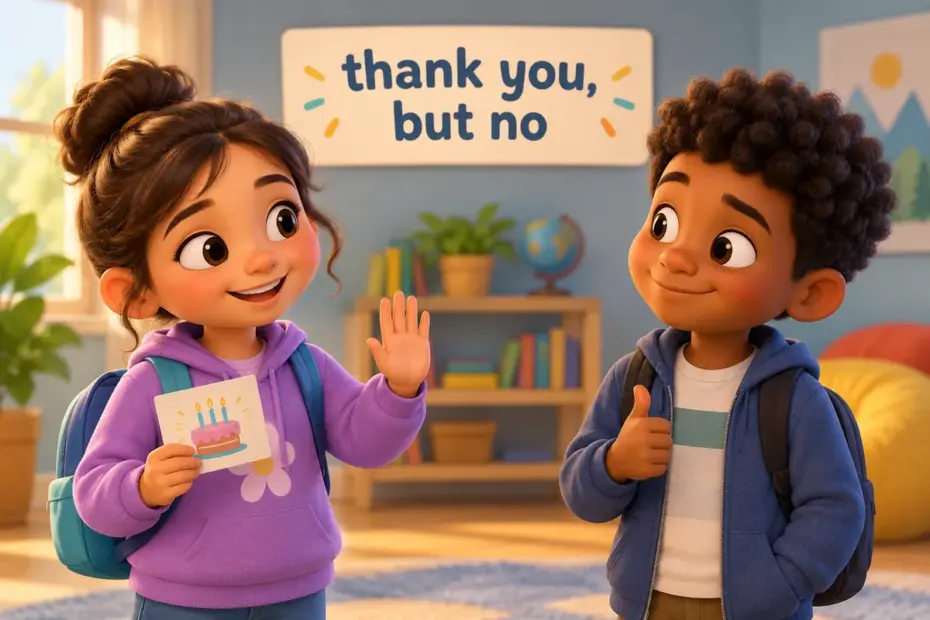
Polite ways to decline an invitation thank the host first, then give a clear answer. A short line such as “thank you so much, but I am afraid I cannot make it” keeps the friendship warm. The thank-you and the clear no belong together.
Polite ways to decline an invitation at a glance
- Thank the host before you say no.
- Decline clearly rather than leaving a vague maybe.
- Keep the reason short and kind if you give one at all.
- Offer a rain check when you would like to meet another time.
- Reply early; a late cancellation is the least polite option.
A good refusal answers the invitation, not the host. It never implies that the event is dull or that the host did something wrong, and it never leaves the reader to guess whether you are coming or not.
What makes a refusal polite?
A refusal is polite when it protects the other person’s feelings and still gives a clear answer. Four moves do that work, and most good lines use three of them.
| Move | Why it matters | Example |
|---|---|---|
| Thank | values the invitation itself | Thank you so much for the invitation. |
| Decline | gives a clear answer | I am afraid I cannot make it. |
| Reason | explains briefly without over-sharing | I already have a family plan. |
| Rain check | keeps a future door open | Could we meet the following week? |
How do you decline an invitation politely?
The setting decides the wording. The table matches eight common invitations with a line that fits and the reason it works.
| Situation | Polite phrase | Why it works |
|---|---|---|
| Dinner party | Thank you so much, but I am unable to come that evening. | warm thanks plus a clear no |
| Wedding | We are so grateful for the invitation, but we cannot attend. | formal and appreciative |
| Birthday | Sadly I cannot make it, but I hope you have a lovely day. | declines and adds goodwill |
| Work event | Thank you for including me; I have to miss this one. | professional and brief |
| Casual meet-up | I would love to, but I am already busy. Rain check? | friendly and offers another time |
| Playdate | Thanks for thinking of us; we cannot make that day. | speaks for the group |
| Distant friend | It is so kind of you to invite me, though I cannot be there. | warm despite distance |
| Repeated invitation | I really appreciate it, but I will have to pass. | firm yet kind |
Formality changes the words but not the shape. A reply card needs a set phrase, a text message can drop the full sentence, and both still thank the host before they decline.

Polite ways to decline: examples across contexts
The same soft moves appear in messages, emails and speech. The table pairs a context with a sentence and the reason it fits.
| Context | Sentence | Why this works |
|---|---|---|
| Text to a friend | Can’t make Friday, but thanks for the invite. | casual thanks with a clear no |
| Email to a boss | Thank you for the invitation; unfortunately I have a prior commitment. | formal and respectful |
| Reply card | We are unable to attend but wish you every happiness. | set phrase for a formal card |
| Phone call | I would love to come, but I am away that weekend. | warm opener, honest reason |
| Group chat | Sorry I will miss it, have a great time. | brief and kind |
| To a child’s host | Thank you for inviting my daughter; we cannot make it. | gracious on someone’s behalf |
| Declining twice | I am so sorry, and grateful you asked again. | acknowledges the repeat |
| Declining a favour | I cannot help this time, but do ask again. | keeps the door open |
| Declining in person | I wish I could, but I have to say no this time. | gentle and direct |
| Declining a trip | That sounds wonderful, though the dates do not work for me. | compliments the plan then declines |
| Declining a potluck | Thanks for the invite; I have to sit this one out. | warm and casual |
| Declining a webinar | Thank you for the invitation, but I cannot attend. | brief professional reply |
The verb itself is practised in the decline sentence examples, the noun in the invitation sentence examples, and the tone in the polite sentence examples.
Polite decline or blunt refusal?
Both say no, but the effect on the relationship is very different. The table separates them on the points a reader notices.
| Attribute | polite decline | blunt refusal |
|---|---|---|
| Opener | thank you | no |
| Reason | brief and kind | none, or harsh |
| Tone | warm | cold |
| Future | offers another time | closes the door |
| Effect | keeps the friendship | may cause hurt |
Choose the polite decline when the relationship matters, which is almost always.
Decline is the safer verb in social writing because it sounds gentler than refuse, which can suggest a hard, final rejection. Both are correct English; the tone separates them.
Word forms and grammar of declining
The language of refusals has a few set shapes. This table collects the forms learners need.
| Form | Part of speech | Example |
|---|---|---|
| decline | verb | I have to decline the invitation. |
| decline | noun | A polite decline is never rude. |
| refuse | verb | He refused the offer. |
| rain check | noun (idiom) | Can I take a rain check? |
| unable | adjective | I am unable to attend. |
| regret | verb (formal) | I regret that I cannot come. |
| RSVP | verb (from French) | Please RSVP by Monday. |
| pass | verb (informal) | I will have to pass this time. |
Common mistakes when declining an invitation
Five errors turn a kind refusal into a clumsy one. Each gives the wrong line, the fix, and the rule.
No.Thank you so much, but I cannot make it. A bare no gives no warmth and invites offence.I cannot come because I do not like your friends.I am afraid I cannot make that evening. A true but blunt reason hurts; keep it general.Maybe I will come.I would love to, but I am already busy. A vague maybe leaves the host unsure whether to plan for you.Sorry, sorry, so sorry I cannot come.Thank you for thinking of me; unfortunately I cannot come. Over-apologising weakens the line.I accept, but I may leave early.I would rather decline than arrive late and leave early. A half-acceptance often disappoints more than a clear no.
Practice declining invitations politely
Rewrite or complete the six exercises, then read the answers with the reason for each.
- Make polite: No, I will not come to your party.
- Choose the softer verb: I have to (decline / refuse) with thanks.
- Add a rain check to: I cannot make Saturday.
- Correct the error: I cannot come because I do not like your friends.
- Build a decline using “would love to, but” about a concert.
- Which suits a wedding reply card: “Can’t make it!” or “We are unable to attend.”
Answers
- Thank you so much, but I am afraid I cannot come to your party. The thanks and a soft opener replace the bare refusal.
- Decline. Decline with thanks sounds gentler than refuse in a social setting.
- I cannot make Saturday, but could we meet the following week? The rain check keeps a future meeting open.
- I am afraid I cannot make it that evening. A general reason avoids hurting the host.
- I would love to go to the concert, but I am away that night. The warm opener softens the clear no.
- We are unable to attend. A formal reply card needs the set, graceful phrase.
The bottom line
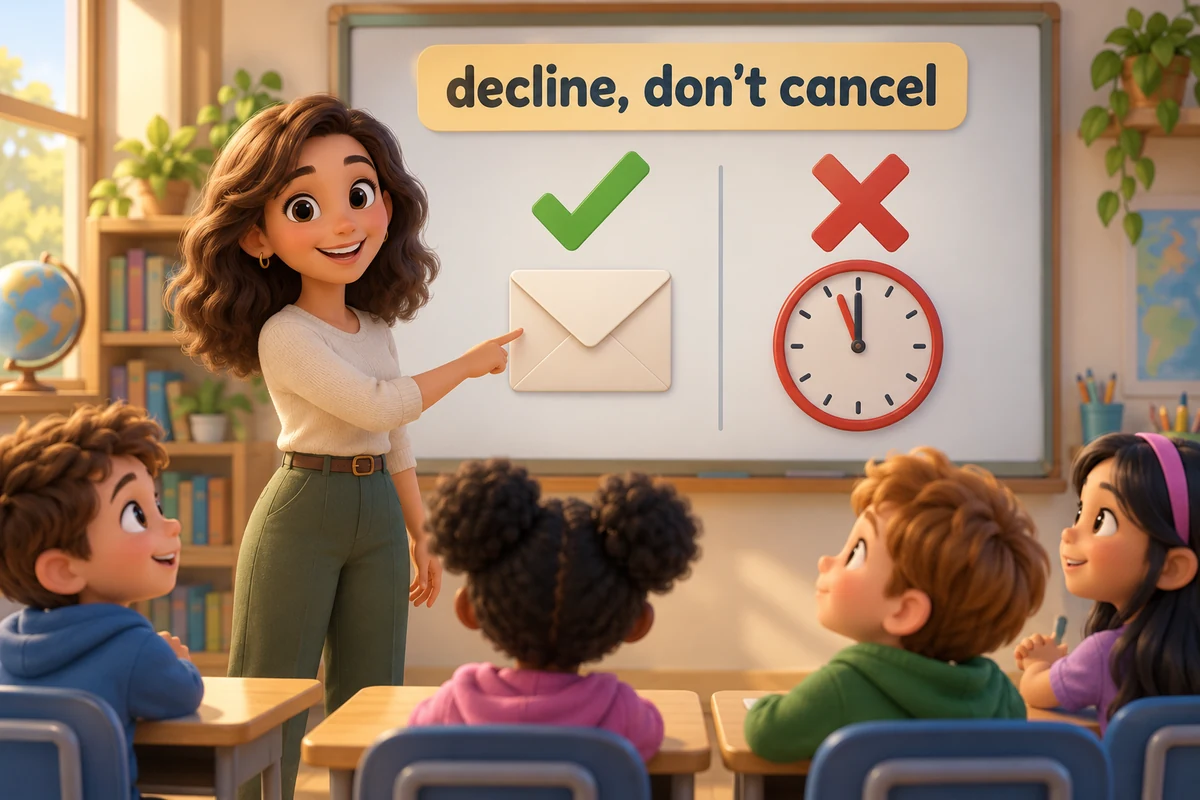
Polite ways to decline an invitation thank the host, say no clearly and keep the door open. A short reason is kind, a vague maybe is not, and an early reply beats a last-minute cancellation. Decline with warmth once, and the friendship stays intact.
Frequently asked questions about declining an invitation
How do you politely decline an invitation?
Thank the host first, give a clear no, add a brief kind reason, and offer another time if you mean it. A line such as thank you so much for the invitation, but I am afraid I cannot make it works in almost any setting. Clarity with warmth is the goal.
Is it rude to say no to an invitation?
It is not rude to decline; it is rude to decline coldly or to leave the host guessing. A clear, early no with thanks respects everyone`s time. A vague maybe, which forces the host to keep asking, is the least considerate response of all.
What does rain check mean in a refusal?
A rain check is a friendly way of declining now while promising another time. It comes from a ticket kept for a rained-off game, so a rain check means we could not meet this time, but let us set a new date. Offer it only when you truly intend to meet.
Should you give a reason when declining an invitation?
A short, general reason is kind because it shows the refusal is not personal. Details are optional and can hurt if they reveal dislike. A phrase such as I already have plans is enough; when no reason feels right, a plain warm thank you still carries the message.