Plural only nouns are nouns that appear in the plural form and take a plural verb, such as scissors, clothes, and trousers. English keeps several of these, some for two-part objects and some for things with no singular. In “the scissors are sharp,” the noun has no singular form.
Plural only nouns at a glance
- Plural only nouns have no singular form and take a plural verb.
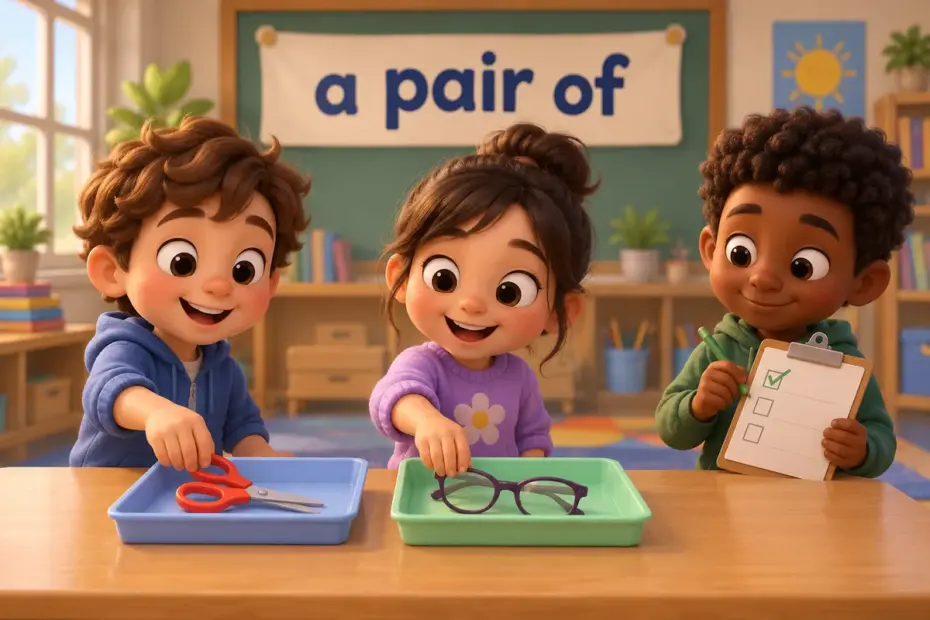
- Two-part items such as scissors, trousers, and glasses are counted as a pair.
- Others such as clothes, belongings, and thanks simply have no singular.
- Some words look plural but take a singular verb, and news is the clearest example.
- The commonest error is placing a or a number directly before one of these nouns.
What are plural only nouns?
A plural only noun is a noun that exists in the plural form alone, either because the object comes in two joined parts or because the word never gained a singular. The group is sometimes called pluralia tantum, and the verbs and counters that go with it follow special rules.
| Group | Examples | Verb |
|---|---|---|
| Two-part items | scissors, trousers, glasses, pliers | plural |
| No singular at all | clothes, belongings, thanks, goods | plural |
| Ranges and totals | savings, earnings, surroundings, outskirts | plural |
| Looks plural, single idea | news, physics, mathematics, measles | singular |
| Collective plural | the police, the cattle, the people | plural |
An honest limit matters here: not every word ending in -s is plural only. A word such as news looks plural yet takes a singular verb, so “the news is good” is right while “the news are good” is not, and the ending alone does not decide the verb. The safest habit is to learn each noun with a short sentence attached, because the verb in that sentence stores the agreement the noun needs. A learner who keeps the model sentence to hand then reads the verb back whenever a new sentence is built.
The reach of these nouns is not only wide but also deep, as the examples for not only in a sentence show the same paired pattern.
How do you use plural only nouns in a sentence?
The two-part items are counted in pairs, the no-singular group is counted with measure words, and the verb agrees with the real number of the noun.
| Pattern | Example | What it signals |
|---|---|---|
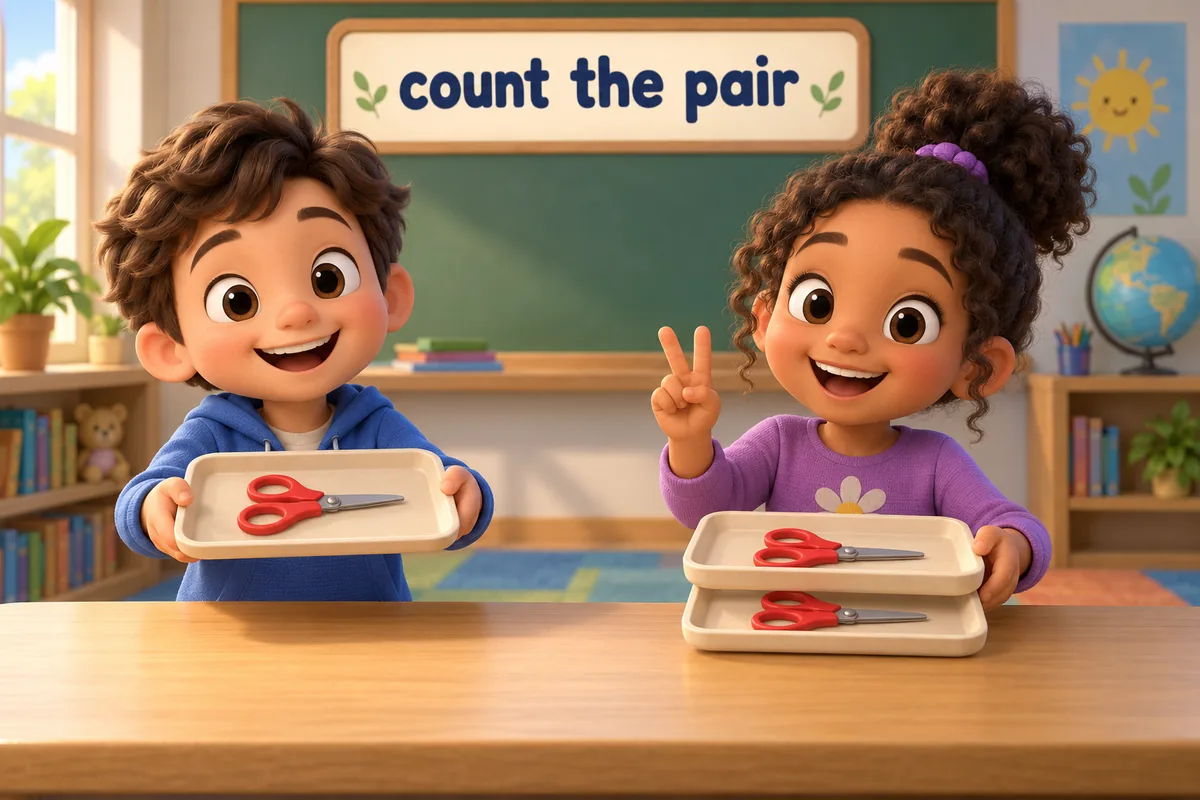
| a pair of + item | a pair of scissors | one two-part object |
| two pairs of + item | two pairs of trousers | more than one object |
| item or piece of + noun | an item of clothing | counting an uncountable-style noun |
| the + noun + plural verb | The scissors are sharp. | plural agreement |
| the + noun + singular verb | The news is good. | a plural-looking singular noun |
| a set of + noun | a set of tools | a matched group |
The counting trick is worth drilling, because a learner who remembers pair of and item of can order, pack, and describe these nouns without ever reaching for a singular that does not exist.
The clothing group clusters around one letter, and the list of nouns that start with c gathers cloth-related words such as clothes and the shorter cloth.
Plural only nouns across contexts
The same agreement rules hold in every setting, from a classroom list to a shopping receipt. A buyer who asks for a pair of trousers gets one item, and a seller who lists goods uses a plural verb throughout the whole list.
| Context | Example sentence | Why this works |
|---|---|---|
| Classroom | The scissors are in the drawer. | a two-part item takes a plural verb |
| Clothes shop | These trousers are too long. | trousers is always plural |
| News report | The news is better than expected. | news takes a singular verb |
| Packing list | I packed two pairs of shorts. | pairs count a two-part item |
| Everyday speech | My glasses are on the desk. | eyewear is plural only |
| Thanks | My thanks go to the whole team. | thanks has no singular form |
| Moving house | Our belongings are in boxes. | belongings is plural only |
| Physics lesson | Physics is my favourite subject. | a subject name takes a singular verb |
| Shopping | The groceries are in the boot. | groceries has no singular |
| Banking | Her savings are growing. | savings is plural only |
| Police report | The police are investigating. | a collective plural takes a plural verb |
| Tailor | A pair of pliers is in the box. | the pair, not the item, controls the verb |
Everyday items fill several letters, and the list of nouns that start with g shows how many ordinary words open there, from goods to glasses.
Plural only nouns vs plural-looking singulars
The two groups look alike on the page, and only the verb reveals which one a word belongs to.
| Feature | Plural only | Looks plural, is singular |
|---|---|---|
| Verb | plural: the scissors are | singular: the news is |
| Countable? | counted in pairs or pieces | usually uncountable |
| Examples | trousers, clothes, goods | news, physics, measles |
| A or an? | not used directly | not used directly |
| Typical trap | a singular verb added by mistake | a plural verb added by mistake |
| Example | The trousers are new. | The news is surprising. |
Read the verb to place a word: a plural verb marks a plural-only noun, and a singular verb marks a subject name that merely ends in -s, so the pair scissors and news never agree the same way. When the verb is hidden in a longer sentence, the same test still works, because a plural-only noun keeps its plural agreement whatever the surrounding words do.
Word forms and grammar of plural only nouns
| Form | Structure | Example |
|---|---|---|
| Two-part item, one | a pair of + noun | a pair of scissors |
| Two-part item, many | a number + pairs of + noun | three pairs of glasses |
| No-singular noun | item, piece, or article of | an article of clothing |
| Uncountable twin | a singular form with a different sense | clothing beside clothes |
| Collective plural | the + noun + plural verb | the police are here |
| Looks plural, singular | the + noun + singular verb | the news is here |
The plural noun never takes -s again, because it already carries the plural, so two pairs of scissors is correct while two pairs of scissorses is not. The same care helps with the no-singular group, where an article of clothing or a piece of goods supplies the count and the noun stays plural.
Common mistakes with plural only nouns
Mistake 1: a singular verb on a plural-only noun. Incorrect: My new trousers is tight. Correct: My new trousers are tight. Rule: a plural-only noun takes a plural verb.
Mistake 2: a or an placed directly before it. Incorrect: I need a scissors. Correct: I need a pair of scissors. Rule: a two-part item is counted with pair of.
Mistake 3: counting without a measure word. Incorrect: I have three clothes. Correct: I have three items of clothing. Rule: a no-singular noun needs item, pair, or piece.
Mistake 4: a plural verb on a plural-looking singular. Incorrect: The news are surprising. Correct: The news is surprising. Rule: news takes a singular verb despite the -s.
Mistake 5: inventing a singular form. Incorrect: a trouser, a belonging. Correct: a pair of trousers, a personal belonging. Rule: a plural-only noun has no singular for the same sense.
Practice using plural only nouns
- Fill in the blank: My glasses ___ on the table.
- Choose the better form: I bought (a scissors / a pair of scissors).
- Correct the error: The news are excellent today.
- Build a sentence: say that you packed two pairs of shorts.
- Spot the register: which is correct in a physics lesson, (a) Physics is difficult, or (b) Physics are difficult?
- Fill in the blank: Our ___ are packed in the boxes.
Answers
- are, because glasses is a plural-only noun and takes a plural verb.
- a pair of scissors, because a two-part item is counted by the pair.
- The news is excellent today; news takes a singular verb.
- I packed two pairs of shorts for the trip.
- (a), because a subject name ending in -s takes a singular verb.
- belongings, because belongings is a plural-only noun.

The bottom line
Plural only nouns come in two main shapes: items counted in pairs, such as scissors and trousers, and words with no singular, such as clothes and belongings. Both take a plural verb, while a plural-looking word such as news takes a singular one. Count the first group with pair of, the second with piece or item, and the agreement follows.
Frequently asked questions about plural only nouns
Why do we say a pair of scissors?
Scissors names a single tool made of two joined blades, and English treats the two parts as a plural. The word pair of lets a speaker count one complete tool, so a pair of scissors is one object and two pairs of scissors is two objects.
Is news singular or plural?
News is singular despite its -s ending, so the news is good is correct. It behaves like a subject name rather than a count noun, which is why it never takes a or a number directly. The same pattern covers physics, mathematics, and measles.
Can I say two clothes or two trousers?
No. Say two items of clothing, or two pairs of trousers, because these nouns are not counted with a number placed directly before them. The measure word item or pair carries the count, while the noun itself stays in its plural-only form.
What is the difference between clothes and clothing?
Clothes is plural only and takes a plural verb, as in my clothes are clean. Clothing is an uncountable noun that takes a singular verb, as in warm clothing is essential. They describe the same idea but follow different grammar rules.