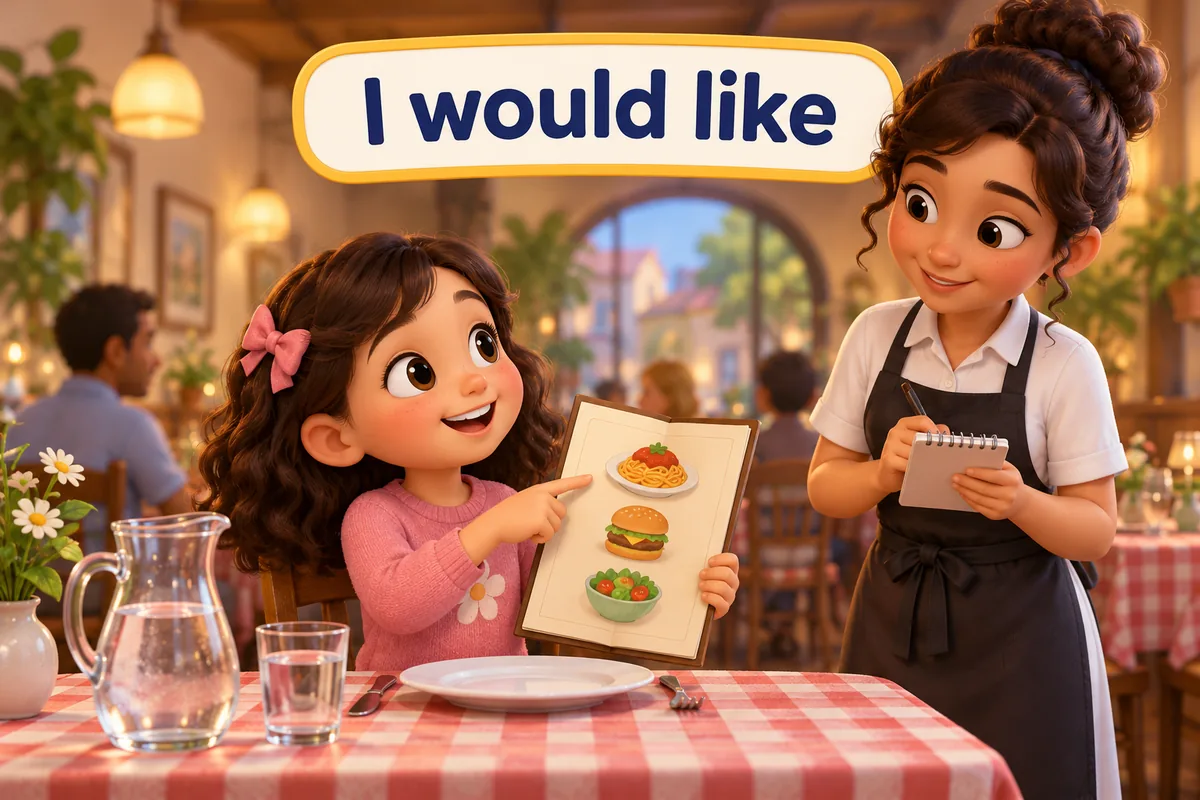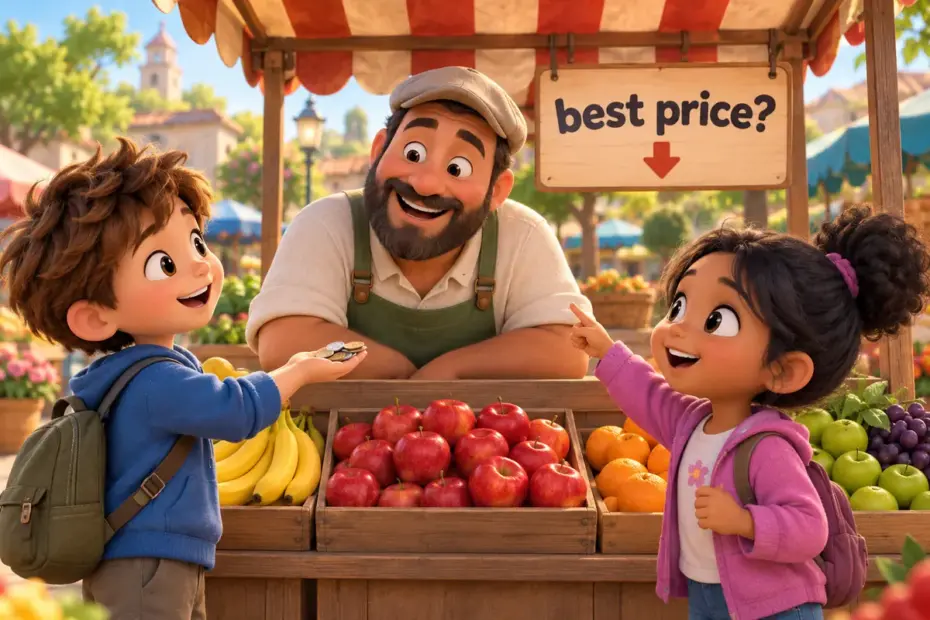
Phrases for shopping and bargaining guide a buyer from asking about an item to agreeing a price. English softens the request with how much is, do you have this in, and is there any chance of. In “could you do it for ten?,” the frame turns a demand into a negotiation.
Phrases for shopping and bargaining at a glance
- Core frames include how much is, do you have this in, and could I try this on.
- Bargaining softens the ask with is there any chance of or could you do it for.
- Haggling suits markets and street stalls, not shops with fixed prices.
- I am just looking politely declines help without closing the sale.
- The commonest error is bargaining where the price is already fixed.
What are phrases for shopping and bargaining?
Phrases for shopping and bargaining are the fixed requests a buyer uses at each stage of a purchase. The questions about an item are neutral, while the bargaining frames add a gentle push toward a lower price, and the wording signals which of the two the speaker intends.
| Stage | Useful phrase | Example |
|---|---|---|
| Browsing | I am just looking | I am just looking, thank you. |
| Asking a price | how much is | How much is this bag? |
| Asking about size or colour | do you have this in | Do you have this in blue? |
| Trying an item | could I try this on | Could I try this on? |
| Bargaining | is there any chance of | Is there any chance of a lower price? |
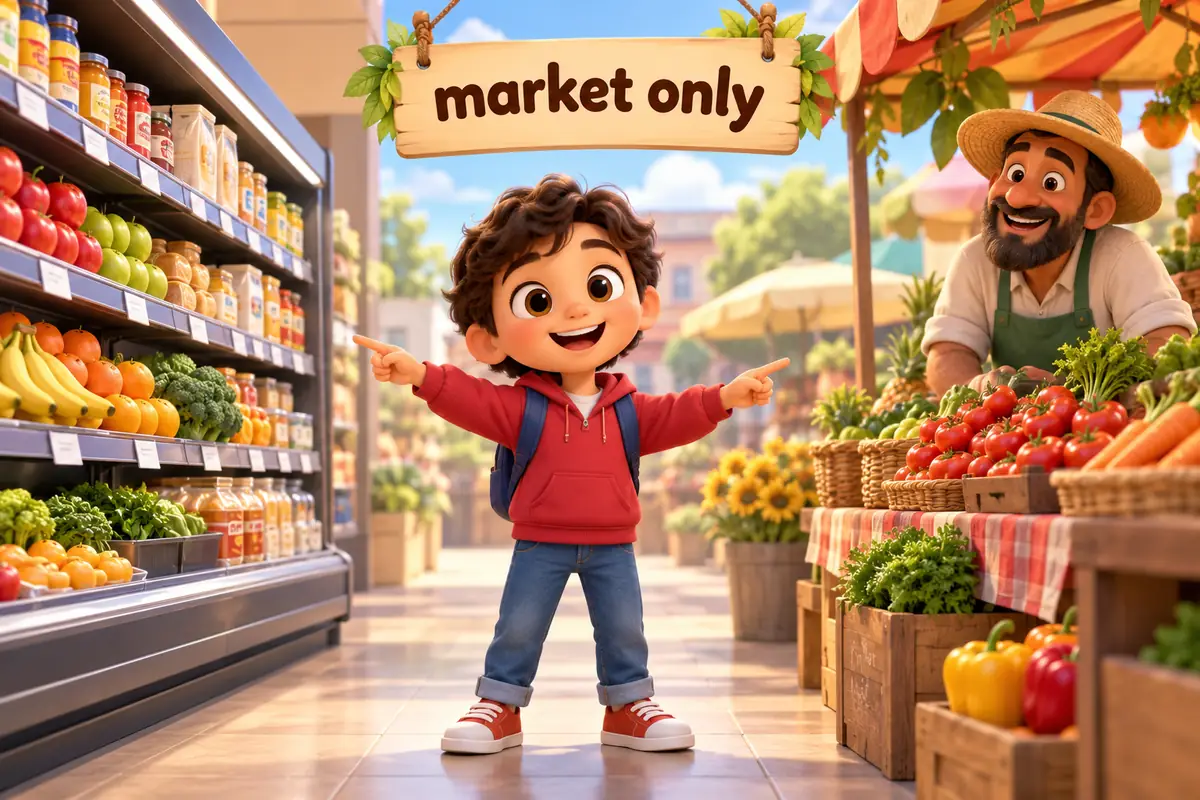
An honest limit matters here: bargaining is welcome in a market and unwelcome in a supermarket, so the same sentence can seem friendly in one setting and pushy in another. Reading the setting matters more than the phrase itself.
A shopping trip often starts with a look rather than a purchase, and the examples for shopping in a sentence cover that browsing stage.
How do you ask for a lower price politely?
A polite bargain frames the lower price as a question rather than a command, and often offers a reason such as buying more than one item.
| Pattern | Example | What it signals |
|---|---|---|
| Is there any chance of + noun | Is there any chance of a discount? | a gentle opening |
| Could you do it for + price | Could you do it for ten? | a concrete counter-offer |
| That seems a little high | That seems a little high for cash. | a soft objection |
| What is your best price | What is your best price? | an invitation to lower it |
| I will take it if | I will take it if you can do fifteen. | a conditional close |
| How much for two | How much for two of them? | a bulk-price question |
An offer that names a number moves the exchange forward far faster than a general complaint, because the seller can accept, refuse, or meet it halfway on the spot.
Haggling has its own wording, and the examples for bargaining in a sentence show how a price is nudged down politely.
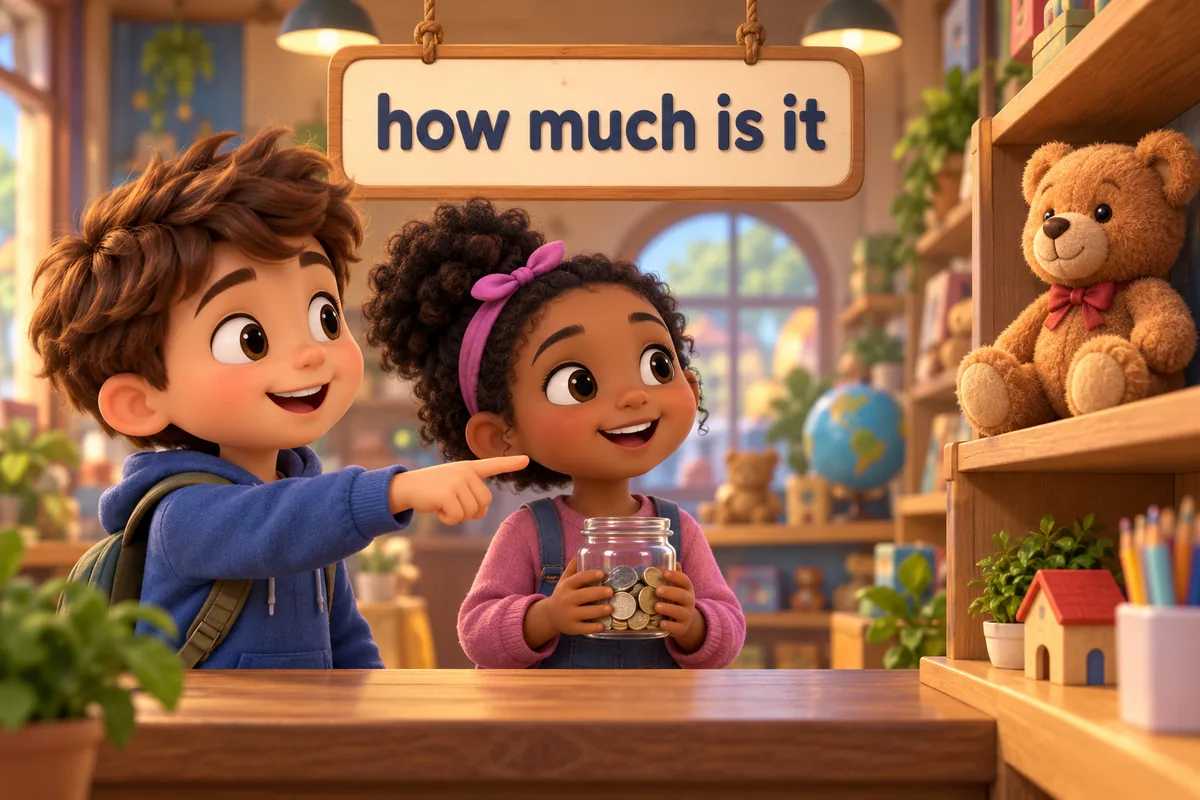
Phrases for shopping and bargaining across contexts
The setting decides whether a price question is a simple check or the opening move of a negotiation. In a shop the answer is a number on a tag, while in a market the first answer is often an opening position rather than a final one.
| Context | Example sentence | Why this works |
|---|---|---|
| Clothes shop | Do you have this in a medium? | a neutral size question |
| Market stall | Could you do it for eight? | a soft counter-offer |
| Supermarket | Where can I find the rice? | a plain location question |
| Boutique | Is there any chance of a discount? | a gentle opening |
| Changing room | Could I try this on? | a standard fitting request |
| Souvenir stand | What is your best price? | an invitation to lower it |
| Shoe shop | Do you have these in a size six? | a precise availability question |
| Payment | Can I pay by card? | a simple yes or no check |
| Returns | Could I exchange this, please? | a polite after-sale request |
| Browsing | I am just looking, thanks. | a courteous decline of help |
| Bulk buying | How much for three of them? | a quantity-based bargain |
| Conditional deal | I will take it if you can do fifteen. | a firm but fair close |
Not every outing ends in a sale, and the examples for window shopping in a sentence capture the no-purchase trip.
Bigger trips need a plan, and the examples for shopping mall in a sentence set several errands in one place.
Fixed-price shops vs bargain markets
The two settings expect opposite behaviour, so the choice of phrase rests on where the shopping happens.
| Feature | Fixed-price shop | Bargain market |
|---|---|---|
| Price | set and marked | open to offers |
| Bargaining | unwelcome | expected |
| Typical question | do you have this in blue | what is your best price |
| Tone | brief and factual | warm and playful |
| Payment | at the till | often cash, agreed on the spot |
| Example | Where is the till? | Could you do it for ten? |
Read the setting before opening a negotiation, because a polite bargain in a market builds goodwill while the same sentence in a supermarket reads as a misunderstanding of how prices work. When a seller does agree a price, a short thank you closes the deal and often earns a warmer welcome on the next visit.
Word forms and grammar of shopping phrases
| Form | Structure | Example |
|---|---|---|
| Price question | how much is or are plus noun | How much are these shoes? |
| Availability | do you have plus noun plus in plus size | Do you have it in a large? |
| Trying on | try plus item plus on | Could I try the coat on? |
| Counter-offer | could you do it for plus price | Could you do it for twelve? |
| Conditional | I will take it if plus condition | I will take it if you can discount it. |
| Polite decline | I am just plus -ing | I am just looking. |
The particle on is easy to drop and hard to hide, because try this on is the fixed shape while try this alone leaves the listener waiting for the missing word. The same habit keeps a price question compact, since how much is this asks everything a buyer needs to know in one short line.
Common mistakes with shopping and bargaining phrases
Mistake 1: bargaining where prices are fixed. Incorrect, at a supermarket till: Can you give me a discount? Correct: I will pay at the till. Rule: haggling suits markets, not fixed-price shops.
Mistake 2: a vague price question. Incorrect: How much money? Correct: How much is this? Rule: a price question names the item.
Mistake 3: leaving out on when trying clothes. Incorrect: Could I try this? Correct: Could I try this on? Rule: clothing takes the particle on.
Mistake 4: a blunt demand for a discount. Incorrect: Give me a lower price. Correct: Is there any chance of a lower price? Rule: a question frames the bargain politely.
Mistake 5: the wrong question form with cost. Incorrect: How much cost this shirt? Correct: How much does this shirt cost? Rule: cost needs the auxiliary does in a question.
Practice using phrases for shopping and bargaining
- Fill in the blank: How much ___ these trousers?
- Choose the better phrase: (Do you have / Give me) this in a small?
- Correct the error: Could I try this?
- Build a sentence: offer ten for an item priced at fifteen.
- Spot the register: which line suits a market stall, (a) What is your best price?, or (b) Where is the till?
- Fill in the blank: I am just ___, thank you.
Answers
- are, because trousers is a plural noun and takes are.
- Do you have, because it is a neutral availability question.
- Could I try this on? Clothing always takes the particle on.
- Could you do it for ten? or I will take it if you can do ten.
- (a), because market prices are open to offers.
- looking, because I am just looking politely declines help.
The bottom line
Phrases for shopping and bargaining move from a neutral price question to a soft counter-offer, and the setting decides which is welcome. Ask how much is this in a shop, and reach for could you do it for in a market. Keep the particle in try this on, and read the price tag before opening any negotiation.
Frequently asked questions about shopping and bargaining phrases
Is bargaining rude in an English-speaking shop?
It depends on the setting. A market, street stall, or souvenir stand expects a friendly offer, while a supermarket, chain store, or boutique has fixed prices and treats haggling as a misunderstanding. Read the shop before you speak, and when in doubt pay the marked price.
How do I ask to try clothes on?
Use could I try this on, naming the item if it helps, such as could I try the jacket on. The particle on is required for clothing. In a fitting room you may also ask where the fitting rooms are, and the assistant will point the way.
What is a polite way to ask for a discount?
Frame it as a question and offer a reason. Is there any chance of a discount, or could you do it for ten if I buy two, both soften the ask. A concrete counter-offer works better than a vague request, because the seller can answer yes or no at once.
What does I am just looking mean?
It tells an assistant that you want to browse without help, and it does so politely. The phrase closes the offer of assistance without closing the sale, so a shopper who says it can still call the assistant back later when a decision is made.