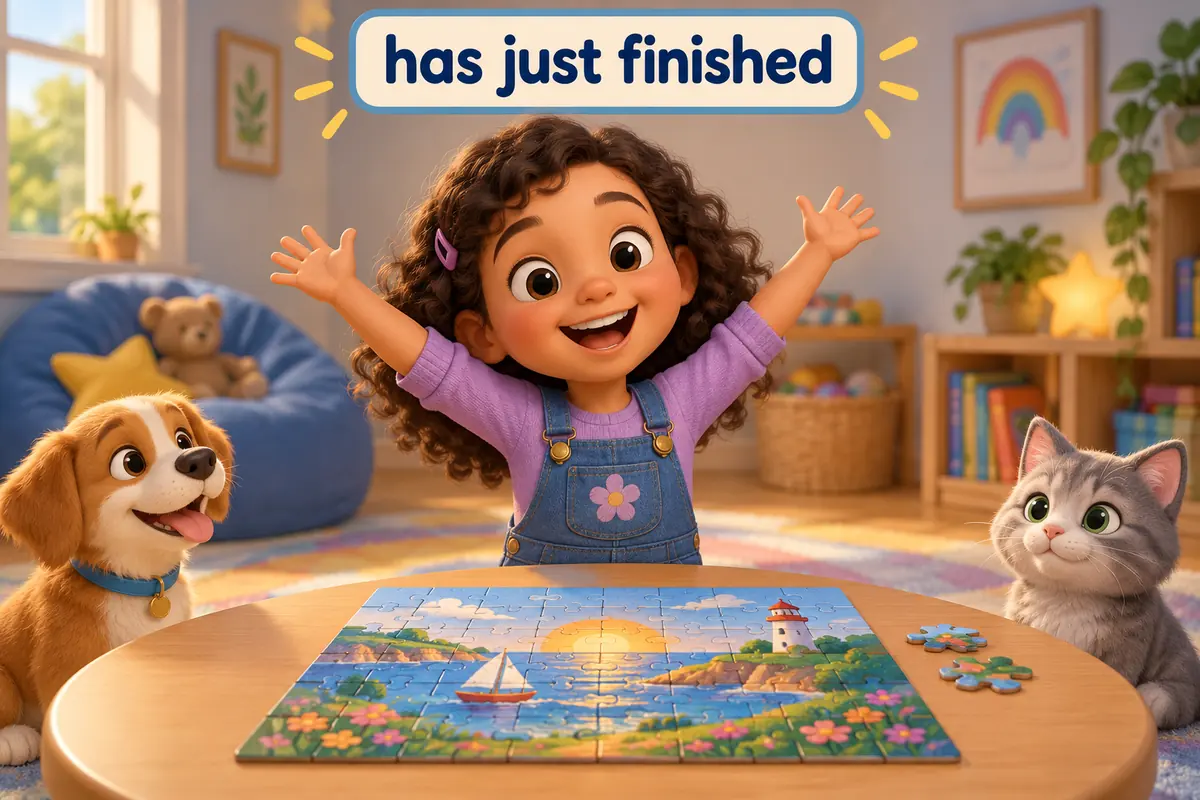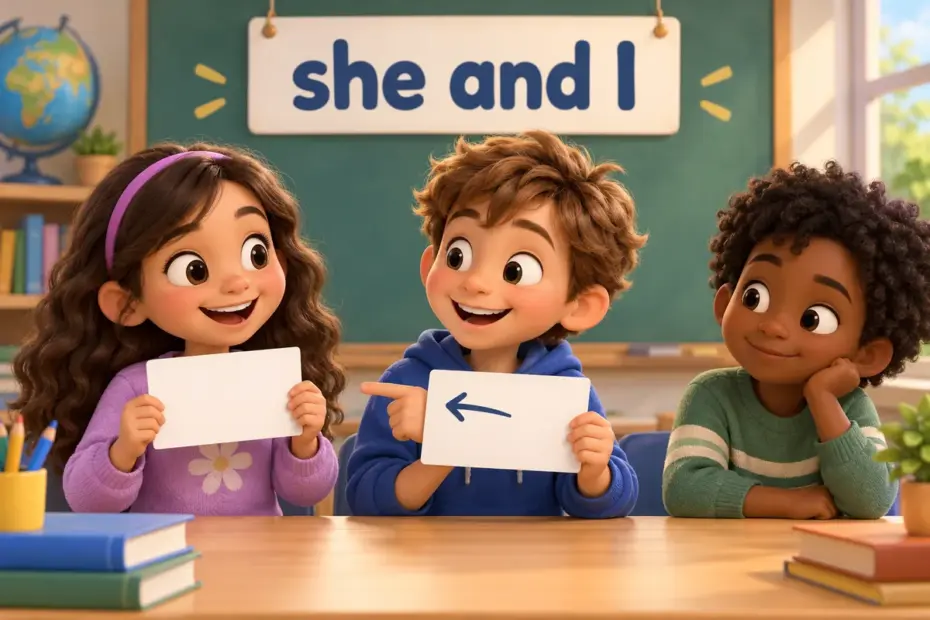
A pronoun and its types with examples begin with one idea: a pronoun stands in for a noun so a sentence does not repeat the same name. Personal pronouns such as I, you and they replace people and things. Possessive pronouns such as mine and theirs show ownership, and reflexive pronouns such as myself point back to the subject.
Pronoun and its types with examples at a glance
- A pronoun replaces a noun or a noun phrase.
- Personal pronouns change with the person and the number.
- Possessive pronouns show ownership without an apostrophe.
- Reflexive pronouns end in self or selves and point back to the subject.
- The commonest error is using a subject pronoun where an object pronoun belongs.
What is a pronoun?
A pronoun is a word that takes the place of a noun or a noun phrase, so the reader knows who or what is meant without a repeat of the name. The word it replaces is called its antecedent, and a clear pronoun must agree with that antecedent in number and in person. Without agreement, a sentence leaves the reader guessing who did what.
| Person | Singular | Plural |
|---|---|---|
| First person | I, me, my, mine | we, us, our, ours |
| Second person | you, your, yours | you, your, yours |
| Third person | he, she, it, him, her | they, them, their, theirs |
One honest limit is worth naming. A pronoun is only clear when the reader can find its antecedent, so a sentence with two possible owners of the same pronoun is better rewritten with the noun repeated. Clarity beats brevity whenever the two disagree.
What are the types of pronouns?
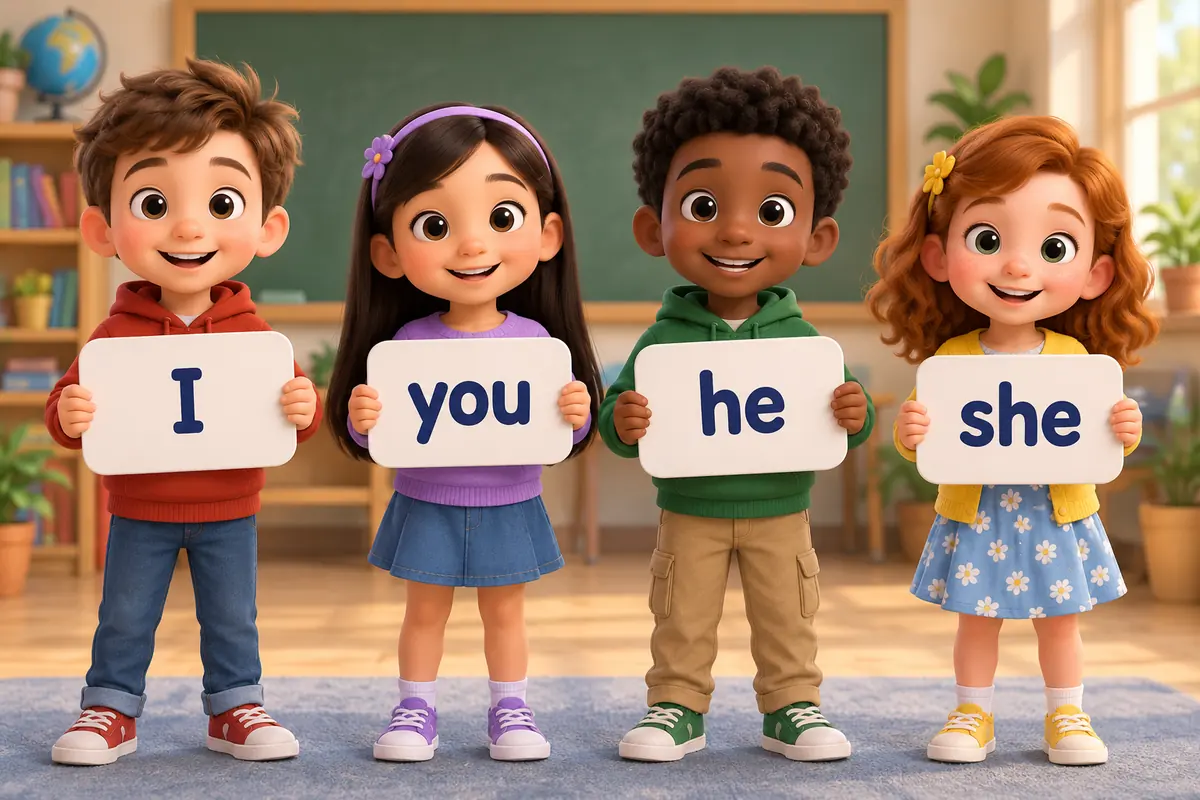
Pronouns fall into a small set of families, and each family does a different job in the sentence. Naming the family makes it easy to choose the right form.
| Type | Example pronouns | Example sentence |
|---|---|---|
| Personal | I, you, he, she, they | She called the office. |
| Possessive | mine, yours, hers, theirs | The blue bag is hers. |
| Reflexive | myself, yourself, themselves | He taught himself guitar. |
| Demonstrative | this, that, these, those | These are the new ones. |
| Relative | who, which, that | The girl who won smiled. |
| Indefinite | someone, everyone, none | Everyone arrived early. |
Pronoun and its types with examples across contexts
The families show up in every kind of writing, and the reason beside each sentence explains why that form fits.
| Context | Sentence | Why this works |
|---|---|---|
| Classroom | They shared the crayons. | A personal pronoun replaces the children. |
| Workplace email | I have sent it to you. | Two pronouns shorten a familiar exchange. |
| News report | The mayor said she would attend. | The pronoun matches its singular antecedent. |
| Story opening | He was not afraid of the dark. | The pronoun names the main character. |
| Academic essay | Researchers who publish often cite it. | A relative pronoun links a clause. |
| Recipe | Whisk them until they are smooth. | The pronoun refers to the eggs. |
| Conversation | Someone left a note. | An indefinite pronoun names an unknown person. |
| Letter | The parcel is yours. | A possessive pronoun shows ownership. |
| Reflection | She reminded herself to breathe. | A reflexive pronoun points back to the subject. |
Quick practice with the forms makes the choice automatic. A set of pronoun sentence models covers each family in turn. When a pronoun replaces a noun, pronoun and adjective agreement keeps the describing words matching. For more examples of pronouns in sentences, the same collection is a useful starting point.
Personal pronouns vs possessive pronouns
Both name people or things, but one acts in the sentence while the other marks ownership, and the apostrophe is the clearest difference.
| Feature | Personal pronoun | Possessive pronoun |
|---|---|---|
| Job | Names who acts or is acted on | Shows who owns something |
| Example | They built the shed. | The shed is theirs. |
| Apostrophe | None | None, even though it shows ownership |
| Stands alone? | Yes, as a subject or object | Yes, it replaces the whole noun phrase |
| Typical slip | Mixing I and me | Writing her’s instead of hers |
The verdict is simple: use a personal pronoun for the doer or receiver, and a possessive pronoun only for the owner.
Word forms and grammar of pronouns
The same pronoun changes shape depending on whether it is the subject, the object or a possessor, and the case table keeps the three apart.
| Case | Role | Example |
|---|---|---|
| Subject | Performs the action | We finished early. |
| Object | Receives the action | She called us. |
| Possessive determiner | Sits before a noun | our plan |
| Possessive pronoun | Stands alone | The plan is ours. |
| Reflexive | Points back to the subject | We taught ourselves. |
Common mistakes with pronouns
| Wrong | Right | Rule |
|---|---|---|
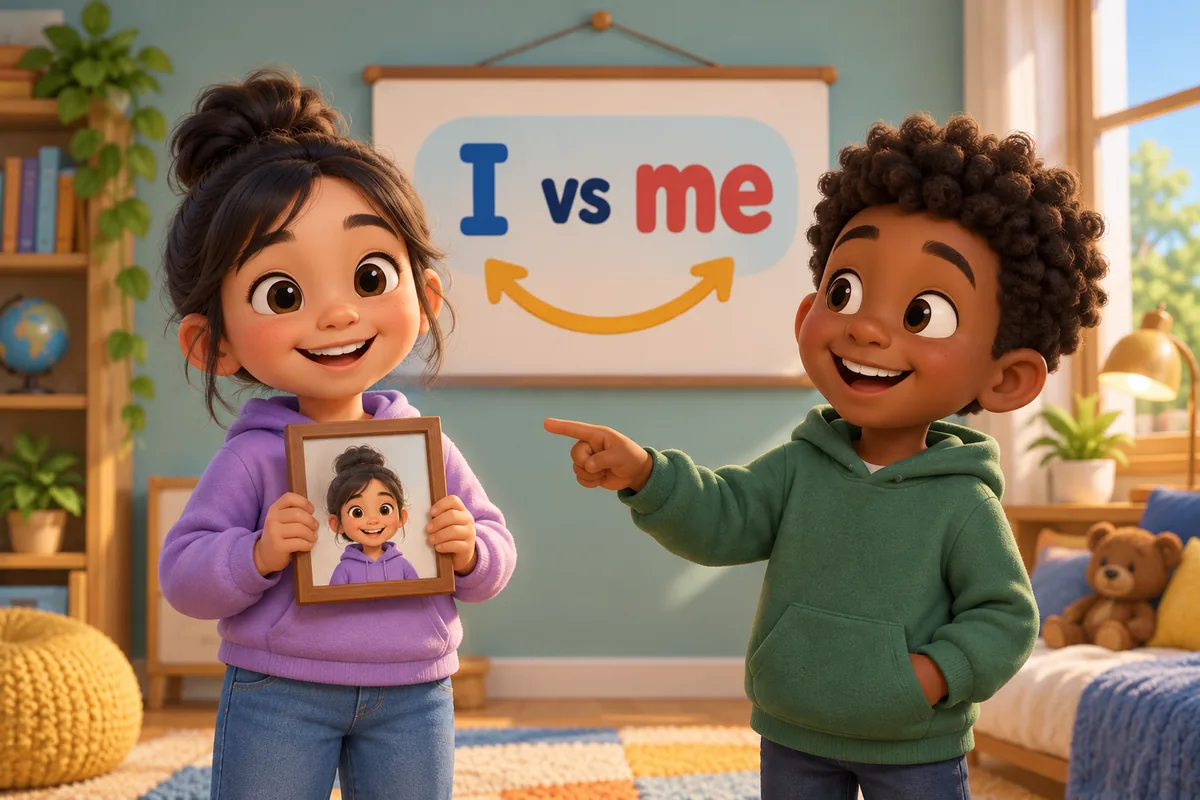
| Sam and I went out. | A subject pronoun performs the action. | |
| Between you and me, it is cold. | A pronoun after a preposition takes object form. | |
| That book is hers. | Possessive pronouns take no apostrophe. | |
| Each student brought a bag. | A singular indefinite subject takes a singular form. | |
| The team lost its game. | Its shows possession; it’s means it is. |
Practice using pronouns
These exercises test the family and the case. Choose the correct form or repair each sentence, then check the reason.
- Fill the gap: Sam and ____ (I / me) are friends.
- Fill the gap: The red pen is ____ (her / hers).
- Correct the error: Dad drove my brother and I to school.
- Choose the type: In Everyone clapped, which family is everyone?
- Build a sentence about a team using a reflexive pronoun.
- Replace the repeat: Maria lost Maria’s keys.
Answers
- Sam and I are friends. The subject of the sentence takes the subject pronoun.
- The red pen is hers. A possessive pronoun stands alone and takes no apostrophe.
- Dad drove my brother and me to school. The object of the verb takes the object pronoun.
- Indefinite. Everyone names people without saying who exactly.
- The team encouraged themselves before the match. A reflexive pronoun points back to the subject.
- Maria lost her keys. A possessive determiner removes the repeated name.
The bottom line
A pronoun and its types with examples come down to matching the form to the job, so a subject pronoun acts and an object pronoun receives. Learn the families in order, personal first and relative last, and keep the apostrophe away from possessive pronouns. Check the antecedent every time, because a pronoun is only useful when the reader can tell what it stands for.
Frequently asked questions about pronouns
What is the difference between a pronoun and a noun?
A noun names a person, place, thing or idea, while a pronoun replaces a noun that the reader already knows. In Maria called, Maria is a noun. In she called, she is a pronoun standing for Maria. The pronoun keeps the sentence short and avoids a repeat of the name.
Is the word it a pronoun?
Yes. It is a personal pronoun for a single thing or animal, and it can also act as a placeholder subject, as in it is raining. When it stands for a noun, the reader must be able to find that noun, or the sentence needs rewriting for clarity.
Can a pronoun come before its noun?
Usually the noun comes first so the reader knows the antecedent, but a pronoun can open a sentence when the noun appears later. In she waved, the runner had almost finished, the pronoun points forward to the runner. Forward reference works but needs care to stay clear.
Why do we say you and I rather than you and me as a subject?
Because the whole phrase acts as the subject of the verb. Once the subject role is fixed, every pronoun in the phrase takes the subject form, so you and I is right at the start. After a verb or a preposition, the same pair becomes you and me.