
Adjectives for Work Ethic: Words, Meanings & Examples
Adjectives for work ethic describe the habits, attitudes, and values a person brings to work—such as diligence, reliability, accountability, and initiative. Choose a word that matches observable behavior in its job context; a strong result alone cannot show how it was achieved, and long hours alone do not prove a strong work ethic.
Work Ethic at a Glance
- Work ethic describes patterns: follow-through, honesty, care, responsibility, and persistence.
- Performance is related but separate: results also depend on skill, tools, workload, role clarity, and opportunity.
- Use observable evidence: replace “hardworking” with a concrete action and its effect.
- Match the adjective to the role: initiative matters differently in a tightly regulated task and an exploratory project.
- Fair feedback names expectations: compare behavior with clear standards, not personality assumptions.
What does work ethic mean?
Work ethic is a person’s approach to work: the values and repeated habits that shape how they handle responsibilities. It can include dependability, integrity, attention to detail, initiative, achievement orientation, and perseverance. O*NET OnLine groups these under “work styles,” while organizational research often treats related qualities such as conscientiousness as predictors whose value varies with the occupation and performance criterion.
Work ethic is not the same as raw output. A worker may show diligence by documenting a careful process even when an external delay prevents a project from shipping; another person may hit a target through a lucky opportunity without showing reliable follow-through. A balanced description states the behavior and the result separately. U.S. Office of Personnel Management guidance likewise recommends clear standards tied to quality, quantity, timeliness, and cost-effectiveness.

Which adjective fits the behavior you observed?
Start with evidence, then select the narrowest accurate word. The table separates adjectives that are often treated as interchangeable.
| Adjective | What it emphasizes | Observable example |
|---|---|---|
| Diligent | Steady care and effort | Checks figures against the source before submitting a report. |
| Hardworking | Sustained effort across tasks | Maintains attention through a demanding shift; avoid using it as a synonym for unpaid overtime. |
| Conscientious | Careful, responsible, rule-aware work | Follows the required safety steps even when no supervisor is present. |
| Reliable | Consistent follow-through | Completes the agreed handoff by the deadline or flags a risk early. |
| Accountable | Ownership of decisions and repair | Owns an error, corrects the record, and explains how recurrence will be prevented. |
| Proactive | Anticipating needs before prompting | Alerts the team to a dependency before it delays the next step. |
| Organized | Structured management of work | Uses a clear tracker so teammates can see status and deadlines. |
| Self-disciplined | Maintaining focus and commitments | Protects time for a scheduled task and communicates when priorities conflict. |
| Adaptable | Adjusting constructively to change | Reorders tasks when requirements change and confirms the new priority. |
| Persistent | Continuing through obstacles | Tests another approved solution after the first approach fails. |
| Ethical | Honesty and principled conduct | Reports a mistake accurately instead of hiding it to protect a metric. |
| Collaborative | Contributing responsibly with others | Shares a timely update and credits colleagues’ work accurately. |
How do positive work-ethic adjectives differ?
Positive adjectives describe different behaviors; choosing a specific one makes a résumé, review, or recommendation more credible than stacking synonyms such as “dedicated, committed, hardworking, and motivated.”
Dependability and responsibility
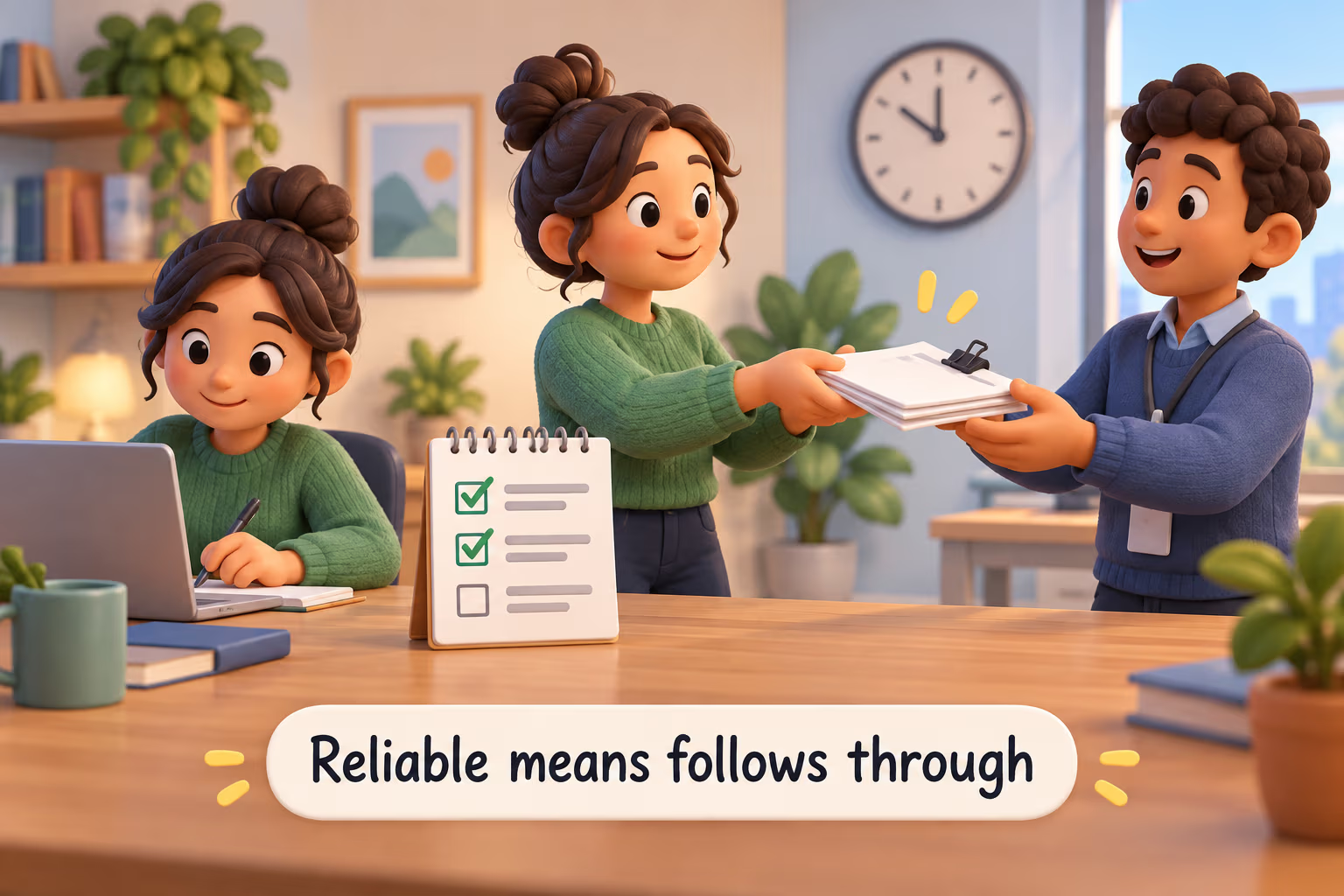
Reliable focuses on consistent follow-through. Responsible describes taking care of assigned duties, while accountable specifically emphasizes owning actions and consequences. Use “reliable” when a person meets agreed commitments; use “accountable” when they address a mistake or explain a decision openly.
Care, quality, and organization
Diligent and thorough highlight sustained attention; detail-oriented emphasizes noticing specific details; methodical means using an orderly process. These words do not automatically mean fast. For a quality-critical task, “methodical” may be more accurate praise than “quick,” especially when the person catches a preventable error.
Initiative, effort, and persistence
Proactive means acting before a prompt when the next step is reasonably clear. Motivated points to willingness or drive, which may be harder to observe than behavior. Persistent describes continued effort after a setback, and resourceful describes finding a workable path with available resources. Initiative is not permission to bypass approvals or take on work without coordination.

Integrity and teamwork
Ethical, honest, and trustworthy describe conduct, not just efficiency. Cooperative and collaborative highlight how someone contributes with others. Strong work ethic includes respecting boundaries and sharing credit; it does not require agreeing with every request or being constantly available.
How should you describe work ethic in a review?
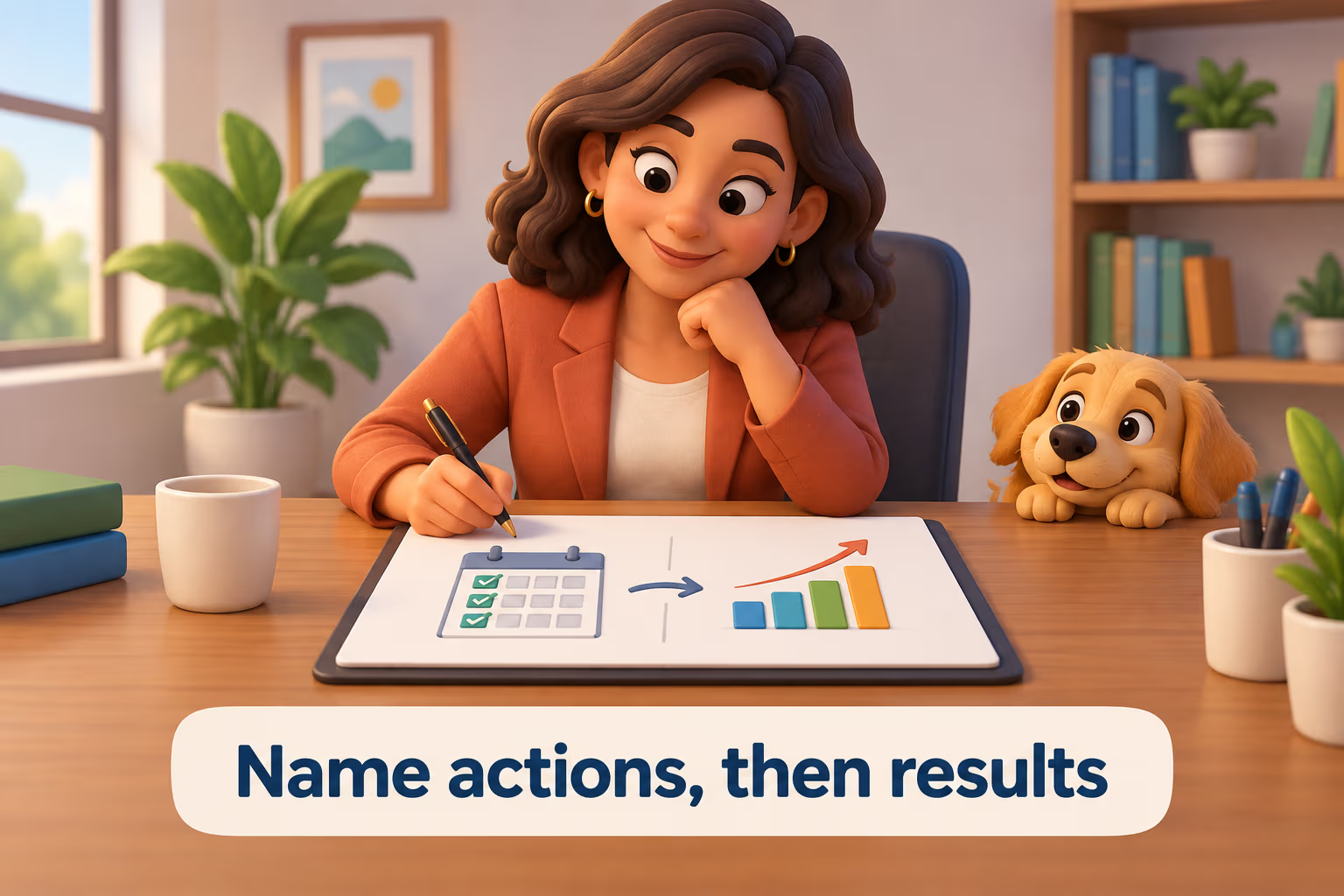
For a performance review, name a concrete behavior, explain the relevant expectation, and state the impact. The U.S. Office of Personnel Management advises writing standards that are objective, measurable, realistic, and clear; this helps keep personality labels from replacing evidence.
- Name the situation: “During the April release…”
- Describe the behavior: “…Maya flagged a missing approval two days before launch and kept the handoff log current.”
- Connect the behavior to impact: “…which gave the reviewer time to resolve the dependency without a late rework.”
- Choose a precise adjective: “Her proactive, reliable approach reduced avoidable handoff risk.”
Separate conduct from outcome. If a deadline slipped because a supplier missed delivery, “unreliable” may misattribute the cause to the employee. Describe what was within the employee’s control—such as whether they communicated the risk promptly—and record the external constraint separately.
Which adjectives work on a résumé or application?
On a résumé, pair one adjective with evidence rather than listing personality claims by themselves. A hiring manager can verify an action, a scope, or a result more readily than a bare claim that someone is “exceptionally dedicated.”
| Generic claim | More specific wording | Why it is stronger |
|---|---|---|
| Hardworking employee | “Maintained a 98% on-time close rate across 120 monthly service tickets.” | Connects a work habit to a defined measure; include only a number you can substantiate. |
| Detail-oriented | “Reconciled 40 weekly invoices and corrected mismatched line items before payment.” | Shows the task and the care applied. |
| Proactive team member | “Created a shared handoff checklist that clarified owners and due dates for six-person project teams.” | Explains the initiative and its practical use. |
| Highly motivated | “Completed the required safety certification and used it to train three new team members.” | Replaces an internal-state claim with a verifiable action. |
Use metrics only when they are accurate, relevant, and fair to disclose. If a result depends on a team, describe your contribution instead of claiming sole credit. The same evidence-first rule applies to describing integrity, work skills, or participation.
What are negative work-ethic adjectives?
Unreliable, careless, unaccountable, disorganized, and unmotivated can describe a repeated pattern, but they are broad judgments. In feedback, describe the behavior first: “The last two status updates arrived after the agreed deadline, and no delay notice was sent.” This is clearer and more actionable than “You have a poor work ethic.”
Do not confuse a skill gap, unclear direction, inaccessible tool, illness, disability, caregiving constraint, or unrealistic workload with a character defect. Describe a specific expectation and observed behavior, ask what blocked the work, and agree on a practical next step. A person can be ethical and diligent while still needing training or a more workable process.
Frequently Asked Questions About Adjectives for Work Ethic
What is one strong adjective for work ethic?
Reliable is a useful choice when someone consistently follows through on agreed responsibilities. If the evidence is careful work, choose diligent; if it is ownership after a mistake, choose accountable. The strongest adjective is the one supported by a specific example from that role.
Is hardworking the same as having a strong work ethic?
No. Hardworking emphasizes sustained effort, while work ethic can also include honesty, dependability, care, accountability, and respect for others. More hours do not automatically mean better judgment or better results. Describe the behavior relevant to the job instead of treating overtime as proof of character.
Can I say I have a strong work ethic on my résumé?
You can, but a bare claim is difficult to verify. Pair it with a concrete example: the schedule you maintained, quality checks you completed, commitments you met, or initiative you took. Use numbers only when you can substantiate them and explain your own contribution accurately.
What is a polite way to describe poor work ethic?
Describe the missed expectation and its effect without diagnosing someone’s character. For example, say “The report was submitted two days late, and the delay was not raised in advance” rather than “You are lazy.” Then identify the agreed deadline, ask about blockers, and set a measurable next step.
Does work ethic look the same in every job?
No. Dependability and integrity matter broadly, but the best way to show initiative, speed, precision, or flexibility depends on the work. A creative role may require experimentation; a safety-critical role may require strict procedure. Match the adjective to the role’s actual responsibilities and standards.
Sources and Further Reading
- O*NET OnLine: Work Styles, including dependability, integrity, initiative, and perseverance.
- American Psychological Association: Which traits predict job performance?
- U.S. Office of Personnel Management: Developing Performance Standards.
- Dudley et al., A meta-analytic investigation of conscientiousness in the prediction of job performance (2006).
Original Work-Ethic Adjective List
The original examples and adjective tables are retained below in full; the added guide clarifies how to distinguish work habits from results and how to support each description with fair evidence.

When it comes to describing someone’s work ethic, finding the right words can be a challenge. After all, work ethic is a reflection of a person’s dedication, discipline, and commitment to their job or career. In this article, I’ll be sharing a list of powerful adjectives that can help you accurately describe someone’s work ethic. Whether you’re writing a performance review, crafting a resume, or simply looking to express your admiration for a colleague, these adjectives will come in handy. So, let’s dive in and explore the world of work ethic adjectives together!
How to Describe work ethic? – Different Scenarios
When it comes to describing someone’s work ethic, it’s important to use the right adjectives that accurately convey their qualities and abilities. To help you in various scenarios, whether it’s writing a performance review, crafting a resume, or expressing admiration for a colleague, I’ve compiled a list of powerful adjectives that can effectively describe work ethic. Let’s take a look at some different scenarios and the adjectives that work well in each one.
- Performance Reviews:
- Diligent: The employee consistently puts in the effort and shows great dedication to their work.
- Detail-oriented: They pay close attention to every aspect of their tasks, ensuring accuracy and precision.
- Reliable: They can always be counted on to complete tasks on time and deliver high-quality work.
- Accountable: They take ownership of their responsibilities and are always willing to accept and learn from their mistakes.
- Resumes or Job Applications:
- Proactive: They take initiative and are always looking for new ways to improve their work or contribute to the team.
- Organized: They prioritize their tasks efficiently and can handle multiple projects simultaneously.
- Self-disciplined: They can work independently with minimal supervision and consistently meet deadlines.
- Adaptable: They are flexible and can easily adjust to changes in the work environment or project requirements.
- Expressing Admiration for a Colleague:
- Hardworking: They go above and beyond to achieve their goals and consistently put in extra effort.
- Committed: They are dedicated to their work and always give it their all, no matter the circumstances.
- Persistent: They never give up and continue to strive for success, even in the face of challenges.
- Motivated: They have a strong drive and are always eager to take on new challenges and learn.
Remember, the key to effectively describing work ethic is to choose adjectives that accurately reflect the qualities and abilities of the individual. By using these adjectives in the appropriate scenarios, you can paint a clear picture of their work ethic and highlight their strengths. So, whether it’s a performance review, resume, or simply expressing admiration for a colleague, the right adjectives can make all the difference.
Describing Words for work ethic in English
When it comes to describing someone’s work ethic, it’s important to choose the right adjectives that accurately reflect their qualities and abilities. These adjectives not only help convey their strong work ethic but also showcase their dedication and commitment. Let’s explore some powerful adjectives that can effectively describe work ethic in different contexts:
- Diligent: I admire individuals who are diligent in their work. They consistently put in their best effort and are committed to achieving their goals.
- Detail-oriented: Being detail-oriented is crucial in many professions. It means paying attention to even the smallest details and delivering work with precision and accuracy.
- Reliable: A reliable person is someone you can always count on. They consistently meet deadlines, fulfill their commitments, and produce high-quality work.
- Accountable: Being accountable means taking responsibility for one’s actions and outcomes. Individuals who are accountable are not afraid to own up to their mistakes and learn from them.
- Proactive: Proactive individuals take the initiative and anticipate the needs of the team or organization. They step up without being asked and always find ways to contribute positively.
- Organized: Being organized is essential for productivity. It means having a systematic approach to tasks, keeping track of deadlines, and efficiently managing time and resources.
- Self-disciplined: Self-disciplined individuals have the ability to stay focused and motivated, even in challenging situations. They are determined to achieve their goals and prioritize their work effectively.
- Adaptable: In today’s fast-paced work environment, being adaptable is a valuable skill. Adaptable individuals can adjust to changes, work well in different situations, and think creatively to overcome obstacles.
- Hardworking: Hardworking individuals consistently put in the effort and go the extra mile to achieve their goals. They are dedicated, persistent, and willing to do what it takes to succeed.
- Committed: A committed person is someone who is deeply dedicated to their work and the team. They show unwavering loyalty, work towards the common goal, and give their best at all times.
- Persistent: Persistence is key to overcoming challenges and achieving success. Individuals who are persistent demonstrate determination, resilience, and the ability to push through obstacles.
Adjectives for work ethic
Positive Adjectives for Work Ethic
A strong work ethic is a desirable quality in any professional environment. It demonstrates dedication, productivity, and reliability. Here are 12 positive adjectives that can accurately describe someone’s work ethic, with example sentences:
| Adjective | Example Sentence |
|---|---|
| Diligent | I am diligent in completing tasks promptly and efficiently. |
| Detail-oriented | She is detail-oriented and pays attention to every detail. |
| Reliable | He is a reliable team member who always meets deadlines. |
| Accountable | I am accountable for my actions and take ownership of my work. |
| Proactive | She is proactive and takes initiative in solving problems. |
| Organized | I am organized, which helps me stay focused and productive. |
| Self-disciplined | He is self-disciplined and always follows through on tasks. |
| Adaptable | She is adaptable and can easily adjust to changing circumstances. |
| Hardworking | I am hardworking and continuously strive to improve. |
| Committed | He is committed to his work, going above and beyond expectations. |
| Persistent | She is persistent and never gives up, even in challenging situations. |
| Motivated | I am highly motivated and enthusiastic about my work. |
Negative Adjectives for Work Ethic
While positive adjectives can demonstrate an exceptional work ethic, it is also important to be aware of negative qualities that may hinder performance. Here are 5 negative adjectives that can describe poor work ethic, with example sentences:
| Adjective | Example Sentence |
|---|---|
| Lazy | He is lazy and often avoids taking on additional responsibilities. |
| Inefficient | I am inefficient and struggle to complete tasks on time. |
| Unreliable | She is unreliable and frequently misses deadlines. |
| Irresponsible | He is irresponsible and fails to take ownership of his work. |
| Unmotivated | I am unmotivated and find it difficult to stay focused and productive. |
Remember, when describing someone’s work ethic, it’s important to choose adjectives that accurately reflect their qualities and abilities.
Synonyms and Antonyms with Example Sentences
Synonyms for work ethic
When it comes to describing someone’s work ethic, there are several adjectives that can effectively capture their qualities and abilities. Here are some synonyms that can help you paint a clear picture of someone’s work ethic:
- Diligent: I work diligently to complete all my tasks on time.
- Detail-oriented: He is very detail-oriented, making sure to check every aspect of his work.
- Reliable: You can always count on her to get the job done, she’s incredibly reliable.
- Accountable: I hold myself accountable for meeting deadlines and delivering quality work.
- Proactive: He takes proactive steps to anticipate and address any potential challenges.
- Organized: She’s highly organized, ensuring that everything is in order and well-managed.
- Self-disciplined: I’m self-disciplined, which helps me stay focused and meet my goals.
- Adaptable: She’s adaptable, able to quickly adjust to changing priorities and requirements.
- Hardworking: I have a strong work ethic and am always willing to put in the extra effort.
- Committed: He’s fully committed to delivering exceptional results in every project.
- Persistent: I persevere through challenges and setbacks until I achieve success.
- Motivated: I’m highly motivated to excel in my work and reach new heights.
Antonyms for work ethic
On the other hand, there are also adjectives that describe poor work ethic. These antonyms highlight negative qualities in someone’s approach to work:
- Lazy: He’s lazy and often avoids taking on additional responsibilities.
- Inefficient: She’s inefficient and often struggles to complete tasks in a timely manner.
- Unreliable: You can’t depend on him to follow through on his commitments; he’s unreliable.
- Irresponsible: She’s irresponsible and frequently fails to fulfill her obligations.
- Unmotivated: He lacks motivation and often shows little enthusiasm for his work.
Remember, when selecting adjectives to describe someone’s work ethic, it’s essential to choose words that accurately reflect their true abilities and qualities.
Conclusion
In this article, I have provided a comprehensive list of positive adjectives that accurately describe someone’s work ethic. From diligent and detail-oriented to reliable and accountable, these adjectives showcase the qualities and abilities that make someone a valuable asset in the workplace. It is important to choose adjectives that truly reflect an individual’s work ethic, as this can greatly impact how others perceive their dedication and commitment.
I have also highlighted the significance of selecting the right adjectives when describing work ethic. By using the right words, we can effectively communicate the level of effort and determination someone puts into their work. Conversely, I have also mentioned a list of negative adjectives that describe poor work ethic, such as lazy, inefficient, unreliable, irresponsible, and unmotivated.
Throughout the article, I have provided synonyms and antonyms for each adjective, along with example sentences to demonstrate their usage. This will help readers better understand how to effectively describe someone’s work ethic in various contexts.
By utilizing the adjectives mentioned in this article, individuals can accurately depict their own work ethic or evaluate the work ethic of others. Choosing the right words is crucial in conveying the level of dedication and professionalism that one possesses.


