
Acrid in a sentence describes a sharp, bitter smell or taste that stings the nose or throat, and it also describes bitterly cutting remarks. The adjective usually sits before a noun, as in “acrid smoke filled the corridor.” It rarely follows the verb be on its own, because readers expect a noun such as smell, taste or tone.
Acrid at a glance
- Acrid is an adjective; its common forms are acrid, more acrid, most acrid and the noun acridity.
- The dominant pattern is acrid plus a noun, as in acrid smoke or an acrid smell.
- Acrid belongs to descriptive writing, especially news reports, safety notices and literary prose.
- Common collocates are smoke, fumes, smell, taste, odour, gas, remark and tone.
- The commonest error is using acrid as a noun, saying “an acrid” instead of “an acrid smell”.
What does acrid mean?
Acrid is an adjective meaning unpleasantly sharp and bitter to the senses, especially to smell, and by extension bitterly cutting in tone. The Cambridge entry for acrid records the sharp-smell sense first and the bitter-tone sense second, and the order matters for learners: the physical meaning is far commoner. Where a flavour is merely sharp rather than foul, bitter is the plainer word, because acrid always carries a hint that the air itself is irritating.
| Sense | Plain meaning | Example sentence |
|---|---|---|
| Smell or taste | Sharp, bitter and stinging to the nose or tongue | Acrid smoke drifted from the burnt pan. |
| Tone or remark | Bitterly cutting and likely to cause offence | Her acrid reply ended the discussion. |
| Chemical vapour | Pungently irritating gas or fume | The acrid fumes forced the crew to wear masks. |
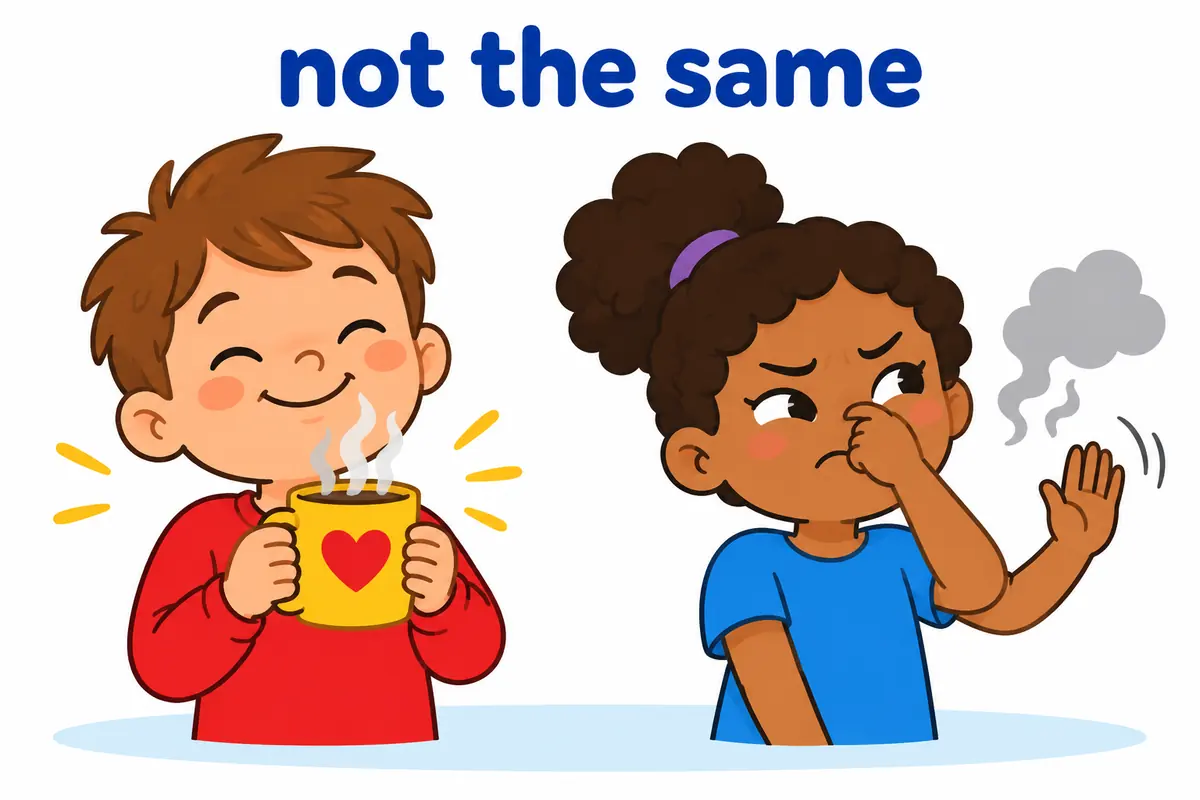
One limit is worth stating plainly. Acrid is not simply a synonym for strong. A freshly opened jar of coffee has a powerful smell, but nobody calls it acrid, because the word names discomfort rather than intensity. Reach for acrid when eyes water, throats tighten or noses wrinkle, and leave it out when the sensation is welcome.
How do you use acrid in a sentence?
Acrid attaches to the noun it describes or follows a linking verb, and those two positions cover almost every natural use.
| Pattern | Example | What it signals |
|---|---|---|
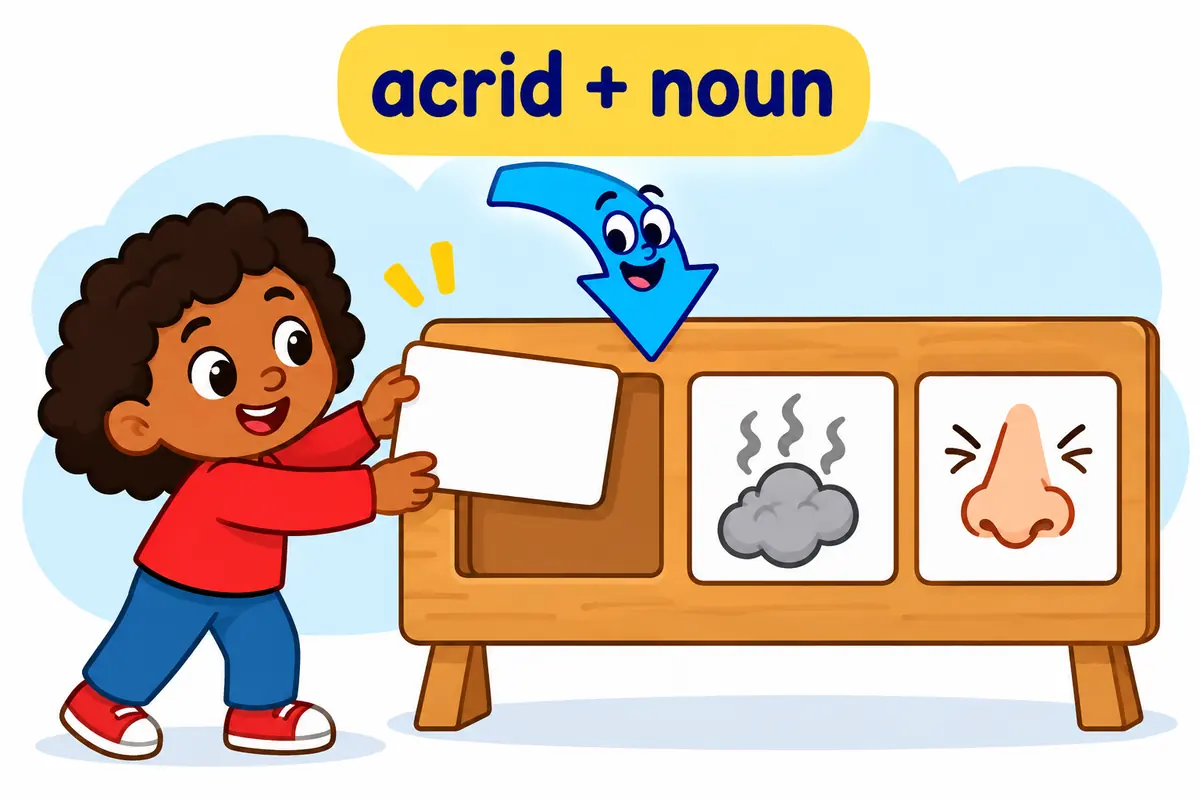
| acrid + noun | Acrid smoke filled the kitchen. | The default attributive use; the noun names what is acrid. |
| a / an + acrid + noun | an acrid smell | Count nouns still need the noun after the adjective. |
| linking verb + acrid | The milk tasted acrid. | Predicative use after smell, taste or turn. |
| acrid with + source | The air was acrid with burning rubber. | Names whatever produces the irritation. |
| more / most acrid | The fumes grew more acrid near the door. | Compares rising intensity. |
| acrid + tone / remark | He answered in an acrid tone. | The figurative sense, always about words. |
Acrid in a sentence: examples across contexts
The same adjective shifts register depending on the noun it modifies, and the nine examples below show that range.
| Context | Example sentence | Why this works |
|---|---|---|
| Classroom | The teacher opened the window because an acrid smell had drifted in from the art room. | Names a real school nuisance and lets acrid modify smell. |
| Kitchen | Acrid smoke poured off the pan when the oil overheated. | Shows the commonest collocation, acrid smoke. |
| News report | Residents were told to stay indoors after acrid fumes leaked from the plant. | Uses the word in a public-safety register. |
| Workplace email | Please check the printer, because an acrid odour is coming from the back of it. | Keeps a practical tone while flagging a hazard. |
| Scientific writing | The reaction released an acrid gas that irritated the eyes and throat. | Pairs acrid with a technical noun, gas. |
| Conversation | That cleaner smells acrid, so open a window. | Uses acrid predicatively after smells. |
| Literary description | An acrid haze hung over the ruined orchard. | Extends the word into atmospheric prose. |
| Safety notice | Do not enter: acrid vapours fill the confined space. | Turns the adjective into a warning. |
| Wine review | The wine turned acrid after a day in the sun. | Applies the sense to taste rather than smell. |
Acrid vs pungent
Learners reach for acrid whenever a smell is strong, but pungent is the word for strength and acrid is the word for sting. The table separates the two.
| Attribute | Acrid | Pungent |
|---|---|---|
| Core meaning | Sharply bitter or stinging | Strong and penetrating |
| Pleasantness | Almost always unpleasant | Can be pleasant or unpleasant |
| Typical nouns | smoke, fumes, gas, odour | cheese, coffee, aroma, scent |
| Effect on the reader | Suggests irritation of nose or throat | Suggests a bold, concentrated scent |
| Usual register | News, safety and scientific writing | Food writing and everyday speech |
Choose pungent when the smell is strong and welcome, and choose acrid when it stings and spoils. Where the complaint is about roughness rather than scent, harsh describes the effect on the senses more broadly. A caustic remark is deliberately cruel, while an acrid one is merely bitter, and a stinging vapour makes the eyes water the moment it reaches them.
Word forms and grammar of acrid
Acrid is regular apart from its uncommon comparative and its two noun forms, and the near neighbour acrimonious belongs to a different sense.
| Form | Part of speech | Example |
|---|---|---|
| acrid | adjective | an acrid smell |
| more acrid / most acrid | comparative / superlative | The second batch was more acrid. |
| acrider / acridest | rare comparative / superlative | The smoke grew acrider near the fire. |
| acridly | adverb | He answered acridly. |
| acridity | noun | the acridity of the fumes |
| acridness | noun, rare | the acridness of the smoke |
| acrimonious | adjective, separate sense | Their acrimonious exchange lasted an hour. |
The adverb acridly is grammatical but uncommon, because acrid normally colours a noun rather than a verb. The adjective astringent overlaps with acrid for tastes that dry the mouth, yet it describes a clean sharpness rather than an irritating vapour.
Common mistakes with acrid
Five errors account for most learner sentences, and each one comes with the rule that fixes it.
1. Using acrid as a noun. The kitchen smelled of an acrid after the toast burned. The kitchen smelled of something acrid after the toast burned. Rule: acrid is an adjective, so it cannot stand where a noun is required.
2. Calling a welcome smell acrid. The fresh coffee had an acrid aroma that everyone loved. The fresh coffee had a pungent aroma that everyone loved. Rule: acrid implies irritation, not a rich and pleasing scent.
3. Turning it into an adverb after a linking verb. The fumes smelled acridly. The fumes smelled acrid. Rule: linking verbs such as smell and taste take an adjective, not an adverb.
4. Confusing acrid with acrimonious. After the meeting the two managers had an acrid argument. After the meeting the two managers had an acrimonious argument. Rule: acrid describes smells, tastes and tones; acrimonious is the settled adjective for bitter quarrels.
5. Doubling the comparative. The smoke was more acrider than before. The smoke was more acrid than before. Rule: acrid takes more and most, never both at once.
Practice using acrid
- The mechanic lifted the bonnet and a(n) ______ smell of burning plastic filled the garage.
- Villagers were moved to safety when ______ fumes escaped from the tanker.
- Choose the better word: the bakery was full of a warm, ______ aroma that drew people in. (acrid / pungent)
- Correct the error: “The sauce tasted acridly after it burned.”
- Build a sentence about a school corridor using smoke and the word acrid.
- Spot the register. Which sentence belongs in a workplace email? (a) This room stinks, open a window now. (b) An acrid odour is coming from the store cupboard, so I have opened a window.
Answers
- acrid — an adjective slots before smell and describes an irritating odour.
- acrid — acrid fumes is the standard collocation for irritating leaked gas.
- pungent — the aroma is welcome and strong, so pungent, not acrid, is right.
- The sauce tasted acrid after it burned. — linking verbs take an adjective, not the adverb acridly.
- Acrid smoke drifted along the school corridor and the caretaker opened every window. — the sentence places acrid before the noun smoke.
- (b) — it states the problem and the action in neutral, professional wording.
The bottom line
Acrid describes a smell, taste or tone that stings and irritates rather than merely being strong. Use acrid in a sentence directly before the noun, as in acrid smoke, and keep pungent for strong smells that are welcome. The word suits news, safety and descriptive writing, and for bitter quarrels the correct adjective is acrimonious. Reserve acrid for sensations that make people recoil.
Frequently asked questions about acrid
Can acrid describe something other than a smell?
Yes. Acrid most often describes smoke, fumes or taste, but writers also apply it to a bitter tone or remark, as in an acrid reply. The figurative sense keeps the idea of something sharp that irritates, so it never means merely short or quiet.
Is acrid stronger than bitter?
Acrid and bitter both describe harsh sensations, but acrid adds the sting of something that irritates the nose or throat. Bitter is mainly a taste, as in bitter coffee. Use acrid when the vapour itself causes discomfort, and bitter when the flavour alone is sharp.
What is the noun form of acrid?
The noun is acridity, meaning the quality of being acrid, and the rarer acridness means the same. Both appear in formal description, as in the acridity of the fumes. Most writers simply keep the adjective and name a noun after it, as in acrid smoke.
Does acrid ever describe a pleasant smell?
No. Acrid always carries a note of irritation, so it is the wrong choice for fresh coffee, perfume or baking bread. For a strong but welcome smell, pungent is the better adjective. Readers treat acrid as a signal that the air is unpleasant or unsafe.
Have you ever come across a word that evokes a sharp, biting odor or taste? That’s the essence of “acrid.” This adjective describes a strong and unpleasant smell or taste that is often sharp, bitter, or offensive.
When something is described as “acrid,” it typically implies a harsh and pungent quality that can be overpowering to the senses. This word is commonly used to characterize the smell of smoke, chemicals, or certain foods.
7 Examples Of Acrid Used In a Sentence For Kids
- Acrid is a strong smell that makes my nose feel funny.
- I don’t like the taste of acrid things like bitter medicine.
- The smoke from the fire was acrid and made me cough.
- When I accidentally bit into a lemon, it tasted very acrid.
- The strong chemicals in the cleaning spray have an acrid smell.
- The acrid smell of onions cooking in the kitchen made me tear up.
- I wrinkled my nose at the acrid smell of burning rubber.
14 Sentences with Acrid Examples
- The acrid smell of burned popcorn filled the dorm room after someone left it in the microwave for too long.
- The acrid taste of bitter medicine lingered in her mouth as she tried to wash it down with water.
- The acrid smoke from the nearby factory made it hard for the students to focus during their outdoor study session.
- The acrid fumes from the chemistry lab made it necessary for students to wear protective masks during experiments.
- The acrid odor of chemicals in the classroom made some students feel nauseous.
- The acrid remarks made by a classmate left a bitter taste in her mouth.
- The acrid feedback from the professor on her essay left her feeling disheartened.
- The acrid tone in the student council meeting made it clear that tensions were running high.
- The acrid argument between roommates over cleanliness led to a strained relationship.
- The acrid smell of burnt toast wafted through the apartment as the students struggled to cook dinner.
- The acrid taste of too much chili powder in the curry made the meal almost inedible for the students.
- The acrid stench of the overflowing garbage bin in the common area prompted the students to take action and clean up.
- The acrid response from the administration about increasing tuition fees sparked outrage among the students.
- The acrid gossip spreading around campus only served to create a toxic environment among the students.
How To Use Acrid in Sentences?
To use Acrid in a sentence, start by understanding its meaning. Acrid is an adjective that describes a sharp, biting, or bitter taste or smell.
Here is an example of how you can use Acrid in a sentence:
“The acrid scent of smoke filled the room after the fire was put out.”
When using Acrid in a sentence, it’s important to consider the context in which the word is being used. Think about whether you are describing a taste or a smell, and try to convey the intensity of the sensation to your reader.
To improve your vocabulary and fluency in using Acrid, try incorporating it into your everyday conversations or writing. This will help you become more comfortable and confident in using the word accurately.
Remember, practice makes perfect! Don’t be afraid to experiment with different sentence structures and contexts to get a better grasp of how to use Acrid effectively in your communication.
Conclusion
In conclusion, the taste of the soup was ruined by the acrid flavor of burnt garlic, making it unpleasant to eat. The acrid smoke filled the room, causing everyone to cough and struggle to breathe. Therefore, the use of acrid in sentences often indicates a strong, bitter, and pungent smell or taste that is harsh and unpleasant.
It is essential to be aware of the use of acrid in descriptions to convey the intensity and off-putting nature of certain experiences or sensations. By incorporating acrid into sentences, one can vividly paint a picture of an overwhelming and displeasing environment or flavor, enhancing the understanding and impact of the text on the reader.


