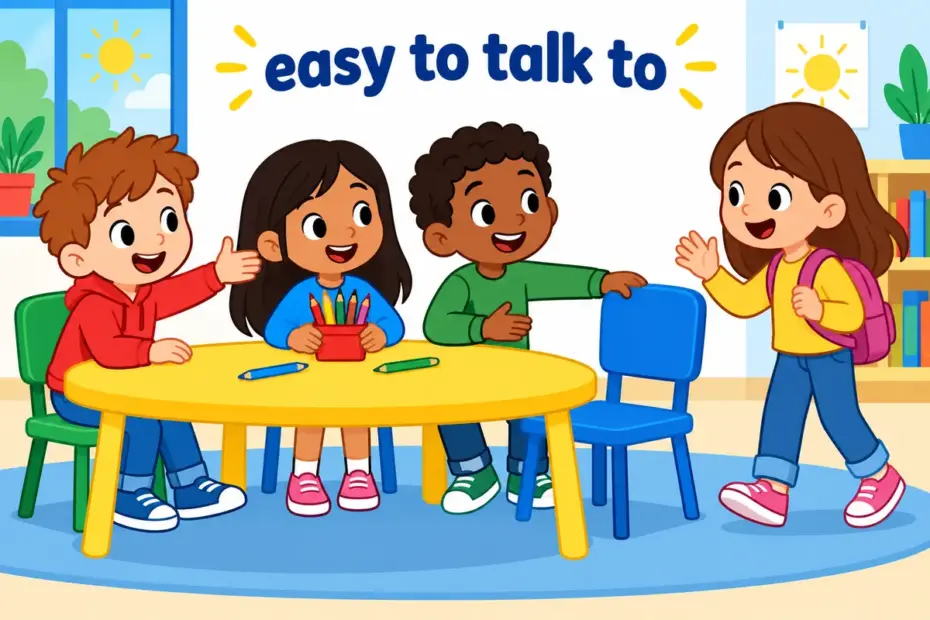
Affable means friendly, pleasant and easy to talk to, so affable in a sentence usually describes a person who puts others at ease. Name the person and the quality together: “The head teacher was affable with every visitor.” The adjective describes manner, not appearance or mood.
Affable at a glance
- Affable is an adjective; its forms are affably (adverb) and affability (noun).
- It means friendly, pleasant and easy to talk to.
- Affable most often describes a person’s manner in public or professional settings.
- Common partners are words such as manner, smile, host and welcome.
- The usual error is confusing affable with amiable, which leans more towards kindness.
What does affable mean?
Affable is an adjective meaning friendly, pleasant and easy to talk to. The Cambridge entry for affable records this social sense, and everyday use splits it into two shades: ease of conversation and courteous warmth towards others.
| Sense | Plain meaning | Example sentence |
|---|---|---|
| Easy to talk to | A person who removes awkwardness in conversation | The new coach is affable with shy players. |
| Courteous and pleasant | A warm, civil manner towards others | She gave the reporters an affable greeting. |
One limitation is worth stating plainly. Affable describes social ease, not depth of character: a person can be affable at a meeting and still be insincere, so the word is not a synonym for kind or trustworthy.
How do you use affable in a sentence?
Put the person first and the quality second. Five patterns cover almost every real sentence, and the choice between them depends on whether you describe a lasting trait, a specific noun or an ongoing relationship.
| Pattern | Example | What it signals |
|---|---|---|
| be + affable | The new librarian is affable. | A lasting trait rather than a single moment. |
| affable + noun | He greeted us with an affable smile. | The quality attached to one specific feature. |
| affable + to + person | She was affable to the catering staff. | Who receives the warmth. |
| affable + with + person | He stays affable with difficult clients. | Warmth maintained across regular dealings. |
| find + somebody + affable | We found the interviewer affable. | A first impression reported by the speaker. |
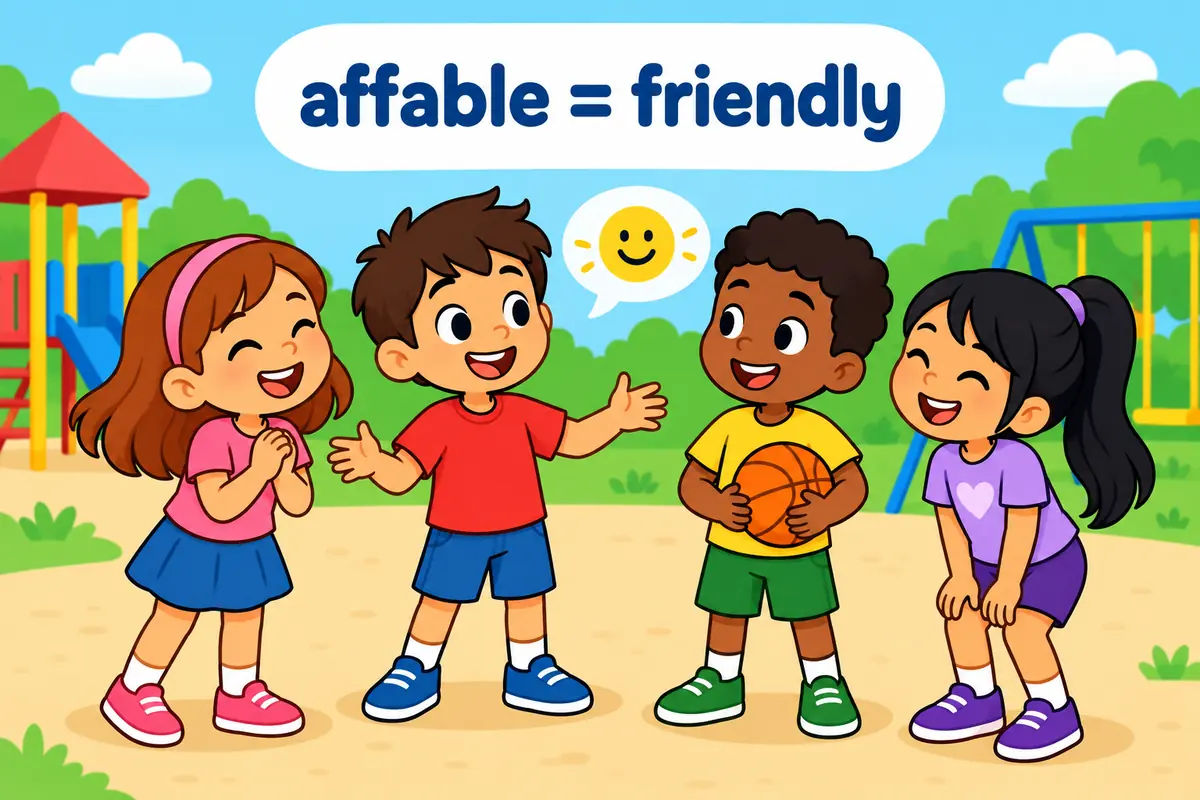
Affable in a sentence: examples across contexts
Affable keeps its meaning while the setting changes. The nine sentences below move from a classroom to a sports report, and each one names the person whose manner is on show.
| Context | Example sentence | Why this works |
|---|---|---|
| Classroom | Our affable form teacher greets everyone at the door. | A daily ritual shows a settled habit rather than a mood. |
| Workplace email | Thank you for the affable welcome to the new team. | A kind greeting turns a plain thank-you into a compliment. |
| News report | The mayor, an affable man of few promises, opened the market. | The adjective colours a public figure with one economical phrase. |
| Job interview | The panel was affable, which helped the candidate relax. | It links the manner to its effect on another person. |
| Customer service | An affable host seated us and remembered our names. | A concrete act proves the manner instead of asserting it. |
| Academic writing | The memoir presents him as affable yet guarded. | The contrast sharpens the trait without contradicting it. |
| Conversation | Your cousin seems really affable. | The everyday register admits an adverb of degree. |
| Social event | She is affable with strangers and never short of a greeting. | The with-pattern names the people who draw the warmth out. |
| Sports report | The captain stayed affable after a heavy defeat. | The manner survives a situation that would excuse a frown. |
Affable vs amiable
Affable and amiable both praise a person, so writers reach for them almost at random. Amiable leans towards kindness, while affable leans towards ease in company, and the table keeps the two apart. Several near-synonyms crowd the same ground: an approachable manner, a congenial host, a cordial welcome and a genial warmth each shift the emphasis without leaving it.
| Attribute | affable | amiable |
|---|---|---|
| Core quality | Easy and pleasant to talk to | Good-natured and kind-hearted |
| What it stresses | Social ease in company | Warmth of character |
| Likely scene | A host, interviewer or new colleague | A relative, neighbour or old friend |
| Tone it leaves | Approachable and relaxed | Gentle and well-meaning |
| Where it fails | Too light for deep feeling | Too soft for brisk professionalism |
Verdict: choose amiable when you mean kind-hearted and affable when you mean easy to talk to, and keep both for people rather than for soup or weather.
Word forms and grammar of affable
Affable inflects regularly, and its noun appears in performance reviews and references. The table also lists a form learners build by mistake.
| Form | Part of speech | Example |
|---|---|---|
| affable | adjective, base form | The receptionist was affable all morning. |
| more affable / most affable | adjective, comparative and superlative | He grew more affable as the term went on. |
| affably | adverb | She smiled affably at each guest. |
| affability | noun | Her affability won over the whole room. |
| affabler | adjective, non-standard | Use more affable, never affabler. |
Its noun affability often appears in reviews that praise a manager’s ease with people.
Common mistakes with affable
- Incorrect:
The soup was affable.Correct: The soup was pleasant. Rule: Affable describes a person’s manner, not food or objects. - Incorrect:
He was affable at his neighbour.Correct: He was affable to his neighbour. Rule: Use affable to or affable with, never affable at. - Incorrect:
She is affable, so she never gets angry.Correct: She is affable, so she is easy to talk to. Rule: Affable means friendly ease, not patience or calm. - Incorrect:
The manager gave an affable decision.Correct: The manager made a fair decision. Rule: Affable describes people and their way of treating others, not decisions.
Practice using affable
Work through the six items, then check the reasoning rather than only the answer.
- Fill the gap: The new coach is ______ with players and parents alike.
- Choose the better word: The warm grandmother had an (affable / amiable) character that everyone trusted.
- Correct the error: The waiter was affable at every diner.
- Build a sentence: use affable with about a classmate who welcomes a new pupil.
- Spot the register: which belongs in a school report — the tutor is affable and well prepared, or the tutor is, like, totally affable?
- Rewrite with the noun: The host was affable. Use affability instead.
Answers
- affable — the coach’s easy manner is the trait being named.
- amiable — the sentence stresses kindness of character, not ease in conversation.
- The waiter was affable to every diner — affable takes to or with, never at.
- Model answer: Maya is affable with the new pupil and always shares her table.
- The tutor is affable and well prepared — a report avoids filler and slang.
- The host greeted everyone with easy affability — the noun needs an article or modifier.
The bottom line
Use affable in a sentence when you describe a person who is friendly and easy to talk to, and attach the quality to a person rather than a thing. The two nuances that decide most sentences are these: affable follows to and with, not at, and it praises social ease rather than deep kindness. If you mean good-natured, the nearer word is amiable.
Frequently asked questions about affable
Is affable a formal word?
Affable sits in neutral to formal writing, where it describes a manner politely and briefly. A reference letter may call a colleague affable, and a news report may call a mayor affable. In casual speech people usually say friendly instead, so affable can sound slightly bookish in a text message.
What is the difference between affable and amiable?
Both are adjectives that praise a person. Affable means easy and pleasant to talk to and stresses social ease. Amiable means good-natured and kind-hearted and stresses warmth of character. A lively host who chats with every stranger is affable, while a gentle grandmother who is kind to everyone is amiable.
Can affable describe a place or an event?
Standard use keeps affable for people and their manner, so an affable party or an affable town sounds odd to careful readers. When a place feels welcoming, write pleasant or relaxed instead. The one common extension is an affable greeting, where the noun names a human act rather than a location.
Is affable a compliment?
Usually yes. Calling someone affable says they put others at ease and make conversation flow, which most people receive well. The compliment is about manner rather than depth, though, so a boss described as affable is praised for approachability and not yet for loyalty or judgement.
Have you ever encountered someone who was effortlessly warm and friendly in their interactions, putting you at ease with their pleasant demeanor? This quality, known as being “affable,” describes individuals who are approachable, kind, and easy to talk to.
An affable person tends to have a likable and agreeable personality, making them enjoyable company in social settings. They are often characterized by their warmth, friendliness, and willingness to engage in conversations with others.
7 Examples Of Affable Used In a Sentence For Kids
- Affable is when someone is friendly and easy to talk to.
- An affable person is always nice and makes others feel happy.
- It’s important to be affable and make new friends at school.
- When you are affable, people will want to be around you.
- Saying “hello” with a smile is a great way to be affable.
- Remember to always be affable and treat others with kindness.
- Being affable is a wonderful trait to have.
14 Sentences with Affable Examples
- Affable professors make learning more enjoyable and engaging for students.
- It’s always nice to have an affable roommate who is easy to get along with.
- An affable classmate can make group projects much more pleasant to work on.
- The guidance counselor at college is known for being affable and easy to talk to.
- It’s important for student leaders to be affable in order to gain the trust of their peers.
- An affable attitude can go a long way in networking and building professional relationships.
- Being affable can help students make a positive impression during job interviews.
- Peer tutoring sessions are more successful when the tutor is affable and approachable.
- An affable study group leader can create a supportive and encouraging learning environment.
- Professors appreciate students who are affable and respectful in class discussions.
- An affable demeanor can help students navigate the challenges of college life with ease.
- Students who are affable tend to have a larger circle of friends and acquaintances.
- In competitive academic environments, being affable can help students stand out and make strong connections.
- Campus clubs and organizations thrive when their members are affable and inclusive.
How To Use Affable in Sentences?
Affable
When you want to describe someone as friendly and easy to talk to, you can use the word affable in a sentence. For example, “She is known for her affable personality that makes everyone feel welcomed.”
To use affable in a sentence, simply place it before or after the noun you want to describe. Here are a few examples:
- “The receptionist greeted us with an affable smile.”
- “Despite his busy schedule, the CEO remained affable and approachable to all employees.”
- “Her affable nature makes her a great candidate for customer service roles.”
Remember, affable is an adjective, so it should be followed by a noun that it is describing. This helps to clarify who or what possesses the quality of being friendly and easy to approach.
By incorporating affable into your vocabulary, you can effortlessly convey a positive and approachable impression of someone or something. Practice using affable in different sentences to become more comfortable with this word and its meaning.
Conclusion
In conclusion, using affable in sentences can help convey a sense of friendliness and approachability. For instance, “The affable waiter made sure all the customers felt welcome and comfortable during their dining experience” illustrates how a person’s friendly and pleasant demeanor can create a positive atmosphere. Similarly, “Her affable attitude towards her colleagues helped foster a collaborative work environment” showcases how being affable can enhance social interactions and relationships in various settings.
Overall, incorporating affable into sentences can highlight the importance of being warm and amiable in interactions with others. It serves as a reminder of the value of kindness and friendliness in fostering positive connections and creating a welcoming environment.


