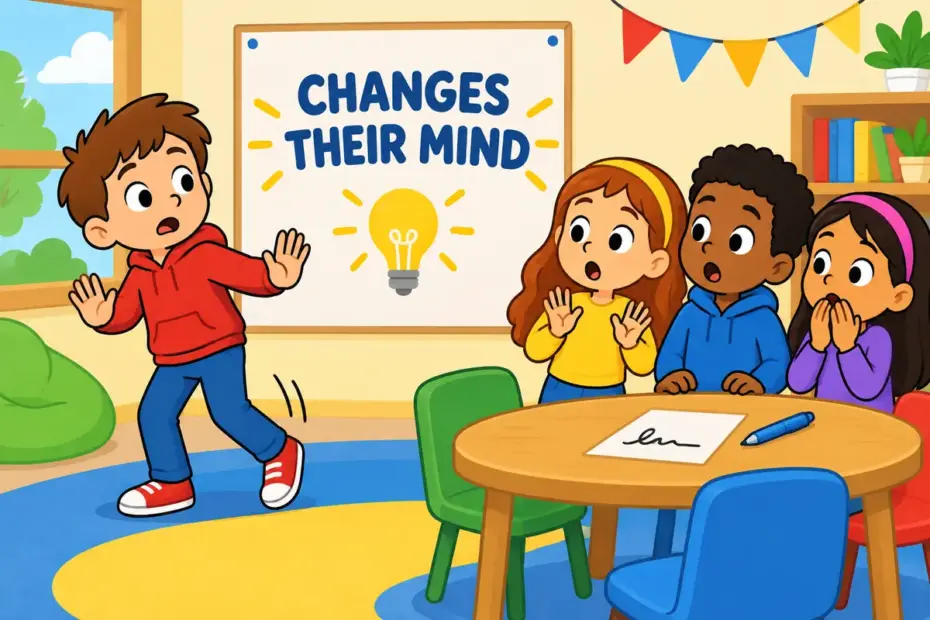
Back out means to withdraw from a deal, plan or promise after agreeing to it, and it can also mean to reverse a vehicle out of a space. To use back out in a sentence, put of before the commitment, as in they backed out of the contract. The withdrawal sense carries a judgement of unreliability.
Back out at a glance
- Back out is a phrasal verb; its past form is backed out and its present participle is backing out.
- In the withdrawal sense it is followed by of plus a noun: back out of a deal, a plan or a promise.
- In the driving sense it is separable and takes an object between or after the parts: back the car out.
- The withdrawal sense usually sounds critical, because the speaker had already said yes.
- The commonest error is dropping of, as in the wrong form backed out the deal.
What does back out mean?
Back out is a phrasal verb meaning to withdraw from something you had agreed to, or to reverse a vehicle out of a place. The Cambridge entry for back out records the withdrawal sense and the driving sense. When you want a neutral verb for leaving a plan, withdraw from a plan states the fact without blame, and when the promise is broken on purpose, renege on a promise names the fault directly.
| Sense | Plain meaning | Example sentence |
|---|---|---|
| Withdraw from a deal | Leave an agreement after saying yes | The builders backed out of the contract. |
| Cancel a plan | Drop an arrangement you had made | She backed out of the trip on Friday. |
| Break a promise | Fail to do what you said you would | He backed out of his promise to help. |
| Reverse a vehicle | Drive a car backwards out of a space | She backed the car out of the garage. |
One limitation is worth naming. Back out always implies a reversal of something already agreed, so it is the wrong verb for a plan that was never fixed. If nothing was settled, you simply change your mind or decline, and you have not backed out of anything.
How do you use back out in a sentence?
Back out behaves differently in its two senses, so the grammar is the teaching point. In the withdrawal sense it is inseparable and intransitive: the commitment follows of, and the verb can stand alone when the context is clear. In the driving sense it is separable and transitive: the vehicle is the object and may sit between the verb and the particle.
| Pattern | Example | What it signals |
|---|---|---|
| back out of + commitment | They backed out of the sponsorship. | Inseparable; of introduces what was left. |
| back out + no object | Two partners backed out at the last minute. | Intransitive; the context supplies the noun. |
| back + object + out (driving) | He backed the van out slowly. | Separable; the object sits in the middle. |
| back out of + place (driving) | She backed out of the driveway. | The place follows of, exactly as a commitment does. |
| be backed into a corner | The firm was backed out of its own market. | Rare passive; keeps the reversal sense. |
The test is what follows the verb: a deal or promise takes of, while a car or van is separable and moves. The same base verb appears in back up a claim, where the particle changes the meaning.
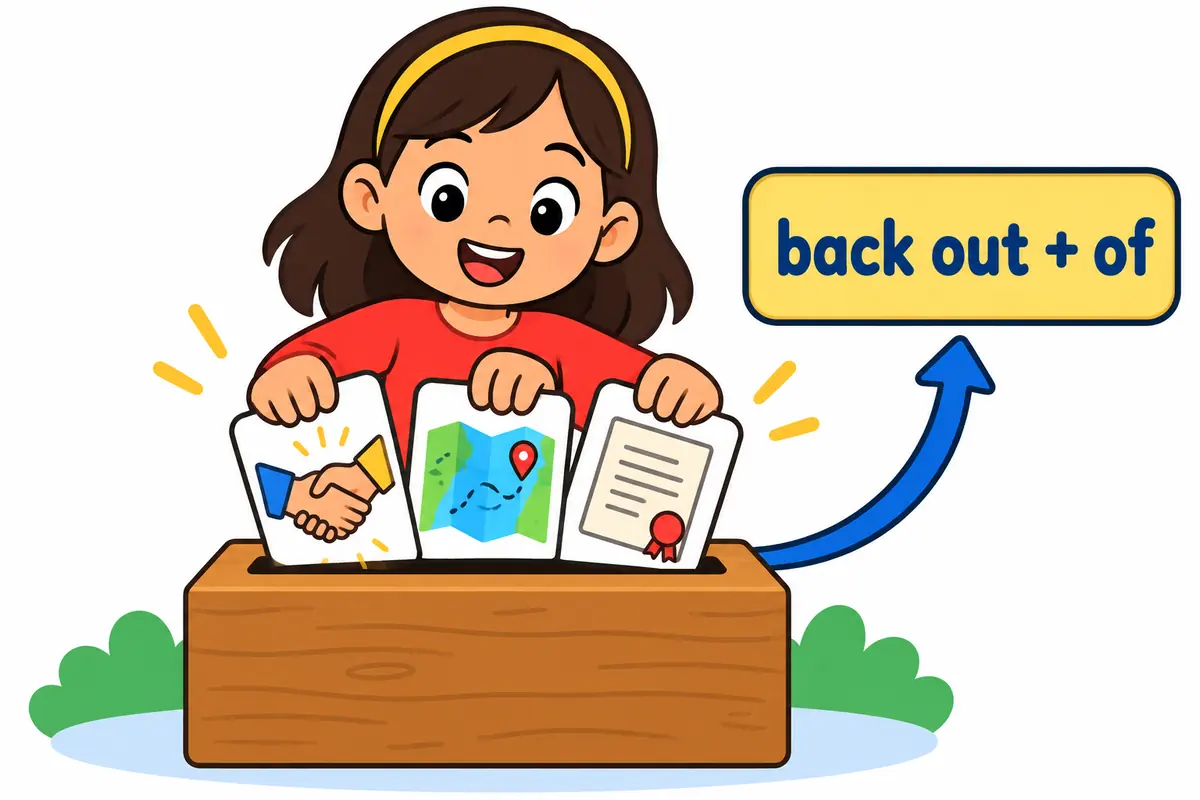
Back out in a sentence: examples across contexts
The phrase suits business, sport and ordinary family life, and the surrounding words show how serious the withdrawal is. The nine sentences below keep the same verb while changing the stakes.
| Context | Example sentence | Why this works |
|---|---|---|
| Business email | The supplier backed out of the order without warning. | Names a concrete commitment and the surprise. |
| News report | Two investors backed out of the stadium deal this week. | Reports who left and from what. |
| Workplace | She backed out of the training course after the dates changed. | Gives a reason that softens the criticism. |
| Conversation | Do not back out now; we have booked everything. | Speaks directly to the person leaving. |
| Sports report | The club backed out of the transfer at the medical stage. | Uses a named stage to show timing. |
| Family life | He backed out of the school run at the last minute. | Everyday commitment, lightly disapproving. |
| Driving instruction | Always check the mirror before you back the car out. | The separable driving sense with the object in the middle. |
| Legal writing | The buyer was allowed to back out of the sale within seven days. | A formal right to withdraw, stated neutrally. |
| Charity notice | Two sponsors backed out, so the fair moved to a smaller field. | Traces a consequence of the withdrawal. |
A time marker often follows the verb, because backing out is a decision about timing as much as loyalty.
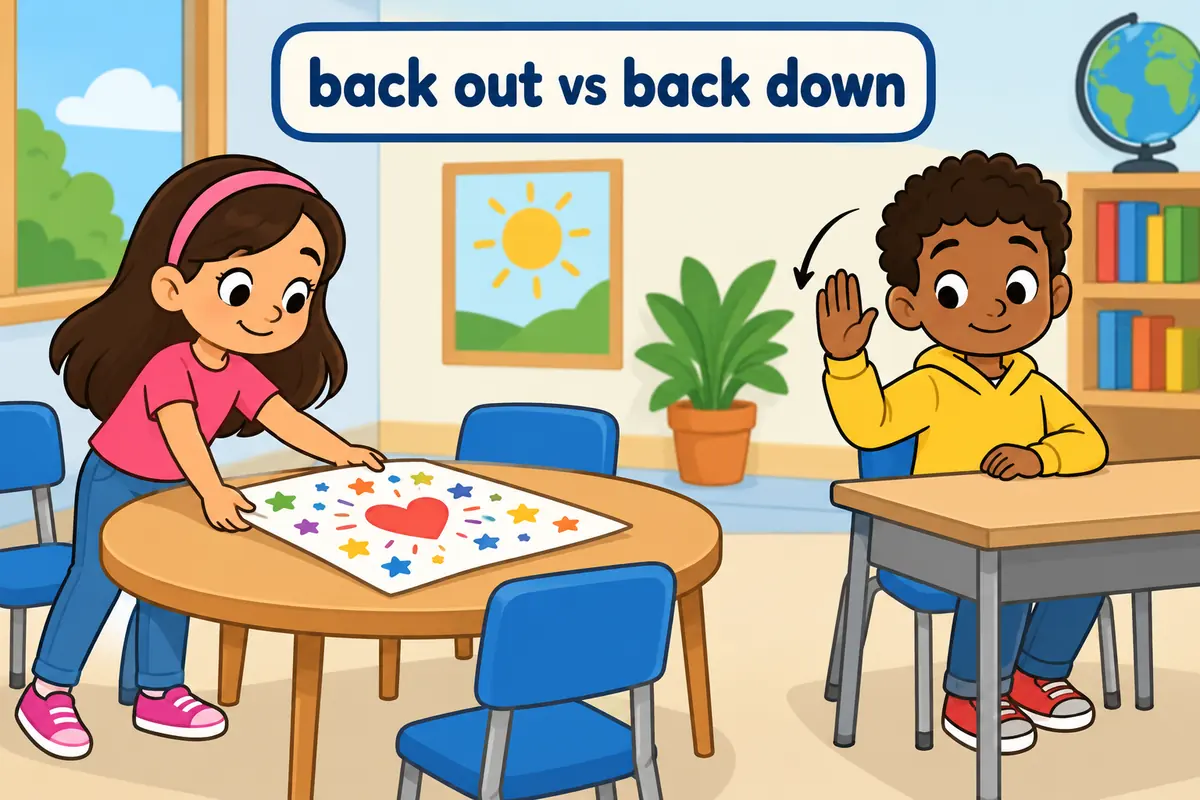
Back out vs back down
Back out and back down share the base verb and both describe a retreat, but they retreat from different things. Back out leaves a commitment; back down abandons a position in an argument.
| Attribute | back out | back down |
|---|---|---|
| Core meaning | Leave something you had agreed to | Yield in a dispute or challenge |
| What triggers it | A deal, plan or promise | A confrontation or firm demand |
| Grammar | Takes of plus the commitment | Usually stands alone without an object |
| What it implies | You said yes, then left | You stood firm, then gave way |
| Usual tone | Often critical, suggesting unreliability | Can seem reasonable or weak |
| Typical sentence | They backed out of the deal. | She refused to back down. |
Verdict: use back out when a commitment is left, and back down when a position is given up. A negotiator who refuses to back down is holding a line, while a partner who pulls out of a deal has left it behind.
Word forms and grammar of back out
The verb is regular, and its two senses share the same inflections. The table also lists the related phrasal verbs that learners mix up with it.
| Form | Part of speech | Example |
|---|---|---|
| back out | phrasal verb, base form | They always back out at the last minute. |
| backs out | third person singular | He backs out of every plan. |
| backed out | past and past participle | The team backed out of the league. |
| backing out | present participle | She is backing out of the agreement. |
| backpedal | verb, related meaning | He backpedalled after the criticism. |
| back up | phrasal verb, different meaning | Please back up your figures. |
Backpedal is close in meaning to back out when it describes retreating from a stated position, so a politician who backpedals after criticism is reversing a claim rather than leaving a deal. The two are useful but not interchangeable.
Common mistakes with back out
- Incorrect:
He backed out the deal.Correct: He backed out of the deal. Rule: the withdrawal sense needs of before the commitment. - Incorrect:
She backed out to the meeting.Correct: She backed out of the meeting. Rule: of, not to, follows the withdrawal sense. - Incorrect:
They backed out from the contract.Correct: They backed out of the contract. Rule: of already carries the sense of leaving, so from is redundant. - Incorrect:
He backed out the car of the garage.Correct: He backed the car out of the garage. Rule: the driving sense is separable and keeps of before the place. - Incorrect:
I want to back out the plan.Correct: I want to back out of the plan. Rule: only a vehicle can follow back out directly; commitments need of.
The clearest learner mistake is the missing of: backed out of the deal is the fixed form, and backed out the deal is never right.
Practice using back out
Complete the six items, then check your answer against the reason below it.
- Fill the gap: The band ______ of the festival two days before it began.
- Choose the better word: After everyone disagreed, she refused to (back out / back down).
- Correct the error: He backed out the agreement without telling us.
- Build a sentence: use back out of about a friend who leaves a shared holiday plan.
- Spot the register: which fits a driving lesson — back the car out slowly, or back out of the arrangement?
- Change the tense: rewrite They back out of the deal in the past simple.
Answers
- backed out — the commitment follows of and the past tense matches two days before.
- back down — she is holding a position in an argument, not leaving a commitment.
- He backed out of the agreement without telling us — the withdrawal sense needs of.
- Model answer: My friend backed out of our holiday plan.
- Back the car out slowly — the driving sense is separable and puts the object first.
- They backed out of the deal — the past simple is backed out.
The bottom line
Use back out in a sentence when someone leaves a deal, plan or promise they had already agreed to, and remember that the commitment follows of. Two details decide the grammar: the withdrawal sense is inseparable and almost always takes of, while the driving sense is separable and lets the vehicle move to the middle. If you only mean giving up an argument, back down is the right verb.
Frequently asked questions about back out
Is back out separable?
It depends on the sense. In the withdrawal meaning it is inseparable, so the commitment follows of and cannot move, as in they backed out of the deal. In the driving meaning it is separable, so the object can sit in the middle, as in back the car out of the garage.
What does back out mean in a deal?
In a deal, back out means to withdraw after agreeing, so the other side is left with a gap. It usually sounds critical, because the speaker had already said yes. A neutral alternative is withdraw from the deal, and a stronger one is renege on the deal.
What is the difference between back out and back down?
Back out means leaving a commitment such as a deal or promise, and it takes of plus the thing you leave. Back down means yielding in an argument or challenge and usually stands without an object. The first is about loyalty, the second about stubbornness.
What is the past tense of back out?
The past tense and past participle are both backed out, as in they backed out of the contract. The third person singular is backs out, and the present participle is backing out. The verb is regular, so no vowel changes and no separate participle form are needed.
Have you ever committed to something, only to regret it later and want to withdraw? That’s what we mean when we talk about “backing out.” To “back out” of a commitment means to decide not to follow through with something you previously agreed to do.
Whether it’s canceling plans with a friend, pulling out of a project at work, or reconsidering a purchase, there are various situations where you might find yourself wanting to “back out.” Knowing how to navigate these moments with grace and consideration for others is crucial.
7 Examples Of Back Out Used In a Sentence For Kids
- We can play together, but please don’t back out at the last minute.
- I wanted to help you, but you decided to back out.
- Let’s make a promise to never back out of our plans.
- It’s important to always keep your word and not back out of promises.
- Sometimes it’s okay to back out if you feel uncomfortable.
- Don’t worry if you need to back out of something, just let us know.
- Remember, it’s not polite to back out without a good reason.
14 Sentences with Back Out Examples
- Back out of a commitment only if it is absolutely necessary.
- It’s not cool to back out of a group project at the last minute.
- If you’re feeling overwhelmed, it’s okay to back out of attending an event.
- Don’t be afraid to back out of a course if it’s not the right fit for you.
- Make sure to read the fine print before deciding to back out of a contract.
- Sometimes it’s better to back out of a social gathering and prioritize self-care.
- Remember that it’s okay to back out of a volunteer opportunity if it’s too demanding.
- It’s important to communicate effectively if you need to back out of a commitment.
- Think about the consequences before you back out of a competition.
- It’s better to back out of a risky situation than to regret it later.
- Don’t let fear or anxiety make you back out of a challenging but rewarding opportunity.
- If you feel uncomfortable, it’s okay to back out of a decision.
- It’s crucial to have a valid reason if you need to back out of a financial agreement.
- Before you decide to back out of an internship, consider the long-term benefits.
How To Use Back Out in Sentences?
To use Back Out in a sentence, you can start by identifying a situation where someone is withdrawing from a commitment, plan, or event. For example, “She had to back out of the project due to unexpected circumstances.”
Next, ensure that the Back Out is placed correctly within the sentence. It usually comes after the subject and any necessary details. For instance, “John decided to back out of the trip at the last minute.”
Remember to use the correct verb form depending on the subject. For singular subjects, use “backs out” as in “He always backs out of social gatherings.” For plural subjects, use “back out” as in “They may back out of the deal.”
Additionally, consider using Back Out with other words to provide more context or detail in the sentence. For instance, “Despite her initial enthusiasm, she had to back out of the agreement due to financial constraints.”
It is important to remember that Back Out is a phrasal verb, so it should be used as a complete unit in a sentence. Avoid separating the words when constructing your sentence.
Overall, using Back Out in a sentence is a simple way to convey the action of withdrawing or pulling out of a commitment. By following these guidelines, you can easily incorporate Back Out into your writing or conversations.
Conclusion
In conclusion, when someone decides to back out of a commitment, they are choosing to withdraw from a responsibility or agreement. Backing out can have consequences such as disappointing others, creating inconvenience, or even damaging relationships. It is important to communicate openly and honestly if you need to back out of something, in order to minimize any negative impact.
Ultimately, it is crucial to consider the implications of backing out before making a decision. By being transparent and considerate when withdrawing from a commitment, it is possible to navigate such situations with understanding and respect for all parties involved.


