What Does “Character” Mean?
Character is a noun with several related meanings. It can name a person represented in a novel, play, film, or game; the qualities that make someone who they are; or a written mark such as a letter, number, or punctuation symbol. The surrounding words make the intended sense clear. For example, a story has characters, a person may show good character, and a password may contain special characters.
When character means a person in a story, it often appears with words such as main, supporting, fictional, or central. When it describes someone’s qualities, common phrases include strength of character, a person of character, and character traits. In writing and computing, it often refers to individual letters, digits, spaces, or symbols.
21 Example Sentences With “Character”
These examples show how context changes the meaning of character:
- The novel’s main character returns to her hometown to solve a family mystery.
- A memorable character can change over the course of a story.
- The film introduces a new character in its opening scene.
- Each character in the play has a different reason for keeping the secret.
- The young reader drew her favorite cartoon character.
- The game lets players design a character and choose its clothing.
- The actor stayed in character throughout the performance.
- The detective is a complex character who is both clever and impatient.
- Her character showed in the way she admitted her mistake.
- He demonstrated strength of character by keeping his promise.
- Honesty is an important part of her character.
- The coach praised the team’s character after a difficult loss.
- Volunteering helped Malik build confidence and character.
- The witness’s account raised questions about the suspect’s character.
- Small acts of patience can reveal someone’s character.
- The old theater has character because of its painted ceiling and carved wooden seats.
- The town’s historic buildings give the main street a distinctive character.
- Enter one character in each box on the form.
- The code must include at least one number and one special character.
- She typed the accented character by using a keyboard shortcut.
- The sign uses a Chinese character to represent the word “mountain.”
How to Use “Character” in Different Contexts
Use “character” for a person in a story
In fiction, a character is an individual represented in a story or performance. It may be a person, an animal, or an imagined being. You can identify what that character does, wants, or learns: “The central character questions the mayor,” or “A curious fox is the story’s narrator.” Use characters when referring to more than one.

Use “character” for personal qualities
When character describes a person rather than a role in a story, it refers to the qualities that shape their behavior or distinguish their personality. In many contexts, it suggests moral qualities such as honesty, courage, or fairness. For example, “She showed good character by returning the wallet.” The phrase a character can also informally mean an unusual or entertaining person: “Our neighbor is quite a character.”
Use “character” for a written mark
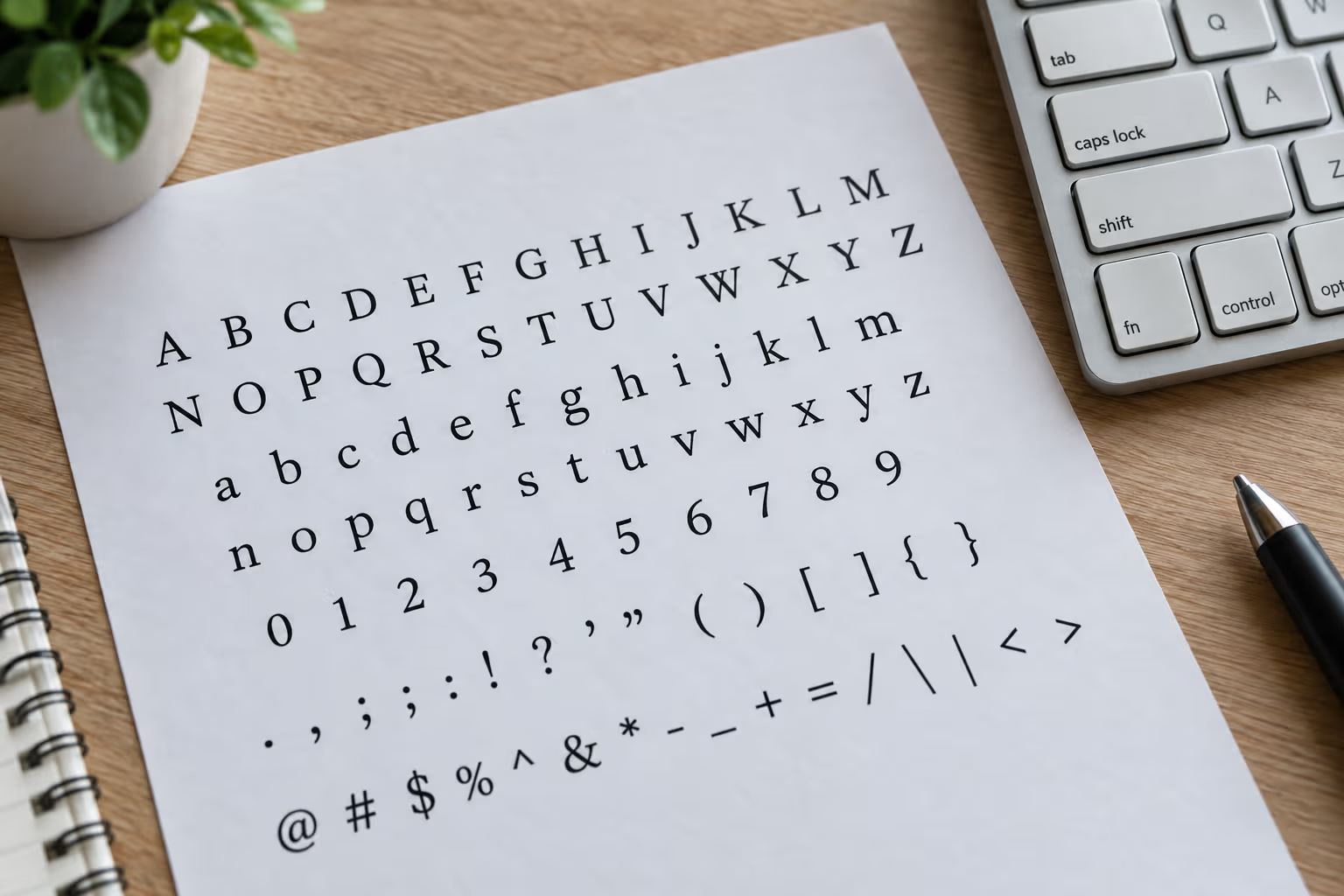
A character can also be one letter, digit, punctuation mark, or other written symbol. This meaning is common in directions about forms, text, and computers. A space may count as a character in a text field, and the word characters often appears in instructions that set a maximum length.
Common Phrases With “Character”
- Character trait: a quality associated with a person, such as generosity or curiosity. Example: “Curiosity is one of the character traits that makes the detective effective.”
- Strength of character: the resolve to act according to one’s principles, particularly in a difficult situation. Example: “It took strength of character to speak up.”
- In character: behaving in a way that fits a role or a person’s usual manner. Example: “The quiet response was in character for him.”
- Out of character: behaving in a way that seems unlike someone or unlike a fictional role. Example: “That impulsive decision was out of character.”
- Character limit: the maximum number of written marks allowed in a field or message. Example: “The caption has a 150-character limit.”
Tips for Writing a Clear Sentence
Choose details that signal which meaning you intend. Words such as plot, novel, or actor point to a story role; words such as honesty, integrity, or behavior point to personal qualities; and words such as keyboard, password, or limit point to a written symbol. If a sentence could be read in more than one way, add a specific description.
Remember that character is usually a count noun when it means a fictional person or a single symbol: “two characters enter” or “type three characters.” It is often uncountable when it means a person’s moral qualities or the distinctive feel of a place: “She has strong character” and “The house has character.”
Dictionary definitions confirm these main uses: Merriam-Webster defines “character” as including a person’s distinctive qualities, a fictional person, and a graphic symbol; Cambridge Dictionary also lists qualities, story roles, and written symbols among its noun meanings. Checking the context around the word is the easiest way to select the right sense.
Quick Review
Character can mean a person in a work of fiction, the qualities that shape an individual, or a mark used in writing. Build the sentence around the sense you want readers to understand, then use a fitting clue such as novel, integrity, or symbol. That small context cue makes the word easy to interpret.
Are you curious about the meaning of “character” in writing? In literature, a character typically refers to a person, animal, or entity portrayed in a work of fiction or drama. These individuals drive the narrative forward through their actions, dialogue, and development.
Characters can be complex, multi-dimensional beings with diverse personalities, motivations, and backgrounds, making them integral to the story’s plot and themes. Through their interactions and choices, characters help readers connect with the narrative on a deeper level, allowing for a more immersive and engaging reading experience.
7 Examples Of Character Used In a Sentence For Kids
- Character is what shows who you truly are.
- A good character means being kind to everyone.
- We should always try to be a brave character.
- Having a strong character helps us make good choices.
- Sharing with others is a sign of a caring character.
- It’s important to be honest to have a trustworthy character.
- Respect for others shows a polite character.
14 Sentences with Character Examples
- Character development is an important aspect of college life as it helps in shaping your personality.
- Joining clubs and societies is a great way to meet new people and build your character.
- Showing character by taking responsibility for your actions is a sign of maturity.
- Participating in community service activities can help you develop a strong sense of character.
- Taking on leadership roles in college can enhance your character and decision-making skills.
- Your character is reflected in how you treat others, especially your peers.
- Facing challenges and overcoming obstacles can help strengthen your character.
- Building a good reputation for yourself is essential for establishing a positive character.
- Being honest and displaying integrity are key components of a strong character.
- Showing kindness and empathy towards others demonstrates a nurturing character.
- Developing a character that is resilient and adaptable can help you navigate through difficult situations in college.
- Exhibiting a strong work ethic is a crucial aspect of building your character as a college student.
- Making ethical decisions that align with your values is a reflection of your character.
- Cultivating a growth mindset can positively impact your character development during your college years.
How To Use Character in Sentences?
Character is a key element of storytelling that brings a narrative to life. To use Character effectively in a sentence, start by identifying the individual you want to describe. This can be a person, animal, or even an imaginary being.
Next, think about the Character‘s traits and characteristics. You can describe their appearance, personality, emotions, or actions. For example, you could say, “The main Character in the story was a brave knight who embarked on a dangerous quest.”
When using Character in a sentence, it is important to provide context so that readers can understand the role and significance of the individual within the story. You can do this by explaining their relationships with other Characters, talking about their motivations, or describing the challenges they face.
To make your sentence more engaging, consider using vivid language and details to paint a clear picture of the Character. Instead of simply stating, “She was kind,” you could say, “Her warm smile brightened the room and she always went out of her way to help others.”
By following these tips, you can effectively incorporate Character into your writing and bring your stories to life for your readers.
Conclusion
In writing, creating sentences with character involves infusing personality, emotion, and vivid imagery to captivate readers and convey a unique voice. By incorporating distinctive traits, quirks, and perspectives into sentences, the narrative becomes dynamic and engaging, leaving a lasting impact on the audience. Through these sentences with character, writers can breathe life into their stories, allowing readers to connect with the characters and settings on a deeper level.
Crafting sentences with character is an art form that transcends mere words on a page, as it adds depth, authenticity, and individuality to the writing. By leveraging descriptive language, dialogue, and narrative style, writers can create a memorable and immersive reading experience that resonates with readers long after they’ve finished the story. The power of sentences with character lies in their ability to evoke emotion, spark imagination, and leave a lasting impression, shaping the overall tone and atmosphere of the narrative.