Quick answer: This guide now presents 705 distinct flower-related terms: 702 unique labels from the preserved original tables, plus researched X and Z entries. It keeps every source word and table. Use the list as a writing bank, then choose terms that accurately describe a bloom’s visible traits, fragrance, growth stage, or intended tone.
Choose flower words that fit the color, form, scent, or stage you can actually describe.
The original 42 letter tables contain 703 filled cells and 702 distinct labels; “Beautiful” appears twice.
The original headings cover A through W and Y. This update adds researched X and Z sections, bringing the unique total to 705.
The source list is a broad brainstorm, not a fully vetted adjective dictionary: it includes a noun such as “aroma,” multiword expressions, and participles.
For a precise description, choose an observable feature first: color, shape, petal texture, growth stage, or fragrance.
Not every flower or cultivar is fragrant. Confirm the scent before using words such as “fragrant,” “aromatic,” or “sweet-smelling.”
How to Choose a Precise Adjective for a Flower
Start with a detail a reader can picture. “Three pale-pink, ruffled blossoms” identifies number, color, and form more clearly than “very beautiful flowers.” A second sentence can add a personal reaction—such as cheerful or romantic—when the tone matters. Separating observation from opinion makes a description vivid without presenting a subjective impression as a botanical fact.
What you are describing
Useful word types
Example detail
Color or pattern
Golden, crimson, ivory, striped
State the visible hue or pattern.
Form or surface
Ruffled, star-shaped, layered, smooth
Describe the outline or petal surface you can see.
Growth stage
Budding, blooming, freshly opened, wilted
Say what stage the flower is in now.
Fragrance
Fragrant, sweet, spicy, citrusy
Use a scent word only when the flower actually has that scent.
Mood or style
Cheerful, elegant, romantic, dramatic
Signal that this is a personal or creative impression.
Specific details help readers picture a flower more readily than a string of near-synonyms.
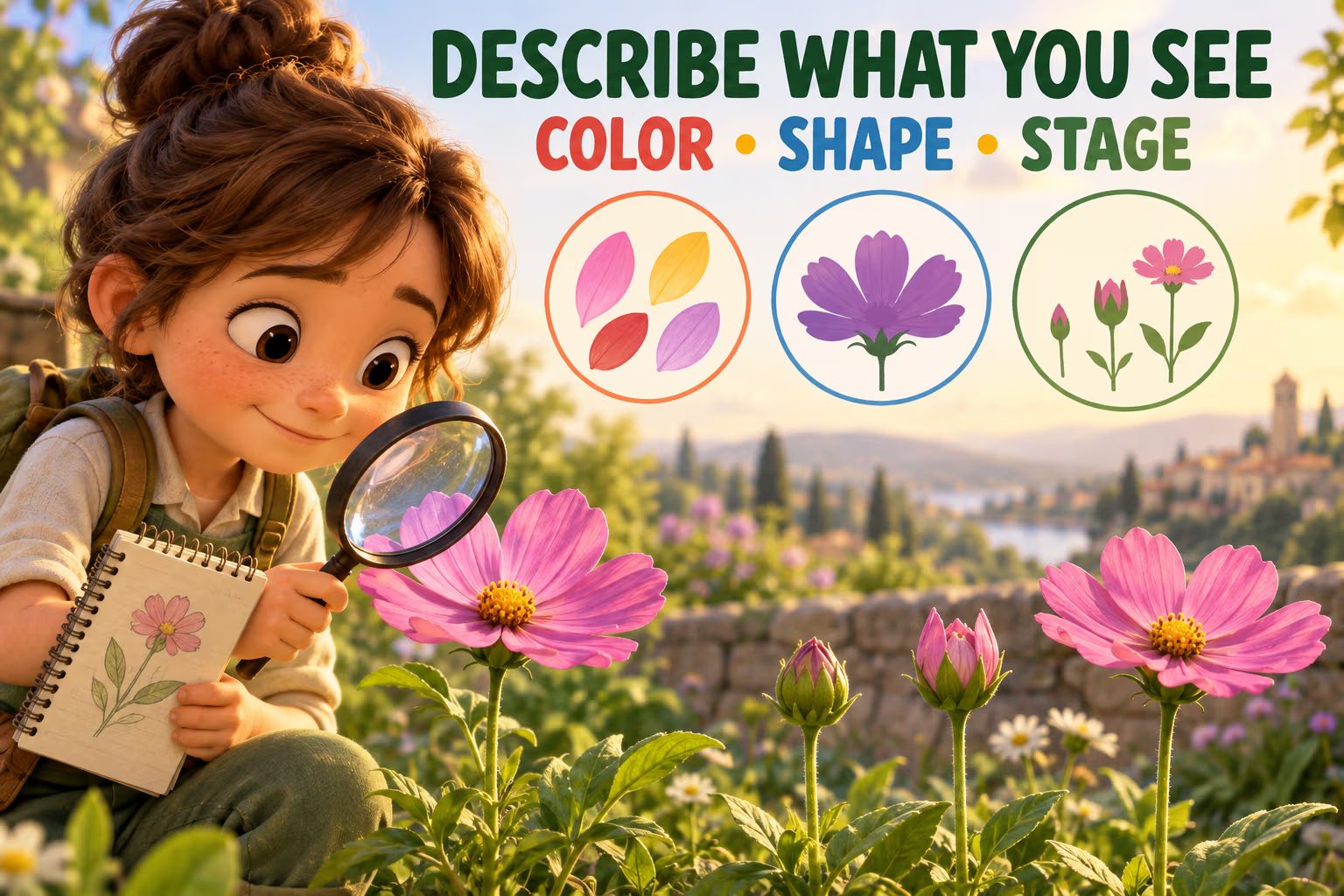
Look closely at a bloom before choosing words for its color, shape, and stage.
Adjective, Noun, or Adverb?
An adjective modifies a noun: “a fragrant flower” or “the petals are delicate.” An adverb describes an action: “the petals opened slowly.” Purdue OWL explains this noun-versus-verb distinction. The source table includes related words that do other jobs too: Cambridge labels aroma a noun and aromatic an adjective. Keep every original entry, but check a dictionary and the sentence before treating each label as an adjective.
Check Fragrance Instead of Assuming It
Fragrance varies among flowering plants and cultivars. The Royal Horticultural Society lists particular fragrant plants and notes that cultivated forms may be selected for characteristics such as flower color, size, or fragrance. It also recommends sheltered places where a scent can linger. In a caption or product description, verify the specific plant or cultivar and use “fragrant” only when that claim fits.
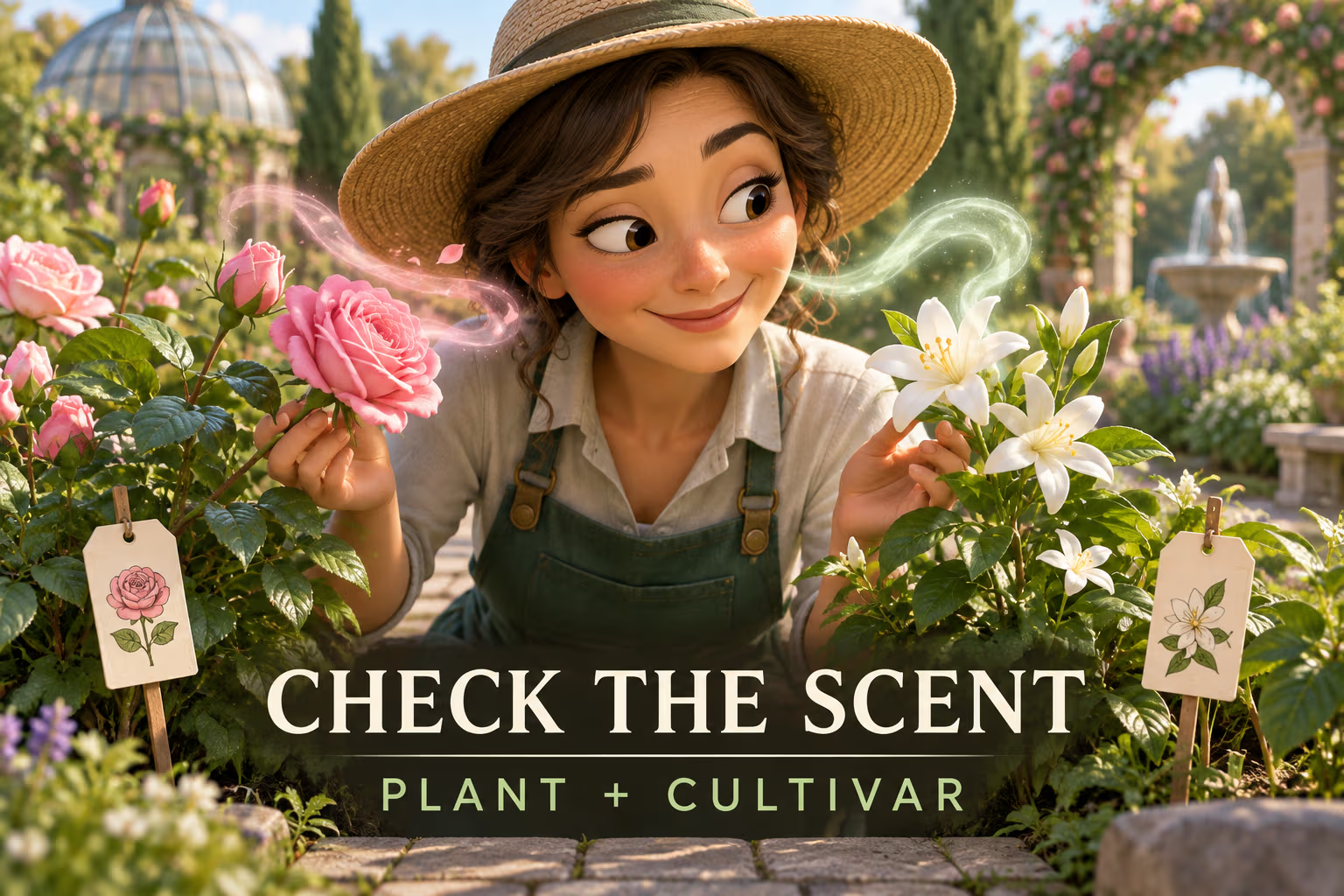
Plant and cultivar matter when a description makes a claim about fragrance.
A Simple Three-Step Writing Check
Name the flower or arrangement when you know it.
Choose one or two visible details, such as color and shape, before adding a mood word.
Check grammar, meaning, and fragrance claims; keep subjective language clearly expressive.
When it comes to adjectives for flowers, there are so many to choose from! Depending on the type of flower and the occasion, you can pick the perfect adjective to describe it. For example, if you’re giving a bouquet of roses to your significant other, you might want to choose adjectives like “passionate,” “romantic,” or “beautiful.” it’s important to choose an adjective that accurately reflects the type of relationship you have with the recipient.
If you’re sending a friend a bouquet of sunflowers, you might want to go with something a little more light-hearted, like “cheerful,” “happy,” or “bright.” No matter what the occasion, there’s an adjective out there that will perfectly describe your flowers!
Adjectives For Flowers
When you think of adjectives for flowers, what comes to mind? Pretty? Delicate? Fragrant? All of these words describe flowers perfectly, but there are so many more adjectives that can be used to describe these beautiful gifts from nature.
Here is a list of some other adjectives that can be used to describe flowers:
Blooming
Budding
Colorful
Cultivated
Garden-Fresh
Gorgeous
Luscious
Magnificent
Natural
Resplendent
Robust
Stunning
Tender
Vibrant
Which of these adjectives would you use to describe your favorite flower?
A
Abloom
Absurd
Abundant
Accent
Accent Plant
Accented
Accustomed
Actual
Adaptable
Adieu
Aërial
Aged
Alike
Alive
Amaranthine
Amazing
Ambrosial
Amiable
Ancient
Annual
Anythingthis
Approximate
Aquatic
Aristocratic
Aroma
Aromatic
Arranged
Artful
Artfully Arranged
Artificial
Artistic
Assorted
Astonishing
Astounding
Attention-Getting
Attractive
Authentic
Autumn
Autumnal
Awake
Awakening
Awry
Axillary
Azure
B
Baleful
Balmy
Balustrades
Bare
Bashful
Beauteous
Beautiful
Beautiful
Beloved
Black
Blasted
Blighted
Blooded
Blooming
Blossom-Filled
Blossoming
Blown
Blue
Blushing
Bold
Boldly Colored
Bonny
Bossy
Botanical
Bottlea
Bounteous
Bountiful
Bouquet
Boutonniere
Bramble
Branched
Brave
Breathtaking
Bridal
Bright
Brilliant
Broad
Broidered
Broken
Brown
Bud
Budding
Budding Stage
Bulb
Bulbous
Burgundy
Burnished
C
Camomile
Campanulate
Captivating
Cbmmercial
Celebration
Celestial
Center
Certain
Cerulean
Characteristic
Charming
Cheerful
Cheery
Cherished
Chic
Chief
Chinese
Choice
Choicest
Chrysanthemum
Circular
Classic
Clear
Close
Clustered
Color-Coordinated
Color-Infused
Colored
Colorful
Coloured
Colourful
Combined
Commercial
Complementary
Complete
Composite
Conscious
Conspicuous
Contemporary
Conventional
Cordial
Corsage
Costly
Countless
Country
Creamy
Creative
Crimson
Crushed
Curious
Cut
D
Dark
Darling
Dazzling
Dead
Dear
Deathless
Decorative
Deep
Delicate
Delicious
Delight
Delightful
Designed
Dimensional
Diminutive
Dinnerany
Distant
Distinct
Distinctive
Diurnal
Divine
Double
Dramatic
Dream
Dreamy
Drenched
Dripping
Dry
Duet
Dull
Dusk
Dusty
E
Earthly
Eden
Edible
Egyptian
Elder
Elegance
Elegant
Emblematic
Enchanted
Enchanting
Enchantment
English
Enormous
Entire
Eternal
European
Everlasting
Excellent
Exotic
Expensive
Exploding
Expressive
Exquisite
Extra
Extraordinary
Extravagant
Eye-Catching
Eyed
F
Faded
Fadeless
Fading
Faint
Fairest
Fake
Fall
Familiar
Fancy
Fanned
Fantasia
Fantastic
Farm-Fresh
Fascinating
Fashionable
Fashioned
Fatal
Faux
Favorite
Favourite
Fearless
Feetlike
Female
Fermented
Fertile
Festive
Fictitious
Field
Fiery
Figurative
Finer
Fit
Flagging
Flat
Flaunting
Fleeting
Fleshy
Floral
Floret
Florist-Delivered
Florist’S Choice
Flower Arrangement
Flower Clusters
Flowering
Flowerother
Flowersfuneral
Flowerswondrous
Fond
Foolish
Forlorn
Formal
Forsaken
Forward
Fragile
Fragrance
Fragrant
Frail
French
Frequent
Fresh
Fresh-Cut
Fresh-From-The-Garden
Freshly Picked
Freshness
Friendly
Frozen
Funereal
Funny
Future
Fuzzy
G
Garden
Garden-Fresh
Garish
Garlic
Gathered
Gay
Gentle
Genuine
Giant
Gigantic
Gilly
Globular
Glorious
Glossy
Gold
Golden
Gorgeous
Graceful
Gracious
Grandeur
Grateful
Green
Greenish
Groundsthe
Grown
H
Hand-Arranged
Hand-Delivered
Hand-Gathered
Hand-Selected
Handsome
Hapless
Happiness
Happy
Hardy
Harmony
Hawthorn
Healthy
Heartfelt
Hearts
Heather
Heavenly
Heavy
Helpless
Hemp
Heraldic
Herbaceous
Hickory
Hispidulous
Holy
Homely
Homostilous
Honest
Honied
Hooded
Hot
Hothouse
Hue
Huge
Human
Humble
Hungry
Hyper
I
Ideal
Identical
Idle
Idyllic
Imaginary
Immature
Immediate
Immense
Immortal
Imperial
Impious
Impossible
Impressive
In Bloom
Inconspicuous
Indian
Indigenous
Individual
Inevitable
Inexpensive
Innocent
Innumerable
Inodorous
Intellectual
Intelligent
Intoxicate
Invisible
Irregular
J | K
Japanese
Jewel-Toned
Joyful
Joyous
Kaleidoscope
Key
Kissed
Knightliest
L
Laced
Large
Lasting
Lavender
Left
Light
Lilting
Lily
Listless
Literary
Live
Lofty
Lone
Loneliest
Lonesome
Long-Lasting
Long-Stem
Loose
Loveliest
Lovely
Lowly
Luminous
Lush
Luxuriant
Luxurious
Lyrical
M
Magic
Magical
Magnificent
Majestic
Male
Mammoth
Marvellous
Marvelous
Mature
Meanest
Melancholy
Mesmerizing
Mesua
Meteoric
Middle
Minute
Miraculous
Mirjin
Mixed
Modern
Modest
Monoecious
Monstrous
Morning
Mortal
Mosaic
Mouldy
Mouthed
Multicolored
Multiple
Multitudinous
Mummy
Musky
Mutant
Myrtle
Mysterious
Mystic
Mystical
N
Nasty
Native
Natural
Nature’S Bounty
Nature’S Finest
Nearby
Neglected
Nestled
Neutral
Nice
Niffy
Nightfall
Noble
Numberless
Numerous
Nutritious
O
Odoriferous
Odorous
Official
One-Of-A-Kind
Open
Orchard
Orchard-Fresh
Ordinary
Organic
Ornamental
Ororous
Outdoor
Oversized
P
Paired
Pale
Paradise
Parched
Passionate
Pastel
Peculiar
Peerless
Pendent
Pendulent
Pendulous
Perennial
Perfect
Persian
Personal
Pet
Petal
Petite
Phosphorescent
Pine
Pink
Playful
Pleasant
Pleasing
Poisonous
Pollen
Pollenated
Pollinated
Pomegranate
Poor
Poppy
Popular
Potted
Practical
Prairie
Precious
Premium
Pretty
Principal
Pristine
Prized
Provincial
Pungent
Puny
Pure
Purple
Purplish
Q | R
Queenly
Queer
Radiance
Radiant
Raillerythese
Rainbow
Rare
Ravishing
Ready-To-Bloom
Ready-To-Open
Real
Realistic
Red
Reddish
Regal
Remarkable
Rhetorical
Rich
Richest
Romance
Romantic
Rosy
Royal
Rustic
S
Sacred
Sad
Sainted
Sanguine
Sapless
Scarlet
Scent
Scented
Season
Seasonal
Select
Selection
Semi
Sensational
Sensitive
Sentimental
Sexed
Shade
Shiny
Short
Showy
Shy
Sided
Silken
Silky
Silky-Smooth
Silly
Silver
Simple
Single
Singular
Sleepy
Smokable
Smooth
Snowy
Sober
Soft
Solitary
Sophisticated
Southern
Sown
Spathe
Special
Spectacular
Spicy
Spiked
Splendor
Starry
Stately
Steamy
Stellated
Sterile
Stiff
Straggling
Strange
Striking
Strowest
Stunning
Stupid
Sturdy
Styled
Stylish
Sublime
Sudden
Suitable
Summery
Sun-Kissed
Sunless
Sunny
Superb
Superlative
Supple
Supreme
Sweet
Sweetest
Symbolic
Symphonythe
Syringa
T
Tasselled
Tattered
Tender
Terminal
Terrestrial
Terrible
Text
Thae
Thee
Theise
Thin
Thirsty
Timeless
Timey
Timid
Tinged
Tiniest
Tinted
Tipped
Tired
Touching
Traditional
Treacherous
Treasured
Tremulous
Tropical
Tubular
Twin
Typical
Tzinitzcan
U
Ugly
Unaccustomed
Unattractive
Uncomprehending
Undying
Unforgettable
Unfortunate
Unique
Unisexual
Unknown
Unlooked
Unopened
Unseen
Unspecialized
Untarnished
Untended
Unusual
Unworthy
Uplifting
Usual
V
Vagrant
Valorous
Varicolored
Varied
Venomous
Verdant
Vernal
Versicolour
Vibrant
Violet
Virgin
Visible
Visually Stimulating
Voluntary
Voluptuous
Votive
Vpon
W
Warm
Watered
Wayside
Weaklinga
Weakly
Weedy
Weird
Welcome
Wet
Whimsical
Whitish
Wild
Wilted
Wistful
Withered
Wonderful
Wondrous
Woodland
Wrought
X
Term
Meaning and use
Xanthic
Rare and technical: yellow or yellowish. Use it for a yellow-toned bloom when a specialist word suits the audience; Collins records the color sense.
X-shaped
A plain compound description for a flower or arrangement whose visible outline resembles the letter X.
Y
Year-Round
Yellow
Yellowish
Young
Youthful
Z
Term
Meaning and use
Zygomorphic
A technical botanical adjective for bilateral flower symmetry. Virginia Tech Extension describes this form as having mirror-image halves across a midline.
Zesty
A lively or piquant impression. Cambridge gives “full of flavor” and “full of energy” senses; for a flower, use it figuratively unless you are describing a verified scent note.
Final verdict
When it comes to adjectives for flowers, there are many to choose from. Whether you want to describe the color, shape, or aroma of a flower, there’s an adjective out there for you. Here are just a few of the most commonly used adjectives for flowers.
Examples: Put Flower Adjectives in a Sentence
For a factual caption, write “The open, pale-yellow flowers have narrow petals.” For a card, a warmer line such as “A cheerful bouquet brightened the room” makes its mood clear. If fragrance is verified, “lightly fragrant blossoms” is more informative than simply “lovely flowers.” Use one strong detail instead of stacking words that repeat the same idea.
The preserved tables contain 703 filled cells and 702 distinct labels because “Beautiful” appears twice. Three researched entries—Xanthic, X-shaped, and Zygomorphic—fill the former X and Z gaps, bringing the distinct total to 705. The expanded list is a writing resource, not a claim that all 705 items are equally common or dictionary-verified adjectives.
What makes a good adjective for a flower?
Choose a word that tells readers something specific and supportable. Color, petal shape, texture, and bloom stage are observable; words such as elegant or romantic express a response. “Golden, ruffled petals” gives more concrete information than several broad compliments. Use a scent adjective only after confirming that the particular bloom is fragrant.
Are all flowers fragrant?
No. Fragrance differs among plant species and cultivars, and some flowers have little noticeable scent. The Royal Horticultural Society identifies particular fragrant plants and cultivars rather than treating scent as universal. If you are writing a label or bouquet description, check the specific plant or smell it before calling it fragrant, sweet, spicy, or citrusy.
Is aroma an adjective?
No. Cambridge Dictionary identifies aroma as a noun; aromatic is the related adjective. Write “the flower has a delicate aroma” or “the aromatic flower.” Purdue OWL notes that adjectives modify nouns, while adverbs modify verbs and other modifiers. Check a word’s role in its sentence instead of relying on a list heading alone.
What do Xanthic and Zygomorphic mean?
Xanthic is a rare, technical adjective for yellow or yellowish coloring. Zygomorphic is a botanical term for bilateral symmetry, where a flower has matching halves across a midline. These words are useful when they fit a specific color or structure, but simpler phrases such as “yellow petals” or “two-sided symmetry” may suit a general audience better.
Robin founded StartsWithy in 2022 to make English words easier to understand and use. Robin oversees our 30,000+ guides, checks meanings and grammar against trusted dictionaries such as Cambridge, Oxford Learner’s and Collins, and is accountable for every correction we make.