
Disdain is a noun meaning a feeling that someone or something is unworthy of respect, and it is also a verb meaning to treat with scorn or to refuse. To use disdain in a sentence, pair it with the thing rejected: disdain for the rules. The tone is cold and formal.
Disdain at a glance
- Disdain is both a noun and a verb; the adjective is disdainful and the adverb is disdainfully.
- As a noun it means a cold feeling of scorn; as a verb it means to treat with scorn or to refuse proudly.
- The noun usually takes for: disdain for convention, disdain for authority, disdain for small talk.
- The verb takes a direct object: she disdained the offer, or the formal disdain to reply.
- The register is formal and literary; in speech people say contempt or look down on instead.
- The commonest error is confusing disdain with disrespect, which is milder and far less cold.
What does disdain mean?
Disdain is a noun and a verb meaning a cold sense that a person or thing is beneath respect. The Cambridge entry for disdain records the noun sense of scorn and the verb senses of looking down on and refusing. The feeling is detached rather than angry, and the verb often means to reject something as unworthy even to consider.
| Sense | Plain meaning | Example sentence |
|---|---|---|
| Noun, cold scorn | A feeling that something is unworthy of respect | Her disdain for careless work was obvious. |
| Verb, look down on | Treat someone or something as beneath notice | The veteran disdained the rookie advice. |
| Verb, refuse proudly | Decline something as unworthy of a reply | He disdained to answer the insult. |
Disdain is not plain dislike and it is not hatred. Mildly not liking something is simply disliking it, and to despise a rival is far stronger and more personal. Disdain stays cool and superior; its opposite, to respect a teacher, is warm and approving. The word never describes an action, only an attitude.
How do you use disdain in a sentence?
Disdain works as a noun that takes the preposition for or the phrase with disdain, and as a transitive verb that needs a direct object. The adjective disdains nothing, but the verb can sit inside a formal refusal. Its opposite, to admire a rival, is warmer and far more common in everyday speech.
| Pattern | Example | What it signals |
|---|---|---|
| disdain for + noun | Her disdain for gossip annoyed the group. | The noun plus its usual preposition. |
| with disdain | He read the note with disdain. | An adverbial phrase of manner. |
| disdain + object, verb | She disdained the small reward. | The transitive verb treating a thing as unworthy. |
| disdain to + verb | He disdained to explain himself. | Formal refusal, close to refuse to. |
| disdainful of + noun | She was disdainful of fashion. | The adjective patterns with of, not for. |
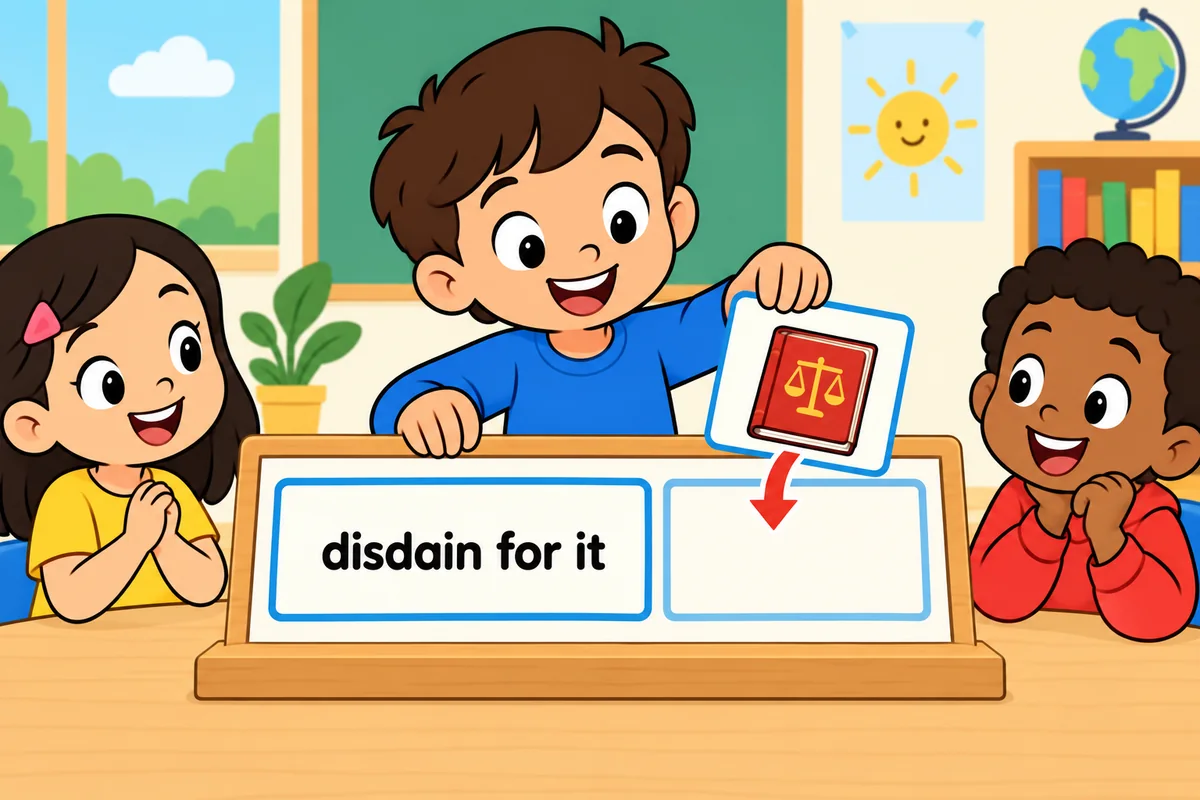
Disdain in a sentence: examples across contexts
The noun rarely stands alone; it almost always names what is being rejected, as in a critic who treats public mockery with open disdain.
| Context | Example sentence | Why this works |
|---|---|---|
| Classroom | Disdain for a classmate work can end a friendship. | The for pattern in an everyday setting. |
| Workplace email | We should discuss the proposal without disdain. | The noun as the object of a preposition. |
| News report | The minister faced disdain for ignoring the warning. | Public judgement in a formal register. |
| Conversation | He said it with such disdain that the room went quiet. | The with phrase describing manner. |
| Literary criticism | The narrator views city fashion with quiet disdain. | Cool detachment fits the literary tone. |
| Academic writing | Early critics showed disdain for the new method. | Historically framed scholarly attitude. |
| Sports report | The champion disdained the easy draw. | The verb sense of refusing as unworthy. |
| Manners | She disdained to reply to the rude question. | The formal disdain-to pattern. |
| Diplomacy | One ambassador private disdain nearly became public. | Shows the noun naming an attitude, not an act. |
Disdain vs contempt
Disdain and contempt for the rules both describe looking down on something, but contempt is the hotter, more active feeling of the two. The table separates them by temperature and by what each usually targets.
| Attribute | Disdain | Contempt |
|---|---|---|
| Meaning | Cold rejection as unworthy | Stronger, open scorn |
| Intensity | Cool and detached | Hotter and more hostile |
| Typical focus | Taste, convention, advice | People or moral failure |
| Verb form | To disdain something | To hold in contempt |
| Connotation | Superior and dismissive | Judging and confrontational |
Use disdain for a cool, superior attitude and contempt when the scorn is fierce and personal, and reach for the verb scorn a warning when the rejection is openly expressed.
Word forms and grammar of disdain
The family keeps the same core meaning, though the adjective a disdainful glance describes a manner rather than a feeling.
| Form | Part of speech | Example |
|---|---|---|
| disdain | noun | Her disdain was plain to everyone. |
| disdain | verb | She disdained the easy route. |
| disdains | verb, third-person singular | He disdains small talk. |
| disdained | past and past participle | They disdained the offer. |
| disdaining | present participle | Disdaining help, she worked alone. |
| disdainful, disdainfully | adjective and adverb | He gave a disdainful shrug. |
Common mistakes with disdain
Incorrect: She felt disdain about the cheap gift. Correct: She felt disdain for the cheap gift. Rule: the noun disdain takes the preposition for, never about.
Incorrect: He disdained at the suggestion. Correct: He disdained the suggestion. Rule: the verb is transitive, so it needs a direct object with no preposition.
Incorrect: They showed disdain of the custom. Correct: They showed disdain for the custom. Rule: the noun takes for, while only the adjective takes of.
Incorrect: I disdain that film a little. Correct: I dislike that film. Rule: disdain is strong and cold, so mild dislike needs a different verb.
Incorrect: Her disdainful for the plan was clear. Correct: Her disdain for the plan was clear. Rule: use the noun for a feeling and the adjective disdainful for a manner.
Practice using disdain
- Fill in the blank: The judge looked at the bribe with ______.
- Choose the better word: She felt (disdain / dislike) for the song but still hummed it.
- Correct the error: He disdained at the modest prize.
- Build a sentence: use disdain for about a rule you refuse to follow.
- Spot the register: Which suits a formal essay, disdain for the custom or no respect for the custom?
- Fill in the blank: The veteran ______ to ask for help.
Answers
- disdain. The with phrase describes the cold manner.
- dislike. Mild feeling does not fit the strength of disdain.
- He disdained the modest prize. The verb needs a direct object.
- Her disdain for the new rule was obvious. The fixed for pattern fits the noun.
- disdain for the custom. The formal noun matches an essay register.
- disdained. The formal pattern disdained to plus a verb shows refusal.

The bottom line
Disdain is a cool, superior sense that someone or something is unworthy of respect, and it works as both a noun and a verb. The noun almost always takes for, and the verb takes a direct object or the formal to. Use disdain in a sentence when the attitude is detached and dismissive; choose contempt for fiercer scorn and dislike for anything milder.
Frequently asked questions about disdain
Is disdain a noun or a verb?
Disdain is both. As a noun it names the feeling, as in her disdain for small talk, and as a verb it means to look down on or to refuse, as in she disdained the offer. The noun is more common, and the verb usually appears in formal or literary writing.
What is the adjective form of disdain?
The adjective is disdainful, meaning showing scorn, and the adverb is disdainfully. A disdainful glance or a disdainfully raised eyebrow describes the manner that signals the feeling. The adjective takes of, as in disdainful of fashion, while the noun takes for.
What preposition follows disdain?
The noun disdain takes for: disdain for authority, disdain for convention, disdain for lazy work. The adjective disdainful takes of: disdainful of praise. The verb takes no preposition at all, since it needs a direct object, as in he disdained the reply rather than disdained at the reply.
Is disdain stronger than dislike?
Yes. Disdain is stronger than dislike because it adds a sense of superiority, treating its object as unworthy rather than merely unpleasant. Dislike is neutral and common in speech, while disdain is formal, cold and often literary. Contempt, in turn, is stronger and angrier than disdain.
Have you ever come across a sentence brimming with scorn or contempt? This tone, often dripping with disdain, is unmistakable in its expression of dislike or disapproval. When someone speaks or writes with disdain, they are showing a strong disapproval or lack of respect for something or someone.
Using words that convey disdain can add depth and emotion to writing, creating a powerful impact on the reader. Whether used in dialogue to highlight a character’s attitude or in narrative to emphasize a particular viewpoint, sentences with disdain can help evoke strong reactions and paint a vivid picture.
7 Examples Of Disdain Used In a Sentence For Kids
- The cat looked at the mouse with disdain.
- The bear showed disdain towards the tiny rabbit.
- The queen looked at the messy room with disdain.
- The princess wrinkled her nose in disdain at the smelly flower.
- The lion roared in disdain at the small monkey.
- The teacher shook her head in disdain at the messy desk.
- The elephant trumpeted in disdain at the small insect.
14 Sentences with Disdain Examples
- The professor looked at the poorly researched assignment with disdain.
- She showed disdain for her classmate’s lack of participation in the group project.
- The seniors in college often expressed their disdain for the freshmen’s lack of experience.
- The students reacted with disdain when the guest lecturer arrived late to the seminar.
- The students felt disdain towards the cafeteria food that lacked quality and variety.
- She couldn’t hide her disdain for the outdated textbooks provided by the college.
- The group of students responded with disdain to the unrealistic demands of the project supervisor.
- He expressed his disdain for the college’s slow response in addressing student grievances.
- She rolled her eyes in disdain at the mention of another boring lecture.
- The professor’s disdain for plagiarism was evident in her strict enforcement of academic integrity policies.
- The students showed disdain for the outdated technology available in the computer lab.
- He couldn’t help but feel a sense of disdain for the lack of support provided by the college administration.
- Her comments were laced with disdain as she criticized the amateurish presentation.
- The lack of respect shown by some students towards their peers was met with disdain by others.
How To Use Disdain in Sentences?
Disdain is a strong word that conveys a complete lack of respect or intense scorn towards someone or something. When using disdain in a sentence, it is important to understand its meaning and proper application to convey your message effectively.
To use disdain in a sentence, think about situations where you feel a strong contempt or disregard for someone or something. For example, “She looked at him with disdain after he made a rude comment about her appearance.” In this sentence, the word disdain highlights the woman’s strong feeling of disrespect and contempt towards the man because of his rude behavior.
When incorporating disdain into your writing, consider the context in which it is being used and ensure it fits the tone and message you want to convey. For instance, “The wealthy socialite treated the waiter with such disdain that it made the other diners uncomfortable.” Here, disdain emphasizes the socialite’s haughty attitude towards the waiter, creating a vivid image of her disrespectful behavior.
Overall, using disdain in a sentence can add depth and emotion to your writing, but it is crucial to use it judiciously to convey the strong feeling of contempt or scorn effectively.
Conclusion
In conclusion, the examples of sentences with disdain show a clear demonstration of contempt or scorn towards someone or something. These sentences reflect a strong disapproval or lack of respect, often conveyed through negative language, tone, or body language. Using disdainful sentences can convey a strong sense of disapproval and can be perceived as disrespectful or rude in communication.
It is important to be mindful of the use of disdain in sentences, as it can have a negative impact on relationships and interactions. Instead, fostering mutual respect and understanding through empathy and open communication can lead to more positive and constructive exchanges.


