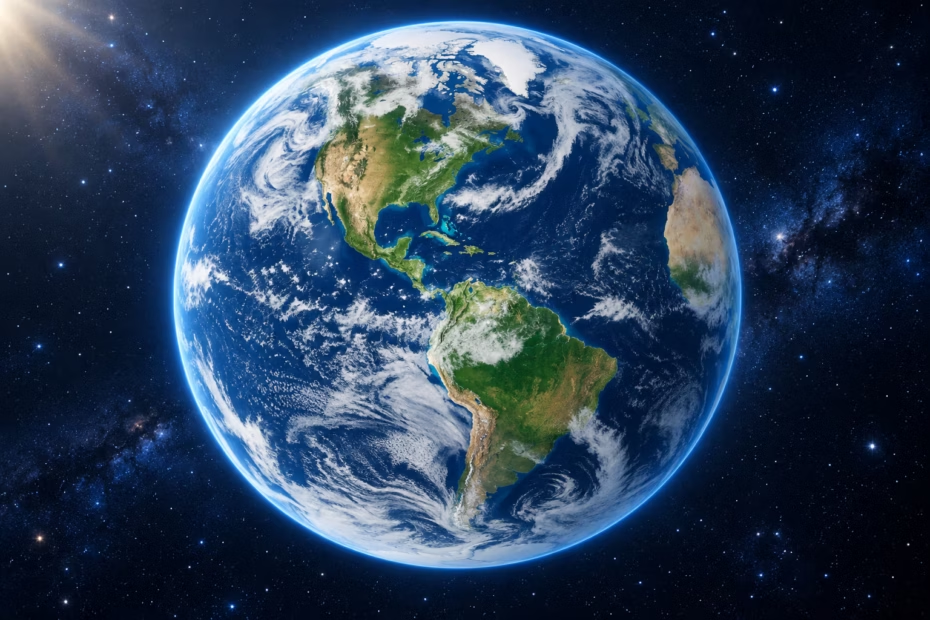
Have you ever wondered how to use the word “earth” in a sentence? When discussing the term “earth,” we are referring to our planet, the third rock from the sun and our home in the vast universe.
Using “earth” in a sentence can be as simple as describing a physical location, referencing the soil or ground beneath our feet, or symbolizing a sense of grounding or connection to nature. Let’s explore various ways to incorporate this versatile word into our everyday language.
Earth in a Sentence: Meaning and Examples
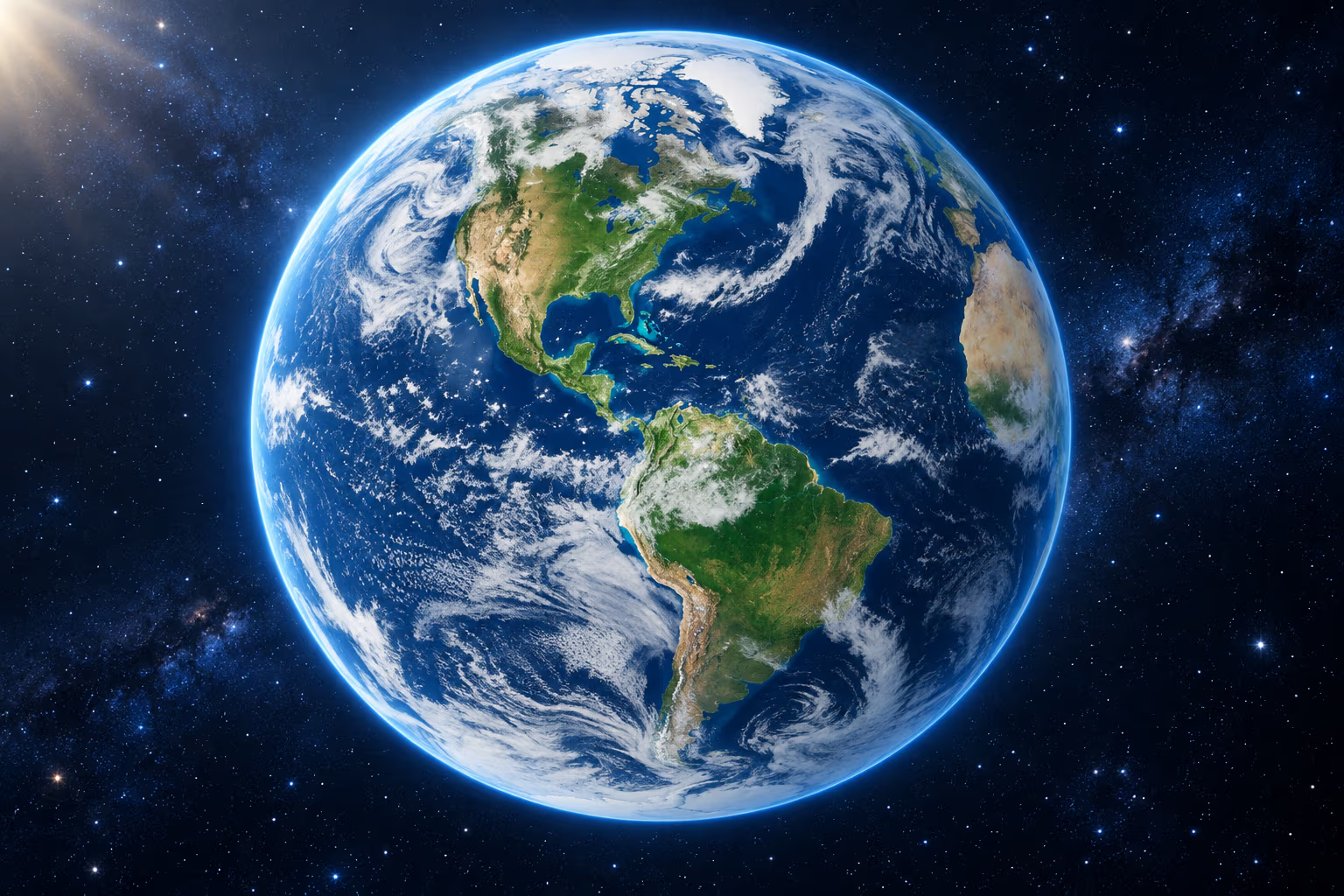
Earth most often names the planet we live on, while earth can mean soil or ground. Context tells readers which sense you intend. The word also appears in familiar expressions such as down to earth and on earth. The examples below show how to use each sense naturally and choose capitalization consistently.
Earth as the name of our planet
Use Earth when you are treating the planet as a named world, especially when comparing it with Mars, Venus, or another planet. In general writing, many editors also accept the Earth or lowercase earth for the planet; follow the style used in your class, publication, or organization. NASA’s history style guide capitalizes the name and omits the, while Chicago says either Earth or the Earth is acceptable when used consistently. The important thing is that readers can identify the planet sense.
- Earth travels around the Sun once each year.
- Scientists compare the atmosphere of Earth with the atmospheres of other planets.
- The spacecraft sent its final images back to Earth.
- Water covers about 71 percent of Earth’s surface, according to NASA.
- Among the rocky planets, Earth is the one we call home.
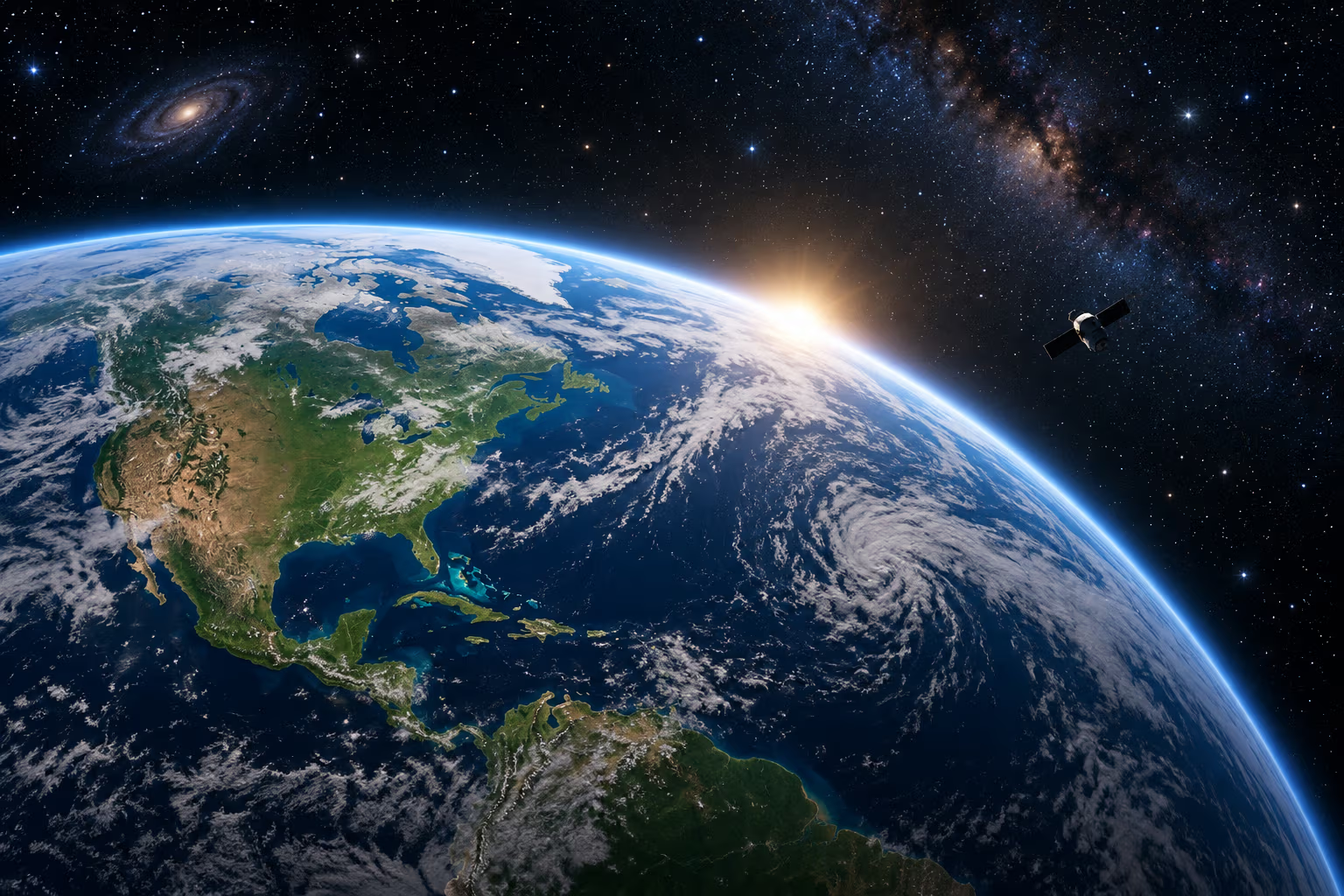
NASA describes Earth as the third planet from the Sun. Its overview also notes that the global ocean covers about 71 percent of the planet’s surface. These facts make clear why the proper-name sense fits examples about orbit, oceans, atmosphere, or space exploration. They are factual examples of usage, not a requirement to capitalize the word in every house style.
Earth as soil, ground, or land
Use lowercase earth when the word means soil or ground. This common-noun sense can take an article or modifier, just like other countable or mass nouns: the earth, loose earth, or a handful of earth. In some contexts, ground, soil, or land may be more precise. Soil usually means the material in which plants grow; ground can mean the surface beneath your feet; land can mean dry terrain or an area of territory.
- The gardener mixed compost into the earth before planting the seeds.
- Rain softened the dry earth along the path.
- Archaeologists carefully removed a layer of earth from the site.
- She brushed the earth from her boots before entering the house.
- A small green shoot pushed through the earth.
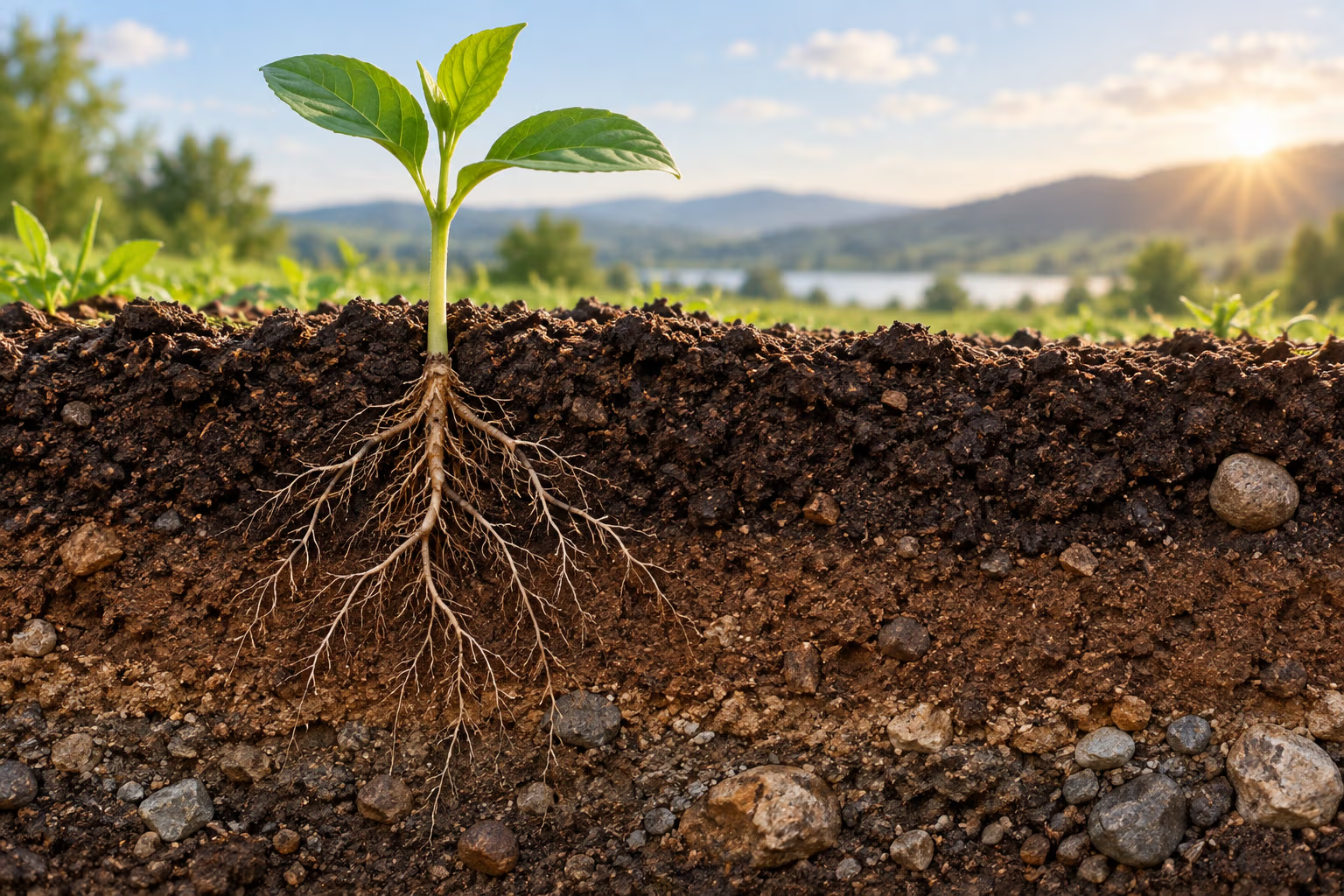
Try this quick substitution test: if soil or ground fits naturally, lowercase earth is usually the intended sense. If the sentence is about a planet among celestial bodies, treat the word as the planet’s name according to your chosen style. The test helps with ordinary sentences, though fixed expressions and publication rules can have their own conventions.
Earth in idioms and expressions
Several common expressions use earth in a figurative or emphatic way. They are usually written lowercase, even when the literal topic is not soil. Because an idiom has an established meaning, replacing one word or changing its capitalization can make the phrase look unusual.
- Down to earth: practical, sensible, and not pretentious. Despite her success, the author remained down to earth.
- On earth: an emphatic phrase in questions or negatives. Where on earth did I leave my notebook?
- Move heaven and earth: make an exceptional effort. They moved heaven and earth to get the stranded hikers home.
- Cost the earth: cost a great deal; this expression is common in British English. The handmade table is beautiful, but it cost the earth.
In down to earth, the phrase describes someone’s manner, not the planet or a patch of soil. In on earth, it adds emphasis rather than naming a location. These examples are useful reminders that capitalization follows meaning and convention together.
How to choose the right form
- Name the meaning. Decide whether you mean the planet, soil, ground, land, or an idiom.
- Use context. Words such as orbit, planet, and spacecraft point to the world; words such as seed, garden, and dig point to soil.
- Check the style rule. If your guide specifies Earth, the Earth, or lowercase earth for the planet, follow it throughout.
- Read the sentence aloud. Make sure the article and preposition sound natural: on Earth, on the earth (soil), or in the earth (soil/ground).
For instance, compare The probe landed on Earth with The probe’s foot sank into the earth. The first sentence names a planet; the second describes the surface material. A useful edit is to replace the word temporarily: if “soil” preserves the sentence’s meaning, lowercase earth is likely right.
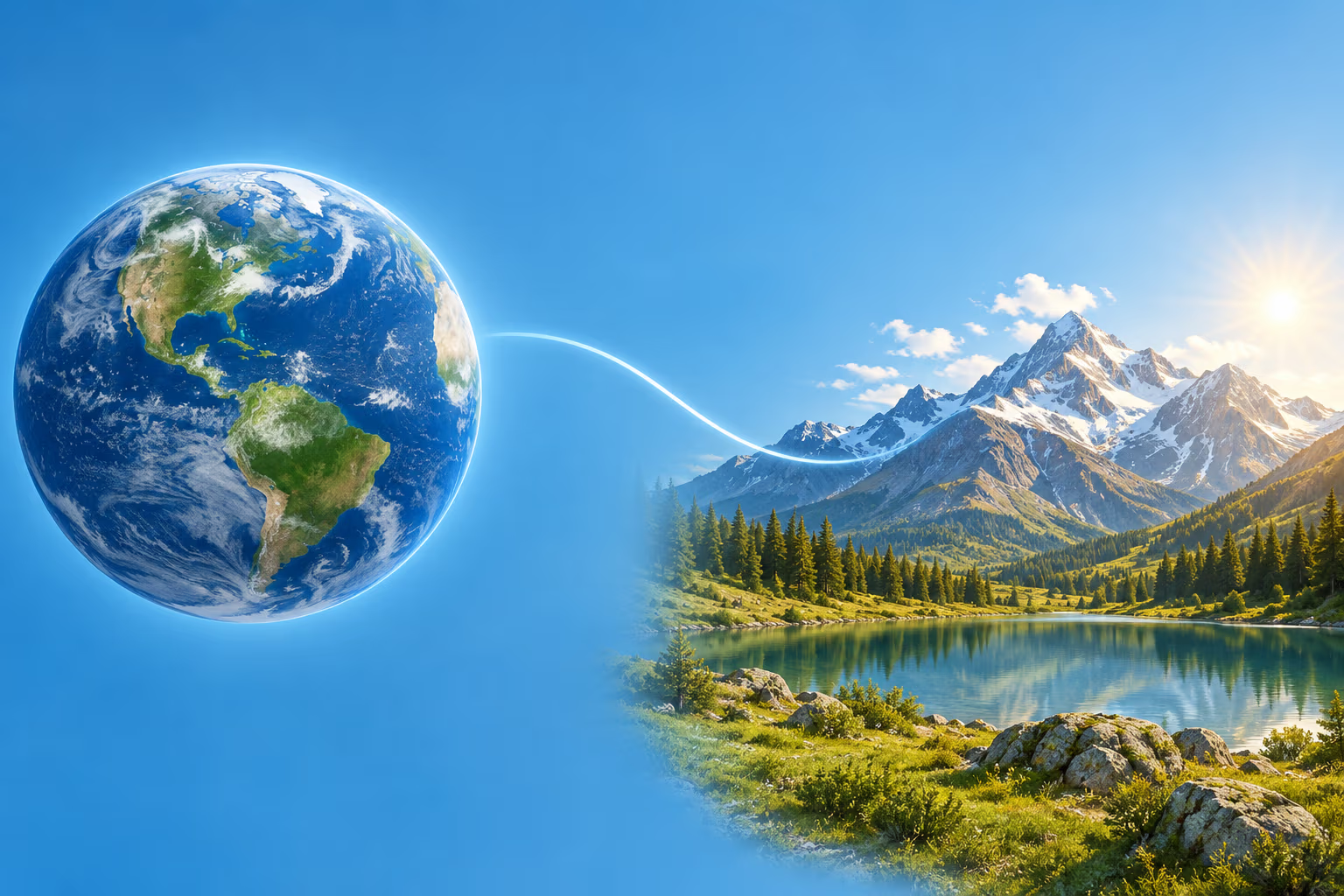
Frequently asked questions about earth
Should Earth always be capitalized?
Not in every style. Many guides capitalize Earth as a planet name and lowercase earth for soil, but some styles lowercase the planetary word in ordinary prose or allow the Earth. Use one rule consistently and follow your publication’s guidance.
Do you say “Earth” or “the Earth”?
Both forms are used. Some technical and editorial guides prefer Earth without an article, particularly when it appears with other planet names. Other guides accept the Earth. Choose the form your style guide uses; the word before it does not by itself identify whether you mean soil.
Is “earth” a noun?
Yes. As a noun it can mean the planet, soil, or ground. In technical electrical usage, earth can also refer to a connection to the ground; that sense is especially common in British English. Check the surrounding words to see which definition applies.
What is a simple sentence with earth meaning soil?
The children planted beans in the moist earth. Here, earth means the soil in the garden, so it is lowercase.
What is a sentence with Earth as a planet?
Earth is the third planet from the Sun. Here, Earth is the planet’s name. Your chosen style may instead write The Earth or the earth.
Sources and further reading
- NASA Science: Facts About Earth — planetary facts and the origin of the name.
- NASA History: Style Guide — NASA’s capitalization and article preference for the planet name.
- The Chicago Manual of Style: Capitalization of Earth — explains its flexible planetary convention.
- Cambridge Dictionary: earth — definitions and examples for the planet and soil senses.
7 Examples Of Earth Used In a Sentence For Kids
- Earth is our home in space.
- We live on the earth with plants and animals.
- The earth is big and round like a ball.
- We need to take care of the earth by recycling.
- The earth gives us air to breathe and water to drink.
- We can learn about different countries on earth.
- Let’s all work together to protect the earth.

14 Sentences with Earth Examples
- Earth is the third planet from the sun in our solar system.
- As college students, it’s important to be aware of the environmental challenges facing our Earth.
- Studying geography helps us understand the different regions and landscapes on Earth.
- Learning about sustainable living practices can help us make a positive impact on the health of our Earth.
- Astronomy enthusiasts often gaze at the stars and wonder about the mysteries of our vast Earth.
- Taking care of our mental health is just as important as taking care of our Earth.
- Volunteering for environmental clean-up drives is a great way to give back to our Earth.
- The study of geology helps us learn about the structure and composition of the layers of Earth.
- Investing in renewable energy sources can help reduce our carbon footprint on Earth.
- Watching documentaries about the natural wonders of Earth can inspire us to appreciate the beauty of our planet.
- Through social initiatives, we can raise awareness about the importance of conserving the resources of our Earth.
- The concept of sustainable agriculture emphasizes the need to protect the soil and nurture the Earth.
- Discussing climate change and its impact on our Earth can lead to meaningful conversations and solutions.
- Each one of us has a responsibility to protect and preserve our Earth for future generations.
How To Use Earth in Sentences?
Earth is the third planet from the sun in our solar system. It is the only planet known to support life. When using the word Earth in a sentence, it is important to remember a few key points.
- Capitalization: The word Earth should always be capitalized when referring to the planet as a proper noun. For example, “I live on Earth.”
- Article Usage: When referring to the planet as a proper noun, it is common to use the article “the” before Earth. For example, “The astronauts traveled to Earth.”
- Context: The word Earth can also refer to soil or land. In this case, it is used in the same way as other nouns. For example, “She planted the seeds in the earth.”
- Proper Noun: When Earth is used as a proper noun, it refers specifically to our planet. For example, “We must protect Earth for future generations.”
By keeping these simple guidelines in mind, you can confidently use the word Earth in your writing and conversations. Practice using Earth in sentences to become more comfortable with its proper usage.

Conclusion
In this article, we explored numerous examples of sentences using the keyword “earth.” These sentences ranged from describing the planet itself and its environment to discussing various activities and phenomena related to Earth. Through these examples, we highlighted the diverse contexts in which the word “earth” can be used in the English language.
Overall, the word “earth” serves as a versatile term, representing both the physical planet we inhabit and the ground beneath our feet. It can be employed to convey a wide range of ideas and concepts, from environmental discussions to geological matters. By understanding the different ways in which “earth” can be incorporated into sentences, we gain a deeper appreciation for the significance of our planet and the role it plays in our daily lives.