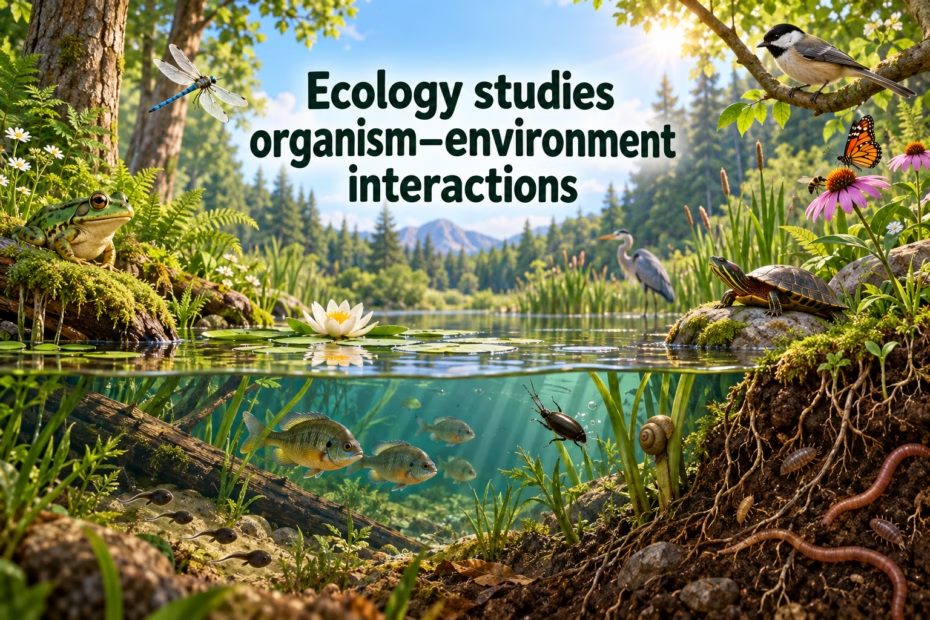
Ecology is the scientific study of how organisms—including people—interact with one another and with their physical surroundings. In a sentence, use ecology for the field of study or for a clearly named set of ecological relationships; use ecosystem when you mean the living and nonliving parts of a particular place. For example: “The class used ecology to explain how drought changed the pond ecosystem.”
What does ecology mean in a sentence?
In a sentence, ecology most often names a branch of biology or the relationships studied by that science. The Ecological Society of America defines ecology as the study of relationships between living organisms and their physical environment; those relationships can involve organisms of the same or different species, as well as factors such as water, soil, and temperature. Ecology includes humans, and it can be studied at scales from an individual organism to a habitat or region.
“The ecology of the marsh changed after a road altered the flow of freshwater” uses ecology to refer to a system of relationships. In technical writing, ecosystem is often the clearer word for the interacting organisms and nonliving surroundings in one place. “The marsh ecosystem includes reeds, fish, microbes, water, and sediment” identifies the place and its components directly.
How are population, community, and ecosystem different?
These three terms describe different levels of ecological organization. A population is individuals of one species in a defined area; a community is populations of different species living and interacting there; an ecosystem includes that community plus nonliving conditions such as water, soil, light, and temperature. State the area and time period when they matter to your point.
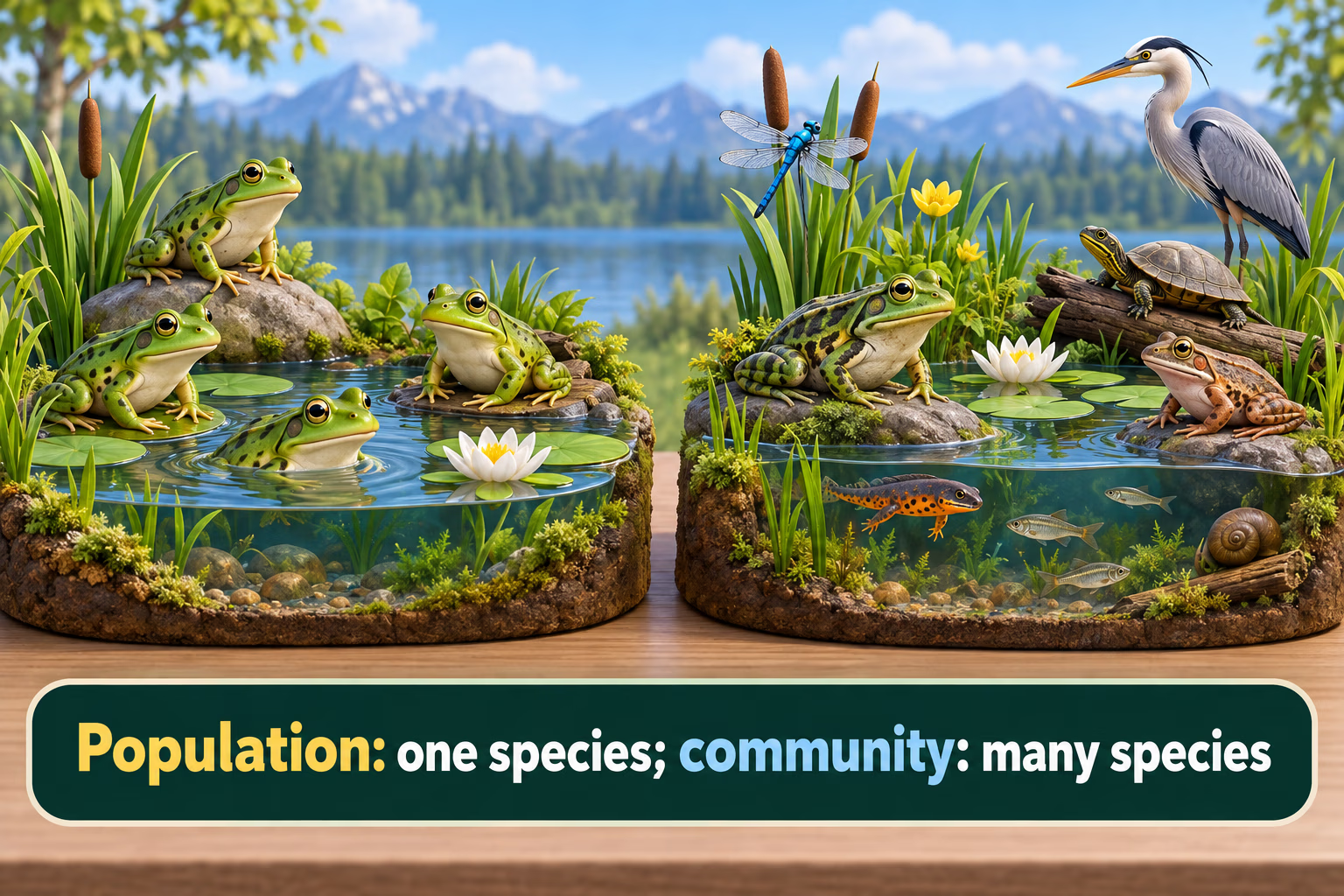
For example, several frogs of the same species living in one pond form a population. The pond’s frogs, insects, algae, fish, and microbes together are part of its community. When the water, mud, sunlight, dissolved nutrients, and other physical conditions are included, the discussion concerns the pond ecosystem. The exact boundary depends on the question: ecologists may study a small pond, a watershed, or a much larger landscape.
How does ecology explain food webs?
Ecology explains how feeding relationships connect organisms and transfer energy. A food chain shows one pathway, while a food web links multiple pathways in a community. In a meadow, plants capture energy through photosynthesis; a grasshopper may eat plant material, a frog may eat the grasshopper, and a hawk may prey on the frog. Arrows in a food-web diagram point from the food source toward the organism that consumes it.
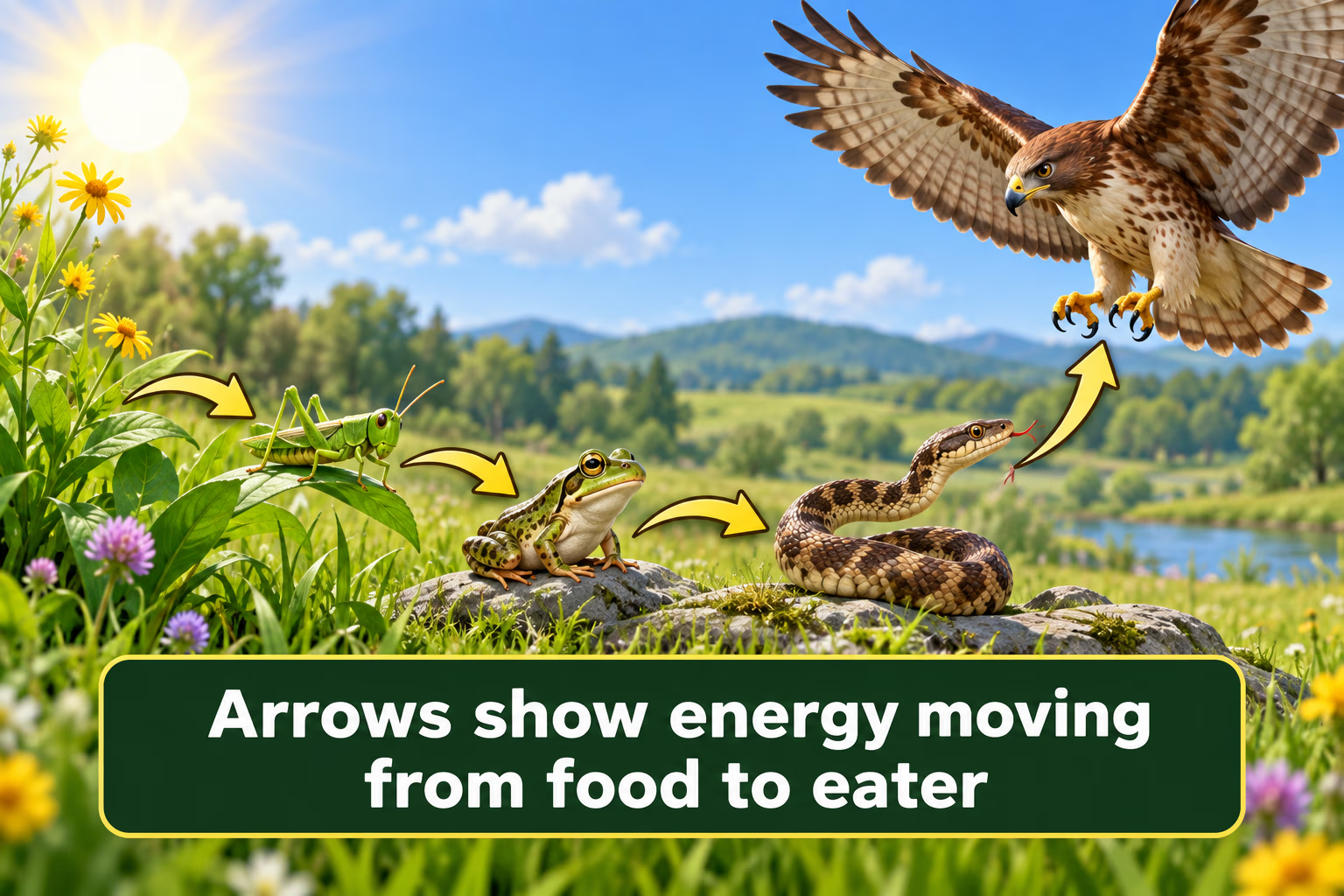
A web is more informative than a single chain because a species may have several food sources and predators. NOAA explains that food webs help ecologists consider direct effects and indirect cascades: removing a predator can affect its prey and then other connected species. A sentence such as “Ecology helps researchers predict how the loss of a predator may affect a food web” describes that use without claiming that every change has the same result.
How do decomposers connect ecology and nutrient cycling?
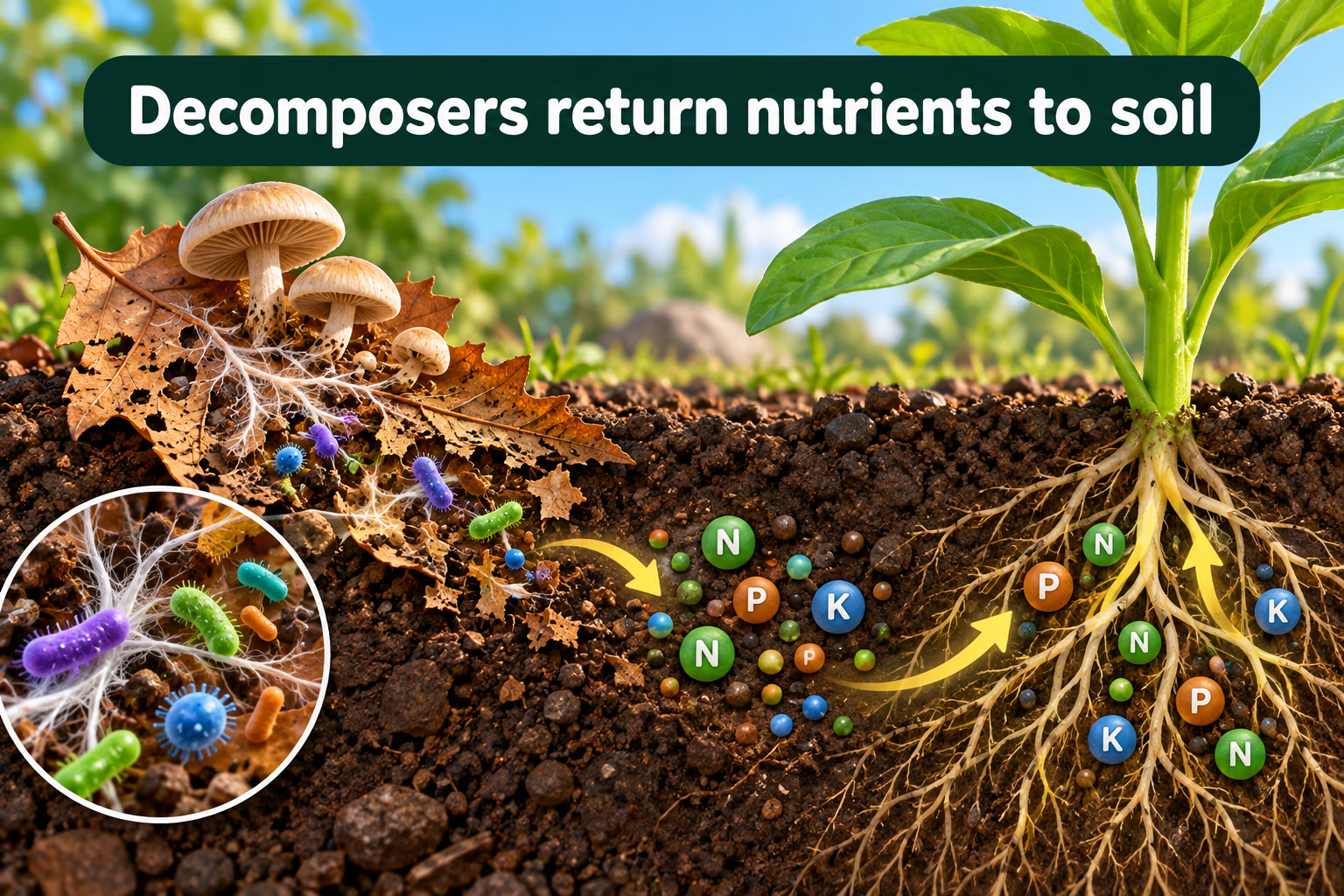
Fungi and bacteria decompose dead organisms and organic waste, releasing nutrients that can become available to plants and other producers. Energy still flows through food webs and dissipates as heat, while matter such as carbon and nitrogen moves through organisms and the environment. This distinction helps keep a sentence scientifically precise: “Ecology examines how decomposers return nutrients to the soil” describes matter cycling, not energy being recycled.
How do nonliving factors affect ecological relationships?
Nonliving, or abiotic, factors include temperature, water availability, light, soil chemistry, and physical disturbance. These conditions can affect where organisms live, how well they grow, and which species interact. For instance, “The ecology of the alpine meadow is shaped by its short growing season and cold temperatures” names physical conditions that help define the setting.
Be specific when describing cause and effect. A drought can reduce water available to plants, but its consequences vary with species, soil, season, and the drought’s duration. A careful sentence says what was observed and where: “After two dry summers, ecologists measured fewer flowering plants along the south-facing slope.” Avoid broad claims such as “drought destroys ecology,” which do not identify a measurable change.
How should you use ecology correctly?
- Use ecology for the science: “She is studying ecology and freshwater habitats.”
- Name the system when you mean a place: “The pond ecosystem includes plants, animals, microbes, water, and sediment.”
- Use ecological as the adjective: “The team measured ecological effects of the shoreline change.”
- Use ecology in a sentence to describe relationships: “Ecology helps explain why pollinators and flowering plants can affect one another.”
- Make claims proportional to evidence: distinguish what researchers measured from what they infer or predict.
Ecology is usually a mass noun when it refers to the academic field (“Ecology is part of the biology curriculum”). The plural ecologies can be appropriate when comparing distinct ecological systems or contexts, but it is less common in everyday usage. Environment is broader and may refer to surroundings generally; ecosystem is more precise when living communities and nonliving factors interact in a place.
Ecology is the scientific study of the interactions between living organisms and their environment. It explores how all organisms, from tiny bacteria to towering trees, depend on each other and the non-living elements around them for survival.
Understanding ecology is crucial in preserving biodiversity, managing resources sustainably, and predicting the effects of environmental changes on ecosystems. By studying the delicate balance of nature, ecologists help shape policies and practices that promote harmony between humans and the environment.
7 Examples Of Ecology Used In a Sentence For Kids
- Ecology is all about how living things interact with each other and their environment.
- We need to take care of our environment to protect the ecology.
- Trees, plants, animals, and humans are all part of the ecology.
- We can help the ecology by planting more trees and recycling.
- It’s important to keep our water and air clean for the sake of ecology.
- We can learn a lot about nature by studying ecology.
- Every little action we take can have an impact on the ecology around us.
14 Sentences with Ecology Examples
- Ecology plays a crucial role in understanding the relationships between organisms and their environment.
- College students can learn about the conservation of natural resources through courses in ecology.
- Understanding ecology helps in finding sustainable solutions to environmental challenges.
- Ecology studies the interactions between living organisms and their surroundings.
- College students can participate in ecology field trips to observe ecosystems in their natural habitat.
- Ecology research can help identify ways to protect biodiversity and prevent habitat destruction.
- By studying ecology, students can analyze the impact of human activities on the environment.
- Ecology teaches students about the interconnectedness of all living things in an ecosystem.
- College students studying ecology often conduct experiments to understand the dynamics of ecosystems.
- Ecology provides valuable insights into how changes in the environment can affect different species.
- Through ecology studies, students can learn about the importance of promoting sustainable practices.
- Ecology fieldwork allows students to collect data and analyze environmental patterns.
- Learning about ecology can inspire college students to get involved in environmental conservation efforts.
- Ecology courses provide students with practical skills to address environmental issues in their communities.
How To Use Ecology in Sentences?
Ecology is the study of how organisms interact with each other and their environment.
When using ecology in a sentence, you need to make sure to provide context for the word. For example: “The ecology of the forest was greatly impacted by the introduction of an invasive species.”
To use ecology effectively, remember to consider the relationships between living organisms and their surroundings. By understanding the principles of ecology, you can analyze how different factors influence the environment and the organisms within it.
As you become more familiar with ecology, you will be able to discuss topics such as food webs, energy flow, and biodiversity. For example, you could say: “The ecology of the coral reef is incredibly complex, with numerous species depending on each other for survival.”
Practice using ecology in various contexts to improve your understanding of the word and its significance in the natural world. Consider reading books or articles about ecology to deepen your knowledge and expand your vocabulary in this field.
Conclusion
In conclusion, the examples of sentences with “ecology” highlight its importance in understanding the interactions between organisms and their environment. The study of ecology is crucial for maintaining the delicate balance of ecosystems and addressing environmental challenges. For instance, “The ecology of the rainforest is incredibly diverse, with a wide range of plants and animals coexisting in harmony” illustrates the complex web of life that exists in natural environments.
By considering sentences like “Human activities have a significant impact on the ecology of our planet, leading to habitat destruction and loss of biodiversity,” we can appreciate the far-reaching consequences of our actions on the natural world. Therefore, it is essential to promote sustainable practices and conservation efforts to preserve the ecology of our planet for future generations.
What are examples of ecology in a sentence?
These additional examples show the word in scientific, classroom, and everyday contexts. They are distinct from the original examples below.
- Marine ecology examines relationships among ocean organisms and their physical environment.
- The students used ecology to explain how algae, insects, and fish were connected in the pond.
- Researchers compared the ecology of two wetlands with different water levels.
- Ecology can help a restoration team decide which habitat conditions to monitor.
- Her report describes the ecological effects of removing trees beside the stream.
- The ecology course included field observations, data analysis, and discussions of food webs.
Why does ecology matter?
Ecological knowledge helps people understand how organisms depend on living relationships and environmental conditions. It can inform questions about habitat restoration, wildlife management, conservation, and resource use, but a finding from one place does not automatically apply everywhere. The U.S. Geological Survey notes that ecosystem properties reflect biodiversity together with factors such as climate, resource availability, and disturbance. Good ecological explanations therefore name the organisms, place, conditions, and evidence involved.
For a clear sentence, identify the ecological relationship rather than using ecology as a vague synonym for “nature.” “The ecology of the estuary changes with tides, freshwater inflow, and seasonal migration” gives readers a concrete setting and the factors under discussion.