What Does Efficacy Mean?
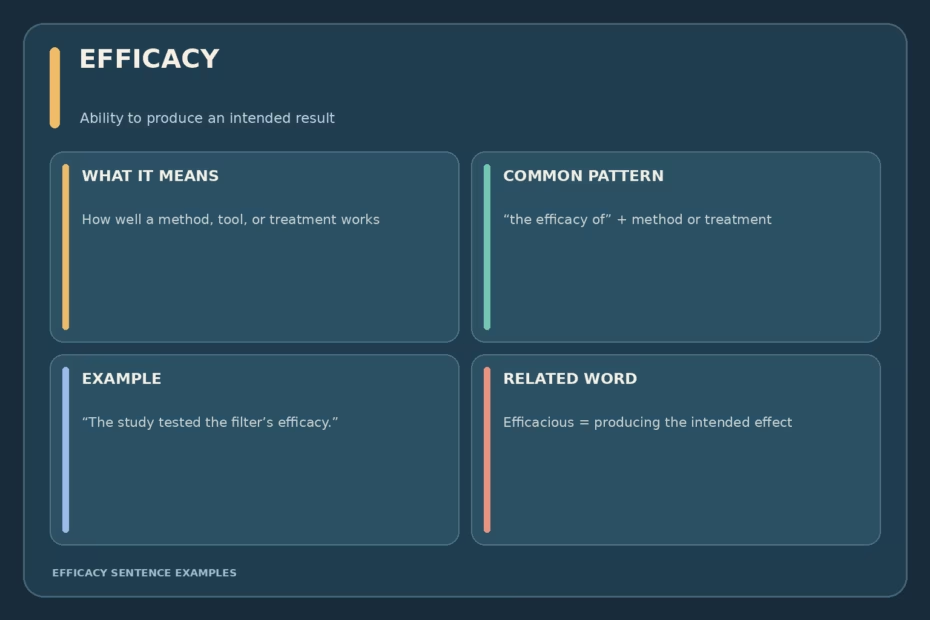
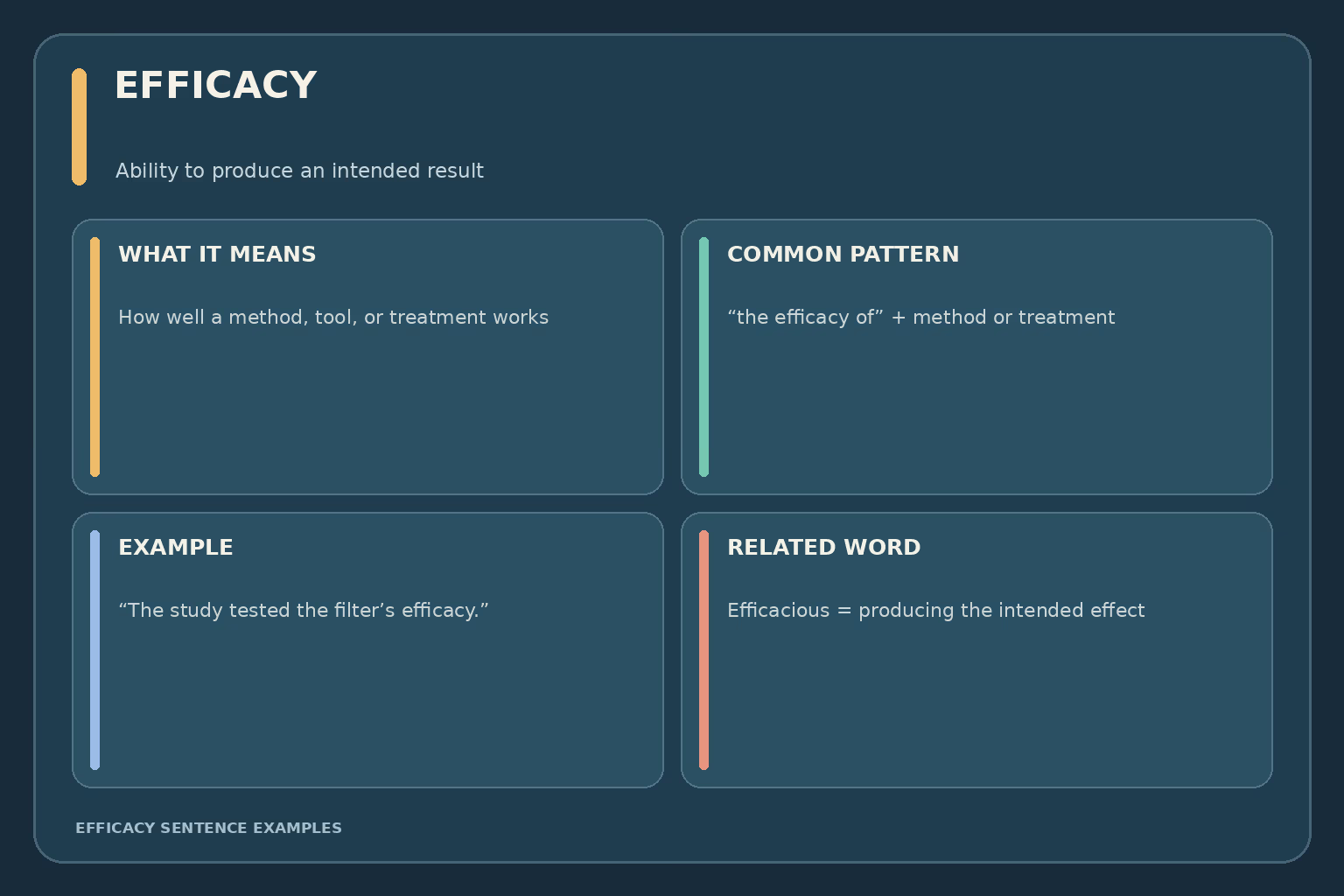
Efficacy is the ability of a method, treatment, product, or action to produce its intended result. It is a formal, usually uncountable noun. In everyday writing, it often appears in discussions of medicine, research, education, technology, and public policy. The adjective is efficacious, meaning effective in producing the intended result; the adverb is efficaciously.
A quick definition is: efficacy = how well something can achieve the outcome it is meant to achieve. For example, “The team tested the efficacy of the new reminder system” means the team examined whether the system achieved its intended purpose. The sentence does not, by itself, tell us what the test found; that result needs to be stated separately.
Common Sentence Patterns With Efficacy
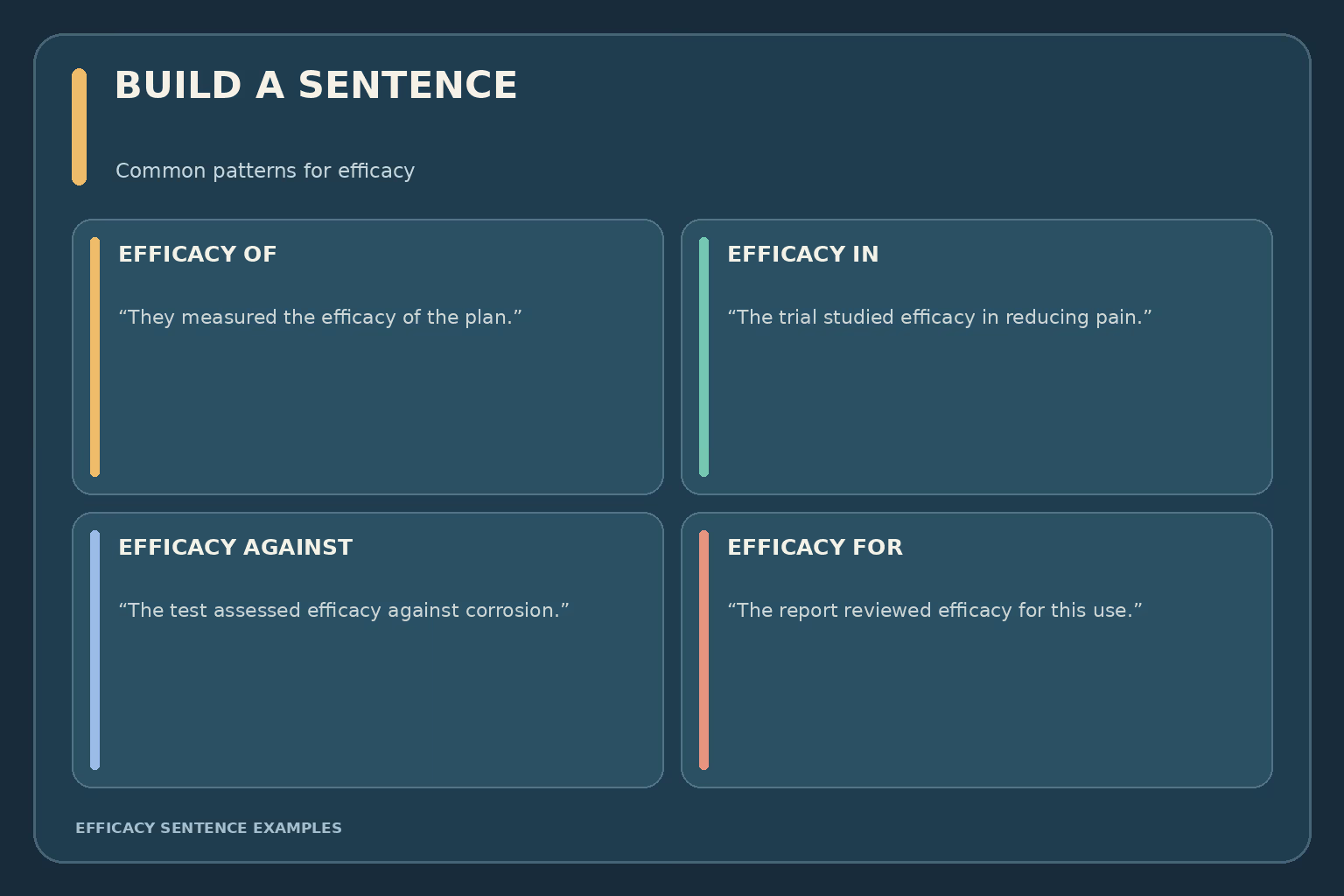
The most common construction is the efficacy of + a method, treatment, or thing: “Researchers evaluated the efficacy of the new water filter.” You can also write efficacy in + a gerund or activity, as in “The pilot measured the program’s efficacy in helping new employees find the right forms.” Use efficacy against + a named threat or problem when describing resistance or protection: “The test examined the coating’s efficacy against rust.”
These phrases focus on a particular outcome. Compare “the efficacy of the training” (whether the training achieved its goal) with “the efficacy of the training in reducing errors” (whether it achieved one specified goal). Naming the outcome makes the sentence more informative. In formal prose, evaluate, measure, assess, demonstrate, question, and compare commonly pair with efficacy.
Efficacy vs. Effectiveness vs. Efficiency
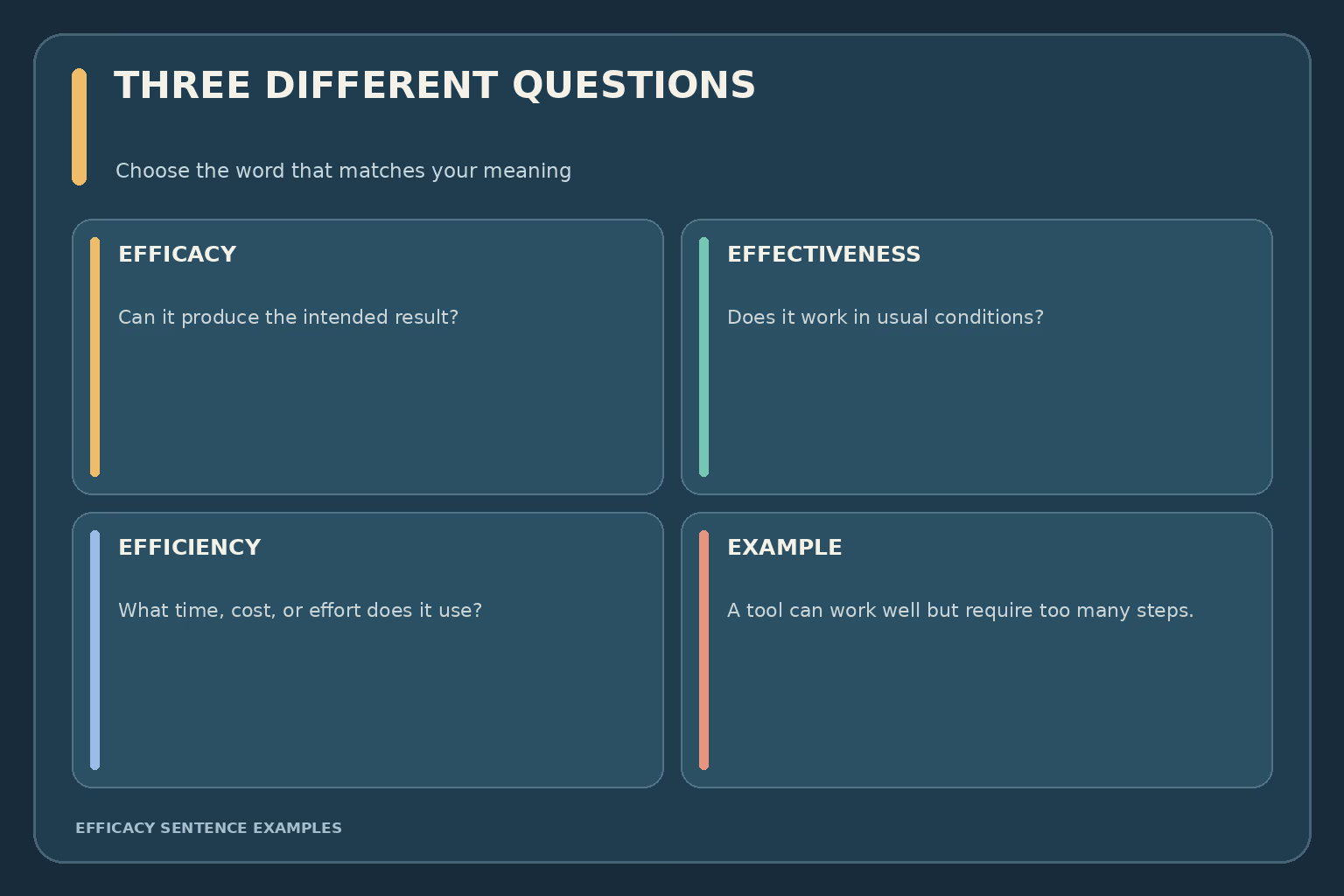
Efficacy and effectiveness are often close in general use, but research writing may distinguish them. In clinical research, efficacy commonly refers to how an intervention performs under controlled study conditions, while effectiveness refers to how it performs in routine, real-world practice. An intervention can show efficacy in a carefully run study and still face practical barriers such as access, adherence, or different patient circumstances. The distinction is useful, although actual studies can fall along a continuum rather than into two perfectly separate categories.
Efficiency asks a different question: how much time, money, effort, or other resource is needed to produce a result. A process may be efficacious (it reaches its target) but inefficient (it takes many hours or materials). For instance: “The reminder system was efficacious in increasing attendance, but the manual setup made it inefficient.” In everyday writing, effective is often the simpler choice when you only mean “it works.” Reserve efficacy for a formal discussion of a method’s capacity or measured performance.
| Word | Main question | Example |
|---|---|---|
| Efficacy | Can it produce the intended outcome? | The study tested the alarm’s efficacy in detecting smoke. |
| Effectiveness | Does it work in ordinary conditions? | The school reviewed the policy’s effectiveness during the term. |
| Efficiency | What resources does it use to get the result? | The revised process improved efficiency by reducing repeated data entry. |
Efficacy in Medical and Research Writing
In a medical or scientific context, efficacy often describes how well a drug, vaccine, procedure, or other intervention achieves a specified response in a controlled clinical setting. A careful sentence identifies the intervention and outcome: “The trial evaluated the treatment’s efficacy in reducing symptoms over twelve weeks.” Avoid turning the word into a blanket claim. A reported efficacy result applies to the study design, participants, outcome, and conditions described by the researchers; it does not automatically establish how every person will respond in ordinary use.
Efficacy is also not the same as safety, approval, or certainty. A sentence such as “The treatment showed efficacy for the measured outcome” reports a limited finding. It does not alone say whether the treatment is safe for a particular person or appropriate for them. When writing about a medical study, name the evidence source and describe its limits instead of implying that the word itself proves a treatment works in every case.
More Examples of Efficacy in a Sentence
- The pilot study measured the efficacy of the new reading routine in helping pupils recall vocabulary.
- Before changing the process, the manager asked for evidence of its efficacy in reducing delays.
- The engineers tested the sealant’s efficacy against water leaks at several temperatures.
- The report compared the efficacy of two search methods on the same set of records.
- Staff questioned the policy’s efficacy after the same errors continued to appear.
- The researcher described the intervention as efficacious for the outcome measured in the trial.
- The committee reviewed whether the campaign’s efficacy justified its cost and staff time.
- Clear labels improved the efficacy of the instructions by helping users choose the correct setting.
In each example, efficacy refers to achieving a goal. When the emphasis is simply on a practical result, a more direct sentence may sound more natural: “The new label helped users choose the correct setting” instead of “The label improved the efficacy of user choices.” Use the formal noun when the discussion is about evaluating or comparing performance.
Grammar and Word Choice Tips
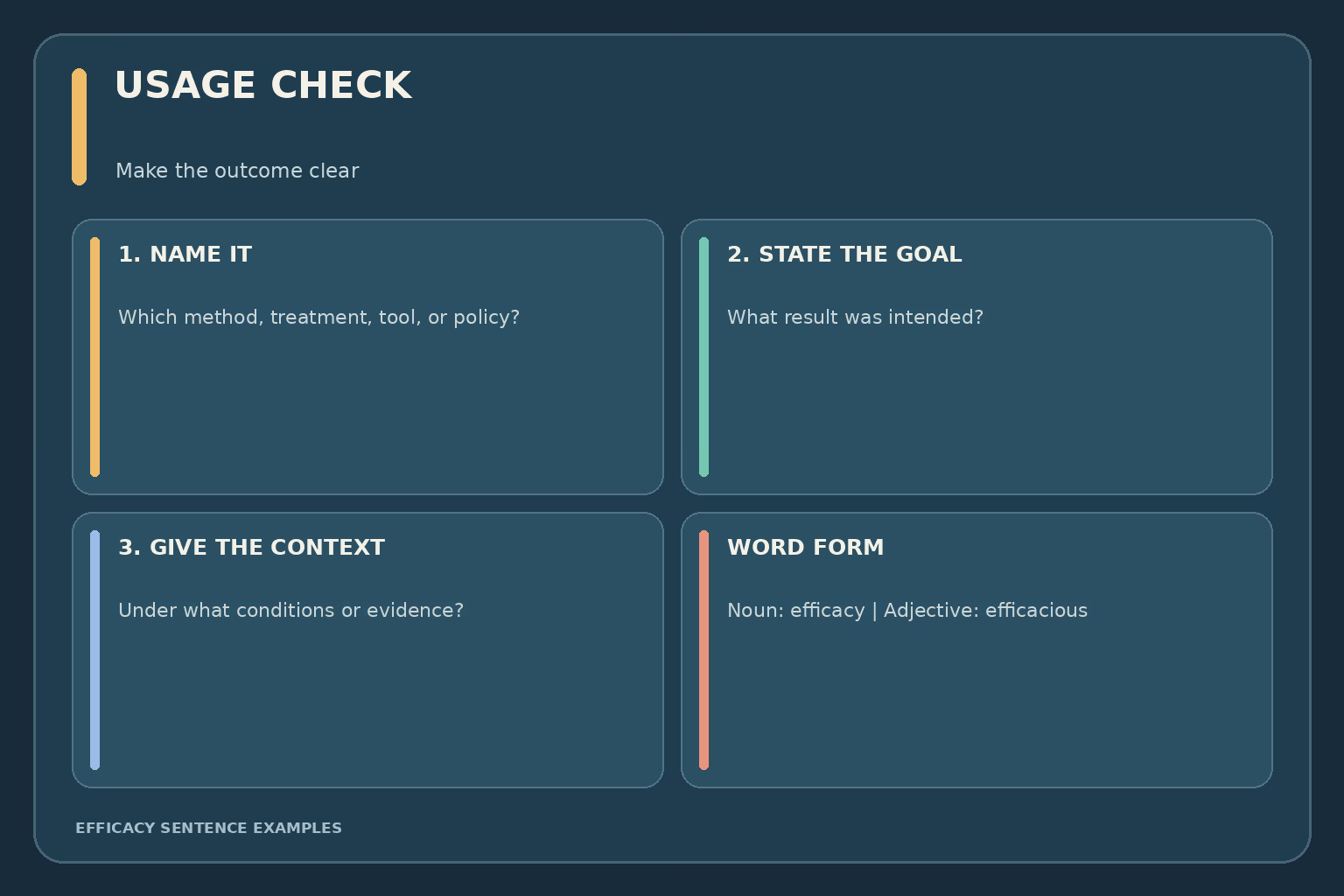
- Use efficacy as a noun: “The efficacy of the plan is being reviewed.” Avoid using it where you need an adjective; write “an efficacious plan” or, more simply, “an effective plan.”
- Usually treat it as uncountable: “The efficacy of these methods varies.” In most contexts, avoid “an efficacy” or “efficacies”; say “a measure of efficacy” or “several efficacy studies.”
- Identify the intended result: “The tool’s efficacy in sorting applications” is more specific than “the tool’s efficacy.”
- Do not confuse efficacy with efficiency: one concerns achieving an outcome; the other concerns the resources used to achieve it.
- Choose a simpler synonym when appropriate: effectiveness or how well it works may fit a general audience better.
Frequently Asked Questions
What does efficacy mean in a sentence?
It means the ability of something to produce its intended result. “The study tested the efficacy of the filter” means it examined whether the filter worked as intended.
What is a simple sentence using efficacy?
“The team measured the efficacy of the new schedule.” This means the team checked whether the schedule achieved its goal.
Is efficacy the same as effectiveness?
They can be synonyms in general usage. In clinical research, efficacy often refers to results under controlled conditions, while effectiveness concerns results in everyday practice.
What is the difference between efficacy and efficiency?
Efficacy is about achieving an intended result. Efficiency is about the resources, such as time or cost, used to achieve it.
What is the adjective form of efficacy?
Efficacious is the adjective: “The report found the method efficacious for its stated purpose.” Effective is a more familiar alternative.
Sources and Further Reading
- Cambridge Dictionary: Efficacy (general meaning, medical usage, and example patterns).
- U.S. Food and Drug Administration: Drug Trials Snapshots—Glossary (efficacy in a controlled clinical setting).
- Singal et al., “A Primer on Effectiveness and Efficacy Trials” (distinction and relationship between research conditions and real-world practice).
- “Clinicians’ Guide to Statistics for Medical Practice and Research” (efficacy, effectiveness, and efficiency terminology).

Efficacy, in its essence, refers to the ability to produce a desired or intended result. It is a measure of effectiveness and efficiency in achieving a specific outcome or goal. In various fields such as medicine, psychology, and business, efficacy plays a crucial role in evaluating the success of interventions, treatments, or strategies.
Understanding the efficacy of a certain approach or method provides valuable insights into its overall impact and utility. By examining the efficacy of different practices, professionals can make informed decisions based on evidence-supported results.
7 Examples Of Efficacy Used In a Sentence For Kids
- Efficacy means how well something works.
- We can improve the efficacy of our work by trying our best.
- Teachers help us understand the efficacy of learning new things.
- Eating healthy food can increase the efficacy of our bodies.
- Asking questions in class can enhance the efficacy of our learning.
- Cleaning our room regularly can show the efficacy of being responsible.
- Practicing drawing can improve the efficacy of our art skills.
14 Sentences with Efficacy Examples
- Efficacy in time management is crucial for college students to balance academic work, extracurricular activities, and personal obligations.
- College students can improve their study habits by regularly assessing the efficacy of their study methods and making necessary adjustments.
- Group study sessions can enhance the efficacy of learning by facilitating collaboration and discussion among college students.
- The efficacy of a presentation is often determined by the speaker’s communication skills and ability to engage the audience.
- College students can evaluate the efficacy of their note-taking strategies by analyzing how well they retain and recall information during exams.
- Setting realistic goals and tracking progress can help college students increase their efficacy in achieving academic success.
- The efficacy of online learning platforms can vary, so college students should research and choose ones that best suit their learning style.
- Seeking feedback from professors and peers can help college students gauge the efficacy of their project work and presentations.
- Developing strong critical thinking skills can enhance the efficacy of college students in analyzing complex issues and forming well-reasoned arguments.
- College students can improve the efficacy of their study sessions by creating a conducive environment free from distractions.
- Participating in internships and practical training programs can enhance the efficacy of college students in applying theoretical knowledge to real-world scenarios.
- Regular exercise and a balanced diet can improve the mental and physical efficacy of college students, helping them stay focused and energized throughout the day.
- The efficacy of time spent networking with professionals in the industry can open up valuable opportunities for college students looking to enter the workforce.
- Utilizing online resources and digital tools can enhance the efficacy of research projects and assignments for college students.
How To Use Efficacy in Sentences?
To use the word Efficacy in a sentence, you can follow these steps:
-
Begin by understanding the meaning of the word Efficacy, which refers to the ability to produce a desired or intended result. It is often used to describe the effectiveness or success of something in achieving a specific goal.
-
Consider the context in which you want to use the word Efficacy. Think about a situation where you want to express the idea of effectiveness, success, or achievement.
-
Construct a sentence that includes the word Efficacy in a way that clearly conveys the concept of achieving a desired outcome. For example, “The new medication has shown great efficacy in treating the patient’s symptoms.”
-
Check the sentence to ensure that the word Efficacy is used correctly and fits naturally within the sentence structure. Make sure that the meaning you intend to convey is clear and appropriate.
-
Practice using the word Efficacy in different sentences to become comfortable with incorporating it into your writing or speaking. This will help you to expand your vocabulary and communicate more effectively.
Remember, using a new word like Efficacy may take some practice, but with time and effort, you can become more proficient in incorporating it into your everyday language.
Conclusion
In conclusion, it is evident from the sentences with efficacy provided in this article that effective communication is essential for success in various aspects of life. From delivering a persuasive sales pitch to implementing efficient work processes, using succinct and impactful sentences can significantly improve one’s ability to convey messages clearly and achieve desired outcomes. By carefully crafting sentences with efficacy, individuals can enhance their communication skills, build relationships, and influence others positively.
Moreover, understanding the power of concise and well-structured sentences can lead to better outcomes in academic, professional, and personal interactions. Whether it is through writing compelling emails, giving impactful presentations, or negotiating deals, the art of constructing sentences with efficacy plays a pivotal role in effectively conveying ideas and achieving goals. By honing this skill, individuals can become more persuasive, assertive, and successful communicators in all areas of their lives.