Employment in a sentence usually means paid work or the state of having a job: “After months of training, Amira found employment at a local clinic.” In this common sense, employment is an uncountable noun; useful phrases include seek employment, gain employment, and employment opportunities. In formal writing, it can also mean “the use of something.”
- Main meaning: paid work, or the state or situation of having work.
- Part of speech: noun; it usually takes a singular verb when treated as a concept.
- Useful collocations: find, seek, gain, provide, or create employment; employment contract, status, and opportunities.
- Second formal meaning: the use of something, as in “the employment of imagery in the poem.”
Note on the original article: The original examples below are retained unchanged. One simplifies employment as working for someone else; paid work may also be self-employment. The word has a separate, more formal sense meaning “use,” which is distinguished from the job-related meaning in the guide above.
How to use “employment” in a sentence
Use employment for the paid-work situation, a period or arrangement of work, or the availability of jobs. For example, “The new clinic provided employment for 30 local residents” means it created paid work. If you mean one specific position, job is often the simpler word: “She accepted a job at the clinic.”

Common sentence patterns
- find/seek employment: “Ravi moved closer to the city to seek employment in engineering.”
- gain/secure employment: “After completing her certification, Mei secured employment with a design studio.”
- provide/create employment: “The expanded workshop will create employment for several technicians.”
- employment in/with: “He found employment in healthcare” or “She took up employment with a research group.”
- in employment: “Most graduates in the survey were in paid employment within a year.”
Employment examples in different contexts
Applications and career changes
- After revising her portfolio, Lena found employment as a junior illustrator.
- The career fair introduced students to employment opportunities in health care, education, and technology.
- He left his first position and sought new employment closer to home.
- The apprenticeship helped Noor gain practical experience before she looked for employment in the trade.
Employers, communities, and reports

- The opening of the food-processing plant is expected to provide employment for nearby residents.
- The report compares employment levels across several regions and industries.
- Flexible schedules can be one feature of an employment arrangement.
- Her employment contract states her start date and main responsibilities.
Self-employment and other work arrangements
- After years in an office, Mateo left paid employment to run a small repair business.
- Self-employment gave Priya more control over her schedule, but she had to find her own clients.
- Seasonal employment at the orchard ended when the harvest was complete.
- The organization offers part-time employment during the school year.
Is “employment” countable or uncountable?
For the usual meaning of paid work, employment is generally uncountable: write “She is looking for employment,” not “an employment.” Use a job or a position for one vacancy. The plural employments does occur, especially formally, when referring to separate periods or instances of work, but it is uncommon in everyday sentences.
Because employment is singular in the uncountable sense, use a singular verb: “Employment is important to the region.” A plural verb can follow a plural noun instead: “Employment opportunities are increasing.” The word can also modify another noun: employment status, employment agency, or employment law.
Employment, job, work, and occupation
Employment is a formal term for paid work or the situation in which people have work. A job is a particular paid position or regular task. Work is broader: it can mean paid activity, a task, or effort, and it may be countable or uncountable depending on the meaning. An occupation is someone’s kind of work, such as teaching or carpentry. Choose the word that matches the point: “employment rose” describes a labor-market trend; “she got a job” describes one position.
Can “employment” mean “use”?
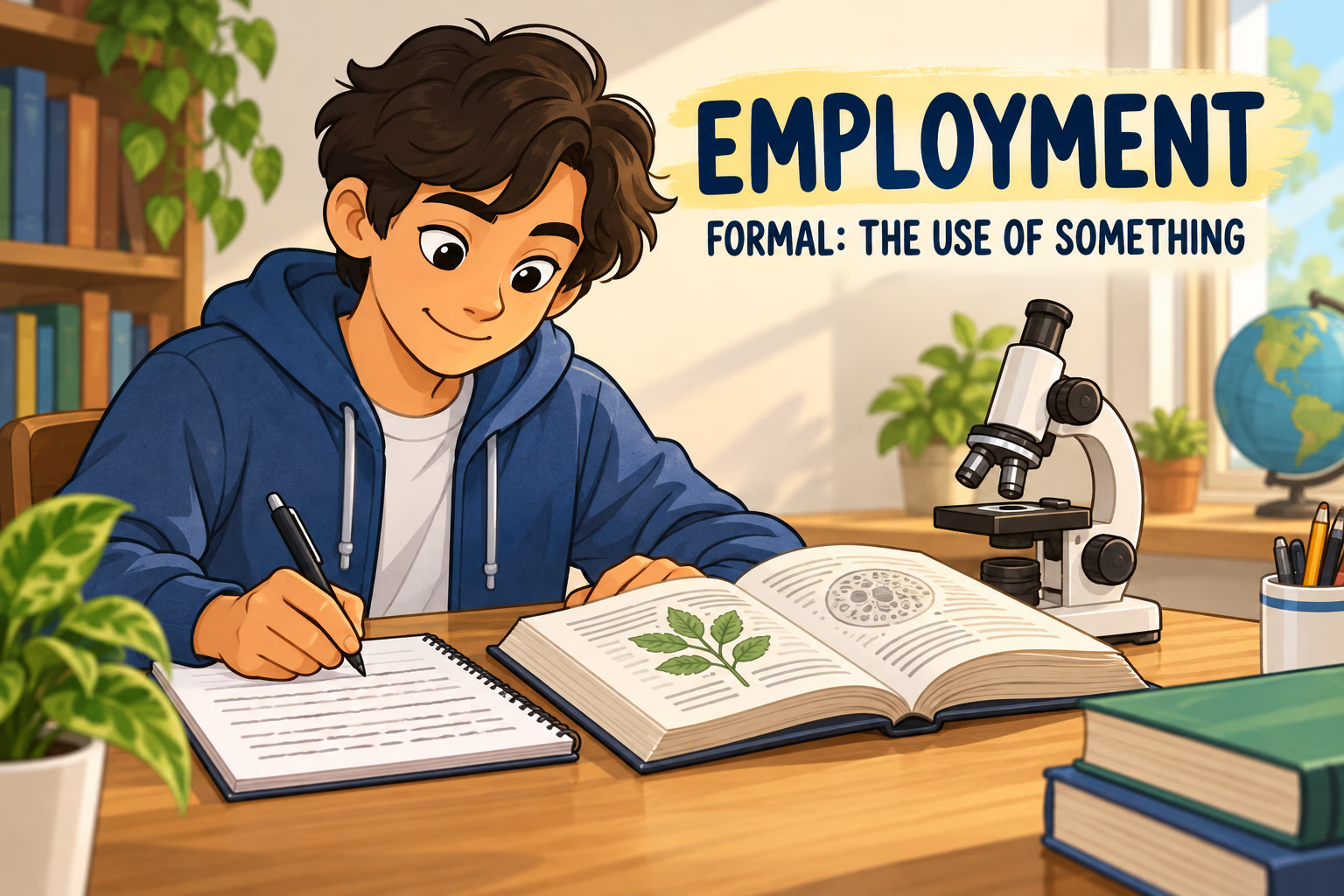
Yes. Dictionaries record a formal sense of employment meaning the use of something for a purpose. For example, “The essay examines the employment of humor in political speeches” means it studies how humor is used. This sense is less common than paid work and is often clearer with the verb use in everyday writing.
Frequently asked questions
What is a simple sentence with employment?
“She found employment at a neighborhood bookstore” is a simple example. Here, employment means paid work or the state of having a job. You can replace it with “a job” for a more conversational sentence: “She found a job at a neighborhood bookstore.”
Can employment refer to self-employed work?
Yes. The word commonly describes paid work and labor-market participation; it is not limited to working for another person. To be precise about the arrangement, use self-employment for working for yourself and employment by a company for a hired position.
Which verbs commonly go with employment?
Common combinations include find, seek, gain, and secure employment, and provide or create employment. For one position, writers often say “get a job,” “fill a vacancy,” or “hire an employee.” These patterns help the noun sound natural.
Is employment the same as a career?
No. Employment refers to paid work or the situation of having work. A career is a longer path through related jobs, training, and experience. Someone may have employment in a temporary role without considering it part of a long-term career, or build a career across several employers.
For dictionary definitions and additional examples, see Cambridge Dictionary: employment and Oxford Learner’s Dictionaries: employment.
Curious about what employment actually means? The concept of employment refers to the state of being employed or the act of working for a company or organization in exchange for payment. This fundamental aspect of economics and society is pivotal for individuals to earn a living and contribute to the workforce.
Employment encompasses a wide range of job opportunities and roles, from part-time positions to full-time careers. It serves as a cornerstone for economic stability and personal growth, allowing individuals to utilize their skills and talents in various industries. Understanding the nuances of employment is essential for navigating the job market and pursuing fulfilling career paths.
7 Examples Of Employment Used In a Sentence For Kids
- People work to find employment and earn money.
- Employment is when you have a job and work for someone.
- Many adults have employment to support their families.
- Teachers, doctors, and police officers all have different types of employment.
- It is important to study hard so you can find employment in the future.
- Some people have more than one type of employment.
- Employment helps people contribute to society and build a better future.
14 Sentences with Employment Examples
- Employment opportunities for college students in India are increasing with the growth of industries.
- Many students look for part-time employment to support themselves financially while studying.
- Internships are a great way for students to gain experience and improve their chances of securing employment after graduation.
- The campus placement cell helps students connect with potential employment opportunities in various companies.
- Some students choose to pursue higher studies before seeking employment in their desired field.
- College fairs and job expos are excellent places for students to explore different employment options.
- Students can enhance their skills through workshops and seminars to make themselves more attractive to potential employment recruiters.
- Networking with alumni and professionals in different industries can open up employment doors for college students.
- Online platforms like LinkedIn have made it easier for students to showcase their skills and connect with employment opportunities.
- Start-ups are providing unique employment opportunities for college students to gain hands-on experience and practical knowledge.
- College students often seek employment in sectors like information technology, finance, marketing, and human resources.
- Remote employment opportunities are becoming popular among college students who prefer flexible working schedules.
- Government initiatives like skill development programs aim to increase employment opportunities for college students in India.
- Employment statistics show that the demand for skilled graduates is high in various sectors, providing ample opportunities for college students.
How To Use Employment in Sentences?
Employment is a noun that refers to the state of being employed or having a job. When using the word employment in a sentence, remember to consider its role as a concept related to work and job opportunities. Here are some tips on how to use employment in a sentence:
-
Subject-Verb Agreement: Ensure that the verb in the sentence agrees with the noun employment. For example, “Employment is crucial for economic growth.”
-
Context Clues: Provide context in the sentence to clarify the meaning of employment. For instance, “She found employment at a local restaurant after graduating.”
-
Word Order: Position employment correctly in the sentence based on the context. “The company offers various employment opportunities.”
-
Punctuation: Use appropriate punctuation marks such as commas or periods when necessary. “Unemployment rates can impact overall employment, affecting many individuals.”
-
Adjectives: You can use adjectives to describe employment in more detail. For example, “Stable employment is essential for financial security.”
By following these tips, you can effectively incorporate employment into your sentences while conveying the intended meaning related to work and job status. Practice using employment in different contexts to become more comfortable with its usage.
Conclusion
In conclusion, the examples of sentences with “employment” highlight the diverse ways in which the term can be used in different contexts. Whether discussing job creation, job opportunities, or the state of employment in a specific industry, the word “employment” signifies the act of being employed or the availability of work. These examples illustrate how “employment” is a crucial aspect of individuals’ livelihoods, economic growth, and societal well-being.
Understanding the significance of “employment” in various contexts can help individuals, policymakers, and businesses make informed decisions regarding job creation, workforce development, and labor market trends. By examining sentences with “employment,” we gain insight into the complexities and nuances of the labor market, highlighting the importance of fostering a robust and inclusive employment environment for all individuals.