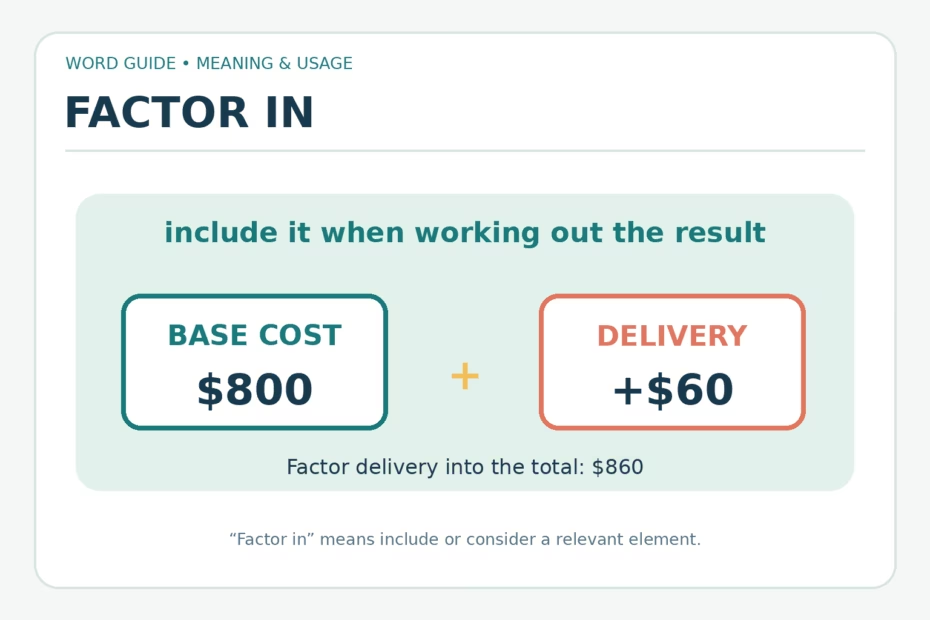
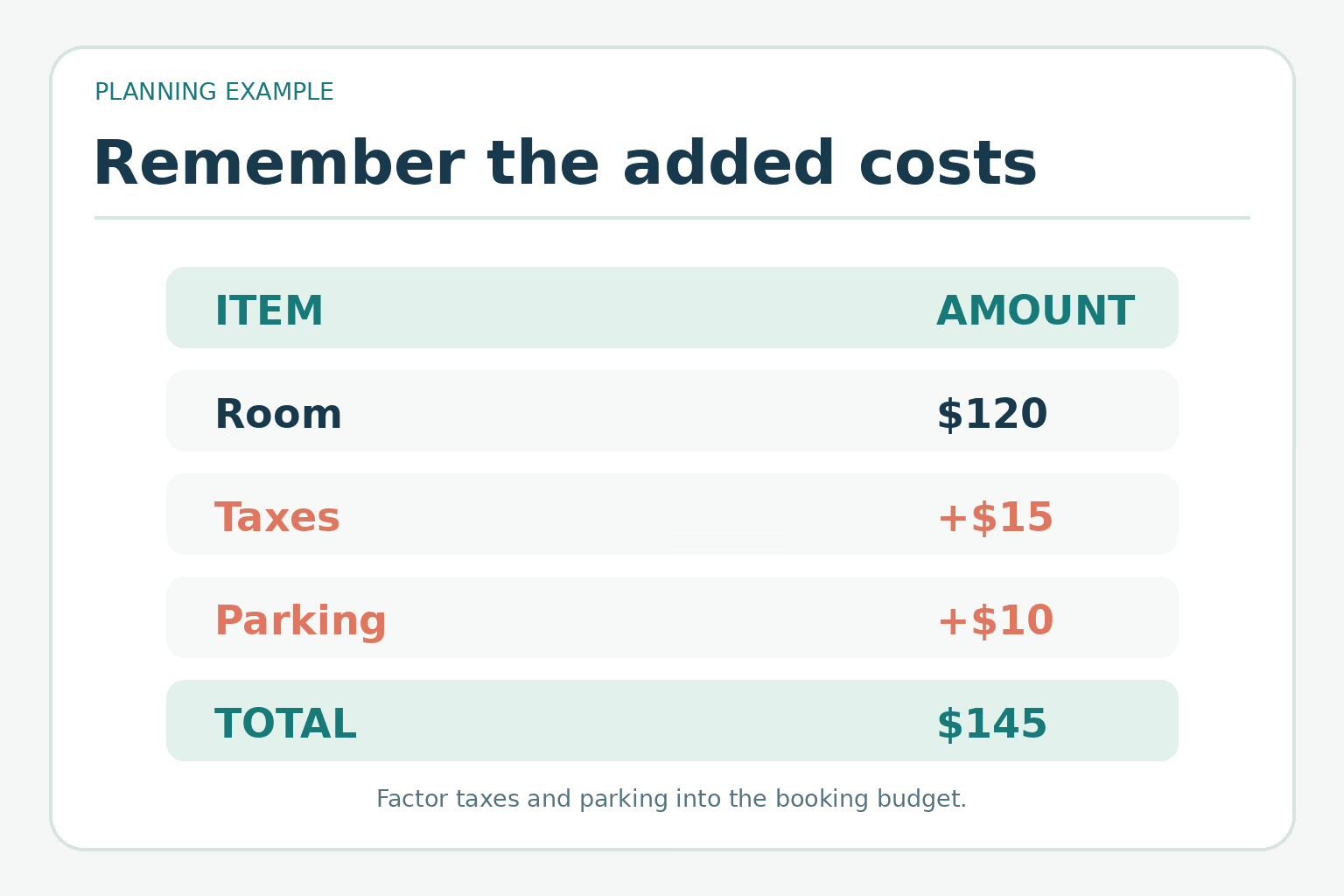
Factor in means to include or consider something when calculating, planning, or judging a result. For example, if a room costs $120 and taxes and parking add $25, you factor those charges into the trip budget to see the fuller cost. The phrase can also mean taking information into account when making a decision.
- Meaning: include a relevant amount, fact, or condition in a calculation or decision.
- Common patterns: factor something in, factor in something, and factor something into something.
- Quick example: “We factored the delivery fee into the estimate.”
What does “factor in” mean?
Factor in is a phrasal verb. It means to include something as one of the elements in a calculation, plan, estimate, or judgment. Cambridge Dictionary gives both the sense of including something in a calculation and the sense of considering information that may affect a result. The thing being factored in might be a number, such as a fee, or a condition, such as weather or available time.
In “Factor in the repair cost before you approve the quote,” the repair cost is part of the amount being considered. In “The coach factored the short recovery period into the training plan,” the recovery period is considered while shaping the plan. The phrase does not say by itself how much an item changes the result; the surrounding calculation or explanation supplies that.
How to use “factor in” in a sentence
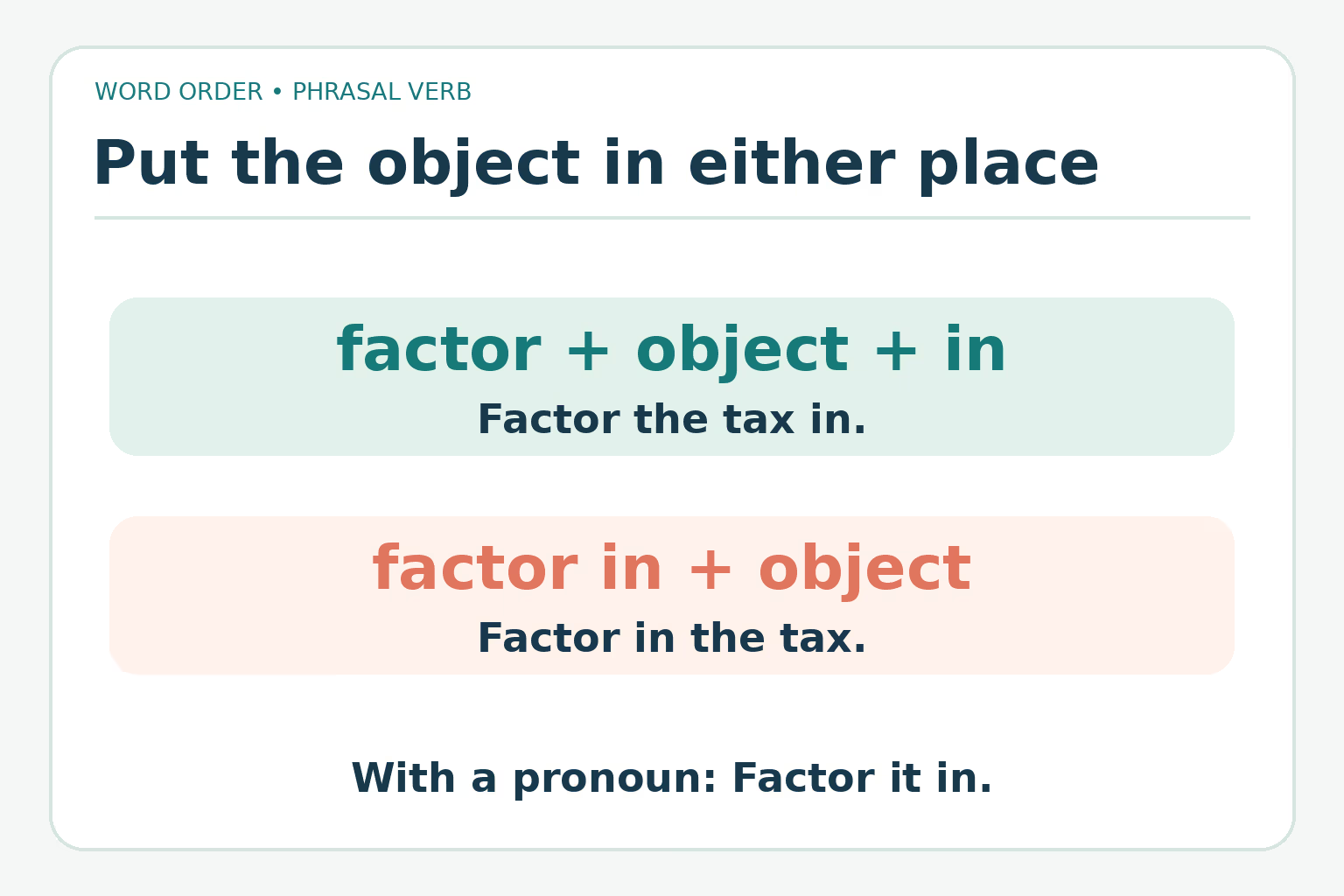
When the object is a noun, both word orders are common: put the object between factor and in, or put it after in.
- Factor the service charge in before comparing the two restaurant bills.
- Factor in the service charge before comparing the two restaurant bills.
When the object is a short pronoun such as it, place it between the verb and particle: Factor it in. “Factor in it” is not the usual order for this phrasal verb. Cambridge Grammar explains that separable phrasal verbs allow a noun object in either position, while a personal pronoun goes before the particle.
You can also use factor something into something when you name the larger calculation or plan: We factored the permit fee into the project estimate. In the passive voice, write is factored in or is factored into: Shipping is already factored into the quoted price.
Sentence examples with “factor in”
- Budgeting: “Factor the annual fee in before choosing the account.”
- Travel: “We factored in the cost of checked bags when comparing flights.”
- Scheduling: “Please factor in ten minutes for the security check.”
- Weather: “The trail may take longer when you factor in the steep climb and rain.”
- School: “She factored the reading time into her study plan.”
- Hiring: “The team factored relevant experience into its assessment.”
- Cooking: “Factor in the time needed for the dough to rise.”
- Project planning: “The estimate factors in equipment rental but not unexpected repairs.”
- Decision making: “Before accepting the role, factor in the commute and schedule.”
- Passive voice: “The effect of inflation was factored into the revised estimate.”
These examples show that the object may be a cost, a period of time, or information relevant to a choice. When precision matters, state whether the item is included in a numeric total, considered as evidence, or allowed for in a plan.
“Factor in” vs. “factor into”
Both forms are standard. Use factor in when the sentence focuses on including or considering an item: Factor in the tax. Use factor an item into a total, estimate, plan, or decision when you want to name the larger whole: Factor the tax into the final price. You may also put the object after in: Factor in the tax before you compare prices.
With passive constructions, in can stand on its own or introduce the whole with into: The tax is factored in; The tax is factored into the final price. Keep the named whole after into so readers can tell where the item is included.
“Factor in” vs. “a factor in”
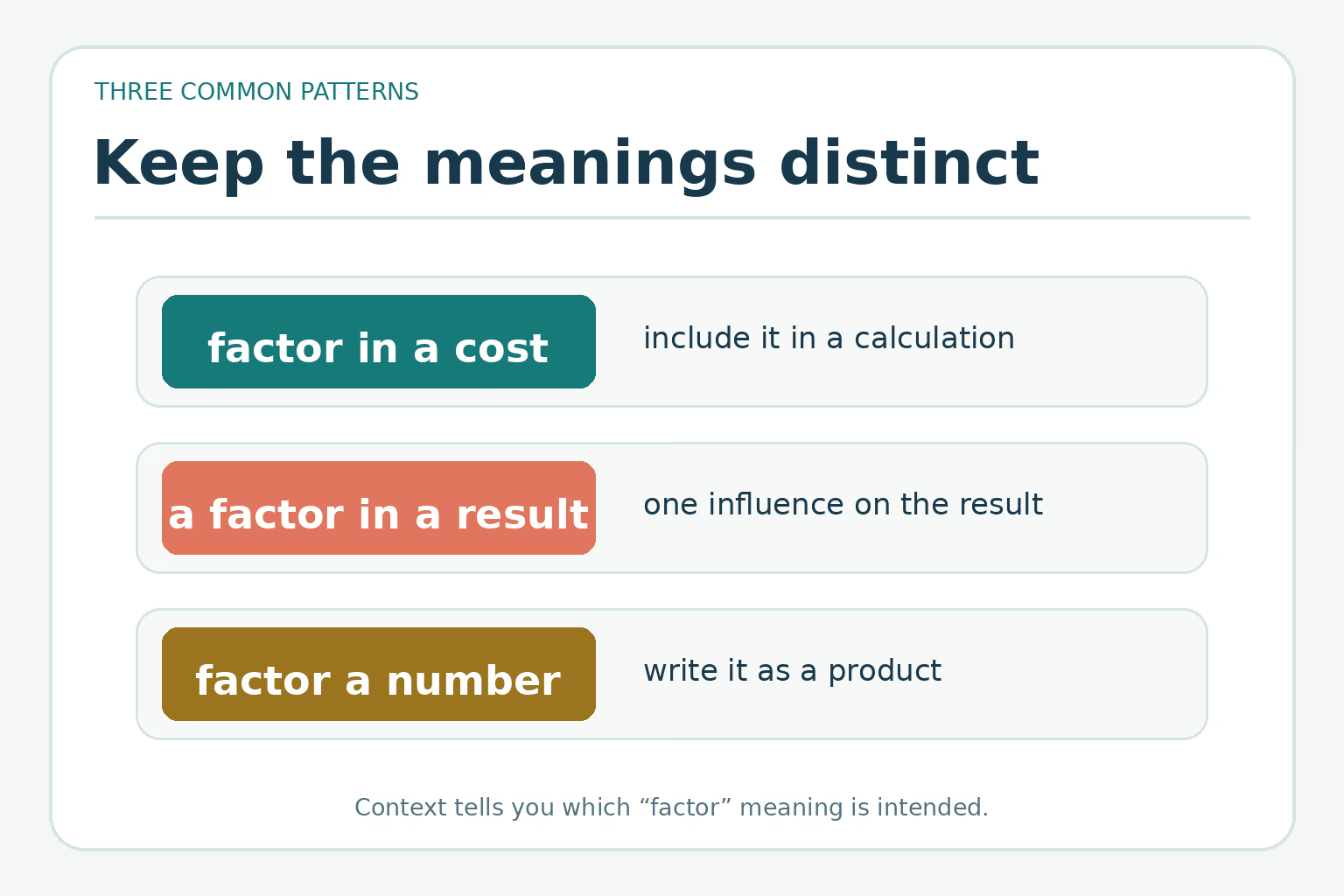
In factor in the delivery fee, factor in is a verb phrase: someone deliberately includes or considers an item. In delivery cost is a factor in the final price, factor is a noun meaning an influence or element that contributes to an outcome, and in the final price tells where it has an effect. Compare:
- Factor in the delay when setting a deadline. (verb: consider it)
- The delay was a factor in the missed deadline. (noun: an influence on the outcome)
Context also separates this expression from the mathematical verb factor, as in factor 12 into 3 × 4. The meanings are related through the general idea of elements, but the grammar and sense differ.
Common mistakes to avoid
- Putting a pronoun after “in”: say factor it in, not typically factor in it.
- Omitting the larger whole when it matters: “Factor the fee into the total” makes the relationship explicit.
- Confusing the verb with the noun: factor in the expense is an action; the expense is a factor in the price describes an influence.
- Assuming the phrase means “add” in every context: a cost may be added to a total, but information or a condition can simply be considered in a decision.
- Leaving the calculation unclear: if a reader needs a number, name what is included and show the amount or method.
Frequently asked questions
What does “factor in” mean in simple words?
It means to include or consider something when working out a number, plan, or decision.
Is it “factor in” or “factor into”?
Both are correct. “Factor in the fee” includes or considers it; “factor the fee into the total” names the whole that includes it.
Can you say “factor it in”?
Yes. When the object is a pronoun, put it between the verb and particle: “Factor it in.”
What is the difference between “factor in” and “take into account”?
They often express a similar idea. “Factor in” is a phrasal verb and often appears in calculations and plans; “take into account” is another way to say consider something.
Does “factor in” always mean adding money?
No. It can mean including a charge in a total, but it can also mean considering time, conditions, or other relevant information.
Sources and usage note
Cambridge Dictionary’s entry for factor something in describes including something in a calculation or considering information that may influence a result. Cambridge Grammar’s explanation of phrasal verbs and objects supports the word-order note for noun and pronoun objects. The examples above are original and illustrate general English usage.

Factors play a crucial role in various aspects of our lives, influencing outcomes and decisions. When something is considered to be a “factor in,” it means that it contributes to or influences a particular situation or result. Understanding these factors can provide insight into how certain events unfold or decisions are made.
By identifying the key factors at play in a given scenario, one can gain a better understanding of the motivations behind actions or the reasons for particular outcomes. Recognizing and analyzing these factors can lead to more informed choices and strategic planning in both personal and professional settings.
7 Examples Of Factor In Used In a Sentence For Kids
- Factor in your favorite color when you choose your crayons.
- Don’t forget to factor in the weather before going outside to play.
- When making a sandwich, factor in the kind of bread you like.
- Remember to factor in your friends’ feelings when playing games together.
- Factor in how much time you need to finish your homework before bedtime.
- Always factor in safety when riding your bicycle around the neighborhood.
- It is important to factor in sharing with your siblings when playing with toys.
14 Sentences with Factor In Examples
- When deciding whether to attend a particular lecture, factor in the importance of the topic to your upcoming exams.
- Before choosing which extracurricular activities to participate in, factor in the time commitment required for each.
- Factor in the distance between your classes when planning your daily schedule to avoid being late.
- When buying textbooks for the semester, don’t forget to factor in the costs of additional online resources that may be required.
- Before signing up for a credit card, make sure to factor in the interest rates and annual fees that come with it.
- When deciding on a suitable study group, factor in the strengths and weaknesses of each member to create a balanced team.
- Before selecting a specialization in your course, factor in the job prospects and salary potential in that field.
- Factor in the availability of public transportation options when choosing off-campus housing to save on commuting costs.
- When planning a group project, make sure to factor in each member’s availability and schedule before assigning tasks.
- Before taking on a part-time job, factor in the impact it may have on your academic performance and overall well-being.
- Factor in the cost of living in the area when evaluating internship opportunities to ensure you can afford to support yourself.
- When choosing a location for a group study session, make sure to factor in the noise level and accessibility to resources like libraries and cafes.
- Factor in the number of credits needed to graduate on time when selecting elective courses to avoid falling behind in your academic progress.
- Before committing to a study abroad program, factor in the cultural differences and challenges you may face in adjusting to a new environment.
How To Use Factor In in Sentences?
To use Factor In in a sentence, begin by identifying the main factors influencing a situation or decision. Once you have identified these factors, consider how they play a role in your sentence. For example, “I need to factor in the cost of transportation when planning my budget for the trip.” Here, the phrase “factor in” is used to indicate that the cost of transportation is being taken into account while planning the budget.
Remember that Factor In is a phrasal verb that means to include or consider something as part of a decision-making process. It is commonly used when discussing budgets, calculations, or decisions where various elements need to be taken into consideration.
When incorporating Factor In into a sentence, ensure that it is placed correctly to convey the intended meaning. For instance, “When making a financial decision, it is important to factor in all potential expenses to avoid any surprises later on.”
Overall, using Factor In effectively in a sentence involves recognizing the key factors at play and acknowledging their impact on the situation. By understanding how to incorporate this phrase skillfully, you can communicate your thoughts clearly and ensure that all relevant aspects are considered in your decision-making process.
Conclusion
In conclusion, sentences with the term “factor in” are commonly used to denote the consideration or inclusion of certain elements or variables when making decisions or evaluations. These sentences help individuals to take into account various factors that may influence outcomes or choices, ensuring a more thorough analysis and informed conclusion.
By using sentences with “factor in,” individuals can acknowledge the complexity of situations and make well-rounded judgments. Whether it is in decision-making processes, problem-solving, or planning, considering multiple factors can lead to more effective strategies and better outcomes. Overall, incorporating the phrase “factor in” into sentences helps to emphasize the importance of holistic thinking and comprehensive analysis in various contexts.