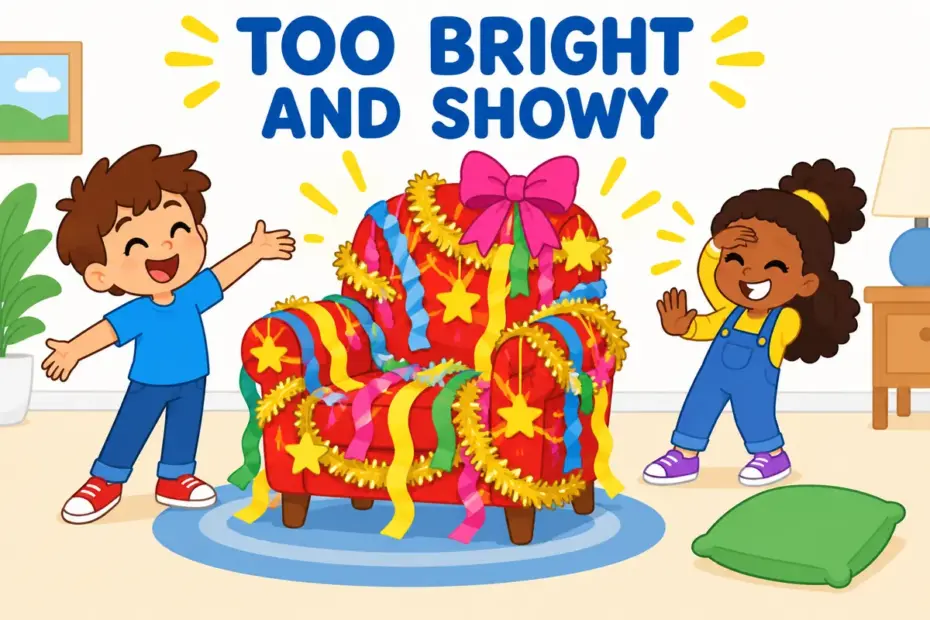
Gaudy is an adjective meaning unpleasantly bright, showy and tasteless in appearance. To use gaudy in a sentence, put it before a noun or after the verb be: The hotel lobby was gaudy. It is a critical word, so it judges decoration rather than simply describing colour.
Gaudy at a glance
- Gaudy is an adjective, with the comparative gaudier and the noun gaudiness.
- It works before a noun or after the verb be.
- Its tone is critical: bright in a cheap, tasteless way.
- Usual subjects are colours, clothes, decorations and designs.
- The commonest error is confusing gaudy with garish or misspelling it as gawdy.
What does gaudy mean?
Gaudy is an adjective meaning unpleasantly bright or showy, especially in a way that looks cheap or tasteless. The Cambridge entry for gaudy records this sense, and the near-synonym garish leans toward glaring, harsh light rather than cheap ornament. The word almost always carries criticism.
| Sense | Plain meaning | Example sentence |
|---|---|---|
| Tastelessly bright | Colours that clash and shout | The curtains were a gaudy orange. |
| Cheaply showy | Ornament that looks flashy, not rich | He wore a gaudy plastic crown. |
Gaudy is the wrong choice for praise: bright colours you admire are vivid or bold, not gaudy. It does not mean large, expensive or modern, and it never describes something quietly elegant.
How do you use gaudy in a sentence?
Gaudy follows ordinary adjective grammar, with a comparative form and one common adverb. The subject is usually a colour, an outfit or a decoration.
| Pattern | Example | What it signals |
|---|---|---|
| gaudy + noun | They hung gaudy banners everywhere. | Attributive use before the noun. |
| be + gaudy | The sign was far too gaudy. | Predicate use after the verb be. |
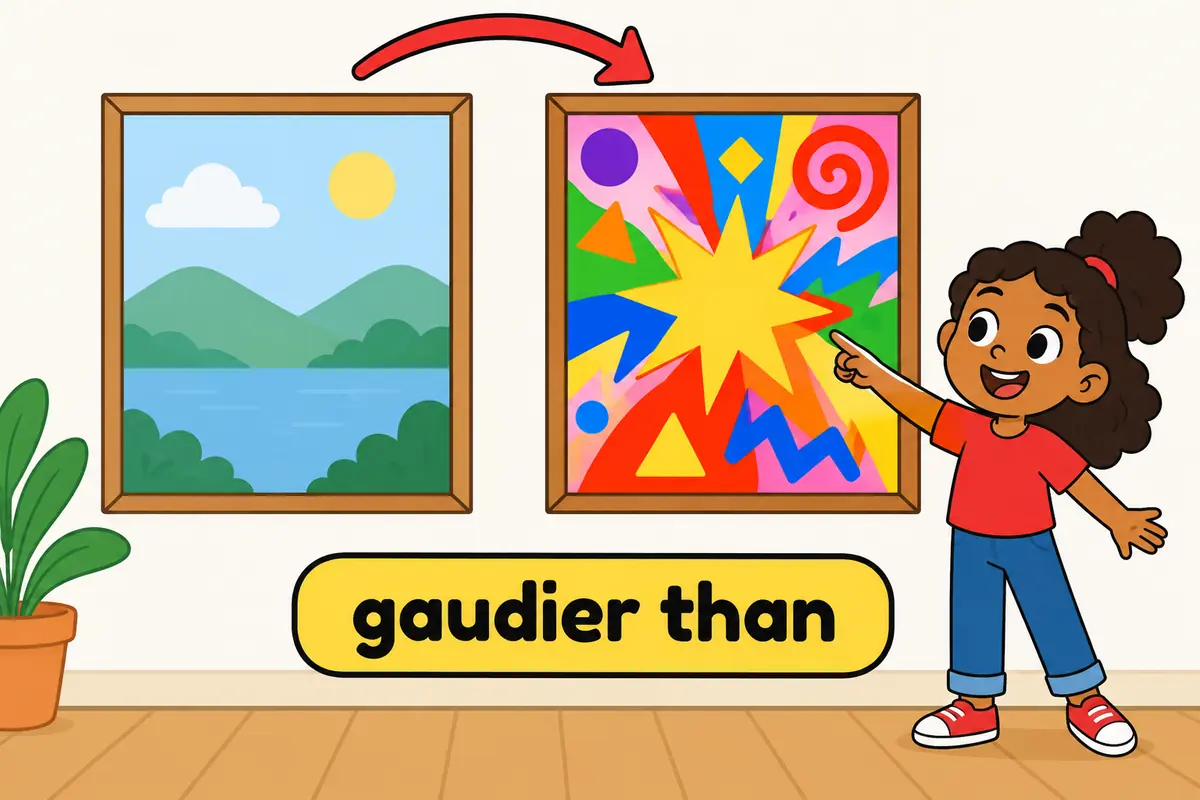
| gaudier than | This tie is gaudier than that one. | A direct comparison. |
| too gaudy for | The colours were too gaudy for a memorial. | Fitness for an occasion. |
| gaudily + verb | The stage was gaudily decorated. | The adverb describing style. |
Gaudy in a sentence: examples across contexts
Gaudy appears wherever taste is being judged. Each setting below keeps its critical edge.
| Context | Example sentence | Why this works |
|---|---|---|
| Conversation | That cushion is a bit gaudy for me. | A gentle judgement of taste. |
| Fashion writing | The designer avoided the gaudy prints of last year. | Criticises excess ornament. |
| Travel writing | The resort was a gaudy strip of neon and plastic. | Sets a cheap, loud atmosphere. |
| Home decor | We painted over the gaudy red walls. | Names an unwanted colour choice. |
| Design review | The logo looks gaudy at small sizes. | A practical, professional criticism. |
| Academic writing | The period is often dismissed as gaudy and commercial. | Describes a critical judgement. |
| News report | Critics called the parade gaudy and wasteful. | Reports an aesthetic objection. |
| Restaurant review | A gaudy dining room spoils good cooking. | Contrasts style with substance. |
| Art criticism | The gaudy frame overwhelms the quiet painting. | Judges a clash of restraint and display. |
Gaudy vs garish
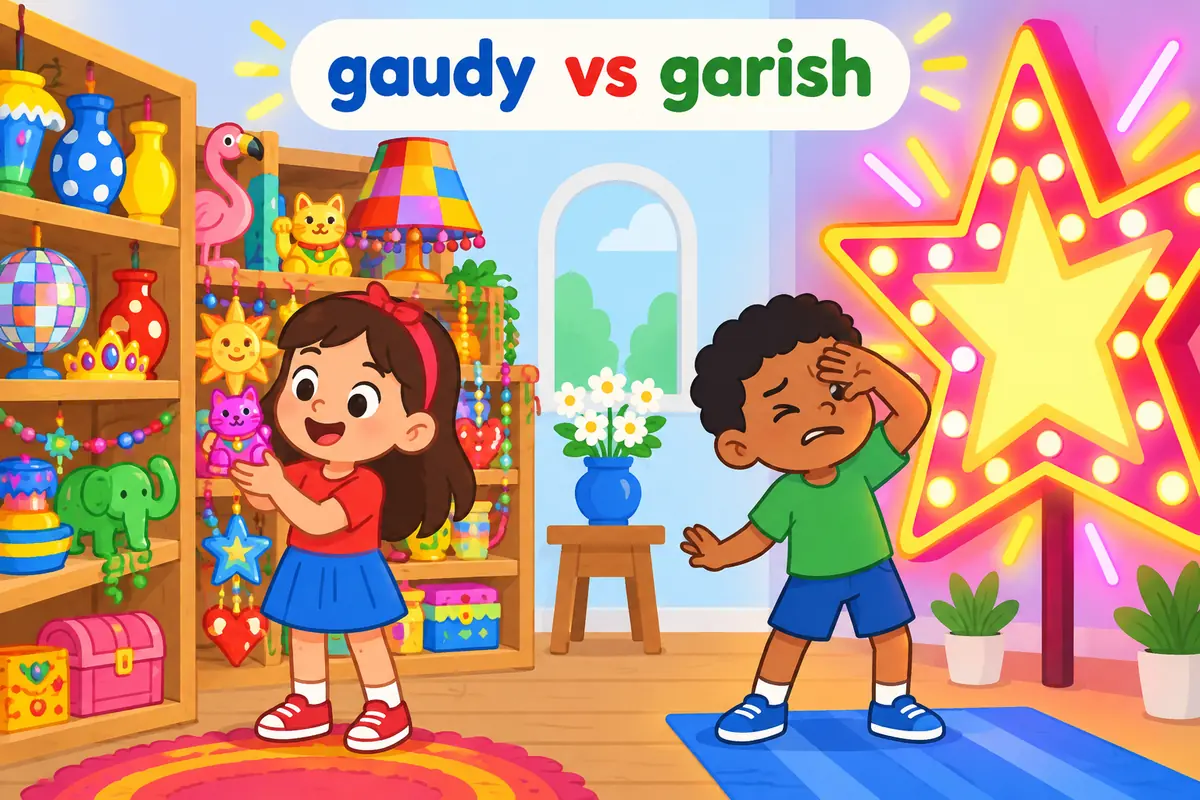
Gaudy and garish are close synonyms, both critical, but they blame different faults. One blames clashing, cheap ornament; the other blames harsh, glaring light.
| Attribute | Gaudy | Garish |
|---|---|---|
| Core fault | Tastelessly bright and over-decorated | Harsh, glaring and over-bright |
| Usual subject | Clothes, banners, decor, colours | Lights, neon signs, strong colours |
| What it blames | Cheapness and excess ornament | Glare and visual shock |
| Typical setting | Festivals, hotels, fashion | Nightlife, advertising, city streets |
| Intensity | Loud and cluttered | Piercing and glaring |
The verdict: use gaudy for clashing, over-decorated things and garish for harsh, glaring light. Tawdry adds a note of cheapness and poor taste, while showy is the neutral word for something made to attract attention.
Word forms and grammar of gaudy
| Form | Part of speech | Example |
|---|---|---|
| gaudy | Adjective | The wrapper looked gaudy and cheap. |
| gaudier | Comparative | Her second hat was gaudier still. |
| gaudiest | Superlative | It was the gaudiest float in the parade. |
| gaudily | Adverb | The room was gaudily painted. |
| gaudiness | Noun | The gaudiness of the display divided critics. |
| gawdy | Non-standard spelling | The correct spelling is gaudy. |
Common mistakes with gaudy
- Incorrect:
Her face was gaudy with embarrassment.Correct: Her face was red with embarrassment. Rule: gaudy describes appearance and taste, not emotion. - Incorrect:
The music was too gaudy for us.Correct: The music was too loud for us. Rule: gaudy applies to visible colour and ornament, not sound. - Incorrect:
She wore a gawdy dress.Correct: She wore a gaudy dress. Rule: the spelling is gaudy, with au, not gawdy. - Incorrect:
He is a gaudy writer.Correct: His prose is florid. Rule: gaudy describes appearance; for writing, florid or ornate is the right word.
Practice using gaudy
- Fill in the blank: The shop window was full of ___ plastic flowers.
- Choose the better word: The glaring neon sign was (gaudy / garish).
- Correct the error: She wore a gawdy scarf to the party.
- Build a sentence comparing two colourful posters using gaudier than.
- Spot the register: which belongs in a design review, The palette is gaudy or The colours are yucky?
- Fill in the blank: The stage was ___ decorated for the festival.
Answers
- gaudy; the adjective sits before the noun flowers.
- garish; the harsh glare of a neon sign points to garish rather than gaudy.
- She wore a gaudy scarf to the party; the correct spelling uses au.
- This poster is gaudier than that one; the comparative judges the louder design.
- The palette is gaudy suits a design review; gaudy is the professional critical term.
- gaudily; the adverb describes how the stage was decorated.
The bottom line
Gaudy means unpleasantly bright and showy, and it almost always criticises taste rather than describing colour neutrally. When display is meant to impress rather than merely clash, ostentatious criticises the motive, while gawky describes awkward movement and is easy to mix up with gaudy. Keep the au spelling, keep the critical tone, and the word will land correctly.
Frequently asked questions about gaudy
Does gaudy always mean bad taste?
Almost always. Gaudy carries criticism, so it describes bright colours or decoration that look cheap, clashing or overdone. If you admire brightness, use vivid, bold or striking instead. Calling something gaudy is a judgement, not a neutral note about how colourful it is.
What is the difference between gaudy and garish?
Both criticise excess, but gaudy blames clashing, cheap ornament while garish blames harsh, glaring light. A hotel lobby crowded with clashing banners is gaudy; a street of blinding neon signs is garish. The two overlap often, and choosing the sharper one makes the criticism more precise.
How do you spell gaudy correctly?
Gaudy is spelled g-a-u-d-y. The common misspelling gawdy swaps the au for aw and is not standard English. The comparative is gaudier, formed by changing the y to i and adding er, and the noun is gaudiness, as in the gaudiness of the display.
Can gaudy describe a person?
Only their appearance, not their character. You can describe a person as gaudy if their clothes are tastelessly bright, but the adjective judges the outfit, not the person. To criticise a person for showing off, ostentatious or flashy is the better word.
Have you ever come across a sentence that was so flamboyantly decorated with colorful and showy language that it seemed almost obnoxiously flashy? This type of excessively ornate and ostentatious writing can be aptly described as “gaudy.”
When a sentence is described as gaudy, it often means that it is overly ornamental or flashy, drawing attention to itself with excessive decoration or elaboration. This can result in a lack of subtlety or elegance in the writing, instead opting for a brash and showy style that may distract from the actual substance of the sentence.
7 Examples Of Gaudy Used In a Sentence For Kids
- Gaudy colors are so bright and flashy!
- I love wearing gaudy clothes for festivals.
- The peacock has such gaudy feathers.
- My gaudy bangles jingle when I move.
- The gaudy flowers make me smile.
- I painted a gaudy rainbow in my drawing.
- Gaudy decorations make the party fun.
14 Sentences with Gaudy Examples
- Gaudy posters are plastered all over campus to promote the upcoming music fest.
- Some students prefer to wear gaudy and vibrant clothes to stand out in the crowd.
- The decorations at the college party were so gaudy that they hurt my eyes.
- The group project presentation was criticized for its gaudy design and color scheme.
- The bulletin board was filled with gaudy flyers advertising various club meetings.
- The fashion show at college featured models strutting down the runway in gaudy outfits.
- The campus bookstore sells a variety of gaudy stationery items to appeal to students.
- Anushka felt out of place wearing gaudy makeup to a formal academic event.
- The auditorium was adorned with gaudy curtains for the drama society’s performance.
- Vishal’s laptop bag stood out with its gaudy neon green color among the sea of black bags.
- The mural painted on the college wall was too gaudy for some students’ tastes.
- Aanya’s room in the hostel was filled with gaudy fairy lights and colorful tapestries.
- The college canteen had a reputation for serving gaudy and overly sweet desserts.
- Priya’s presentation slides were criticized for their gaudy use of animations and clip art.
How To Use Gaudy in Sentences?
To use Gaudy in a sentence, you can follow these simple steps:
-
Understanding the Meaning: Gaudy means extravagantly bright or showy, typically so as to be tasteless. It is often used to describe something that is overly flashy or ornate.
-
Selecting an Object: Think of something that fits the description of being excessively bright or showy. This could be an outfit, a piece of jewelry, a room decoration, or any other object that stands out for its flashy appearance.
-
Forming the Sentence: Try to incorporate Gaudy in your sentence to describe the object you have chosen. For example, “She wore a gaudy dress covered in sequins and feathers.” This sentence clearly conveys the idea of an overly flashy and tasteless outfit.
-
Contextual Usage: Consider the context in which you are using the word Gaudy. Make sure it fits well within the overall message or theme of your sentence.
-
Practice: To become more comfortable using Gaudy in sentences, try practicing with different objects and scenarios. This will help you become more familiar with the word and its usage.
By following these steps and practicing regularly, you will be able to effectively incorporate Gaudy into your vocabulary and writing.
Conclusion
In conclusion, sentences with gaudy descriptors are vivid and flashy, often using extravagant and over-the-top language to evoke strong visual images. These sentences tend to be attention-grabbing and colorful, drawing the reader’s focus to the flamboyant and ostentatious details of the described subject. While gaudy sentences can be entertaining and engaging, they are best used sparingly to avoid overwhelming the reader with excessive ornamentation and unnecessary embellishments.
Overall, sentences with gaudy language can be a powerful tool for creative writing, adding flair and vibrancy to descriptions. However, it is important to strike a balance and use these sentences judiciously to enhance rather than overshadow the main message or theme of the writing.