Grim describes something stern, unpleasant or without hope. To use grim in a sentence, decide which sense you need: a grim face looks serious, grim news is bad, and grim determination means stubborn courage. The adjective usually sits before the noun it describes.
Grim at a glance
- Grim is an adjective, and its comparative and superlative are grimmer and grimmest.
- Its three shades are stern, depressing and resolutely determined.
- The adjective usually sits before a noun: grim news, a grim task, a grim face.
- The word suits serious reporting, hardship and dark humour rather than light chat.
- The commonest error is using grim for mild annoyance or for simple sadness.
What does grim mean?
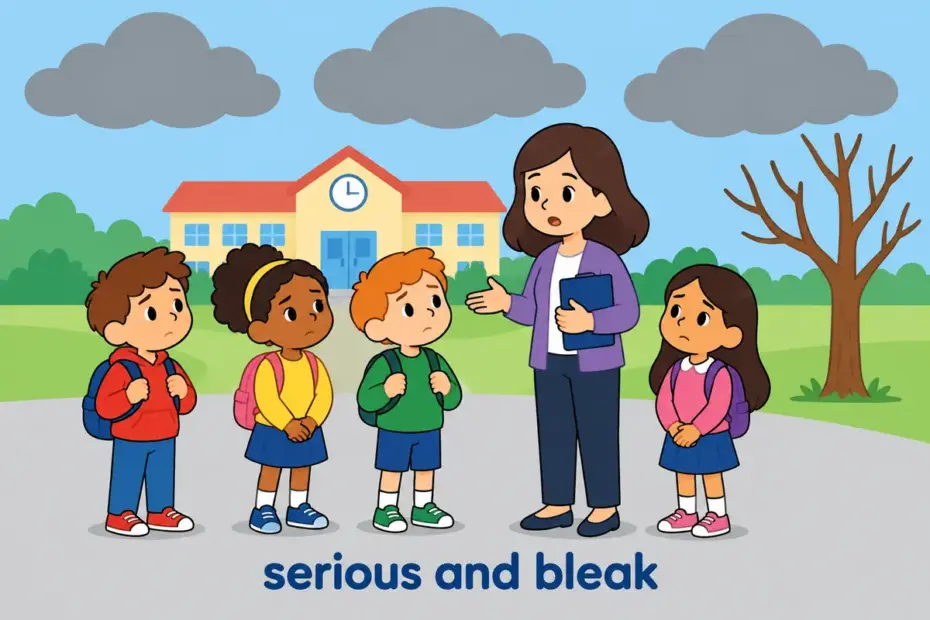
Grim is an adjective meaning stern and unsmiling, depressing and without hope, or stubbornly determined. The Cambridge entry for grim records all three shades, and they share a mood of hardship: a somber, quiet ceremony is close in feeling, though somber stresses sadness and gravity while grim adds a sense of harshness and strain.
| Sense | Plain meaning | Example sentence |
|---|---|---|
| Stern or serious | Looking severe and unsmiling | His grim face told us the answer. |
| Depressing or bleak | Full of bad news and little hope | The report painted a grim picture. |
| Resolute or unyielding | Determined in a joyless, stubborn way | She worked with grim determination. |
One limitation is worth stating plainly. Grim is not a mild word for sad, and it is not a word for anger: a person who is annoyed with you is cross, not grim. The adjective carries weight, so it suits hardship, bad news and cheerless persistence, and it should never describe a small inconvenience that a plainer word would cover.
How do you use grim in a sentence?
Grim works either before a noun or after the verb be, and both positions are common in reporting. Five patterns cover almost every real sentence, and the fixed phrase grim determination keeps its own slot. Where the writer wants an stern warning to drivers or a gloomy forecast for the week, those adjectives narrow the mood in a different direction.
| Pattern | Example | What it signals |
|---|---|---|
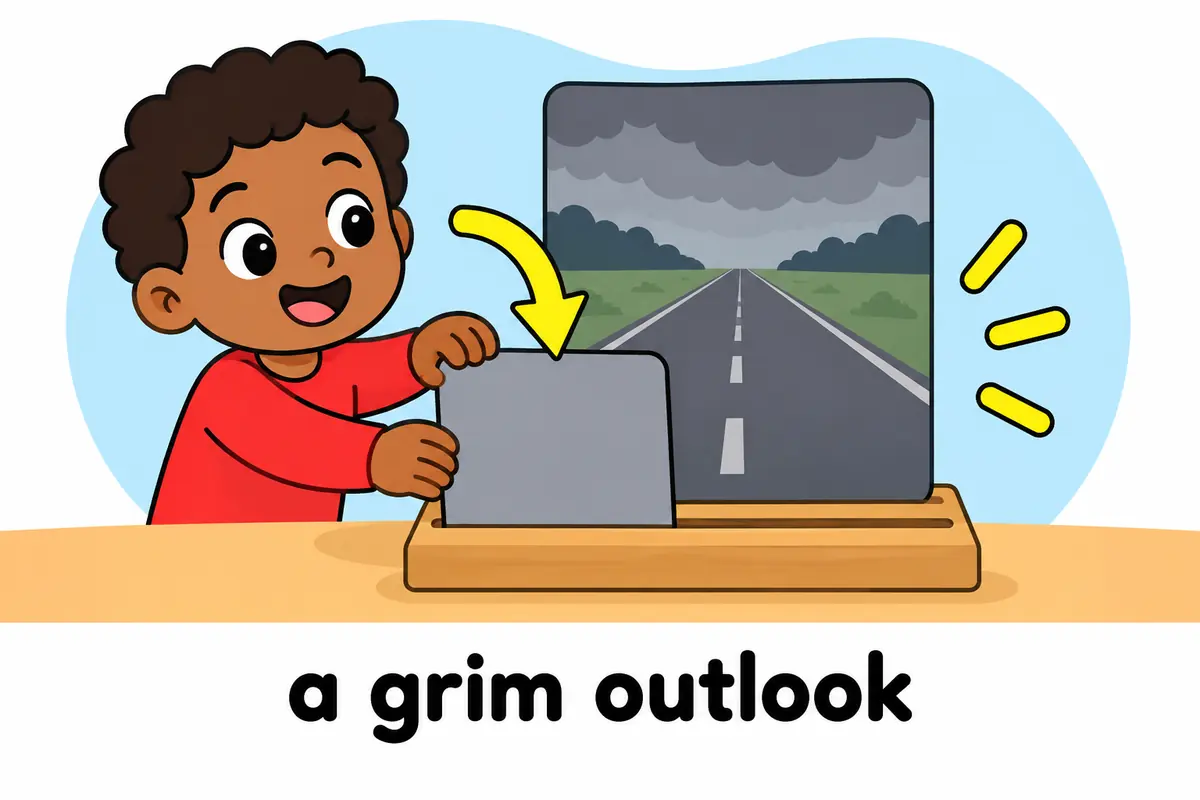
| grim + noun | The outlook was grim after the storm. | The adjective colours the noun directly. |
| it is grim or things look grim | Things look grim for the small port. | Predicative use sums up a whole situation. |
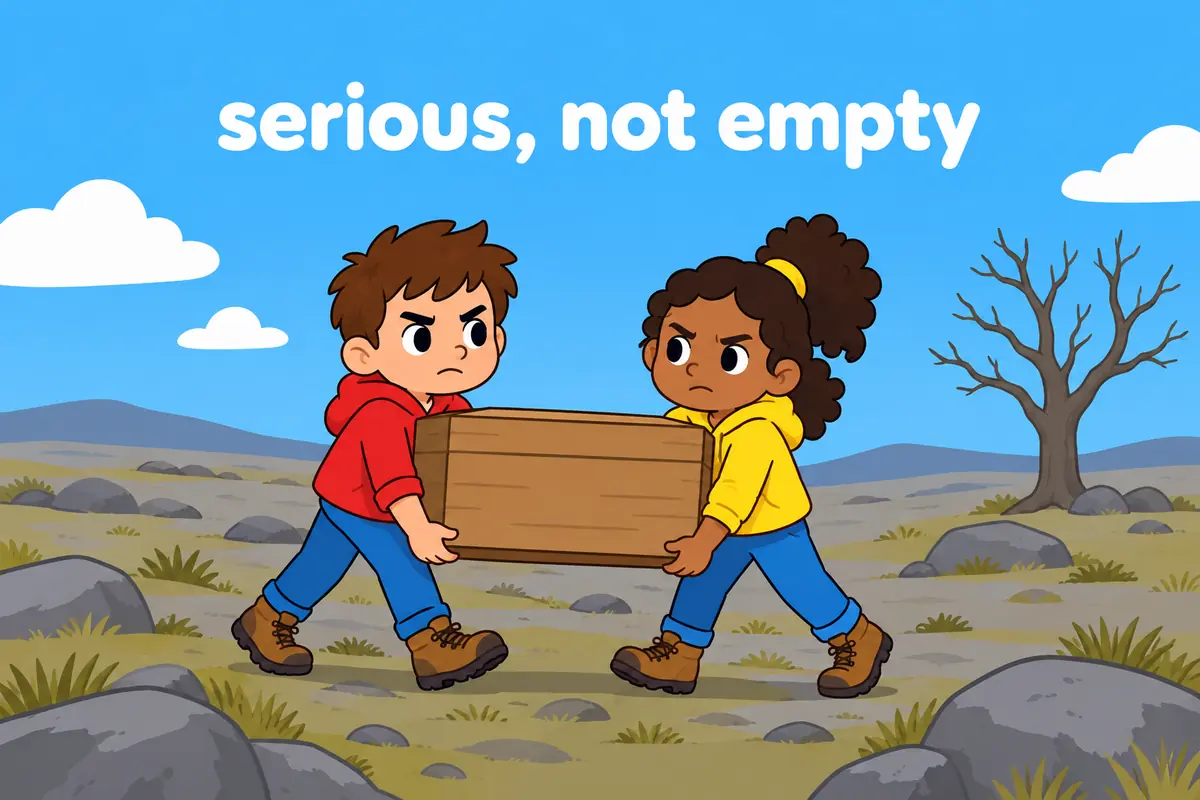
| grim determination or resolve | He finished the race with grim determination. | A fixed collocation for joyless persistence. |
| a grim reminder that | The empty stands were a grim reminder of the ban. | Introduces what a sight teaches. |
| grim humour | The team kept going with grim humour. | Shows dark humour under strain. |
Grim in a sentence: examples across contexts
Grim keeps its serious weight across registers, and the nine sentences below move from a school corridor to a business forecast. Each one shows what is stern, hopeless or stubbornly endured. Reporters who want the weather sense often reach for a gloomy forecast for the week, which is softer than grim.
| Context | Example sentence | Why this works |
|---|---|---|
| Classroom | The teacher’s grim look warned us that the test was hard. | A face carries the stern sense. |
| News report | Rescuers described a grim scene at the flooded village. | Reporting uses grim for hardship. |
| Weather report | A grim forecast kept the ferries in port all weekend. | The adjective colours a prediction. |
| Sports report | She ran the final lap with grim determination. | The fixed phrase signals stubborn effort. |
| Conversation | The news from the hospital was grim, so we sat quietly. | Everyday speech keeps the serious weight. |
| Business outlook | Orders fell, and the board faced a grim choice. | Describes a hard decision with no good option. |
| History essay | The winter of 1917 was the grimmest of the war. | The superlative ranks hardship. |
| Book review | The novel opens with a grim joke about the flood. | Dark humour is a natural collocation. |
| Charity appeal | The empty shelves were a grim reminder of the shortage. | The phrase points to what the sight teaches. |
Notice how often grim pairs with news, a task, a face or determination. Those collocations are what make a sentence sound native, while a random noun such as a grim sandwich sounds odd.
Grim vs bleak
Grim and a bleak stretch of empty coast both suggest little comfort, and they divide the work differently. Grim points to hardship that people face seriously, while bleak points to emptiness, cold and a prospect stripped of hope. A third word, a dire warning of danger, adds urgency rather than gloom.
| Attribute | grim | bleak |
|---|---|---|
| Core meaning | Stern, serious and without hope | Cold, empty and offering no comfort |
| What it describes | Faces, news, tasks and determination | Landscapes, prospects, weather and futures |
| Emotional tone | Hardship and resolve | Desolation and emptiness |
| Common collocation | grim news, grim determination | a bleak landscape, a bleak future |
| Example | a grim expression | a bleak hillside |
Verdict: choose grim when the hardship is faced with seriousness and resolve, and bleak when the scene or the prospect is empty and comfortless.
Word forms and grammar of grim
Grim inflects with double m in the comparative and superlative, and its adverb and noun are common in serious writing. The table also lists the fixed proper phrase the Grim Reaper, which is the one place the word is capitalised.
| Form | Part of speech | Example |
|---|---|---|
| grim | adjective | The news was grim. |
| grimmer | adjective, comparative | The second report was grimmer still. |
| grimmest | adjective, superlative | That was the grimmest winter on record. |
| grimly | adverb | She grimly carried on. |
| grimness | noun | The grimness of the camp shocked visitors. |
| the Grim Reaper | fixed phrase, capitalised | The Grim Reaper appears in many old tales. |
The adverb grimly usually modifies a verb of enduring, as in held on grimly, and the noun grimness is almost always abstract, naming the quality of a place or a situation.
Common mistakes with grim
- Incorrect:
She was grim at me for being late.Correct: She was cross with me for being late. Rule: Grim means stern or bleak, not annoyed at a person. - Incorrect:
The clown was grim and made everyone laugh.Correct: The clown was funny and made everyone laugh. Rule: A grim mood is serious and joyless, the opposite of light-hearted. - Incorrect:
He grimmed the bad news to us.Correct: He gave us the grim news. Rule: Grim is an adjective and never a verb. - Incorrect:
She faced the exam with grim.Correct: She faced the exam with grim determination. Rule: The adjective needs a noun when it names an attitude. - Incorrect:
The sunny beach was grim.Correct: The sunny beach was cheerful. Rule: Grim implies hardship or gloom, so it clashes with a cheerful scene.
Practice using grim
Work through the six items, then read the reasoning rather than only the key.
- Fill the gap: The doctor’s ______ expression made us fear the worst.
- Choose the better word: The empty moor looked (grim / bleak) under the grey sky.
- Correct the error: They grimmed through the long winter.
- Build a sentence: use grim determination about a runner finishing a race.
- Spot the register: which belongs in a news report — rescuers described a grim scene, or the scene was super grim?
- Rewrite in the superlative: It was a grim winter. Use grimmest instead.
Answers
- grim — the adjective before expression conveys the stern, serious sense.
- bleak — an empty landscape stripped of comfort is bleak rather than grim.
- They endured the long winter grimly — grim is an adjective, so the adverb grimly modifies the verb.
- Model answer: She finished the marathon with grim determination.
- Rescuers described a grim scene — a report keeps the serious adjective and avoids the slangy super grim.
- It was the grimmest winter on record — the superlative doubles the m and needs the.
The bottom line
Use grim in a sentence when something is stern, bad or endured without joy, and choose the shade that fits: a grim face, grim news or grim determination. Two facts decide most sentences: the adjective carries real weight, so it is wrong for small annoyances, and it collocates with news, tasks and faces rather than with random nouns. Where a scene is empty rather than hard, a harsh verdict from the judge or bleak is the sharper choice.
Frequently asked questions about grim
Is grim always sad?
No. Sadness is only part of it. Grim can mean stern and unsmiling, as in a grim face, or stubbornly determined, as in grim determination. The common thread is hardship and a lack of cheer, so the word covers more ground than sadness alone.
What does grim determination mean?
Grim determination means continuing to try without any joy or hope of ease, driven by sheer resolve. The phrase usually describes someone enduring a hard task, such as finishing a race or working through a crisis. It praises persistence and hints that the effort is cheerless.
Is grim an adjective or a verb?
Grim is only an adjective. There is no verb to grim, so sentences such as they grimmed through the winter are wrong. When you need an action, use endure or carry on and keep grim as a modifier: they carried on through the grim winter.
Can grim describe the weather?
Yes. Grim weather is cold, grey and threatening, and a grim forecast predicts hardship. The word still carries its serious weight, so it suits a storm or a hard winter rather than a light shower. For a merely dull day, grey or overcast is the plainer choice.
Have you ever struggled to find the right words to describe a situation that feels dark and foreboding? The term “grim” is the perfect word to convey a sense of gloom, harshness, or desolation.
When something is described as grim, it often implies a somber or bleak outlook, painting a picture of hardship or tough circumstances. This word effectively captures the mood of a distressing or severe situation, leaving no room for optimism or joy.
7 Examples Of Grim Used In a Sentence For Kids
- The stormy clouds looked grim in the sky.
- The spooky ghost had a grim expression on its face.
- The haunted house had a grim atmosphere inside.
- The witch’s potion had a grim color and smell.
- The old graveyard had a grim feel to it.
- The vampire’s castle looked grim under the full moon.
- The scary movie had a grim ending.
14 Sentences with Grim Examples
- After receiving their exam results, the grim expressions on their faces were hard to miss.
- The grim reality of student loans weighed heavily on their minds as they approached graduation.
- The prospect of facing a grim job market after completing their studies was a concern for many students.
- The professor’s grim warning about plagiarism left the class silenced and pensive.
- The grim atmosphere in the library during exam week was palpable as students crammed for their tests.
- As the deadline for their research paper loomed closer, a grim sense of dread settled in among the students.
- The lack of affordable housing options in the city painted a grim picture for students searching for accommodation.
- The grim reality of the competitive job market pushed students to build their skills and network diligently.
- Despite the grim weather forecast, students braved the rain to attend their classes and lectures.
- The news of a sudden fee hike cast a grim shadow over the campus, sparking protests among the students.
- The grim testimonies during a panel discussion on mental health shed light on the struggles faced by students.
- Despite the grim circumstances, students came together to support each other during challenging times.
- A grim reminder of the importance of time management hit students hard when they faced overlapping deadlines.
- The grim stories of graduates struggling with unemployment motivated current students to seek internships and gain practical experience.
How To Use Grim in Sentences?
Grim is an adjective that describes something that is gloomy or depressing. Here’s how you can use it in a sentence:
- “The news of the impending storm cast a grim shadow over the town.”
When using Grim in a sentence, it is important to consider the context in which it is being used. Typically, Grim is used to depict a situation that is serious, severe, or unpleasant. It can also convey a sense of foreboding or pessimism.
To use Grim effectively in a sentence, try to pair it with descriptive language that emphasizes the negative aspects of the situation. This will help convey the overall mood or tone you are trying to create.
For example, instead of simply saying, “The room looked grim,” you could say, “The walls of the room were peeling, the furniture was covered in dust, and a sense of grim despair hung in the air.”
Remember that Grim is a powerful word that can evoke strong emotions in your writing. Use it thoughtfully and sparingly to create impact and convey the desired atmosphere in your sentences.
In conclusion, incorporating Grim into your writing can add depth and intensity to your descriptions. Experiment with using it in various contexts to see how it can enhance the tone and mood of your sentences.
Conclusion
In conclusion, the examples of sentences with the keyword “grim” highlight the somber and serious nature associated with this term. These sentences effectively portray a sense of bleakness, seriousness, and harsh realities. The use of “grim” in these sentences sets a tone that conveys a sense of impending danger, sadness, or ominousness.
Overall, sentences with the word “grim” are impactful in evoking emotions of pessimism and seriousness. They create a vivid image of dark and distressing situations, setting a tone that is solemn and foreboding. The word “grim” is a powerful descriptor that effectively conveys the harsh realities and serious nature of the scenarios it is used to describe.