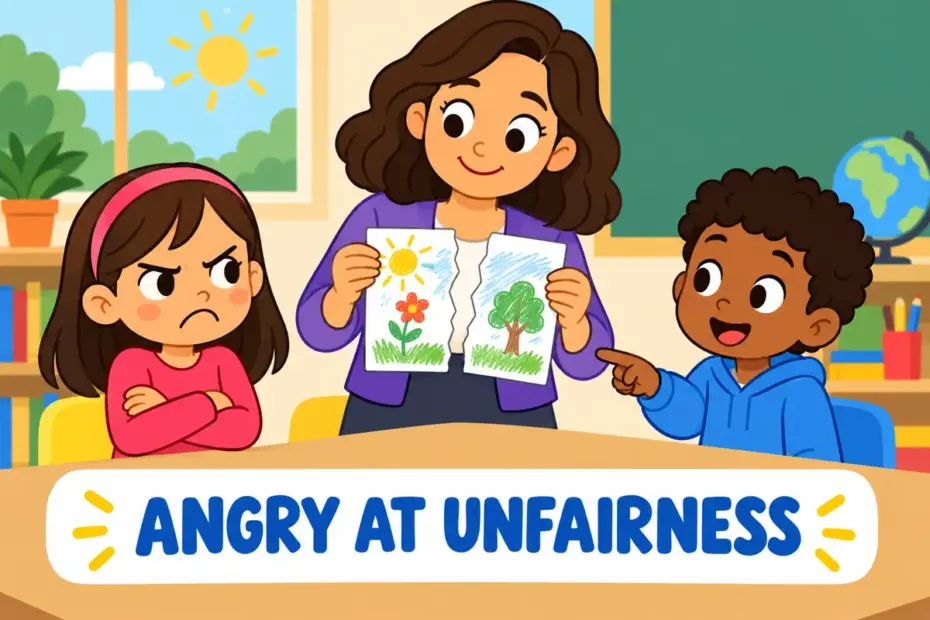
Indignant is an adjective meaning angry because something seems unfair or insulting. To use indignant in a sentence, pair it with the right preposition: someone is indignant about a remark, at a person, or over a decision. “The team was indignant about the ruling.” The feeling always has a stated reason.
indignant at a glance
- Indignant is an adjective; the adverb is indignantly and the noun is indignation.
- It names anger at unfairness, not a generally bad temper.
- The dominant patterns are indignant about / at / over + noun and indignant that + clause.
- The register is written and formal-reporting; speech prefers annoyed, mad or cross.
- The commonest error is confusing indignant with indigent, which means very poor.
What does indignant mean?
| Sense | Plain meaning | Example sentence |
|---|---|---|
| Feeling anger at unfairness | Resentful because something seems unjust | She was indignant about the unexplained charge. |
| Showing that anger | Expressing resentment in manner, voice or writing | An indignant letter arrived the next morning. |
The Cambridge entry for indignant centres on anger at something unjust, and the word always implies a reason the speaker could name. That reason separates it from plain anger: you can be angry with no clear cause, but you cannot be indignant without one. Where the anger is open and loud, outraged is the stronger adjective.
One limitation is worth stating plainly. Indignant does not mean merely irritated, and it does not mean insulting; it describes the person who feels wronged. For a mild irritation, annoyed or cross is more accurate, and for an anger you want to criticise, resentful carries the right edge.
How do you use indignant in a sentence?
| Pattern | Example | What it signals |
|---|---|---|
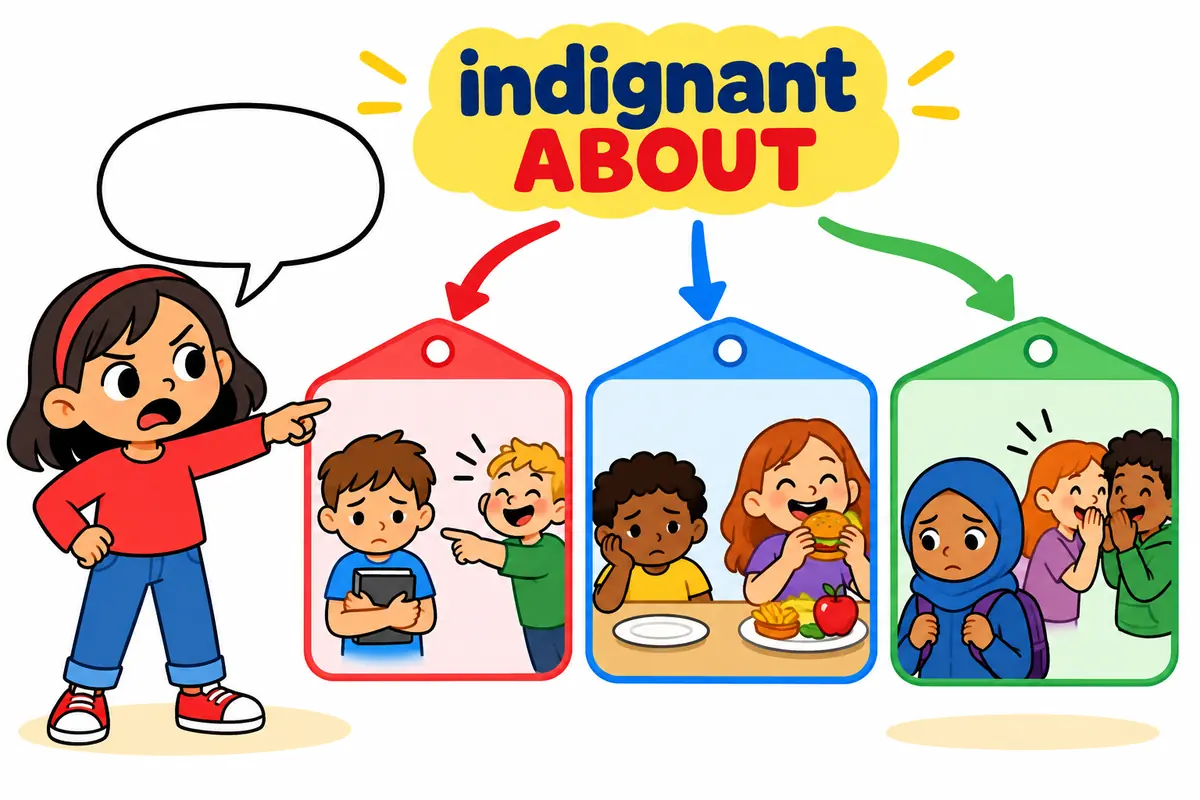
| indignant + about + situation | Residents were indignant about the new parking fee. | Points at an unfair situation or event. |
| indignant + at + person or act | He was indignant at the referee. | Targets the person or act blamed. |
| indignant + over + decision | The staff were indignant over the lost bonus. | Focuses on a decision and its effect. |
| indignant + that + clause | They were indignant that the offer was withdrawn. | States the grievance as a full clause. |
| indignant + noun (attributive) | An indignant crowd gathered outside. | Applies the tone to a whole group in one phrase. |
| feel / look / sound + indignant | The clerk sounded genuinely indignant. | Links the adjective to a sense verb. |
The adjective never stands before the cause on its own; it needs about, at, over or a that clause to name the grievance. Learners who drop the preposition produce sentences that sound unfinished. When the anger is aimed at a feeling rather than a fact, resentful is the closer word.
Indignant in a sentence: examples across contexts
| Context | Example sentence | Why this works |
|---|---|---|
| Classroom | The class was indignant about losing its break to a fire drill. | A small but clearly unfair loss a young reader understands. |
| Workplace email | Several staff felt indignant that the rota changed without notice. | Names the clause that carries the grievance. |
| News report | Passengers grew indignant over the sudden fare rise. | Over plus a decision, the standard reporting frame. |
| Customer service | The caller was indignant at being kept waiting twice. | At plus a gerund makes the unfair act explicit. |
| Academic prose | Reviewers were indignant about the missing citations. | Keeps the tone measured while naming the fault. |
| Literature | An indignant silence followed the announcement. | Attributive use turns the emotion into an atmosphere. |
| Social media | Shoppers were indignant that the sale ended early. | A that-clause fits a short, emotional post. |
| Diplomatic note | The delegation was indignant over the closed border. | Formal, restrained and still clearly resentful. |
| Conversation | Mum was indignant about the queue at the till. | The one register where the word survives in speech. |
Across every context the sentence states the cause, which is what makes the word precise. Drop the cause and indignant floats free, reading as vague temper. In casual speech the same idea often appears as plain angry instead.
Indignant vs indigent
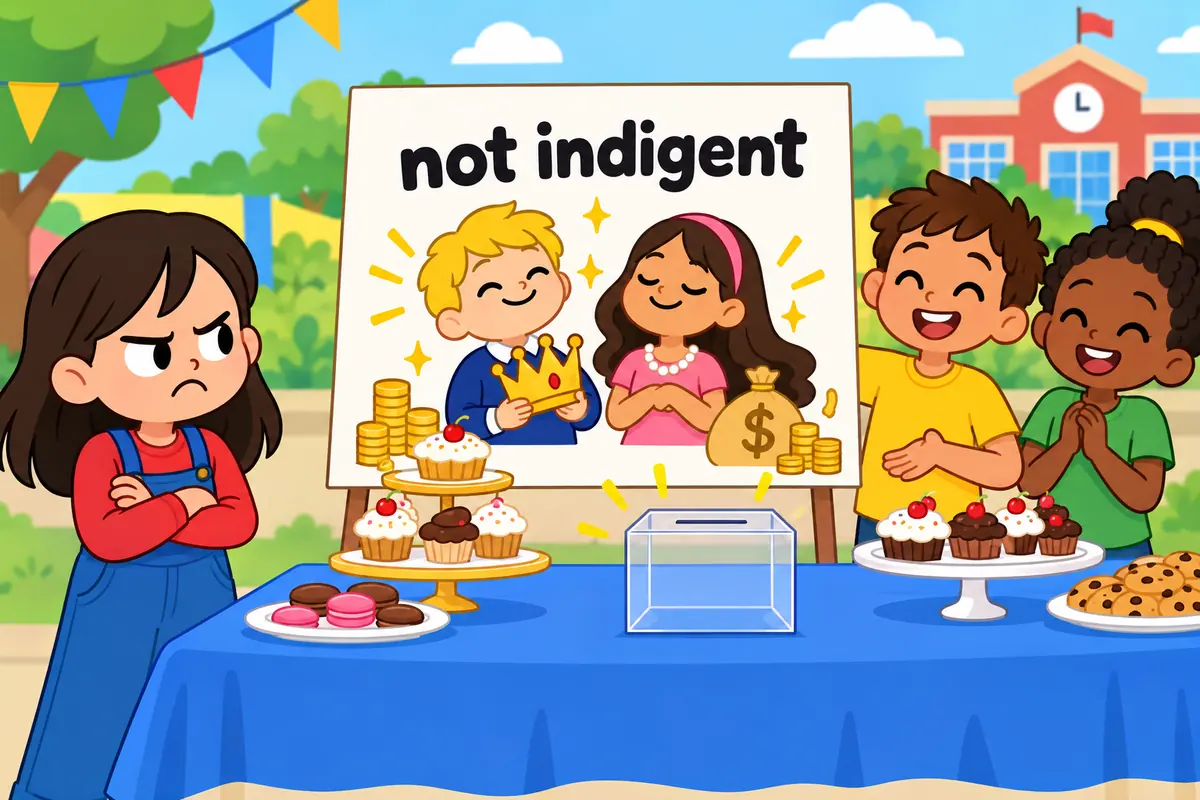
Indignant and indigent differ by a single letter and almost nothing else, which is why they are so often swapped. Indigent
| Attribute | indignant | indigent |
|---|---|---|
| Meaning | Angry at something unfair | Very poor and in need |
| Part of speech | Adjective | Adjective |
| Typical pairing | indignant about / at / that | indigent family / defendant |
| Register | Written and formal reporting | Formal, legal and older |
| Common context | A person reacting to a slight | A person lacking money |
| Everyday substitute | annoyed, outraged | poor, destitute |
Verdict: if the person has no money, write indigent; if the person has been treated unfairly and is angry about it, write indignant. Context, not spelling, decides which one the sentence needs.
Word forms and grammar of indignant
Indignant has a full word family, and the forms that trip learners most are the adverb and the noun.
| Form | Part of speech | Example |
|---|---|---|
| indignant | adjective | She was indignant about the delay. |
| indignantly | adverb | He protested indignantly. |
| indignation | noun | Their indignation was fully justified. |
| indignity | noun, different meaning | The long queue was an indignity. |
| indignant of | non-standard pairing | Incorrect: indignant of the delay; correct: indignant about the delay. |
The adverb indignantly marks the manner of a protest, and the noun indignity names a humiliation rather than the anger itself. Only indignant and indignantly share the meaning of righteous anger; indignity means a loss of dignity.
Common mistakes with indignant
- Incorrect:
She was indignant of the rude remark.Correct: She was indignant about the rude remark. Rule: Indignant selects about, at or over, never of. - Incorrect:
The charity helped indignant families.Correct: The charity helped indigent families. Rule: Indigent means very poor; indignant means angry at unfairness. - Incorrect:
He replied indignant to the question.Correct: He replied indignantly to the question. Rule: An adverb modifies the verb; indignant is an adjective and needs a noun or linking verb. - Incorrect:
Their indignant was obvious to everyone.Correct: Their indignation was obvious to everyone. Rule: The noun is indignation; indignant cannot stand as a subject. - Incorrect:
The crowd was indignant for the cancelled match.Correct: The crowd was indignant about the cancelled match. Rule: For introduces a purpose, while about or over introduces the unfair thing itself.
Practice using indignant
Work through the six items, then read the reasoning rather than only the answer.
- Fill the gap: The neighbours were ______ about the fence being moved overnight.
- Choose the better word: The shelter was built for (indignant / indigent) families in the district.
- Correct the error: She complained indignant about the extra charge.
- Build a sentence: use indignant that about a class whose trip was cancelled.
- Spot the register: which belongs in a formal letter — we were indignant about the delay, or we were pretty miffed about it?
- Rewrite with the noun: The staff were indignant about the rota. Use indignation instead.
Answers
- indignant — the cause is unfair conduct, so the adjective takes about.
- indigent — the families lack money, so the poverty adjective is required, not the anger one.
- She complained indignantly about the extra charge — the adverb modifies the verb complained.
- Model answer: The class was indignant that the trip had been cancelled without warning.
- We were indignant about the delay — a formal letter keeps the standard adjective and avoids slang.
- The staff expressed their indignation about the rota — the noun carries the feeling as its subject.
The bottom line
Use indignant in a sentence when someone is angry at something clearly unfair, and always name the grievance with about, at, over or a that clause. The two nuances that decide most sentences are the stated cause and the register: written reporting favours indignant, while speech usually prefers taking umbrage. Keep the word away from money, where indigent belongs.
Frequently asked questions about indignant
Can indignant describe a thing?
Indignant describes people and the behaviour that shows their anger, as in an indignant letter or an indignant silence. It does not describe a situation itself, so a fee is not indignant. Use unfair, insulting or outrageous for the thing that caused the feeling.
Is indignant stronger than angry?
Indignant is narrower, not simply stronger. It specifies anger at unfairness and demands a stated cause, while angry covers any intensity and any cause. A person can be furious about a scratch, but indignant only when a rule or a right has been violated.
What is the noun form of indignant?
The noun is indignation, meaning the anger itself, as in their indignation was justified. Do not invent indignantness. A related noun, indignity, means a humiliating treatment and is not a synonym for the anger. Keep the spelling and the meaning of each separate.
Does indignant need a preposition?
When it describes the cause, yes: indignant about, at or over before a noun, or indignant that before a clause. The adjective can usually also sit directly before a noun, as in an indignant crowd, where no preposition is needed.
Have you ever witnessed someone speaking with strong disapproval or resentment, perhaps even feeling angered by a perceived injustice? This intense emotion is what we refer to as being “indignant.”
When someone is indignant, they are expressing a profound sense of righteous anger or displeasure towards a particular situation or person. This feeling typically stems from a perceived unfairness, disrespect, or mistreatment that the individual finds unacceptable.
7 Examples Of Indignant Used In a Sentence For Kids
- Indignant animals will make loud noises when they are upset.
- It is not nice to make someone feel indignant on purpose.
- The cat looked indignant when the dog stole its toy.
- You should always apologize if you make someone feel indignant.
- People may feel indignant if someone takes their things without asking.
- It is important to listen to others when they are feeling indignant.
- You can help someone feel better if they are indignant by being kind.
14 Sentences with Indignant Examples
- Indignant at the professor’s unfair grading system, the students demanded transparency and accountability.
- The students were indignant when they found out that the library hours had been reduced without prior notice.
- She felt indignant when her group project partner took credit for her hard work.
- The college students were indignant when they learned about the sudden increase in tuition fees.
- Indignant at the lack of facilities in their hostel, the students protested for better living conditions.
- The students were indignant when they discovered that the quiz questions were not covered in the syllabus.
- The group of students became indignant when their cultural event was abruptly canceled by the college administration.
- He was indignant when he realized that the internship he was promised was given to someone else.
- Indignant at the delayed exam results, the students demanded immediate feedback from the faculty.
- The students were indignant when they were not given a voice in the decision-making process concerning campus events.
- She was indignant when her academic achievements were undermined by an indifferent professor.
- Indignant at being overlooked for a scholarship opportunity, the deserving student sought clarification from the scholarship committee.
- The students were indignant when they discovered that the college canteen was charging exorbitant prices for basic food items.
- He felt indignant when his research paper was rejected without valid reasons by the academic committee.
How To Use Indignant in Sentences?
Indignant is a word used to describe feelings of anger or annoyance caused by a perceived unfair treatment or disrespect. Here’s a useful guide on how to use it in a sentence:
-
Start by identifying a situation where you or someone else is feeling indignant. For example, “She felt indignant when her coworker took credit for her idea.”
-
Next, think about the context of the situation and the emotions involved. For instance, “He was indignant that he was not invited to the meeting, despite being part of the team.”
-
Consider using indignant in a sentence to express a strong sense of injustice or offense. For example, “The customer was indignant when she received poor service at the restaurant.”
-
Remember that indignant is often used to convey a mixture of anger and outrage at a perceived injustice. For instance, “The teacher was indignant at the student’s disrespectful behavior in class.”
-
Practice using indignant in different contexts to become more comfortable incorporating it into your vocabulary. For example, “She was indignant at the unfair treatment of her friend.”
By following these steps and practicing using indignant in various sentences, you’ll become more proficient in expressing feelings of anger or annoyance in a clear and effective manner.
Conclusion
In conclusion, sentences containing the word “indignant” often convey a sense of anger, frustration, or resentment towards unfairness, injustice, or disrespect. These sentences can be characterized by a strong tone of moral outrage or righteous indignation, showcasing a deep feeling of offense or offense taken at perceived wrongdoing. The word “indignant” is used to express a heightened emotional state, reflecting a person’s strong disapproval or outrage in response to a particular situation or behavior.
Through sentences with “indignant,” individuals can articulate their feelings of outrage, displeasure, or anger towards situations that they find unfair, unjust, or disrespectful. This word encapsulates the sentiment of righteous anger or moral indignation, emphasizing a strong emotional response to perceived mistreatment, injustice, or wrongdoing.


