
Look up to means to admire and respect someone. To use look up to in a sentence, name the person as the object and keep the whole phrase together: ‘The younger players look up to their captain.’ It is a fixed expression, so the object always follows to.
Look up to at a glance
- Look up to is a fixed phrase meaning to admire and respect someone.
- The object is a person or group, and it always follows the preposition to.
- Only look changes for tense; up and to never change.
- The phrase is neutral and common in everyday speech and writing.
- The commonest error is dropping to and writing look up him.
What does look up to mean?
Look up to is a phrase meaning to admire and respect someone, usually someone older or more experienced. The Cambridge entry for look up to treats it as a single unit, which is useful because the meaning cannot be guessed from look and up separately. The feeling combines warmth with a wish to be like the person.
The phrase differs from its near neighbours by degree. To admire someone is quiet approval; to look up to someone adds the sense that they set an example. To revere an elder adds open love, and to idolize a singer goes further still, almost to worship. The object is almost always a person, so the verb rarely describes a thing.
| Element | Plain meaning | Example |
|---|---|---|
| Admiration | Approval of someone’s qualities | Students look up to a fair referee. |
| Respect | Recognition of someone’s authority or skill | Young nurses look up to the senior sister. |
| Example | A wish to copy the person | She looks up to her older cousin. |
Look up to is not the same as look up. The phrase with to carries admiration; the plain phrasal verb means to search for information, as in look up a word. When the meaning is respect, the preposition is not optional and cannot be moved. This single contrast prevents most learner errors.
How do you use look up to in a sentence?
The phrase keeps three words in a fixed order, with only look changing for tense. The person admired is the object, and it follows to.
| Pattern | Example | What it signals |
|---|---|---|
| subject + look up to + person | The trainees look up to their supervisor. | A plain statement of admiration. |
| looked up to (past) | She looked up to her grandfather. | Only look carries the tense. |
| object pronoun after to | Everyone looks up to him. | The pronoun must follow to. |
| someone + to look up to | Children need someone to look up to. | Names the role, not the act. |
| look up to + person + for + quality | We look up to her for her honesty. | Specifies what earns the respect. |
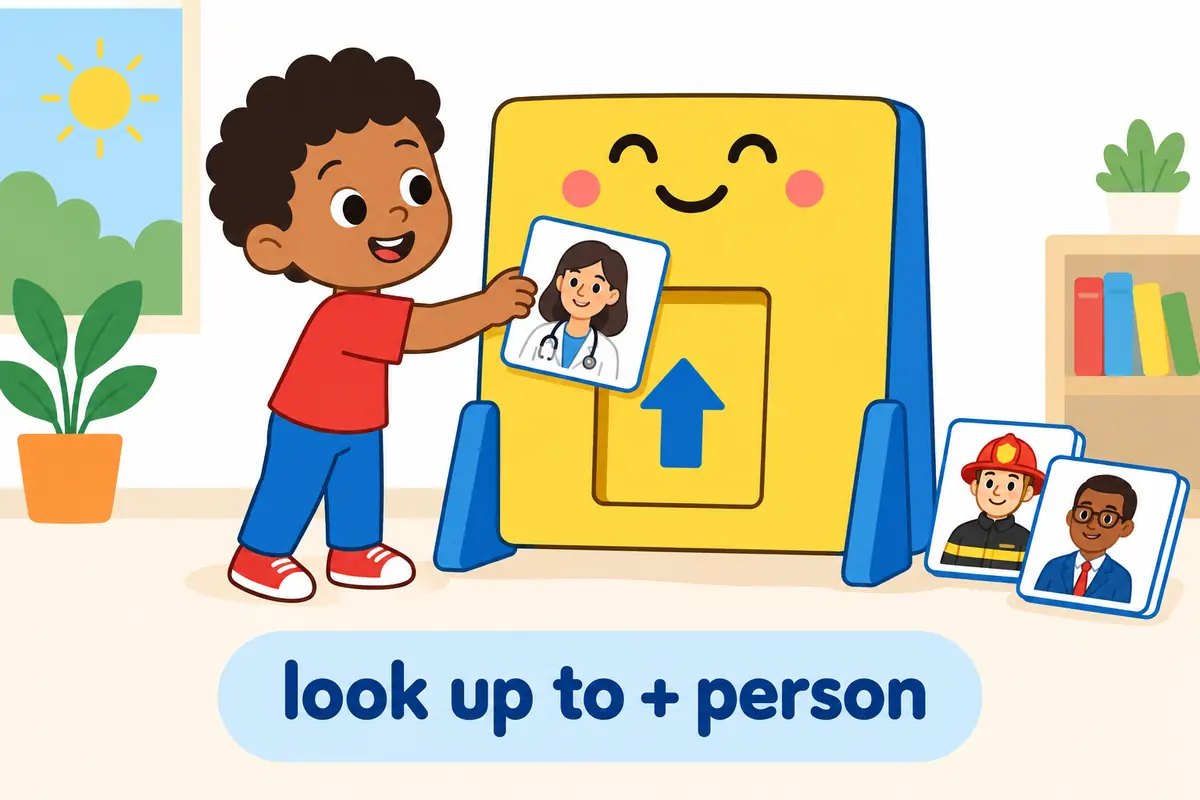
Only look inflects, so the phrase becomes looked up to in the past and is looking up to in the continuous. The two function words stay frozen. A sentence such as looked up him to is therefore impossible, and learners who try to emulate a mentor should keep the same structure.
Look up to in a sentence: examples across contexts
| Context | Example sentence | Why this works |
|---|---|---|
| Classroom | The new pupils look up to the class monitor. | A clear person as object. |
| Family | He looks up to his older sister. | Everyday admiration within a family. |
| Sport | Junior players look up to the team captain. | Names a role model. |
| Workplace | Many graduates look up to the founder. | Respect for achievement. |
| News profile | A generation of runners looked up to her. | Past tense on look only. |
| Conversation | I looked up to my first coach. | Informal and natural. |
| Academic writing | Students tend to look up to lecturers who publish widely. | Formal subject with the same pattern. |
| Community | Children look up to the volunteers. | A plural object after to. |
In each example the admired person sits after to, and the meaning stays warm rather than cold. Where the sentence needs the cooler idea of simple approval, regard someone highly is the better verb, because it names the feeling without the suggestion of a role model.
Look up to vs look up
| Attribute | look up to | look up |
|---|---|---|
| Core meaning | Admire and respect a person | Search for information or raise the eyes |
| Object | A person or group | A word, number, fact or the sky |
| Fixed form | Three words kept together | Particle up can move: look it up |
| Register | Neutral | Neutral |
| Typical error | Dropping to: look up him | Putting the pronoun after up: look up it |
Keep the to when the meaning is respect, and drop it only when the meaning is search or a lifted gaze. The two uses sound identical for a moment, which is why learners mix them. If you can replace the phrase with respect a teacher and keep the sense, you have the right one.
Word forms and grammar of look up to
| Form | Part of speech | Example |
|---|---|---|
| look up to | phrase, base | They look up to their coach. |
| looks up to | phrase, third person | She looks up to her mentor. |
| looked up to | phrase, past | We looked up to our first teacher. |
| looking up to | phrase, -ing | Looking up to role models is normal. |
| look up to him | correct object order | The pronoun follows to. |
| look up him to | non-standard | Never split the phrase this way. |
Common mistakes with look up to
-
The children look up their grandfather to.Correct: The children look up to their grandfather. Rule: keep look up to together, with the object last. -
She looks up him.Correct: She looks up to him. Rule: the phrase needs to before the person. -
He is looked up to by many.Correct: Many people look up to him. Rule: the phrase prefers an active sentence; the passive is awkward. -
I look up my sister.Correct: I look up to my sister. Rule: without to the sentence means searching for her. -
They look up to admire him.Correct: They look up to him. Rule: do not add a verb after to; the phrase already carries the meaning.
Practice using look up to
- Fill in the blank: The young players look up ______ their captain.
- Fill in the blank: She ______ up to her grandmother. (past tense)
- Choose the better word: To (look up to / look up) a word, open the dictionary.
- Correct the error: The students look up their teacher to.
- Build a sentence: use look up to + person about a child and a coach.
- Spot the register: which sentence belongs in a school report – “Mia looks up to her mentor” or “Mia totally looks up to her mentor”?
Answers
- to; the preposition must sit between up and the person.
- looked; only look changes for tense.
- look up; searching for a word takes no to.
- The students look up to their teacher; keep the phrase together.
- Model: The young striker looks up to her coach.
- The first; a report keeps a neutral register without intensifiers.
The bottom line
Look up to is a fixed phrase for admiring and respecting someone, and the object always follows to. Only look changes for tense, so looked up to is correct while looked up him to is not. To use look up to in a sentence well, name the person last and keep the three words together.
Frequently asked questions about look up to
Is look up to formal or informal?
Look up to sits in the neutral middle. It is at home in a conversation, a school report and a news profile alike, so it needs no apology in formal writing. The phrase is warmer than respect and less intense than idolize, which makes it a safe choice whenever admiration for a person is the point.
Can you look up to a thing?
Almost never. The object of look up to is a person or a group of people, because the phrase implies an example to follow. You might admire a painting or respect an institution, but you do not look up to them. If the object is not a person, choose admire or respect instead.
What is the past tense of look up to?
The past tense is looked up to, with the change on look alone: She looked up to her first teacher. The words up and to never change. For the continuous, use looking up to, as in He is looking up to the older players. The pronoun still comes after to in every tense.
Does look up to take an object pronoun?
Yes, and the pronoun goes after to: everyone looks up to him, never everyone looks up him. This is the same rule that keeps the phrase together in every sentence. Object pronouns such as him, her, them and us all follow to, because to is the preposition that governs them.
When we talk about looking up to someone, we are discussing the act of admiring or respecting another person for their qualities or achievements. This admiration often leads to seeking guidance, inspiration, or emulation from that individual.
In various aspects of life, whether it be in personal relationships, professional settings, or even in the realm of celebrities and role models, people often find themselves looking up to others for motivation and direction.
7 Examples Of Look Up To Used In a Sentence For Kids
- We look up to our teachers for guidance.
- We look up to our parents for love and support.
- We look up to astronauts for exploring space.
- We look up to doctors for keeping us healthy.
- We look up to firefighters for being brave.
- We look up to scientists for discovering new things.
- We look up to our grandparents for their wisdom.
14 Sentences with Look Up To Examples
- Look up to your professors as mentors who can guide you in your academic journey.
- Look up to successful alumni for inspiration and motivation to achieve your goals.
- Managing your time effectively is crucial for college students to look up to deadlines and stay organized.
- It’s important for college students to look up to role models who embody qualities they aspire to have.
- Don’t be afraid to look up to fellow classmates for help or support during challenging times.
- College is a great time to look up to new experiences and step out of your comfort zone.
- Always look up to industry professionals and experts in your field of study for valuable insights.
- Remember to look up to campus resources for assistance with academic, personal, or career-related issues.
- It’s beneficial for college students to look up to study groups as a way to enhance their learning experience.
- College is a time to look up to new opportunities for internships, research projects, and extracurricular activities.
- Don’t hesitate to look up to professors for clarification or guidance on challenging course material.
- College students should look up to leadership opportunities on campus as a way to develop important skills.
- Look up to the importance of self-care and mental well-being as you navigate the demands of college life.
- College students can look up to campus clubs and organizations to connect with like-minded peers and explore new interests.
How To Use Look Up To in Sentences?
To use “Look Up To” in a sentence, you can show admiration or respect for someone or something. For example, “I look up to my parents because they always prioritize kindness and hard work.”
Another way to use “Look Up To” is to idolize or admire someone as a role model. For example, “Many young athletes look up to professional athletes as their heroes.”
You can also use “Look Up To” in a sentence to indicate seeking guidance or inspiration from someone. For instance, “I always look up to my mentor for career advice and support.”
When you use “Look Up To” in a sentence, it implies holding someone in high regard or as a source of inspiration. For example, “I look up to Maya Angelou for her literary accomplishments and powerful words.”
Remember that Look Up To is a phrasal verb and should be used with an object after it, such as a person or a concept. By using “Look Up To” in your sentences, you can convey feelings of admiration, respect, or inspiration towards someone or something.
Conclusion
In conclusion, having role models to look up to can provide inspiration, guidance, and motivation in various aspects of life. By observing the achievements and qualities of those we admire, we can set goals for ourselves and strive to emulate their success. Whether it’s a parent, teacher, celebrity, or historical figure, the individuals we look up to can influence our choices and shape our attitudes.
Furthermore, looking up to someone can also foster personal growth and development. Learning from the experiences and wisdom of our role models can help us navigate challenges, make decisions, and build character. By recognizing and appreciating the positive impact of those we admire, we can cultivate a sense of respect, perseverance, and aspiration in our own lives.


