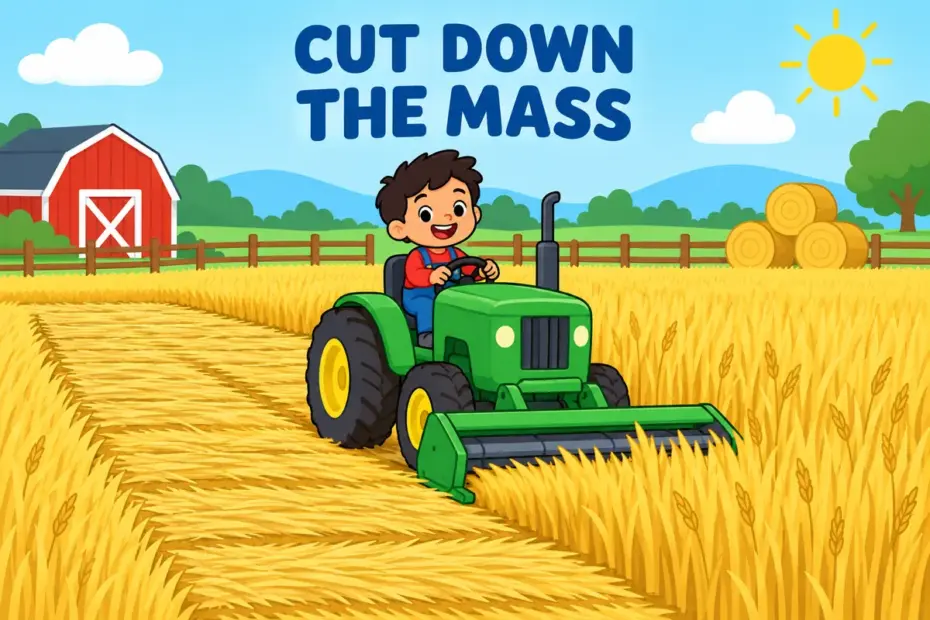
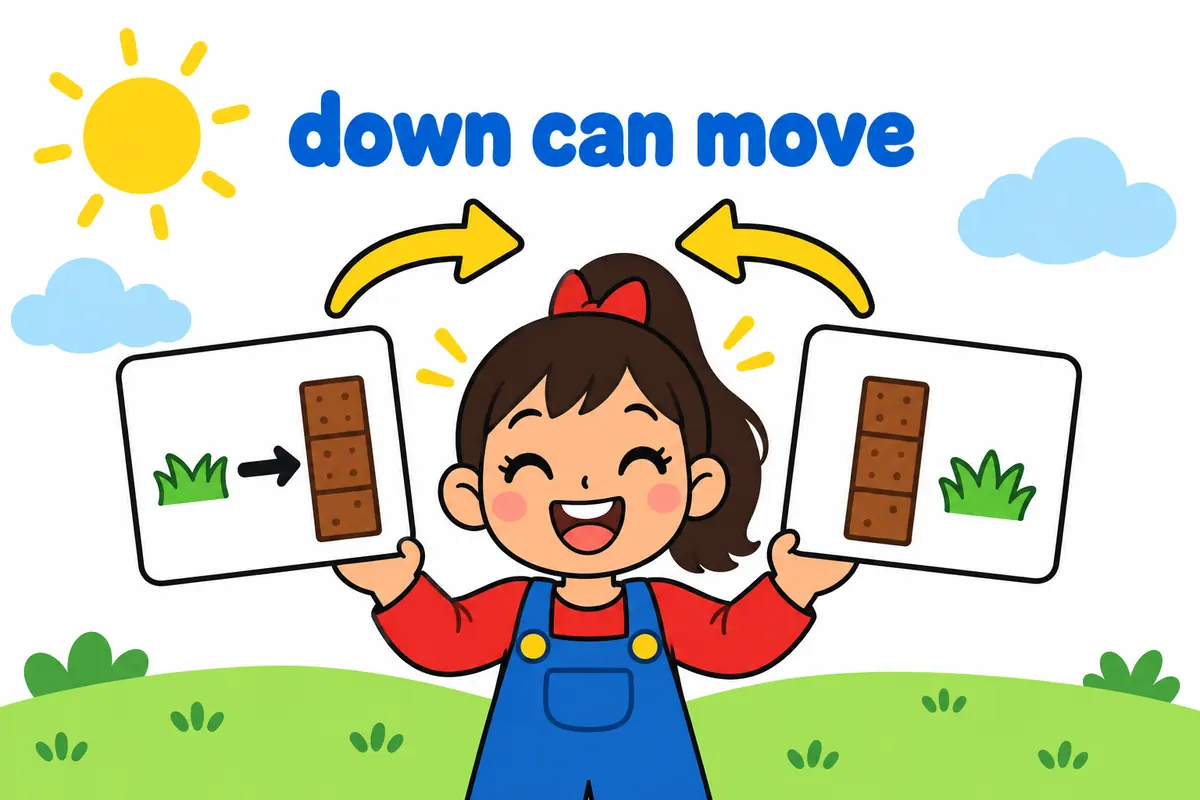
Mow down means to cut or knock something to the ground in large numbers, most often people struck by gunfire. In a sentence, mow down is a transitive phrasal verb: name the force and the people or plants it flattens. The particle down can move, so mow down the crowd and mow the crowd down are both correct.
Mow down at a glance
- Mow down is a transitive phrasal verb meaning to cut or knock down in quantity.
- Its forms are mow down, mows down, mowed down and mowing down.
- The dominant modern sense is violent: people cut down by gunfire, a vehicle or disease.
- A second, literal sense is cutting a field of grass or crops right down to the ground.
- The commonest error is using mow down for one person or one object, when it demands a mass.
What does mow down mean?
Mow down is a transitive phrasal verb meaning to cut down or knock down a large number of people, animals or plants at once. The Cambridge entry for mow down records the killing sense, and the literal sense comes straight from farming. Where the cutting is neat and harmless, cutting down a ripe field of wheat is the plainer choice, because mow down adds the idea of force and quantity.
| Sense | Plain meaning | Example sentence |
|---|---|---|
| Violent killing | To kill or knock down many people at once | The raiders mowed down the unarmed villagers. |
| Decisive defeat | To beat a group completely and fast | The champions mowed down every challenger. |
| Literal cutting | To cut grass or crops right to the ground | They mowed down the long grass in an hour. |
One limitation is worth stating plainly. Mow down is a violent word in its main sense, so it is too strong for accidents with one victim or for ordinary tidying. A gardener trims a hedge and cuts the grass; mow down belongs to a whole field or a whole crowd.
How do you use mow down in a sentence?
Mow down behaves like most transitive phrasal verbs with an adverbial particle. The object can follow the whole phrase or fit between the verb and the particle, so mow down the protesters and mow the protesters down are both natural. The particle may also strand at the end, as in the crowd was mowed down. The first pattern below carries the literal sense, and the rest are figurative or violent.
| Pattern | Example | What it signals |
|---|---|---|
| mow down + object | The machine mowed down the tall grass. | Object after the full phrase, literal cutting. |
| mow + object + down | The machine mowed the tall grass down. | Object between verb and particle, same meaning. |
| mow down + people | The gunmen mowed down the crowd. | Violent mass killing. |
| be mowed down by + agent | The team was mowed down by its rivals. | Passive, a decisive defeat as if by a machine. |
| mow down + like + noun | Disease mowed them down like wheat. | A simile that keeps the farming picture alive. |
The same particle down appears in many other phrasal verbs with nothing violent about them, such as when machines break down at the worst moment. The particle is shared; the meaning is not.
Mow down in a sentence: examples across contexts
Mow down changes company from the farm to the newsroom. The ten sentences below separate the literal cutting sense from the violent one and show how the passive keeps the victims in focus. A near-synonym for the literal sense is the verb flatten a standing crop with a roller, which keeps the harvest unharmed.
| Context | Example sentence | Why this works |
|---|---|---|
| Farm report | The new mower mowed down the whole meadow before noon. | Literal cutting of a large area. |
| News report | The driver mowed down a row of market stalls. | A vehicle knocking many things flat. |
| Sports writing | The league leaders mowed down three rivals in a week. | Figurative but fast and complete. |
| History essay | Disease mowed down the settlement in a single winter. | Mass death on a large scale. |
| Gardening | He mowed down the nettles along the fence. | Literal sense, controlled and harmless. |
| Police report | Bystanders were mowed down as the car left the road. | Passive keeps the victims central. |
| War reporting | Gunfire mowed down the advancing line. | The classic violent mass sense. |
| Business column | The discount chain mowed down smaller shops. | Competition imagined as a machine. |
| Ecology writing | One storm mowed down a mile of young trees. | Force applied to many plants at once. |
| Conversation | Our team got mowed down in the first half. | Informal, light use of the defeat sense. |
The literal sense usually takes plants as its object and stays mild; the violent sense takes people and leans on the passive. Keeping that split prevents a garden sentence from sounding like a disaster.
Mow down vs cut down
Mow down and cut down overlap, and the difference is quantity and force. Cut down works for a single tree or a single person and sounds ordinary; mow down insists on a mass and sounds mechanical. A third near-synonym, decimate a population by a third, measures the loss rather than the sweeping motion. Where a machine pushes buildings flat instead of laying a field, you would bulldoze the row of shops, not mow it down.
| Attribute | mow down | cut down |
|---|---|---|
| Core meaning | Cut or knock down many at once | Cut or bring down something |
| Quantity | A mass, many at a time | One or a few |
| Force | Mechanical, sweeping | Deliberate, controlled |
| Typical subject | Gunfire, a vehicle, disease, a mower | A person with a tool or an argument |
| Register | Journalistic and violent | Neutral and everyday |
| Example | Gunfire mowed down the line. | They cut down the old oak. |
Verdict: choose mow down for many falling at once, and cut down for a single tree, a single victim or a mild, deliberate cut.
Word forms and grammar of mow down
The base verb mow is irregular in the past only in the sense that both mowed and the rarer mown appear, and the phrasal verb keeps the same forms. The table gathers them, including the passive, which is unusually common for this verb.
| Form | Part of speech | Example |
|---|---|---|
| mow down | phrasal verb, base | They mow down the thistles each spring. |
| mows down | third person singular | The mower mows down everything in its path. |
| mowed down | past and past participle | The storm mowed down the saplings. |
| mowing down | present participle | They were mowing down the long grass. |
| mown down | past participle, chiefly British | The field had been mown down by dawn. |
| mow the object down | split phrasal verb | They mowed the whole row down. |
Mown is the older participle and survives mainly in the literal cutting sense; mowed is safe everywhere. The object is always required, so mow down cannot stand alone with the meaning intact.
Common mistakes with mow down
- Incorrect:
The gardener mowed down a single weed.Correct: The gardener pulled a single weed. Rule: Mow down demands a mass, so it cannot describe one small plant. - Incorrect:
The soldier was mow down by the blast.Correct: The soldier was mowed down by the blast. Rule: The passive needs the past participle mowed, not the base form. - Incorrect:
She mowed down the hedge.Correct: She trimmed the hedge. Rule: Mow down suggests cutting right to the ground, not tidying edges. - Incorrect:
He mows down grass.Correct: He mows the grass. Rule: The plain cutting of a lawn takes mow alone, without the particle. - Incorrect:
The car mowed down on the corner.Correct: The car mowed down a pedestrian on the corner. Rule: This phrasal verb is transitive, so it needs an object.
Practice using mow down
Work through the six items, then read the reason beside each answer.
- Fill the gap: The old tractor ______ the whole field of barley in a day.
- Choose the better word: The council (cut down / mowed down) the damaged elm on the corner.
- Correct the error: The team was mow down by its rivals.
- Build a sentence: use mow down about gunfire and a line of soldiers.
- Spot the register: which fits a news report — the driver mowed down three stalls, or the driver bumped some stalls?
- Rewrite literally: They flattened the meadow with the mower. Use mow down.
Answers
- mowed down — the tractor cut a whole field at once, the literal mass sense.
- cut down — one tree is a single object, so the neutral verb fits.
- The team was mowed down by its rivals — the passive needs the participle mowed.
- Model answer: Gunfire mowed down the front line before dawn.
- The driver mowed down three stalls — a news report keeps the strong, vivid verb.
- They mowed the meadow down with the mower — the object can sit between the verb and the particle.
The bottom line
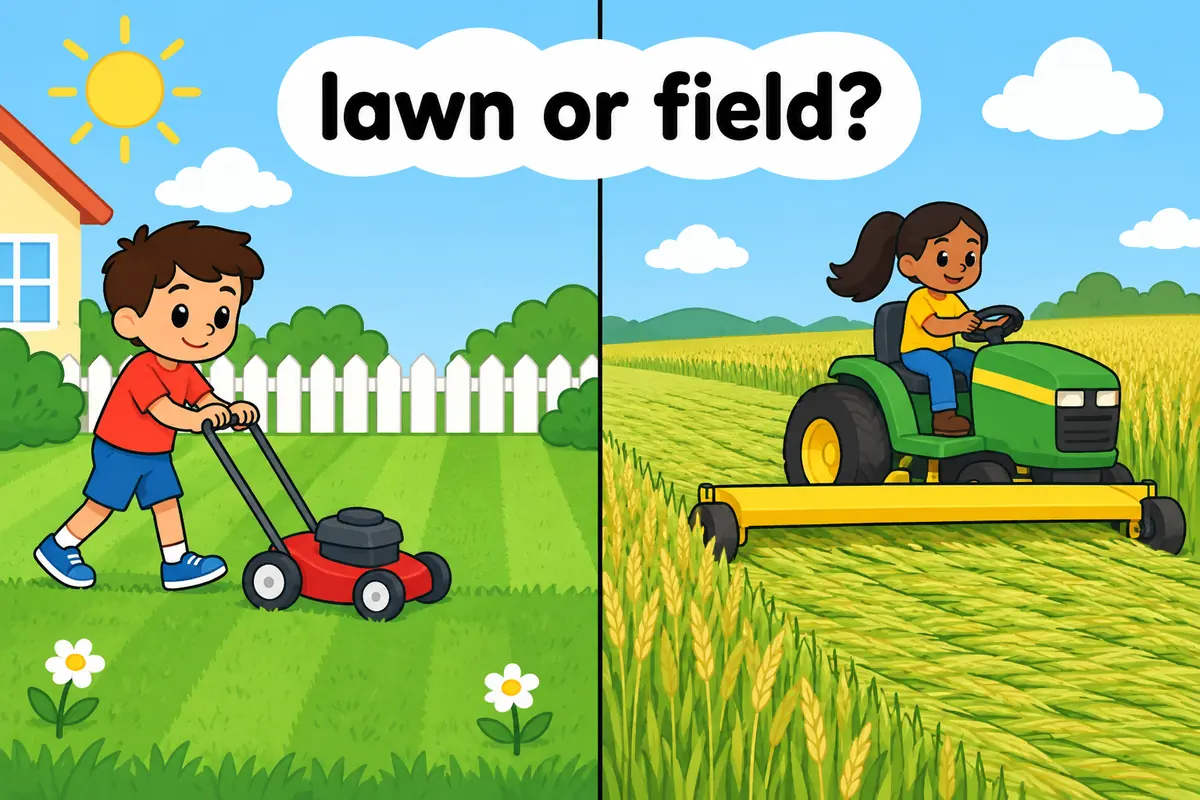
Use mow down in a sentence when something cuts or knocks down a whole mass at once, whether that means grass beneath a mower or people beneath gunfire. The particle down can follow its object or move in front of it, so both word orders are correct, and the passive is common because it keeps the victims in view. Where the cutting is single and gentle, cut down or plain mow is the better choice.
Frequently asked questions about mow down
Is mow down one word or two?
It is always two words, because mow is the verb and down is a particle that can separate from it. You may write mow down the crowd or mow the crowd down, but never mowdown as a single word. The noun mower is separate and keeps one word.
Can mow down mean cutting grass?
Yes, in its literal sense. A mower can mow down a whole meadow or a field of crops, cutting everything to the ground. That sense is calm and practical; the violent sense for people grew from the same farming picture of a sweeping blade.
What is the difference between mow down and cut down?
Cut down works for a single tree, a single victim or a deliberate trim, and it stays neutral. Mow down demands many at once and suggests a mechanical sweep, so it suits a whole field, a whole crowd or a decisive defeat rather than one object.
Is mow down formal enough for a report?
It is standard in journalism for mass violence, and the passive form is especially common there. It is too strong for an accident with one person, and too informal for a scientific description, where words such as decimate or devastate keep a measured tone.
Have you ever heard the phrase “mow down” and wondered what it meant? In simple terms, to “mow down” means to cut down or knock over something quickly and powerfully, as if mowing a lawn.
This expression is often used to describe situations in which a person or object is violently knocked over or destroyed, emphasizing the swift and forceful nature of the action.
7 Examples Of Mow Down Used In a Sentence For Kids
- The farmer used a big machine to mow down the tall grass.
- Be careful when you play near the road, a car can mow down anything in its way.
- The gardener will mow down the wild bushes to make space for flowers.
- Never try to mow down a tree by yourself, it can be dangerous.
- The wind can sometimes mow down weak trees during a storm.
- The race car can easily mow down the cones on the track.
- The lawnmower helps to mow down the grass and keep our garden tidy.
14 Sentences with Mow Down Examples
- Mow down all the unnecessary information in your study notes to make revision easier.
- Before submitting your assignment, make sure to mow down any spelling or grammar mistakes.
- It’s important to mow down distractions like social media while studying for exams.
- Mow down your expenses by cooking at home instead of eating out every day.
- Don’t let procrastination mow down your chances of success in college.
- Mow down your doubts by seeking help from professors or study groups.
- Avoiding late-night snacking can help mow down unwanted weight gain.
- Mow down on healthy snacks like fruits and nuts to keep your energy levels up during lectures.
- Create a study schedule to help mow down on last-minute cramming before exams.
- Joining a sports team is a fun way to mow down stress and stay active in college.
- Mow down your goals into smaller tasks to make them more achievable.
- To improve your concentration, try mowing down on activities that don’t add value to your academic progress.
- Mow down on negative thoughts and stay focused on your academic goals.
- Setting realistic expectations can help you mow down on feelings of inadequacy in college.
How To Use Mow Down in Sentences?
Mow Down is a phrasal verb that can be used to describe the action of swiftly cutting down or destroying a large number of people, obstacles, or things. Here is a simple guide on how to use Mow Down in a sentence:
-
Choose the context: Determine the situation where you want to use Mow Down and identify what is being figuratively cut down or destroyed.
-
Construct the sentence: Use the main verb “Mow Down” followed by the object or subject that is being cut down. For example, “The storm mowed down several trees in the park.”
-
Add additional details: You can include adverbs, adjectives, or prepositional phrases to provide more context to the sentence. For instance, “The reckless driver mowed down the pedestrians at the crosswalk.”
-
Check for clarity: Make sure that the sentence clearly conveys the action of cutting down or destroying a large number of things.
-
Practice using it: To become more comfortable with using Mow Down, try incorporating it into different sentences to grasp its meaning and usage better.
Remember that Mow Down is a vivid and strong phrasal verb that should be used appropriately to convey a sense of destruction or devastation. Be mindful of the context in which you use it and ensure that it fits the tone and intention of your sentence.
Conclusion
In conclusion, the phrase “mow down” typically refers to the act of cutting down or striking down something or someone forcefully and swiftly. It is often used metaphorically to describe actions or events where a large number of people or objects are quickly dealt with or defeated. For example, “The hurricane mowed down entire neighborhoods,” or “The soldiers mowed down the enemy forces.”
Overall, “mow down” conveys a sense of rapid, forceful action and destruction, emphasizing the efficiency and intensity of the process. Whether used in a literal or figurative sense, this expression vividly captures the idea of swiftly and decisively dealing with obstacles or opponents.


