Mull over means to think about something carefully for a while before deciding. To use mull over in a sentence, put the idea or offer after the verb: “She mulled over the offer for a week.” The phrasal verb is separable, so “mulled the offer over” is equally natural.
Mull over at a glance
- Mull over is a transitive phrasal verb: it always needs something to mull over.
- It is separable, so a pronoun must sit in the middle: mull it over, never mull over it.
- The usual objects are offers, decisions, ideas, problems and proposals.
- The register is neutral, common in both conversation and careful writing.
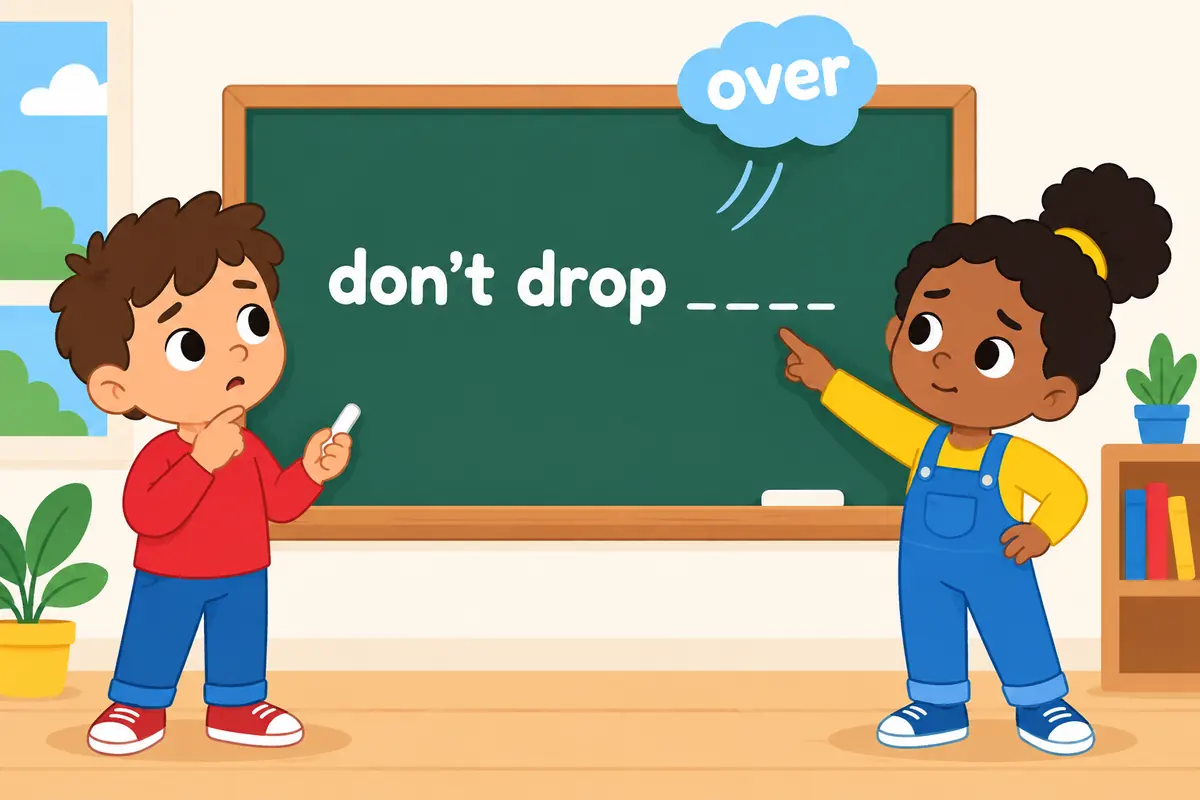
- The commonest error is dropping over, which leaves a different verb altogether.
What does mull over mean?
Mull over is a phrasal verb meaning to consider an idea, offer or decision slowly and in detail before acting on it. The Cambridge entry for mull over gives this single main sense. The verb mull on its own is a different word, used for heating wine with spices, so the particle over carries the whole mental meaning. Where the emphasis is on looking back at a past event, reflect on a choice is the closer expression.
| Sense | Plain meaning | Example sentence |
|---|---|---|
| Consider an offer | Weigh a proposal before answering | He mulled over the job offer all weekend. |
| Turn an idea around | Examine a possibility from several angles | They mulled over the plan while the kettle boiled. |
| Delay a decision | Keep thinking instead of choosing now | She mulled the question over for days. |
One limitation is worth stating plainly. Mull over is not a promise to decide. It describes thought only, so a sentence such as he mulled it over and refused is normal, while he mulled it over and bought it twice sounds odd. If the choice is already made, choose a different verb.
How do you use mull over in a sentence?
The phrasal verb is transitive, which means an object is required, and it is separable, which means the object may sit between mull and over. A pronoun must go in the middle. The table sets out the patterns and what each one signals.
| Pattern | Example | What it signals |
|---|---|---|
| mull over + noun | We mulled over the proposal at lunch. | The standard order, with the object after the particle. |
| mull + noun + over | We mulled the proposal over at lunch. | Free separation, allowed because the verb takes an object. |
| mull + pronoun + over | We mulled it over at lunch. | A pronoun must split the pair; mull over it is wrong. |
| mull over + wh-clause | She mulled over whether to accept. | Introduces the exact question being considered. |
| be still mulling it over | He is still mulling it over. | The continuous shows the thinking has not finished. |
Because the verb is separable, the two orders are both correct, but a long object reads better after the particle. To ponder a problem is the nearest single-word alternative, though it lacks the same conversational ease. Formal writing often prefers to deliberate before deciding, which sounds far heavier than mull over.
Mull over in a sentence: examples across contexts
The meaning stays constant while the setting changes, and each sentence below keeps the object clearly in view.
| Context | Example sentence | Why this works |
|---|---|---|
| Conversation | I’ll mull it over and call you tomorrow. | The pronoun sits between the parts, which is the natural spoken pattern. |
| Workplace email | We are mulling over the quotes before we commit. | States the thinking stage without promising a decision. |
| News report | The committee mulled the tender over for three hours. | The separated form reads smoothly when the object is short. |
| Academic prose | Researchers mulled over the unexpected result before publishing. | Signals careful judgement rather than a casual glance. |
| Legal writing | The board mulled over the settlement terms in closed session. | Keeps the formal subject while naming the exact document. |
| Classroom | Mull over both answers before you raise your hand. | The imperative turns the verb into an instruction. |
| Interview | She paused to mull over the question. | Links the hesitation to the thinking it shows. |
| Fiction | He mulled it over during the long walk home. | Places the private thinking in a scene a reader can picture. |
| Negotiation | They are still mulling over our final figure. | The continuous keeps the door open without agreeing. |
The pattern with the pronoun in the middle is the one to master first, because it is the only order that is correct with it and them.
Mull over vs think over
Readers who meet both usually ask which is stronger. Most English speakers can replace think something over with mull over without changing the meaning: mull over suggests a slower, more deliberate process, while think over is the plain everyday version.
| Attribute | mull over | think over |
|---|---|---|
| Core meaning | Consider slowly and in detail | Consider before deciding |
| Implied pace | Unhurried, often over days | Brief to moderate |
| Typical object | Offer, proposal, decision | Offer, plan, suggestion |
| Separability | Separable: mull it over | Separable: think it over |
| Register | Neutral, mildly informal | Neutral, very plain |
Verdict: choose mull over when the thinking takes time and deserves weight, and think over when you simply mean consider it.
Word forms and grammar of mull over
The phrasal verb inflects on mull, and the particle never changes. The table also shows the unrelated mull that learners meet by accident.
| Form | Part of speech | Example |
|---|---|---|
| mull over | phrasal verb, base | I need to mull over your offer. |
| mulls over | third person singular | She mulls over every clause before signing. |
| mulled over | past and past participle | They mulled over the budget all week. |
| mulling over | present participle | He is mulling it over in the garden. |
| mull something over | separable pattern | Mull the idea over before you reply. |
| mull | verb — different meaning | They mulled the wine with cinnamon. |
Keep the particle in place. Without over, mull alone refers to spiced wine, and the particle also builds the unrelated bowl over.
Common mistakes with mull over
- Incorrect:
I will mull over it tonight.Correct: I will mull it over tonight. Rule: With a pronoun object, the particle must follow the pronoun. - Incorrect:
She mulled the plan.Correct: She mulled the plan over. Rule: The verb is phrasal, so the particle cannot be dropped. - Incorrect:
They mulled over about the price.Correct: They mulled over the price. Rule: Mull over takes a direct object and needs no preposition after over. - Incorrect:
He mulled over that the deal was risky.Correct: He mulled over whether the deal was risky. Rule: The verb takes a noun or a whether-clause, not a that-clause. - Incorrect:
We decided to mull over the wine.Correct: We decided to mull the wine. Rule: The spiced-wine verb is plain mull, with no over.
Practice using mull over
Work through the six items, then check the reason beside each answer.
- Fill the gap: I need a day to ______ your suggestion ______.
- Choose the better word: She wants time to (mull over / mull) the contract before signing.
- Correct the error: He mulled over it for a week.
- Build a sentence: use mull over + whether-clause about changing schools.
- Spot the register: which belongs in a formal minute — the board mulled the offer over, or the board thought about it loads?
- Rewrite with the pronoun: They mulled over the figures. Use them.
Answers
- mull your suggestion over — the separated order is grammatical, and a long object can also follow over.
- mull over — the particle is required, because plain mull means to spice wine.
- He mulled it over for a week — a pronoun must sit between mull and over.
- Model answer: They mulled over whether the move would help the children.
- The board mulled the offer over — a minute keeps the neutral phrasal verb and drops the slang.
- They mulled them over — the pronoun must go in the middle of the pair.
The bottom line
Use mull over in a sentence when an idea needs unhurried thought, and remember that the verb is transitive and separable, so a pronoun always splits the pair. The two decision points are the particle and the pronoun: over is never optional, and it must follow it or them. Where the thinking looks back rather than forward, to reflect on a choice is the clearer choice.
Frequently asked questions about mull over
Is mull over one word or two?
It is written as two words. Mull is the verb and over is a particle, so the pair is a phrasal verb rather than a compound. British and American writers both keep the two words separate in running text, and only a style sheet would ever join them.
Can mull over take a clause?
It can take a whether-clause, as in she mulled over whether to stay. It does not take a that-clause, so he mulled over that the plan was risky is not standard. For a full statement of fact, use a different verb such as consider or reflect on.
Is mull over formal or informal?
The verb sits in the middle of the range. It is relaxed enough for conversation yet tidy enough for a business email or a committee report. Only the most formal legal drafting avoids it, preferring consider or deliberate, which sound heavier and less personal.
What is a stronger word than mull over?
To deliberate before deciding sounds more formal and deliberate, and to weigh a decision stresses the comparison itself. Neither is stronger in meaning, only heavier in tone. Mull over is the better everyday choice because it is the one most readers use and recognise at once.
Have you ever found yourself in a situation where you needed to carefully consider or ponder something before making a decision? If so, you were likely mulling over your options. To mull over something means to think about it deeply or at length, often in a reflective or contemplative manner.
When we mull over a problem or decision, we are taking the time to weigh our options and consider different perspectives. This process can help us make more informed choices and gain clarity on complex issues. So, the next time you find yourself unsure of what to do, take a moment to mull over your thoughts and feelings before moving forward.
7 Examples Of Mull Over Used In a Sentence For Kids
- Mull over which color you want to paint your drawing.
- Let’s mull over what games we can play in the park.
- Mull over your favorite book before nap time.
- We can mull over what snacks to have at our picnic.
- Mull over the different animals you see at the zoo.
- Let’s mull over the shapes of the clouds in the sky.
- We can mull over what songs to sing during music class.
14 Sentences with Mull Over Examples
- Mull over which elective courses to take next semester.
- It’s good to mull over study abroad options early in your college career.
- Mull over whether to join a club or society to meet new people.
- Don’t stress about it, just take some time to mull over your career choices.
- It’s important to mull over feedback from professors to improve your academic performance.
- Take a moment to mull over different internship opportunities for the summer.
- Mull over which extracurricular activities will enhance your resume.
- Before making a decision, make sure to mull over the pros and cons.
- Take some time to mull over the best ways to manage your time effectively.
- Mull over whether to pursue higher education immediately after graduation or gain work experience first.
- Remember to mull over the impact of your decisions on your long-term goals.
- It’s wise to mull over your finances and create a budget for the semester.
- Take a break and mull over creative ways to approach your projects and assignments.
- Mull over the different opportunities available for networking and career advancement.
How To Use Mull Over in Sentences?
To use the phrase “Mull Over” in a sentence, follow these simple steps:
-
Understand the meaning: Mull Over means to consider or think about something deeply and carefully before making a decision or forming an opinion.
-
Choose the right context: Select a situation where you are contemplating or pondering a topic or decision.
-
Structure your sentence: Start with the subject, followed by the phrase Mull Over, and then add the topic you are thinking about.
-
Example sentence: “After receiving the job offer, she took a few days to mull over the details before accepting.”
-
Pay attention to tense: Ensure that the tense of the sentence matches the context in which you are using the phrase.
-
Check for clarity: Make sure your sentence clearly conveys that you are thinking deeply about something.
Remember, Mull Over is a phrase that indicates a thoughtful consideration of a subject. By following these steps, you can effectively incorporate it into your writing or conversation.
Conclusion
In conclusion, when we mull over a decision or situation, we carefully consider it, pondering the options and implications. Whether we are mulling over a career change, a relationship dilemma, or a financial decision, taking the time to think things through can lead to better outcomes. It is important to give ourselves the space to mull over important choices, as this process allows for reflection, analysis, and ultimately, a more informed decision.
By mulling over our choices, we can weigh the pros and cons, consider various perspectives, and fully understand the consequences of our actions. This thoughtful deliberation can lead to clarity and confidence in our decisions, ensuring that we are making choices that align with our values and goals. So, next time you find yourself faced with a tough decision, take the time to mull it over, as this thoughtful consideration can pave the way for a more fulfilling and intentional path forward.


