
Bowl over is a phrasal verb meaning to surprise or impress someone greatly, or to knock them down. To use bowl over in a sentence, keep a pronoun between the verb and the particle, as in “The news bowled me over.” A noun object may follow instead, as in “She bowled over the judges.”
Bowl over at a glance
- Bowl over is a transitive phrasal verb with the forms bowls over, bowled over and bowling over.
- The two senses are to astonish or impress, and to knock a person down physically.
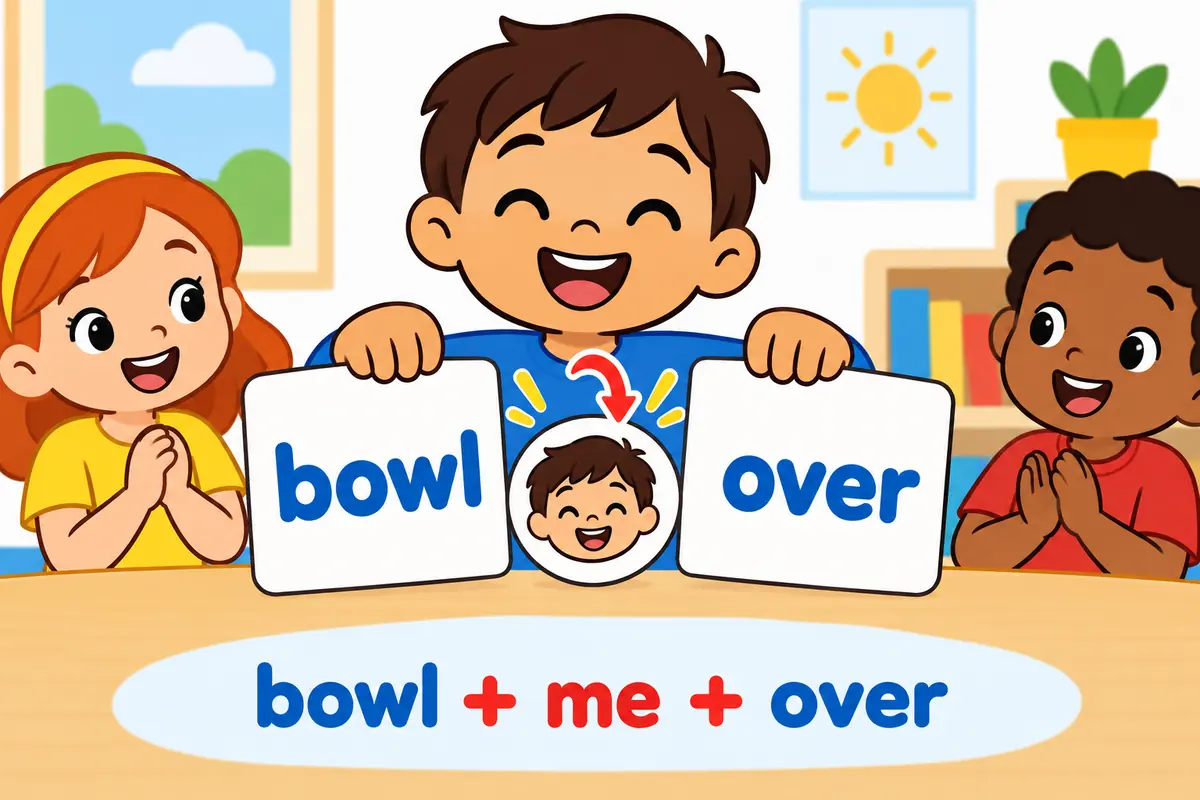
- A pronoun object always sits between the verb and over: it bowled me over.
- A noun object may sit either side: bowl over the judges or bowl the judges over.
- Away from sport, the meaning is almost always figurative and positive.
What does bowl over mean?
Bowl over is a phrasal verb meaning to surprise or impress someone very strongly, or to knock a standing person to the ground. The Cambridge entry for bowl over keeps both senses, and context separates them: a review of a play bowls readers over, while a report from a football match bowls a defender over. Only the figurative sense is common in ordinary conversation, and it is nearly always favourable. Impress keeps only the admiration, while astonish keeps only the surprise and astound turns both up to their limit. When the reaction almost overpowers someone, overwhelm is the closer verb.
| Sense | Plain meaning | Example sentence |
|---|---|---|
| Astonish or impress | Leave someone delighted and surprised | Her generosity bowled me over. |
| Knock to the ground | Send a standing person or animal down | The loose dog bowled the cyclist over. |
| Overwhelm a group | Win over many people at once | The choir bowled over the whole hall. |
How do you use bowl over in a sentence?
The verb is transitive and separable, which is where most errors start. The particle over stays with the verb, but a pronoun object is trapped between the two halves.
| Pattern | Example | What it signals |
|---|---|---|
| bowl + pronoun + over | The result bowled me over. | The fixed order for any pronoun object. |
| be bowled over by + noun | We were bowled over by her kindness. | The commonest passive form. |
| bowl over + noun | The performance bowled over the judges. | A noun object after the particle. |
| bowl over + object + with + noun | She bowled us over with her speech. | The means by which someone impresses. |
| bowl + noun + over | The defender bowled the striker over. | The literal, physical sense. |
Bowl over in a sentence: examples across contexts
| Context | Example sentence | Why this works |
|---|---|---|
| Classroom | The science demo bowled the class over. | A noun object may sit after the particle. |
| Workplace email | We were bowled over by the response to the appeal. | The passive keeps the focus on the reaction. |
| News report | Fans were bowled over by the singer’s surprise return. | Press writing favours the figurative sense. |
| Restaurant review | The dessert alone bowled me over. | A pronoun object splits the phrasal verb. |
| Sports report | The winger bowled the full-back over near the touchline. | Here the sense is plainly physical. The same particle appears with a quieter meaning in chew over, which describes thinking something through. |
| Conversation | Her kind note really bowled him over. | The split form sounds natural in speech. |
| Academic writing | The study’s scope bowled over its reviewers. | Formal prose still allows the strong verb. |
| Charity appeal | The children’s letters bowled over every donor. | The object is a group won over at once. |
Bowl over vs knock down
| Attribute | Bowl over | Knock down |
|---|---|---|
| Core meaning | Impress greatly, or topple a person | Cause to fall, or demolish |
| Usual subject | News, a performance, a person | A vehicle, a storm, a price |
| Figurative use | Common and positive | Possible but neutral |
| Register | Conversational to journalistic | Neutral, widely used |
| What it implies | An emotional jolt that delights | A physical or financial force |
Choose knock down for a fall or a demolition, and bowl over when the effect lands on someone’s feelings.
Word forms and grammar of bowl over
| Form | Part of speech | Example |
|---|---|---|
| bowl over | base phrasal verb | to bowl over an audience |
| bowls over | third-person singular | Her energy bowls over the room. |
| bowled over | past and participle | They were bowled over by the gift. |
| bowling over | present participle | He kept bowling over the defenders. |
| bowl overed | non-standard | The past form is bowled over, never bowl overed. |
Common mistakes with bowl over
Incorrect: The news bowled over me. Correct: The news bowled me over. Rule: A pronoun object must sit between the verb and the particle.
Incorrect: I was bowled over from the welcome. Correct: I was bowled over by the welcome. Rule: The passive takes by, not from, to name the cause.
Incorrect: It was a real bowl-over. Correct: It really bowled me over. Rule: Bowl over is a verb, not a noun.
Incorrect: She bowled over me with her speech. Correct: She bowled me over with her speech. Rule: The pronoun still belongs inside the verb.
Incorrect: He was bowl over by the result. Correct: He was bowled over by the result. Rule: The passive needs the past participle.
Practice using bowl over
- Fill in the blank: The surprise party completely ______ my grandmother. (use the correct form)
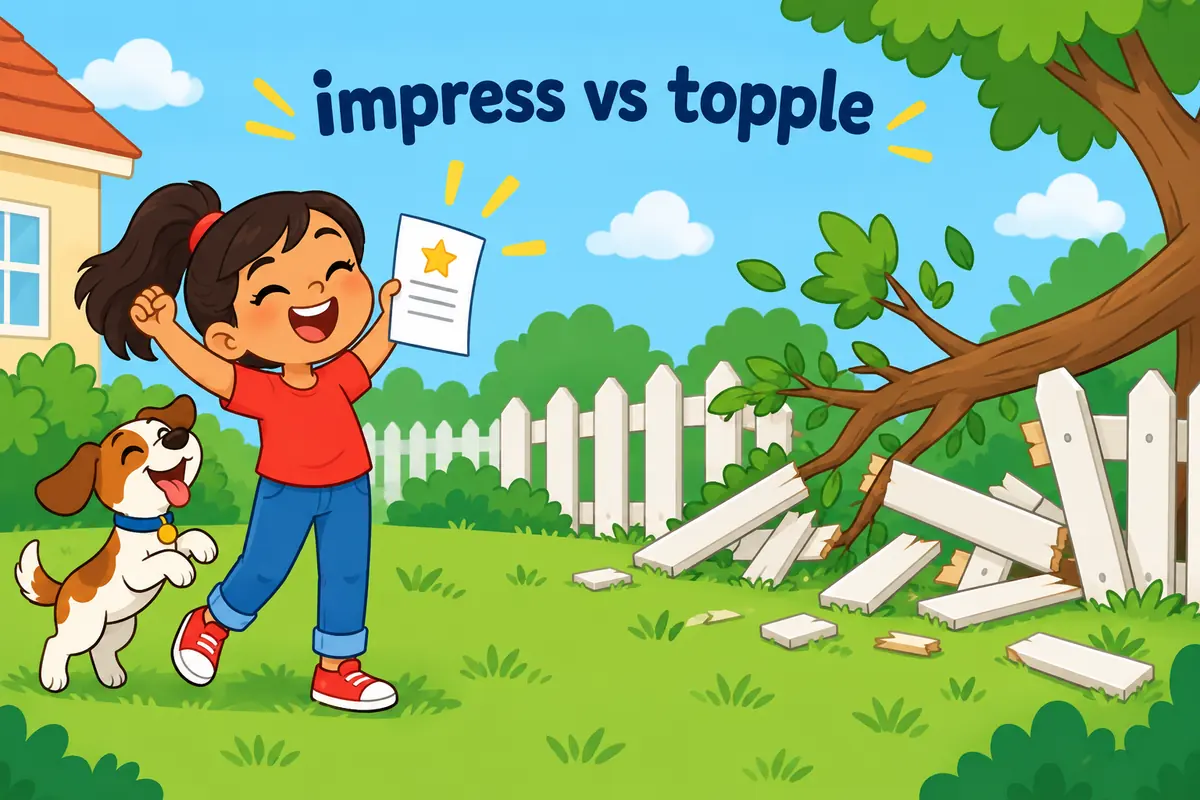
- Choose the better word: The falling branch ______ the fence. (bowled over / knocked down)
- Correct the error: The film bowled over us.
- Build a sentence: use “be bowled over by” about a generous gift.
- Which sentence belongs in a formal review? (a) The finale bowled the audience over. (b) The finale was well sick, mate.
- Fill in the blank in the passive: The judges ______ ______ by the young pianist.
Answers
- bowled over — the past form is bowled over for a single past event.
- knocked down — a physical blow from a branch is a fall, not an emotional jolt.
- The film bowled us over. — the pronoun us must come before over.
- We were bowled over by the quiet generosity of the gift. — the passive names the cause with by.
- (a) — the plain, standard phrasing suits a written review; the slang is out of register.
- were bowled — the passive needs were plus the past participle bowled.
The bottom line
Bowl over describes a strong reaction, whether the delight of being greatly impressed or the force of being knocked down. When you use bowl over in a sentence, remember the separable rule: a pronoun goes between the two halves, so the news bowled me over, never bowled over me. The figurative sense is warmer and far more common than the literal one.
Frequently asked questions about bowl over
What does it mean to be bowled over?
To be bowled over is to be deeply impressed or surprised by something, as in the audience was bowled over by the closing song. The phrase carries no criticism; it praises the effect on the person who felt it. In sport the same words can describe being knocked to the ground.
Is bowl over formal or informal?
Bowl over sits in the middle: it is common in conversation but also appears in newspapers and reviews. It is too colourful for a legal contract yet perfectly acceptable in a work email about good news. Writers who want a plainer tone can use impress or surprise instead.
Can you bowl someone over literally?
Yes. In its physical sense, bowl over means to knock a standing person or animal to the ground, as a runner might bowl over a defender. That use is common in sports reports. Outside sport, the figurative sense of overwhelming someone with delight has largely taken over.
What is the difference between bowl over and knock down?
Knock down means to make something fall or to demolish it, and it stays neutral in tone. Bowl over usually means to impress someone powerfully, and only in sport does it mean to knock a person down. Use bowl over for feelings and knock down for fences and prices.
Have you ever heard someone say they were “bowl over” by something? This idiom describes a feeling of being completely surprised or overwhelmed by a powerful emotion or experience.
When someone is “bowled over,” they are figuratively knocked off their feet by the impact of something unexpected or impressive. It could be used to describe emotions like joy, shock, or amazement caused by a surprising event or information.
7 Examples Of Bowl Over Used In a Sentence For Kids
- The magician’s tricks bowl over the audience.
- My puppy’s wiggly tail can bowl over anyone!
- The exciting storybook will bowl over your imagination.
- The cheetah’s speed can bowl over any other animal.
- The colorful fireworks display will bowl over the crowd.
- The delicious smell of fresh cookies can bowl over anyone.
- The surprise birthday party will bowl over the birthday boy.
14 Sentences with Bowl Over Examples
- Bowl over your classmates with your stellar presentation skills.
- Are you prepared to bowl over the judges at the college debate competition?
- Don’t let your nerves bowl you over during the exam; stay calm and focused.
- His performance in the college play really bowl over the audience.
- The unexpected plot twist in the movie totally bowl over me.
- She managed to bowl over the interview panel with her confidence and knowledge.
- The professor’s passionate lecture bowl over the students and left them inspired.
- His impressive resume and experience bowl over the recruiters at the job fair.
- The announcement of the surprise test bowl over the entire class.
- The new campus library design is sure to bowl over everyone when it’s unveiled.
- She always manages to bowl over her friends with her culinary skills at college potlucks.
- The talented dance team never fails to bowl over the audience at college events.
- How did she manage to bowl over the strict professor and get an extension on her assignment?
- The college football team’s victory at the championship game will bowl over the entire campus community.
How To Use Bowl Over in Sentences?
To use Bowl Over in a sentence, you can follow these steps:
-
Understand the meaning: Bowl Over means to greatly impress or shock someone, typically with surprise or admiration.
-
Choose the right context: Think about a situation where someone or something has surprised you in a positive or unexpected way.
-
Construct the sentence: Start by setting the context of the situation and then use Bowl Over to describe how you were impressed or shocked. For example, “The talented singer Bowl Over the audience with her stunning performance.”
-
Practice using it: Try incorporating Bowl Over in different sentences to get comfortable using it in various contexts.
-
Pay attention to tense: Depending on whether you are talking about something that happened in the past or is currently happening, adjust the tense of your sentence. For example, “The magician Bowled Over the children with his amazing tricks” (past tense) or “She Bowls Over everyone with her infectious enthusiasm” (present tense).
Remember, using Bowl Over in a sentence adds flair and emotion to your communication, making it more engaging and colorful. With practice, you will become more confident in incorporating this phrase into your everyday conversations.
Conclusion
In conclusion, the phrase “bowl over” is commonly used to describe being greatly surprised, impressed, or overwhelmed by something or someone. A person can be “bowl over” by a touching gesture, a stunning performance, or an unexpected piece of news. When someone is “bowl over,” they are typically left feeling deeply moved or astonished by the experience.
Whether it’s a heartfelt compliment, a generous act of kindness, or a breathtaking display of talent, moments that “bowl over” us can leave a lasting impact and evoke powerful emotions. It’s important to appreciate these moments and the individuals who have the ability to bowl us over, as they often remind us of the beauty and wonder that can be found in everyday life.


