Netiquette means the shared expectations for communicating respectfully and clearly online. The right choice depends on the setting: a quick message to a friend can sound different from an email to an instructor, but readers in both cases deserve consideration. Since online messages often lack facial expression and vocal tone, a short pause to reread can prevent confusion.
What does netiquette mean?
Netiquette blends network (or internet) and etiquette. It refers to customary rules for courteous, useful behavior in online spaces: email, class forums, group chats, workplace collaboration tools, comment sections, and social media. The details change with the audience and platform, so a course discussion may require a more formal style than a private chat.
Netiquette is a social guide rather than one universal law. Follow the platform’s rules and the expectations of your class, workplace, or community, then use ordinary courtesy. The University of Texas at Arlington describes it as appropriate behavior for online interaction and recommends respectful language, attention to context, and a suitable use of emojis in academic communication.

What are the basic rules of netiquette?
- Remember a person will read it. Address the idea without insulting the person. Disagree with a claim and give a reason; avoid name-calling, ridicule, or assumptions about the writer.
- Match your tone to the setting. Use a greeting and sign-off in a first email to an instructor or colleague. A group chat may be more casual, but the audience still matters.
- Write clearly. Use a descriptive subject line, organize longer messages into paragraphs, and proofread names, links, spelling, and attachments before sending.
- Pause before posting. Humor, sarcasm, and frustration are easy to misread without voice or facial cues. Rephrase a sentence if a reader could interpret it as hostile.
- Respect privacy and consent. Do not post someone else’s personal details, private message, photo, or recording without permission. Check who can see a post before sharing sensitive information.
- Keep communication relevant. Stay on topic in a class or work discussion. Share a link with a short explanation of why it is useful; avoid flooding a group with repeated messages.
- Use formatting thoughtfully. All caps can look like shouting, and long strings of emoji or abbreviations can make a message harder to understand. Use them only when they suit the platform and audience.
- Own and correct mistakes. If you send something to the wrong person or misstate a fact, correct it plainly and apologize where appropriate instead of escalating the exchange.
These guidelines are especially useful when a conversation becomes tense. Describe the problem and the outcome you want, ask a clarifying question when intent is uncertain, and move a sensitive disagreement to a suitable private channel. Report threats or harassment through the platform or institution’s established process.
How does netiquette change by platform?
Good online manners are consistent in principle but practical details vary. Consider the audience, purpose, permanence, and privacy of each platform before sending.
| Setting | Useful habit | Example |
|---|---|---|
| Use a specific subject line, greeting, concise request, and appropriate sign-off. Include context and attach the file you mention. | “Question about Friday’s reading” is clearer than “Hi.” | |
| Class forum | Respond to the prompt, explain your reasoning, and address classmates respectfully. Check course directions before sharing outside the class. | “I read the result differently because the second example shows…” |
| Work chat | Use the expected channel, include necessary context, and avoid marking a message urgent unless it is. | “Could you review the draft by 3 p.m.? The client meeting starts at 4.” |
| Social media | Check the audience, verify claims before reposting, and ask before tagging or sharing an identifiable photo of someone. | “May I tag you in this event photo?” |
| Group message | Consider who needs the update; choose reply-all only when everyone benefits from the response. | Send a personal answer directly if it concerns just one recipient. |
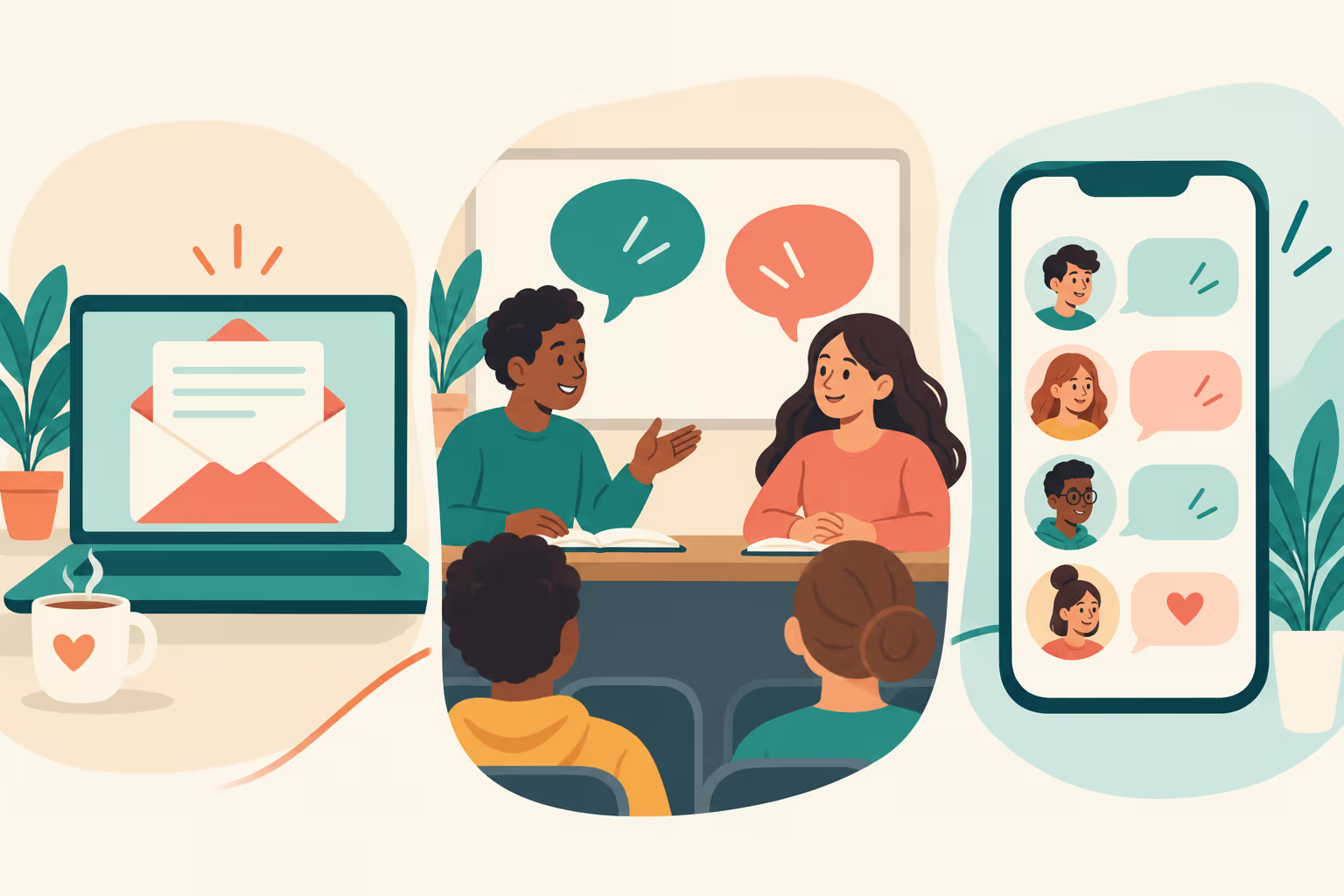
How can you disagree online without being rude?
Separate the person from the point. Quote or summarize the specific idea you are answering, state what you think, and give evidence or a reason. Phrases such as “I see this differently because…” or “Could you explain what you mean by…?” make disagreement direct without making it personal. Avoid sarcasm when you do not know how the other person will read it.
Before replying while upset, draft the message and read it once from the recipient’s point of view. Remove labels and guesses about motive. If the conversation is public and becoming personal, stop replying in the thread and use the platform’s moderation or reporting options when needed. Netiquette does not require tolerating abuse; it encourages respectful communication while recognizing boundaries and safety.

What should you remember about online privacy?
Consider the likely audience before posting. A message intended for one person can be forwarded or screenshotted, and privacy settings do not guarantee that content stays private. The U.S. Federal Trade Commission advises people to think before sharing because posts can affect both privacy and reputation and may reach a larger audience than expected.
- Ask before posting, forwarding, or tagging another person in identifiable content.
- Leave out passwords, account recovery details, financial information, and another person’s contact details.
- Check a link and its source before sharing a claim; do not pass along alarming information based only on a headline.
- When a message includes confidential class or work information, use the approved channel and intended recipients.
For children, the practical rule is simple: do not share a full name, address, school, password, or live location with strangers, and tell a trusted adult when a message feels threatening or asks for private information. A friendly tone never replaces privacy protections.
Netiquette vs. etiquette: is there a difference?
Etiquette covers customary polite behavior in many settings; netiquette applies that idea to internet communication. Online spaces add specific concerns such as written tone, audience visibility, forwarded messages, screen names, and permanent records. The principles overlap: show respect, follow local expectations, and consider how your behavior affects others.
Netiquette does not mean every message must sound formal. A short “thanks!” can be appropriate in a familiar chat; an email about a course deadline may need a greeting and enough context to identify the request. Choose language that is natural, clear, and suitable for the relationship.

Is “netiquette” countable or uncountable?
Netiquette is generally an uncountable noun, like etiquette. Say “good netiquette,” “a netiquette guideline,” or “rules of netiquette,” rather than “a netiquette” when referring to the general concept. The plural noun rules or guidelines is countable, so it can take “a,” “the,” or a number.
| Natural phrasing | Why it works |
|---|---|
| “Good netiquette makes the discussion easier to follow.” | Netiquette names a general practice. |
| “One netiquette guideline is to avoid all caps.” | Guideline is the countable noun. |
| “The class shared three rules of netiquette.” | Rules can be counted. |
| “She showed netiquette by asking before forwarding the photo.” | The noun can name a quality or practice without an article. |
How to use netiquette in a sentence
Use netiquette as a noun when talking about online manners, expectations, or a person’s courteous way of communicating. It often follows an adjective such as good or proper, or appears in a phrase such as rules of netiquette. The word is not normally used as a verb.
- “Our instructor posted a short guide to netiquette before the first online discussion.”
- “Good netiquette means disagreeing with an idea without insulting its author.”
- “Please follow the forum’s netiquette and keep replies focused on the assigned reading.”
- “The team discussed email netiquette, including clear subject lines and concise requests.”
- “Asking before forwarding a private message is an example of netiquette.”
Frequently asked questions about netiquette
What is netiquette in simple words?
Netiquette is using courtesy, clarity, and good judgment when you communicate online. It includes choosing a suitable tone, respecting privacy, and following the rules of the space where you are posting.
What are three examples of netiquette?
Three examples are writing a clear email subject line, disagreeing with a classmate’s idea without attacking them, and asking before sharing a friend’s photo. Each helps communication remain understandable and respectful.
Why is netiquette important?
It helps people understand messages as intended, participate without ridicule, and protect one another’s privacy. Since written digital messages often lack tone of voice and may be shared beyond their original audience, careful wording and audience awareness can prevent avoidable problems.
Is netiquette the same as internet safety?
No. Netiquette concerns courteous and appropriate behavior online; internet safety includes practices that help protect accounts, devices, and personal information. They overlap when, for example, you respect someone’s privacy by not posting their personal details.
Should I use emojis in a professional message?
Use them only if they suit the relationship and workplace norms. In an established casual chat an emoji may clarify warmth; in a formal first email it can distract or be interpreted differently. Clear words are the safer choice when tone matters.
Sources and further reading
- University of Texas at Arlington, Netiquette Guidelines — respectful language and communication across academic online spaces.
- University of Connecticut, Communication Guidelines — professional and courteous course communication.
- Federal Trade Commission, Heads Up: Stop. Think. Connect. — thinking before sharing and considering an online post’s audience.
- Cambridge Dictionary, “netiquette” — labels the noun uncountable in its entry.
Have you ever wondered about the unspoken rules of online communication? Enter the world of Netiquette. Netiquette, a combination of “Internet” and “etiquette,” refers to the proper behavior and guidelines for interacting in digital environments.
In a time where virtual communication plays a significant role in our daily lives, understanding and practicing Netiquette is essential for fostering pleasant and respectful online interactions. From email correspondence to social media engagement, adhering to Netiquette ensures clear communication and helps maintain a positive digital community.
7 Examples Of Netiquette Used In a Sentence For Kids
- Always be kind and polite when using Netiquette.
- Remember to say “please” and “thank you” in your online interactions, following Netiquette.
- Be careful with your words, and think before you type when practicing Netiquette.
- It’s important to respect other people’s opinions while following Netiquette.
- Don’t share personal information online, it’s against Netiquette.
- If you see something mean online, tell a grown-up and remember to always practice good Netiquette.
- Stay safe and have fun while learning about Netiquette!
14 Sentences with Netiquette Examples
- Netiquette suggests refraining from using all capital letters in online conversations.
- As per Netiquette, it is important to respond promptly to emails from professors and peers.
- Utilizing emojis to express emotions is considered a good Netiquette practice in online group discussions.
- Following Netiquette, one should avoid sharing personal information in public chat rooms.
- Displaying a respectful tone while commenting on classmates’ posts aligns with proper Netiquette guidelines.
- When participating in virtual lectures, muting your microphone when not speaking is a common Netiquette rule.
- Implementing proper Netiquette, it is advisable to double-check grammar and punctuation in online assignments.
- Upholding Netiquette, one should avoid forwarding chain emails to classmates as it can be seen as spam.
- Showing appreciation by liking and commenting on classmates’ social media posts adheres to good Netiquette practices.
- Adhering to Netiquette, be mindful of the tone and language used in online debates or discussions on forums.
- Requesting permission before tagging classmates in posts exemplifies respectful Netiquette behavior.
- When collaborating on group projects, demonstrating active participation in online discussions is in line with proper Netiquette.
- Following Netiquette, refrain from using excessive abbreviations or slang that may be unfamiliar to classmates.
- When sharing resources or links in online platforms, providing a brief explanation along with the link is a recommended Netiquette practice.
How To Use Netiquette in Sentences?
Netiquette is a set of guidelines for behaving politely and respectfully online. It is important to practice good netiquette to ensure a positive and pleasant online experience for everyone involved. To use netiquette effectively, beginners should remember to always communicate in a kind and respectful manner. This includes refraining from using offensive language, being mindful of others’ feelings, and avoiding caps lock (which can be interpreted as shouting).
Another important aspect of netiquette is to think before posting. Always consider how your words may be interpreted by others before hitting send. If in doubt, it’s best to err on the side of caution and avoid posting something that could be potentially harmful or hurtful. Additionally, practicing good netiquette involves being mindful of others’ privacy. Never share personal information about others without their consent, and always respect boundaries when engaging in online conversations.
In conclusion, using netiquette is crucial for maintaining a positive and respectful online environment. By following these simple guidelines, beginners can ensure that their online interactions are pleasant and enjoyable for everyone involved.
Conclusion
In conclusion, practicing good netiquette is essential for effective online communication. By following basic guidelines such as using proper grammar and punctuation, avoiding offensive language, and respecting other users’ opinions, individuals can contribute to a positive and respectful online environment. Additionally, being mindful of the tone and context of messages can help prevent misunderstandings and promote constructive discussions.
Ultimately, demonstrating good netiquette not only enhances one’s online interactions but also fosters a sense of mutual respect and courtesy among internet users. By adhering to these simple yet important principles, individuals can play a role in creating a more pleasant and harmonious online community for everyone to enjoy.
Related netiquette examples
The sentence examples above show how netiquette appears in everyday writing. When revising a sentence, check that the noun refers to online manners as a general practice, and use guideline or rule when you mean one specific recommendation.