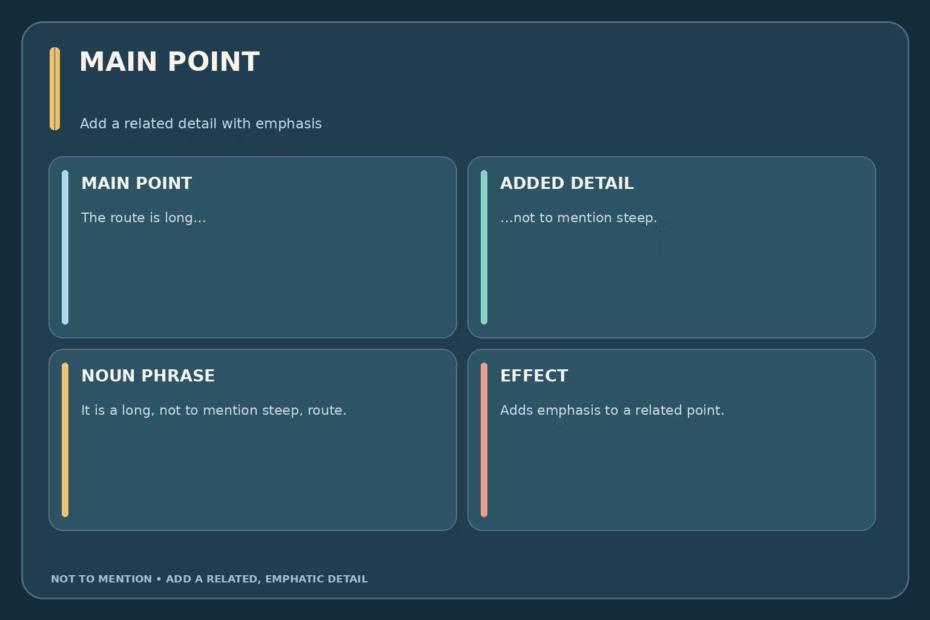
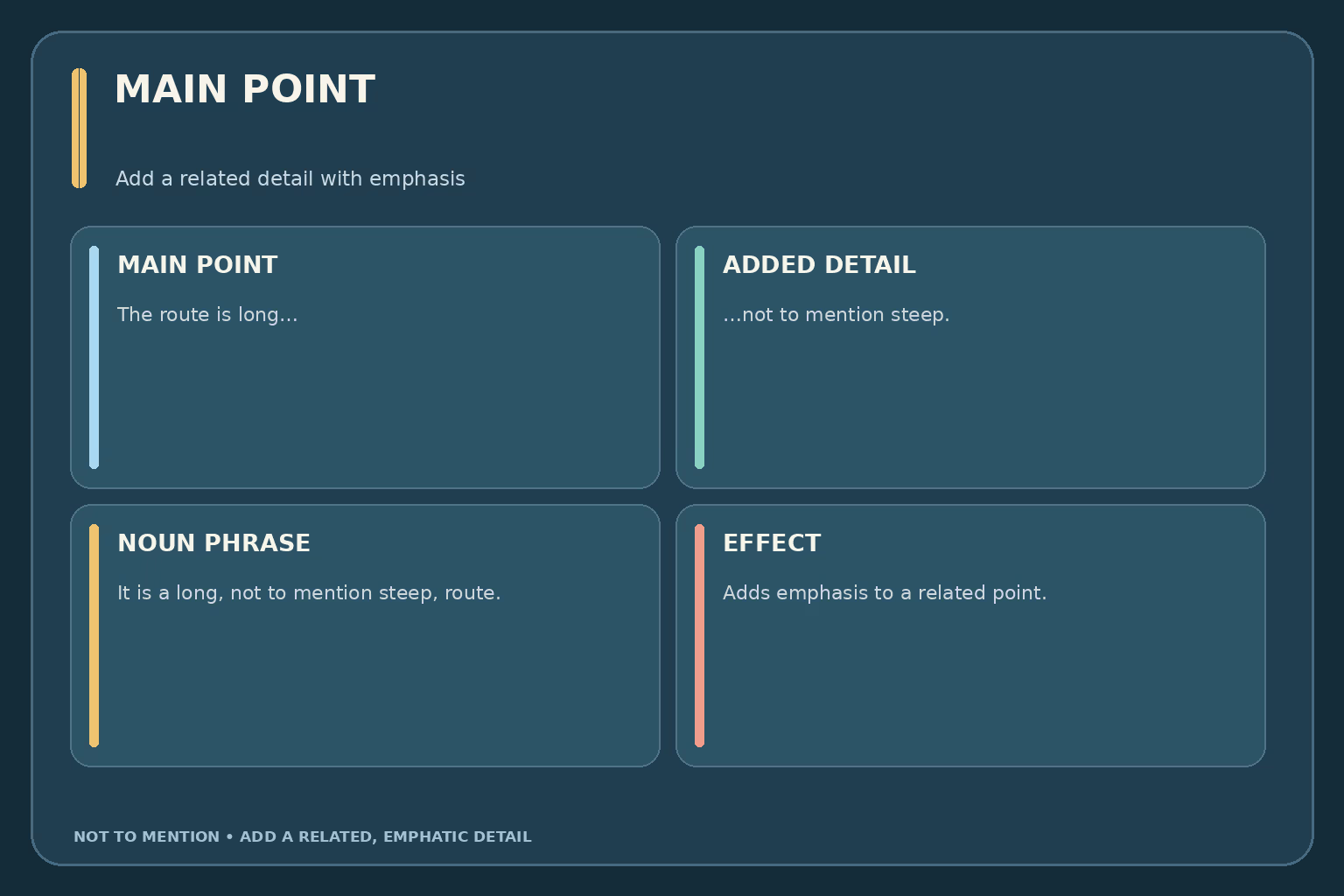
“Not to mention” introduces an additional related fact that the writer or speaker wants to emphasize. It often adds a point that makes the first statement seem stronger: “The apartment is close to work, not to mention surprisingly quiet.” The phrase can introduce a noun phrase, a gerund phrase, or a clause, as long as the new information has a clear relationship to the main idea.
What Does “Not to Mention” Mean?
Cambridge Dictionary defines the idiom as a way to emphasize something being added to a list. In everyday use, it is close to as well as that, and another thing, or to say nothing of, but it can give the added point extra weight. For example, “The trail is scenic, not to mention well marked” presents the clear markings as an additional benefit.
The expression does not usually mean that the speaker will literally avoid mentioning something. It signals the opposite: a detail is being brought up because it strengthens, rounds out, or sometimes complicates the point just made. The tone can be conversational and emphatic, so use it when that emphasis is intended.
How to Use “Not to Mention” in a Sentence
The phrase can connect different kinds of grammatical material. A useful editing check is to identify what comes immediately before and after it, then make sure the relationship reads smoothly.
- Before a noun or noun phrase: “The museum has an excellent collection, not to mention a welcoming café.”
- Before a gerund phrase: “She likes the job for its flexibility, not to mention working with a thoughtful team.”
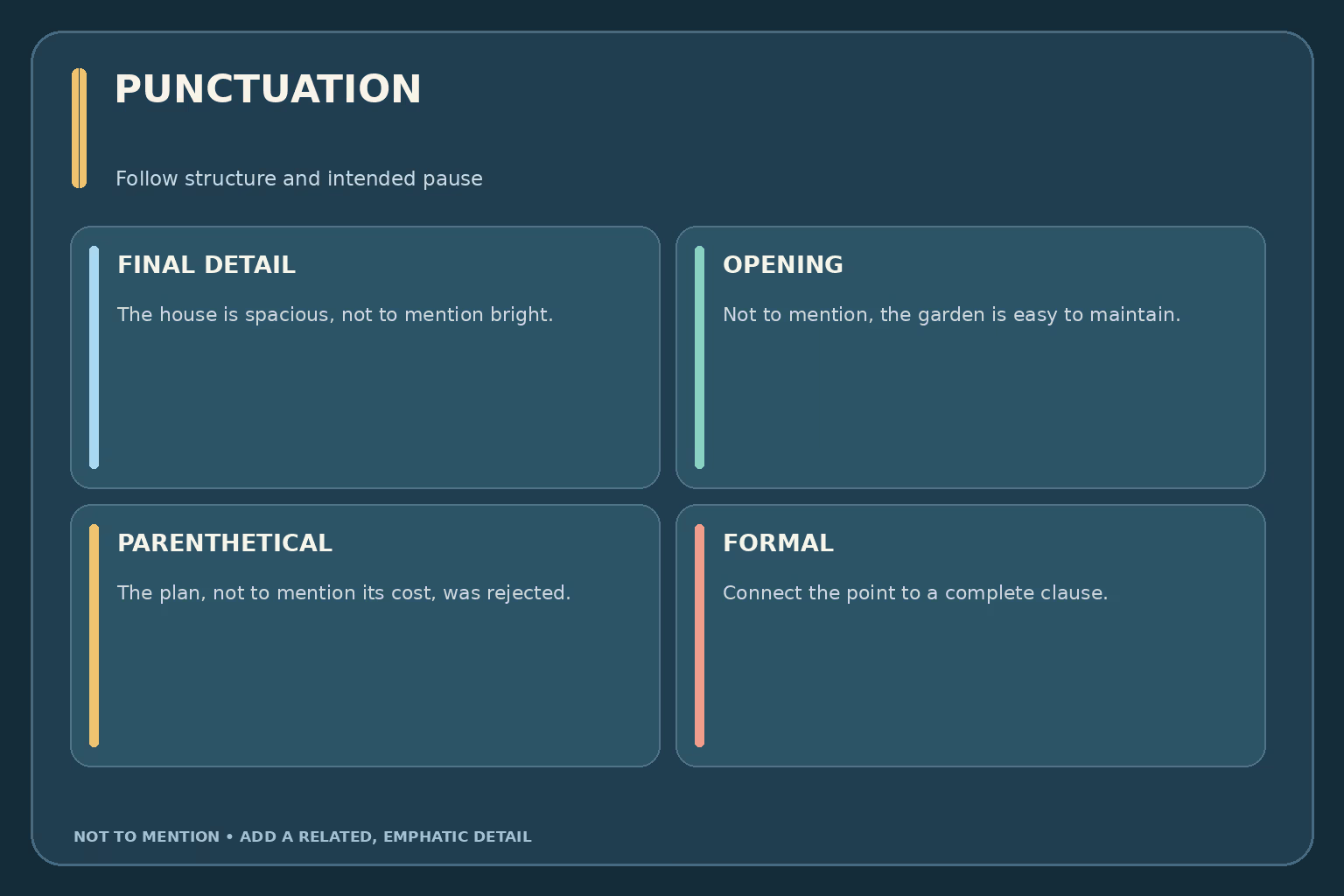
- Before a clause: “The delay is frustrating, not to mention that the replacement parts are expensive.”
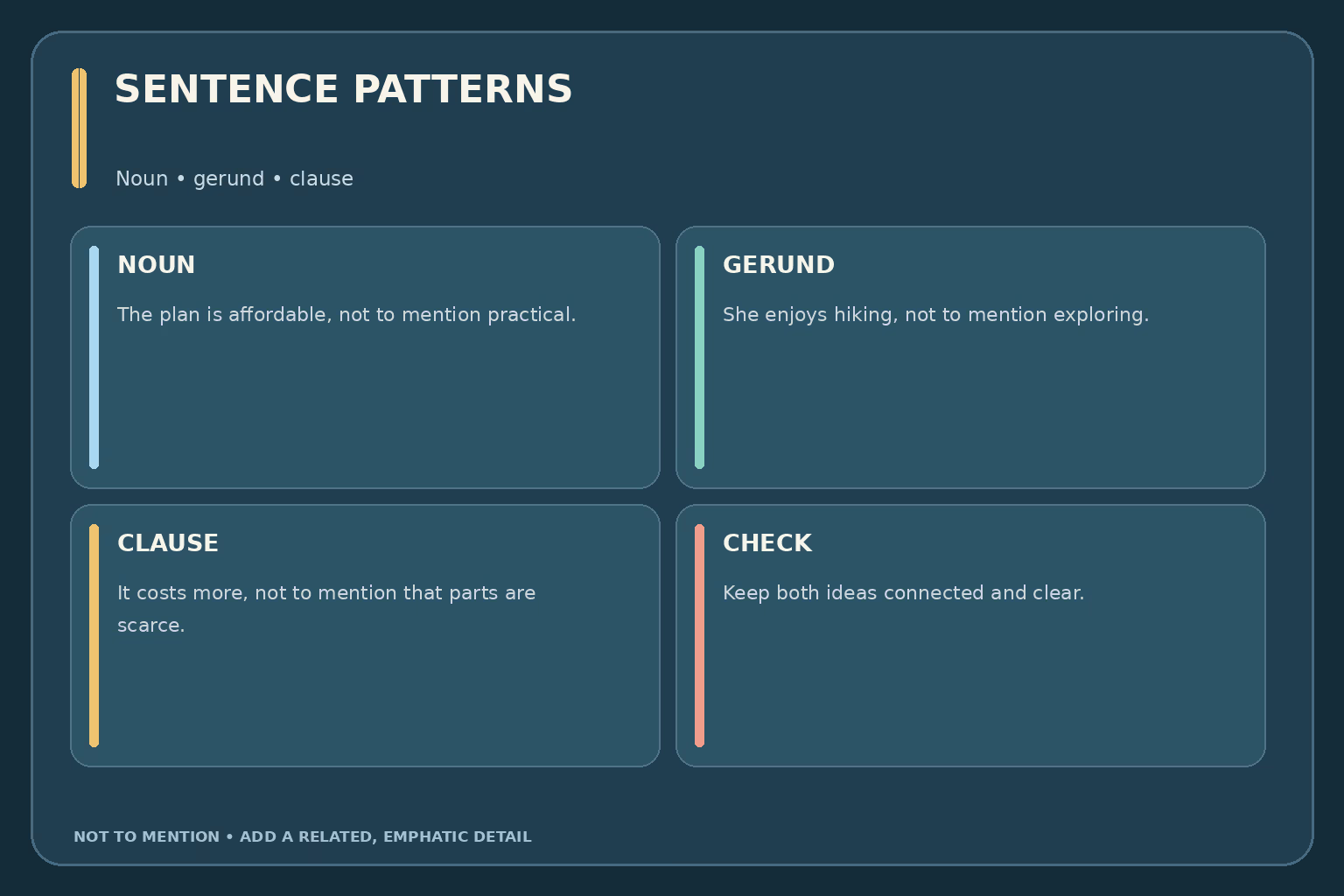
- At the beginning for rhetorical emphasis: “Not to mention, the venue is accessible by train.” In more formal writing, connect this point to a complete sentence or recast it: “The venue is also accessible by train.”
Punctuation With “Not to Mention”
When the phrase adds a detail at the end of a sentence, a comma often comes before it: “The studio is bright, not to mention quiet.” Do not automatically add a comma between the phrase and the words it introduces. When the phrase is a parenthetical interruption, use a pair of commas: “The plan, not to mention its cost, was rejected.”
At the start of a sentence, writers often put a comma after an introductory “Not to mention”: “Not to mention, the schedule changed twice.” This standalone opening is common in informal writing, but it can sound like an incomplete afterthought in formal prose. To make the relationship explicit, attach the idea to a complete clause: “The schedule changed twice, and the venue was difficult to reach.” Purdue OWL’s guidance on commas after introductory elements explains that punctuation depends on the construction, not on a fixed rule for every opening phrase.
When “not to mention” interrupts a sentence as a parenthetical aside, use a pair of commas if removing it leaves a complete sentence: “The proposal, not to mention the revised budget, is ready for review.” Do not let commas separate a subject from its verb or otherwise obscure which words belong together.
Keep the Added Information Parallel
“Not to mention” works best when the added material matches the sentence around it. Parallel items are easier to read: “The course is demanding, not to mention rewarding” pairs two adjectives; “The role involves planning, not to mention coordinating events” pairs two -ing forms. If the parts do not fit, recast the sentence rather than forcing the phrase to carry an awkward connection.
For instance, “She is a skilled editor, not to mention she meets every deadline” mixes an adjective phrase with a full clause. It is understandable, but “She is a skilled editor, not to mention a reliable deadline keeper” makes the list parallel. Another clean option is to write two coordinated clauses: “She is a skilled editor, and she meets every deadline.”
“Not to Mention” vs. Similar Phrases
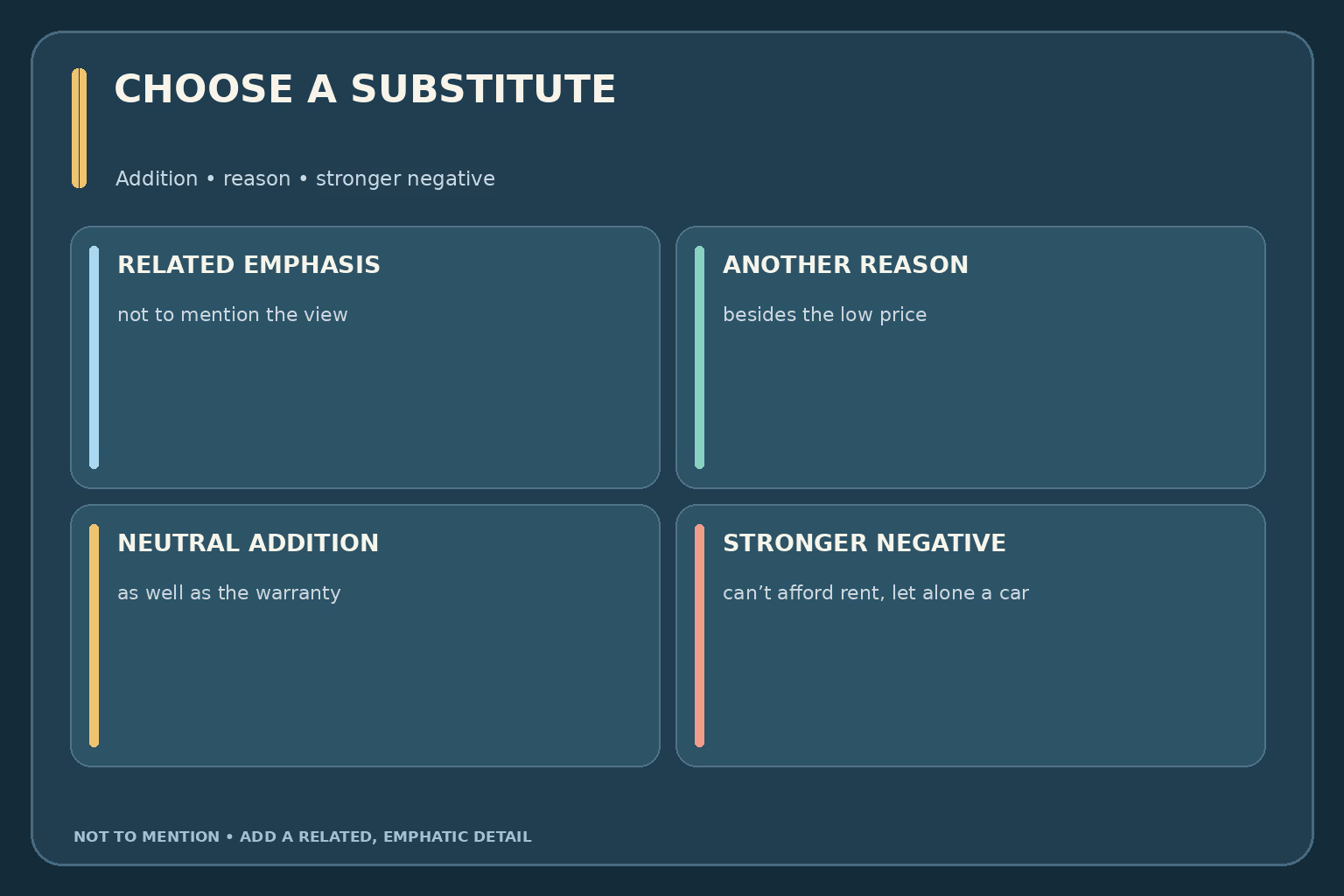
- Besides: Adds another reason or item and can sound conversational: “Besides the low price, the laptop has a long warranty.”
- As well as: Adds information in a more neutral way: “The fee covers meals as well as transportation.”
- To say nothing of: Similar in meaning, often with a more formal or literary feel: “The renovation will take months, to say nothing of its cost.”
- Let alone: Commonly follows a negative or limiting statement and introduces something even less likely: “They could barely afford the deposit, let alone the monthly rent.” It is not a general substitute for every positive use of “not to mention.”
Choose the phrase that conveys your intended logic. “Not to mention” usually adds emphasis; “besides” can add a separate reason; and “let alone” commonly makes a negative comparison more extreme.
When to Use It—and When to Revise
Use “not to mention” when the second point is relevant and gives the reader a reason to notice the first point more strongly. It can add a benefit, drawback, qualification, or practical detail. The connection should be obvious from the sentence or surrounding context.
Revise the phrase if it introduces a point unrelated to the main statement, repeats information, or creates a sentence fragment that distracts from your meaning. In academic or business writing, a direct connector such as also, in addition, or and may sound more neutral. In conversation, reviews, and persuasive writing, “not to mention” can give the added detail a natural emphasis.
Frequently Asked Questions
Is “not to mention” formal?
It is widely understood and acceptable in many kinds of writing, but it often sounds conversational or emphatic. For a neutral formal tone, use “in addition,” “as well as,” or a direct coordinated sentence when that better expresses the relationship.
Should there always be a comma after “not to mention”?
No. Punctuation depends on how the phrase fits into the sentence. A comma may follow it at the beginning of an emphatic afterthought, or set off a parenthetical aside, but a sentence such as “The trip was memorable, not to mention affordable” does not need a comma between the phrase and the adjective.
Can “not to mention” begin a sentence?
Yes, especially in conversational or rhetorical writing: “Not to mention, the tickets sold out in an hour.” For formal prose, consider connecting the point to the previous sentence or rewriting it as a complete, direct statement.
What is a synonym for “not to mention”?
Depending on the sentence, try “as well as,” “in addition to,” “to say nothing of,” or “besides.” “Let alone” fits a different pattern: it generally follows a negative or limiting statement and introduces something even more difficult or unlikely.
Can “not to mention” introduce a complete clause?
It can be followed by a clause, often with that: “The change is costly, not to mention that it delays the launch.” A noun phrase or a parallel phrase may sound more concise; choose the pattern that makes the relationship clearest.
Sources and Further Reading
- Cambridge Dictionary: “not to mention” (idiom meaning and usage example).
- Purdue Online Writing Lab: Commas After Introductions (guidance on punctuation for introductory elements).
Have you ever struggled with connecting ideas in a sentence without using conjunctions like “and” or “but”? This is where the phrase “not to mention” comes in handy. It’s a useful tool to emphasize additional points without repeating the same information or sounding repetitive in a sentence.
“not to mention” is a transitional phrase that serves to introduce further information or points that are related to the topic at hand. It helps to add depth and specificity to a statement, giving the reader a clearer picture of the topic being discussed.
7 Examples Of Not To Mention Used In a Sentence For Kids
- I love to play with my toys, not to mention my colorful building blocks.
- I enjoy watching cartoons on TV, not to mention dancing to music.
- I like to eat fruits and vegetables, not to mention yummy ice cream.
- I have fun running around with my friends, not to mention playing hide and seek.
- I enjoy reading picture books, not to mention drawing with crayons.
- I like to ride my bicycle, not to mention flying a kite at the park.
- I love going to school, not to mention painting in art class.
14 Sentences with Not To Mention Examples
- Not to mention, managing study schedules, extracurricular activities, and social life can be quite challenging for college students.
- As college students, we have to deal with assignment deadlines, exams, and presentations, not to mention part-time jobs and internships.
- Not to mention, the pressure to perform well in academics and secure a good job can be overwhelming for college students.
- Juggling multiple subjects, labs, and practicals can be very stressful for college students, not to mention attending workshops and seminars.
- Not to mention, the struggle to find affordable accommodation and manage monthly expenses can be a major concern for college students.
- Participating in college fests, events, and competitions can be exciting, not to mention the exposure and networking opportunities they offer.
- Not to mention, staying updated with the latest research articles, journals, and trends in your field is crucial for college students.
- Being actively involved in student clubs, societies, and volunteer work can enhance your college experience, not to mention the leadership skills you develop.
- Not to mention, group projects and team assignments often require coordination and effective communication among college students.
- Balancing academics with personal hobbies and interests is important for overall well-being, not to mention taking breaks and practicing self-care.
- Not to mention, seeking guidance from professors, seniors, and career counselors is essential for making informed decisions about your academic and professional journey.
- Building a strong professional network through internships, industry visits, and alumni interactions can open doors to exciting career opportunities for college students, not to mention enhancing your resume.
- Not to mention, the importance of continuous learning, upskilling, and staying updated with industry trends to remain competitive in today’s job market.
- Developing time management skills, setting goals, and prioritizing tasks are essential for college students, not to mention maintaining a healthy work-life balance.
How To Use Not To Mention in Sentences?
Not To Mention can be used in a sentence to add emphasis or provide additional information. It is often used to introduce a point that supports or strengthens the previous statement.
Not To Mention is typically placed at the beginning or middle of a sentence. For example, “I had a busy day at work, not to mention I had to pick up the kids from school and attend a parent-teacher conference.” In this sentence, “not to mention” is used to highlight additional responsibilities the speaker had on top of a busy workday.
Another example could be, “She is an excellent team player, not to mention her exceptional problem-solving skills.” Here, “not to mention” is used to bring attention to the second quality the speaker admires in the person being described.
When using Not To Mention, it is important to ensure that the additional information mentioned is related to the main point being made. This helps to maintain coherence in the sentence and makes the connection between the two points clear to the reader or listener.
In conclusion, Not To Mention is a useful phrase to use when you want to emphasize an added point or provide further details in a sentence. Remember to use it appropriately to enhance the clarity and strength of your statements.
Conclusion
In summary, utilizing sentences with “not to mention” can help to add emphasis, provide further elaboration, or highlight additional points that may have been overlooked. By employing this phrase effectively, one can draw attention to important facts or details that contribute to a clearer understanding of the main topic.
Overall, integrating “not to mention” in your writing can enhance the coherence and clarity of your communication. It serves as a powerful tool to underscore the significance of specific information and ensures that key points are highlighted for the reader’s attention.