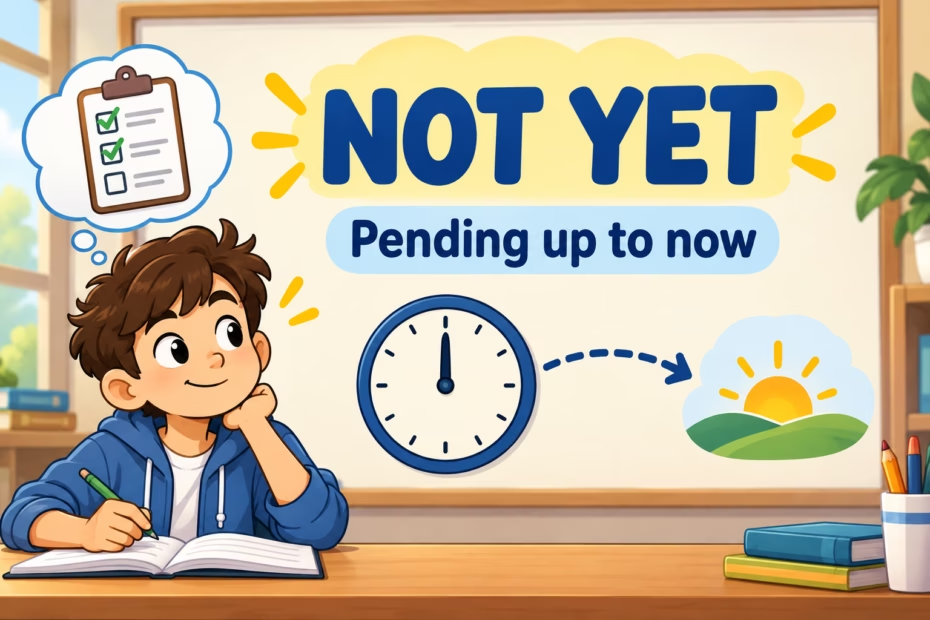
“Not yet” in a sentence means an expected event has not happened or a task is unfinished up to a particular time. Use it at the end of a negative clause or as a short reply: “I haven’t sent the form yet” or “Not yet.”
- “Not yet” usually marks an action that remains pending.
- In a negative clause, “yet” commonly goes at the end; it can also come before the main verb in more formal word order.
- Questions with “yet” ask whether something has happened by now.
- “Still” emphasizes that a situation continues, often longer than expected.
What does “not yet” mean?
“Not yet” means “up to now, the expected event has not happened.” The phrase leaves open the possibility that it will happen later: “The bus hasn’t arrived yet” reports its status now without guaranteeing when—or whether—it will arrive.
Cambridge Dictionary describes yet in negative statements and questions as referring to the time up to now, often when an event is expected. In this use, yet is an adverb. The same word also has other meanings, including “nevertheless” in “It was difficult, yet useful,” but that is a separate use.
How do you use “not yet” in a sentence?
Place not with the verb or auxiliary that makes the clause negative, then put yet after the main verb or object in the most common pattern. A standalone answer can simply be “Not yet,” with the full meaning supplied by the question.
| Pattern | Example | What it tells the reader |
|---|---|---|
| Subject + have/has not + past participle + yet | Rina has not replied to the invitation yet. | A reply is still pending now. |
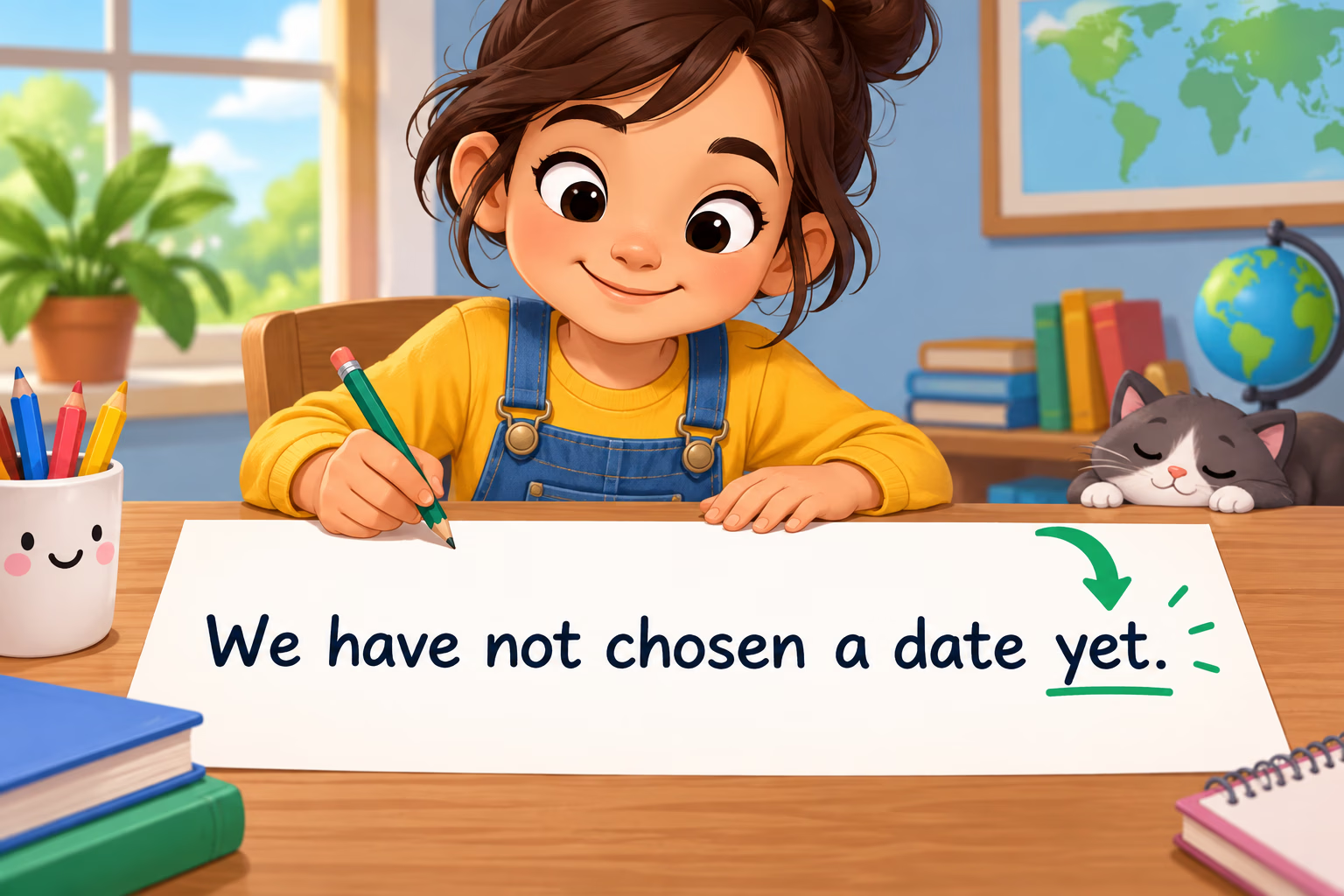
| Subject + have/has not + object + yet | We have not chosen a date yet. | The choice remains open. |
| Subject + be + not + adjective/noun + yet | The soup is not hot yet. | The present state has not been reached. |
| Question + yet? | Have you checked the updated schedule yet? | The speaker asks whether it has happened by now. |
| Short answer | “Is the room ready?” “Not yet.” | The room is not ready at this time. |
Which tense works with “not yet”?
The present perfect is especially common when the past-to-present time period matters: “I have not received the package yet.” Other tenses work when the sentence places the unfinished event at a different time or describes a state.
- Present perfect: “They haven’t announced the results yet.” The announcement has not happened up to now.
- Simple past: “At 8 p.m., the guests had not arrived yet.” The reference time is a past point; the arrival had not happened by then.
- Past perfect: “Mara had not saved the file yet when the computer restarted.” One past event is measured against another.
- Be + adjective: “The store isn’t open yet.” The expected state has not begun.
- Modal verb: “You may not need the extra copy yet.” Here the phrase means that the need has not arisen at this time.
Use a tense that fits the time reference. “I didn’t call her yet” occurs in some varieties of English, especially in informal speech; in standard edited English, “I haven’t called her yet” is the more widely taught choice when the time period continues to the present.
Where does “yet” go in a negative sentence?
End position is the usual choice in everyday English: “We haven’t booked the tickets yet.” In more formal writing, yet can appear between the auxiliary and the main verb, as in “We have not yet booked the tickets.”
When an object follows the verb, yet usually comes after it: “She hasn’t read the report yet.” In questions, it also commonly goes at the end: “Has she read the report yet?” Putting yet at the beginning of a clause can instead signal contrast—“Yet, the plan may work”—so punctuation and context matter.
What is the difference between “not yet” and “still”?
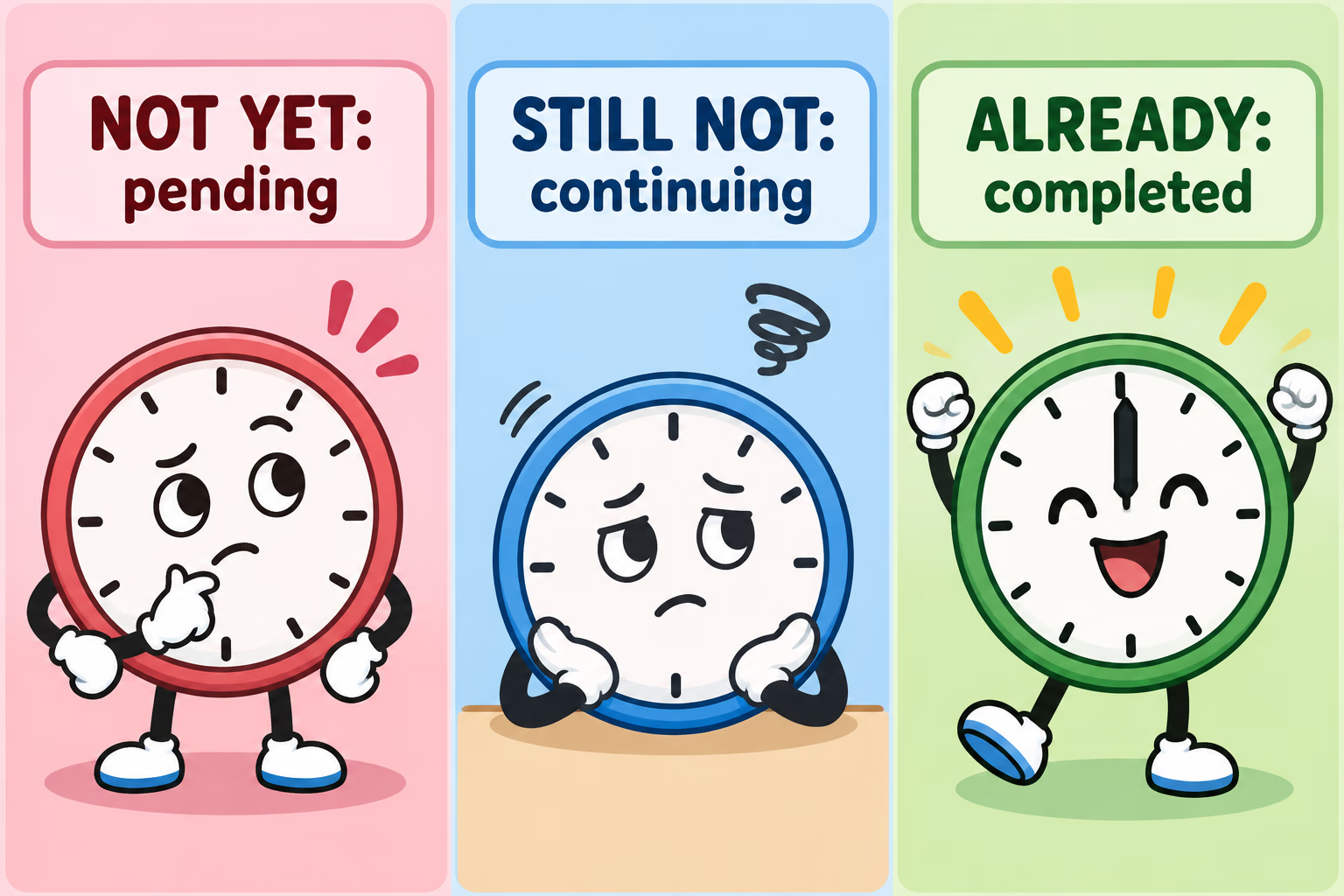
“Not yet” neutrally says an event has not happened up to now; “still” highlights that a situation continues, often longer than the speaker expected. Compare “The train hasn’t arrived yet” (status update) with “The train still hasn’t arrived” (the delay is notable or frustrating).
| Phrase | Typical emphasis | Example |
|---|---|---|
| not yet | Expected event has not happened by now | Our guests haven’t arrived yet. |
| still not | Negative situation continues, often beyond expectation | Our guests still haven’t arrived. |
| already | Event happened sooner than expected or before now | Our guests have already arrived. |
Cambridge Grammar notes the usual position difference: yet often comes at the end, while still normally appears before the main verb or first auxiliary—“I haven’t finished yet” versus “I still haven’t finished.” The distinction is about emphasis, not simply elapsed time.
Can “not yet” be a complete sentence?
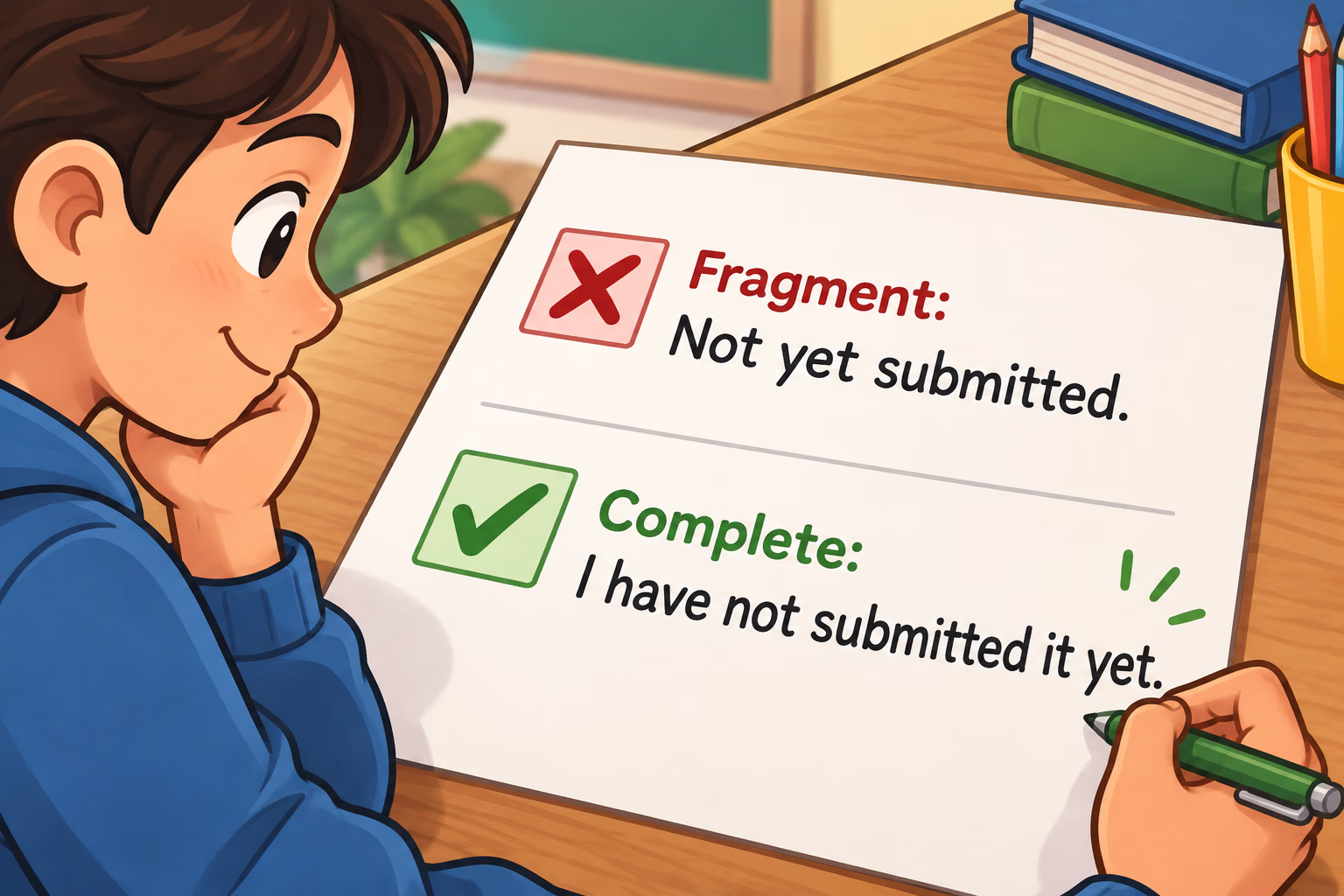
Yes. “Not yet” is a natural elliptical reply when the question makes the missing words clear: “Have you eaten?” “Not yet.” In a formal paragraph where the reader needs more context, write the full clause: “I have not eaten yet.”
A full clause needs a subject and a finite verb. “Not yet submitted the assignment” is a fragment by itself; write “I have not submitted the assignment yet.” The phrase can appear first for emphasis when the rest of the clause is complete: “Not yet has the committee released its decision” is grammatical but formal and marked; most readers will find “The committee has not released its decision yet” more natural.
21 “Not yet” sentence examples
These examples show “not yet” in replies, questions, different tenses, and everyday contexts. The phrase reports what has not happened by the stated time; it does not promise a future result.
- “Have you sent the invoice?” “Not yet.”
- I have not chosen a topic for my presentation yet.
- The library has not opened yet, so we are waiting outside.
- We have not heard whether the meeting is online yet.
- Has the repair technician arrived yet?
- “Is dinner ready?” “Not yet; the rice needs five more minutes.”
- Leo has not learned the final verse yet.
- The team has not reviewed the revised schedule yet.
- I have not read that novel yet, so please do not tell me the ending.
- Our package has not been delivered yet.
- At noon, the rain had not stopped yet.
- They had not decided where to hold the event yet when the venue called back.
- The new student is not comfortable speaking in front of the group yet.
- My coffee is not cool enough to drink yet.
- “Are you ready to leave?” “Not yet—I’m finding my keys.”
- We have not tested the backup plan yet.
- The garden is not in bloom yet this spring.
- Has your supervisor replied to the message yet?
- The final version is not available yet.
- She has not decided whether to accept the offer yet.
- “Can I use the printer?” “Not yet; someone is finishing a large job.”
Common mistakes with “not yet”
- Leaving out the subject or auxiliary: Change “Not yet finished my work” to “I have not finished my work yet,” unless using it as a brief answer.
- Using yet for a completed event: In the ordinary “up to now” sense, say “I have already paid,” not “I have paid yet.” Use yet in a question or negative clause: “Have you paid yet?”
- Putting still at the end by copying yet: In standard word order, write “I still haven’t called,” not “I haven’t called still.”
- Assuming not yet is a promise: “The result is not known yet” reports current knowledge; it does not guarantee when the result will arrive.
- Confusing the contrast conjunction: “The task was difficult, yet enjoyable” means “but enjoyable,” not “not enjoyable up to now.”
Frequently asked questions about “not yet”
Is “not yet” formal or informal?
“Not yet” is neutral and works in conversation and writing. “Not yet decided” can sound more formal than “haven’t decided yet,” but both are grammatical when used in a complete clause.
Should I write “not yet” or “yet not”?
For the usual time-related meaning, write “not yet” in a short reply and usually place yet at the end of a negative clause. “Yet not” is uncommon in ordinary modern prose and can sound literary or contrastive.
Can “not yet” describe a state, not an action?
Yes. A state can also be pending: “The room is not warm yet,” “The form is not complete yet,” and “I am not ready yet” all describe a condition that has not been reached.
What does “not yet” mean in a text message?
As a short reply, “not yet” usually means the person has not done the expected action up to this point. The question supplies the action: after “Did you book it?”, “Not yet” means “I haven’t booked it yet.”
Can I start a sentence with “not yet”?
Yes, for a short answer (“Not yet.”) or a formal, emphatic construction (“Not yet has the decision been announced”). In everyday writing, a normal subject-first clause is usually clearer: “The decision has not been announced yet.”
Editorial note on the original examples
The original article below is preserved word for word. Some of its list entries begin with “Not yet” but omit the subject or auxiliary (“Not yet submitted the assignment”); treat those as prompts or fragments, not complete example sentences. The original also says “yet can be placed at the beginning or end”; this is too broad for learners without context. End position is the ordinary pattern, while front position can sound formal or signal contrast. The new examples above model complete, standard-edited clauses.
Have you ever struggled with using “not yet” in an example sentence? Let’s simplify this for you.
When you want to express that something has not happened up to this point in time, “not yet” can be a handy phrase to use.
7 Examples Of Not Yet Used In a Sentence For Kids
- I have not yet finished my drawing.
- The teacher has not yet arrived in the classroom.
- We have not yet sung the morning prayers.
- The bell has not yet rung for the lunch break.
- The school day has not yet ended.
- I have not yet cleaned my desk.
- The sun has not yet set in the sky.
14 Sentences with Not Yet Examples
- Not yet submitted the assignment that is due tomorrow.
- I have not yet started studying for the upcoming exam next week.
- Not yet decided on the topic for the research paper.
- Have not yet bought the textbooks for this semester.
- Not yet registered for the extracurricular activities that I am interested in.
- Not yet finalized the group members for the group project.
- Not yet finished writing the lab report that is due this Friday.
- Have not yet applied for the internship opportunities available.
- Not yet downloaded the necessary software for the coding assignment.
- Not yet spoken to the professor about the extension for the submission deadline.
- Have not yet attended the career counseling session organized by the college.
- Not yet explored the library resources for my research.
- Not yet scheduled a meeting with the academic advisor to discuss the course selection.
- Not yet prepared the presentation slides for the class presentation next week.
How To Use Not Yet in Sentences?
Not Yet is used to indicate that something has not happened or is not completed at the present moment. Here’s a simple guide on how to use Not Yet in a sentence:
-
Position in the sentence: Not Yet is often placed at the beginning or end of a sentence to emphasize that something has not been done or accomplished. For example, “I have not yet finished my homework.”
-
Negation: When using Not Yet, you are indicating that a particular action or event has not taken place up until now. For instance, “She has not yet received the package.”
-
Tense: Not Yet can be used in different tenses to convey that something has not happened at a specific point in time. For example, “He had not yet arrived when we left the party.”
-
Using it in a question: Not Yet is also used in questions to ask if a certain action has taken place. For instance, “Have you not yet completed your assignment?”
-
Emphasizing the delay: This phrase is often used to emphasize that something expected or anticipated has not happened within the anticipated timeframe. For example, “The project is not yet finished.”
By following these guidelines, you can effectively incorporate Not Yet into your sentences to express that something has not occurred or been completed up to the present moment.
Conclusion
In conclusion, the phrase “not yet” is commonly used to indicate that something has not happened or been completed up to a point in time. It implies a sense of expectation or anticipation of future action. With examples such as “I have not yet finished my homework” or “She has not yet arrived,” this phrase is a useful way to express the idea that an event or task is still pending.
Whether used in casual conversation or formal writing, “not yet” helps convey that something is not complete but is expected to be at some point in the future. It serves as a simple yet effective way to communicate that a particular action or outcome is still awaited or in progress.