Nuance in a Sentence: Meaning and Examples
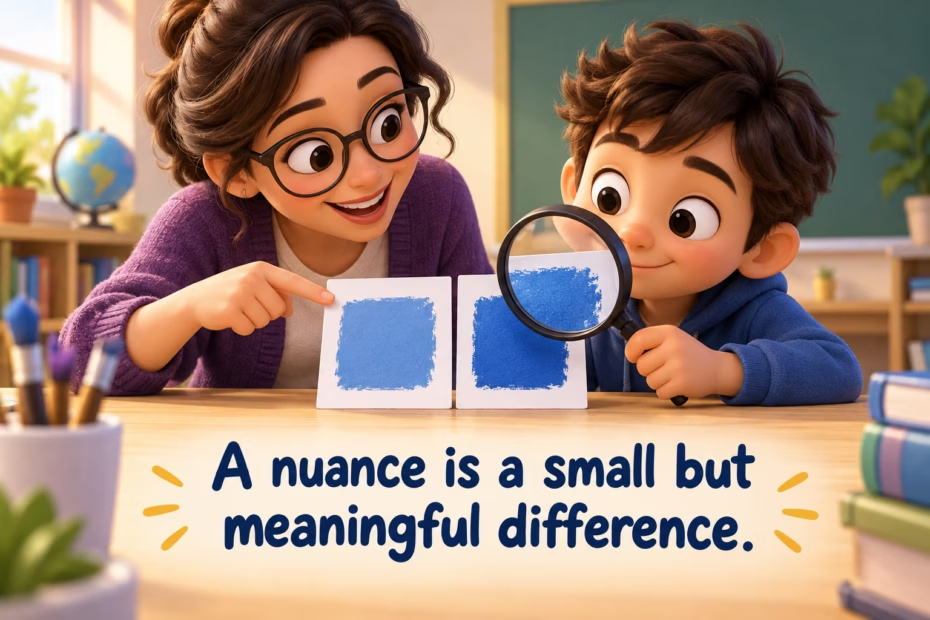
Nuance means a slight but meaningful difference in meaning, appearance, sound, or expression. Use it as a noun when pointing to one distinction (“a nuance in her tone”) or several (“the nuances of a phrase”); use nuanced as the adjective for something that recognizes such distinctions.
Key points
- Nuance names a subtle distinction or variation, often one that affects interpretation.
- The noun is countable: write a nuance, the nuance between two choices, or several nuances.
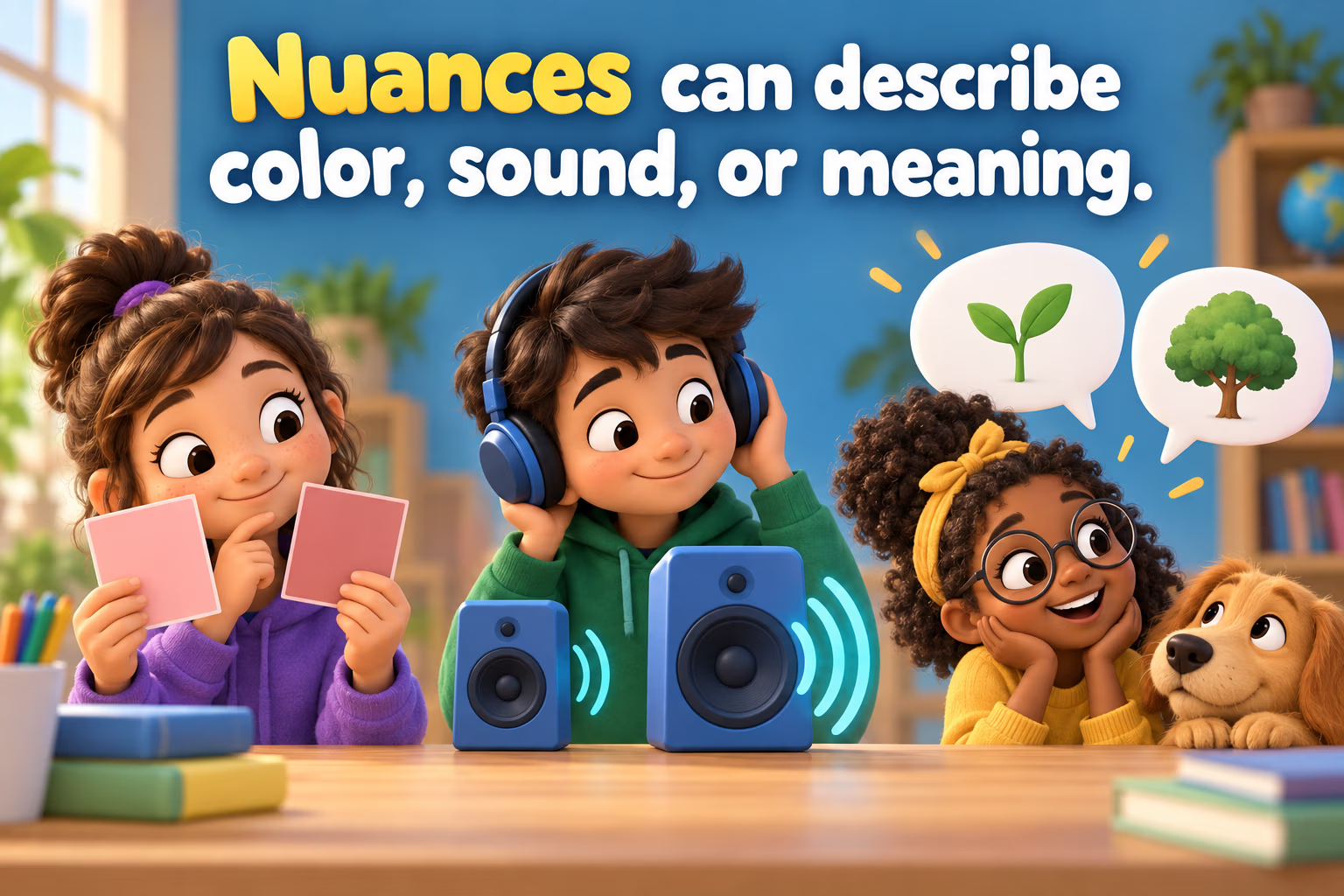
- A nuance may concern color, sound, expression, meaning, or response.
- Nuanced is an adjective: a nuanced explanation recognizes meaningful distinctions.
- Give enough context for readers to identify what the difference is.
Cambridge Dictionary defines nuance as a very slight difference in appearance, meaning, sound, and related qualities, and lists it as a countable noun. The examples below keep the distinction concrete: identify the two things being compared, then show how their small difference matters.
What Does “Nuance” Mean?
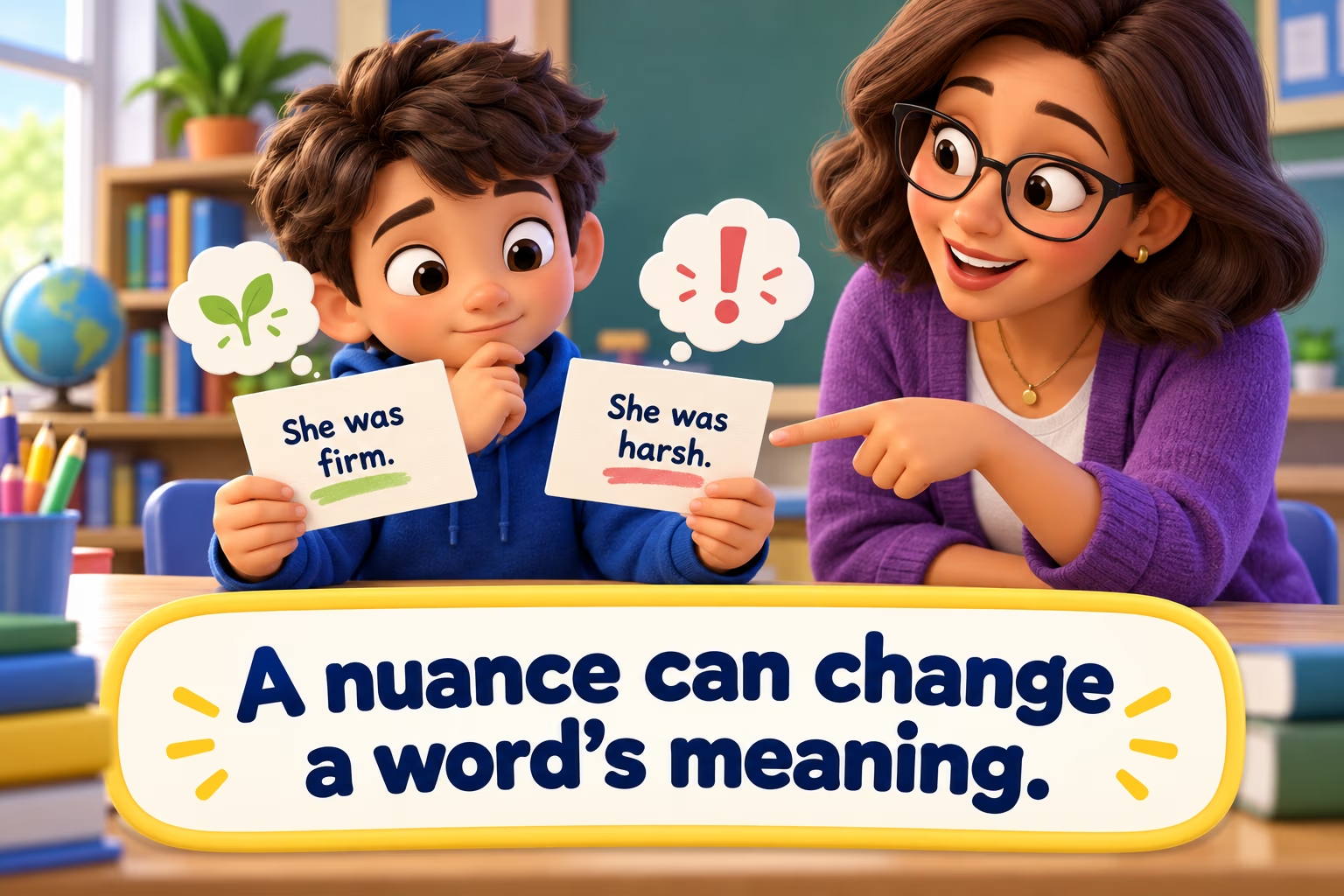
A nuance is a slight distinction or variation that can affect how something is understood, heard, or seen. The difference may be small in degree but relevant to interpretation: “firm” and “harsh” both describe a strict response, but they carry different judgments.
The word is not limited to language. A painter may use nuances of blue, a singer may shape nuances in volume or tone, and a reader may notice a nuance between two similar phrases. In each case, the noun identifies a particular shade or distinction within a broader category.
How Do You Use “Nuance” in a Sentence?
Use nuance as a noun when you identify a small difference, and state what is being compared. For example, “The editor noticed a nuance between ‘must’ and ‘should’” names both the distinction and the words that carry it.
| Sentence pattern | Example | Why it works |
|---|---|---|
| a nuance in + noun | “The actor added a nuance in her voice.” | Points to a subtle quality within a performance. |
| the nuance between + two things | “The lesson explains the nuance between ‘borrow’ and ‘lend.’” | Names both sides of the comparison. |
| nuances of + topic | “The guide explores the nuances of formal email.” | Refers to several distinctions within a topic. |
| a nuance that + clause | “He noticed a nuance that changed the joke’s tone.” | Explains why the difference matters. |
Cambridge labels the noun countable, so singular examples commonly use an article such as a or the. Its plural, nuances, fits when the sentence refers to several distinctions. Some broad statements use nuance without an article to refer to subtlety as a general quality, but learners can rely on the countable patterns above for clear examples.
What Is the Difference Between “Nuance” and “Nuanced”?
Nuance is usually a noun naming a distinction; nuanced is an adjective describing something that recognizes or expresses subtle distinctions. Compare “The essay includes a nuance about the policy” with “The essay gives a nuanced account of the policy.”
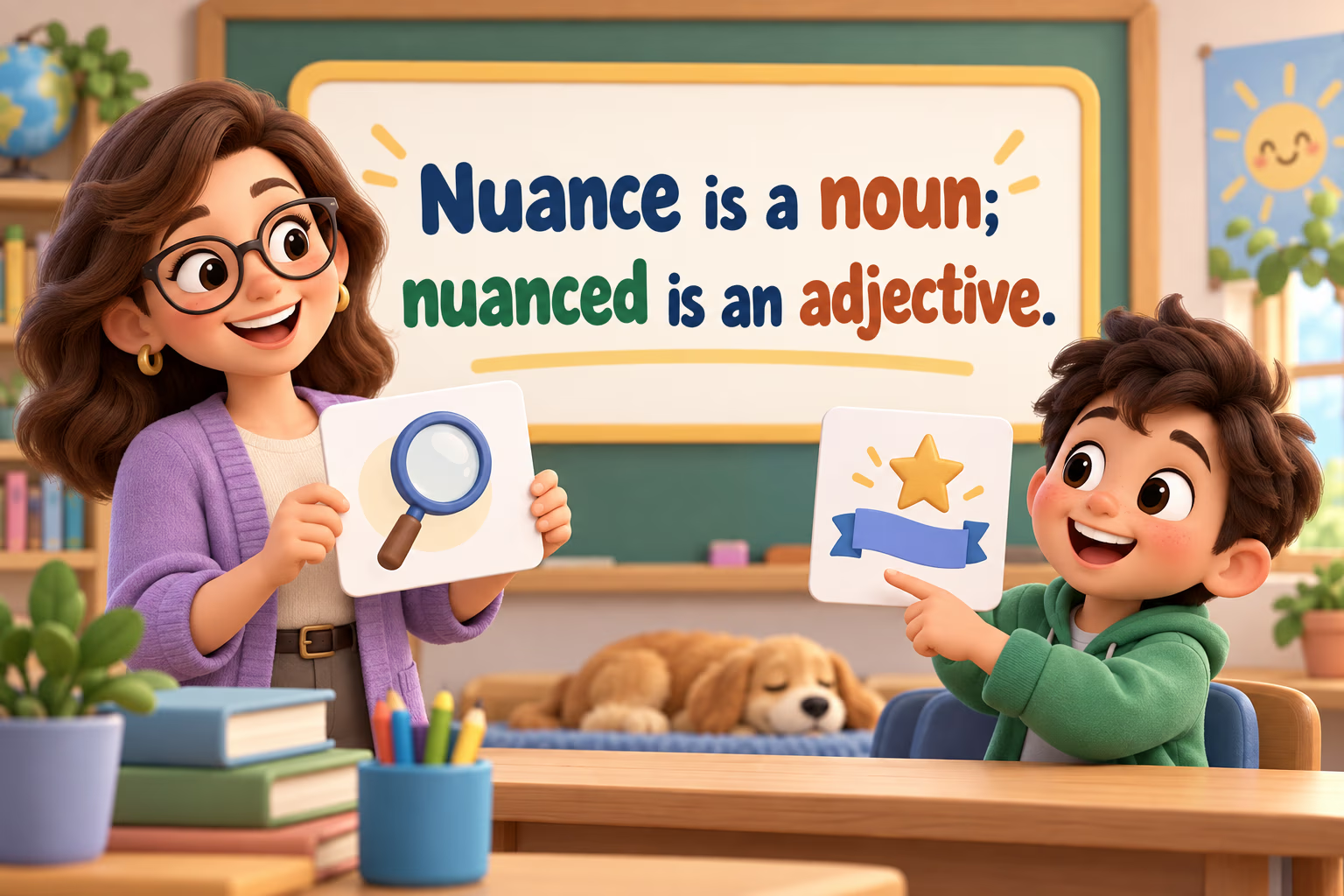
A practical check is to ask what job the word performs. If it follows an article or plural marker and names a distinction, use nuance (“a nuance,” “several nuances”). If it describes a noun, use nuanced (“a nuanced reading,” “a nuanced performance”). The related verb nuance exists, but the noun and adjective are the more useful forms in everyday learner sentences.
How Can You Make a Sentence About Nuance Clear?
Make the comparison visible. A sentence such as “There is nuance in the discussion” may be true, but readers do not know which difference matters. Add the alternatives and the effect: “The speaker’s pause added a nuance of doubt to an otherwise confident answer.”
- Name the two things. Identify the words, colors, sounds, viewpoints, or actions being compared.
- Describe the distinction. Say whether it concerns tone, degree, implication, or another feature.
- Explain its effect. Show how the distinction changes interpretation, feeling, or appearance.
Nuance does not mean that every difference is important or that a sentence is automatically thoughtful because it uses the word. A precise example makes the distinction observable and explains its relevance.
The original article and all 21 original example items are preserved below verbatim. The additional guide above supplies definitions and usage distinctions without changing those examples.

Have you ever noticed subtle differences in meaning that can completely change your understanding of a message? These subtle distinctions are known as nuances, adding depth and complexity to language.
When we pay attention to nuances, we are able to grasp the subtle shades of meaning in communication. It’s these nuanced details that can make a significant difference in how we interpret spoken or written words, allowing for a more precise understanding of the message being conveyed.
7 Examples Of Nuance Used In a Sentence For Kids
- Leaves come in many nuances of green and yellow.
- The sky has different nuances of blue in the morning and evening.
- Flowers have nuances of different colors like pink, red, and blue.
- Butterflies have beautiful nuances on their wings.
- Birds sing in different nuances of chirps and tweets.
- The sea has nuances of blue and green in its waves.
- The rainbow shows nuances of all the colors in the sky.
14 Sentences with Nuance Examples
- Understanding the cultural nuances can help international students adapt better to the Indian education system.
- It’s important to pay attention to the professor’s nuances in their lectures to grasp the full meaning.
- Writing a research paper requires a deep understanding of the nuances of academic language and citation styles.
- Many students struggle with the nuances of time management, especially when balancing academics and extracurricular activities.
- In group projects, it’s essential to communicate effectively to avoid misunderstandings caused by nuances in communication styles.
- The nuances of different learning styles can impact how students absorb and retain information in the classroom.
- Recognizing the nuances in different viewpoints can lead to more thoughtful and respectful discussions in class.
- When studying literature, it’s crucial to analyze the nuances of themes and character development to fully appreciate the text.
- International students often face challenges in picking up the nuances of colloquial language and slang used on campus.
- Engaging with diverse perspectives can help students appreciate the nuances of social issues and foster a more inclusive campus community.
- Understanding the nuances of data analysis is essential for students pursuing degrees in fields like economics or psychology.
- Effective communication skills involve not just words but also the nuances of body language and tone of voice.
- Navigating the nuances of group dynamics can help students become better team players in collaborative projects.
- Recognizing the nuances of ethical decision-making can guide students in navigating complex moral dilemmas both in academia and in life.
How To Use Nuance in Sentences?
To use “Nuance” in a sentence, you should first understand that the word refers to subtle distinctions or variations in meaning, expression, tone, or color. When using “Nuance” in a sentence, you want to convey a sense of complexity or depth in your message.
Here’s an example of how to use “Nuance” in a sentence: “The author’s writing was full of nuance, as she expertly layered different emotions in her characters’ dialogue.” In this sentence, “nuance” is used to describe the intricate and subtle details in the author’s writing.
Remember, “Nuance” is a versatile word that can be applied to various contexts, such as art, literature, communication, and even everyday conversations. It adds a level of sophistication and precision to your language, allowing you to express ideas with more depth and subtlety.
When incorporating “Nuance” into your sentences, pay attention to the specific details or distinctions you want to highlight. Consider how these subtle differences enhance the overall meaning or tone of your message.
By practicing and experimenting with using “Nuance” in your sentences, you will gradually become more comfortable incorporating this word into your vocabulary. As you gain confidence, you’ll discover how “nuance” can enrich your communication and help you express yourself more effectively.
Conclusion
In writing, sentences with nuance add depth and complexity to communication by subtly conveying layers of meaning and emotions. By incorporating nuance into your sentences, you can capture the intricacies and subtleties of a situation, allowing for a more nuanced understanding and interpretation by the reader. Nuanced sentences can evoke empathy, spark curiosity, and create a richer and more engaging reading experience.
Whether it’s a subtle play on words, a clever use of irony, or a carefully crafted metaphor, sentences with nuance invite readers to pause, reflect, and dive deeper into the text. They facilitate a more profound connection between the writer and the audience, encouraging critical thinking and fostering a deeper appreciation for the beauty and complexity of language.
More Examples Showing Nuance
These new examples show a specific distinction instead of using nuance as a general label:
- “The word ‘slim’ has a more positive nuance than ‘skinny’ in this description.”
- “A slight pause added a nuance of uncertainty to the reply.”
- “The two green paints differ in a warm nuance that is easier to see in daylight.”
- “The reviewer noticed a nuance between disagreement and disrespect.”
- “A nuanced explanation can acknowledge evidence on both sides without treating them as equally strong.”
Context matters because a nuance can be subtle to one reader and obvious to another. If the intended difference is important, name it directly rather than expecting readers to infer it from the word alone.
Nuance, Subtlety, and Detail
Nuance refers to a particular shade or distinction; subtlety can refer more broadly to the quality of being subtle; and detail is a specific piece of information, whether subtle or not. The words overlap, but they are not interchangeable in every sentence.
For example, “the nuance between a request and a command” points to a small difference in force or tone. “The subtlety of the performance” describes its delicate quality, while “a detail in the performance” could refer to any specific feature, such as a gesture or costume.
Sources and Further Reading
Cambridge Dictionary’s nuance entry gives the noun definition, countability, and examples across appearance, meaning, and sound. Dictionary.com’s nuance entry includes distinctions in expression, meaning, response, color, and tone. Purdue OWL’s guide to diction explains how intentional word choice affects tone and meaning.
Frequently Asked Questions About “Nuance”
What is a simple example of nuance?
“The words ‘confident’ and ‘arrogant’ have a nuance of difference” is a simple example: both can describe self-assurance, but arrogant adds a negative judgment. A useful example names the two things being compared and makes their slight but meaningful distinction clear.
Is “nuance” a noun or an adjective?
Nuance is usually a noun meaning a subtle distinction or variation; nuanced is the related adjective. Write “a nuance in the poem” when naming a distinction and “a nuanced reading of the poem” when describing an interpretation that recognizes subtle differences.
Can “nuance” refer to color or sound?
Yes. A nuance can be a slight difference in appearance or sound as well as meaning or expression. A painter may distinguish two close shades of blue, while a musician may use small changes in volume or tone. State which quality varies so the reader can follow the comparison.
How do you use the plural “nuances”?
Use nuances when referring to more than one distinction: “The interpreter noticed nuances in the speaker’s tone.” The noun is countable in Cambridge Dictionary, so singular examples commonly take an article (“a nuance”) and plural examples can use numbers or quantifiers (“several nuances”).
What does “nuanced” mean in writing?
Nuanced describes writing or an argument that recognizes meaningful differences instead of flattening a complicated subject into one broad claim. A nuanced account can distinguish facts, interpretations, and uncertainty; it does not mean that all sides are equally well supported or that the writer avoids reaching a conclusion.