What Does Numeration Mean?
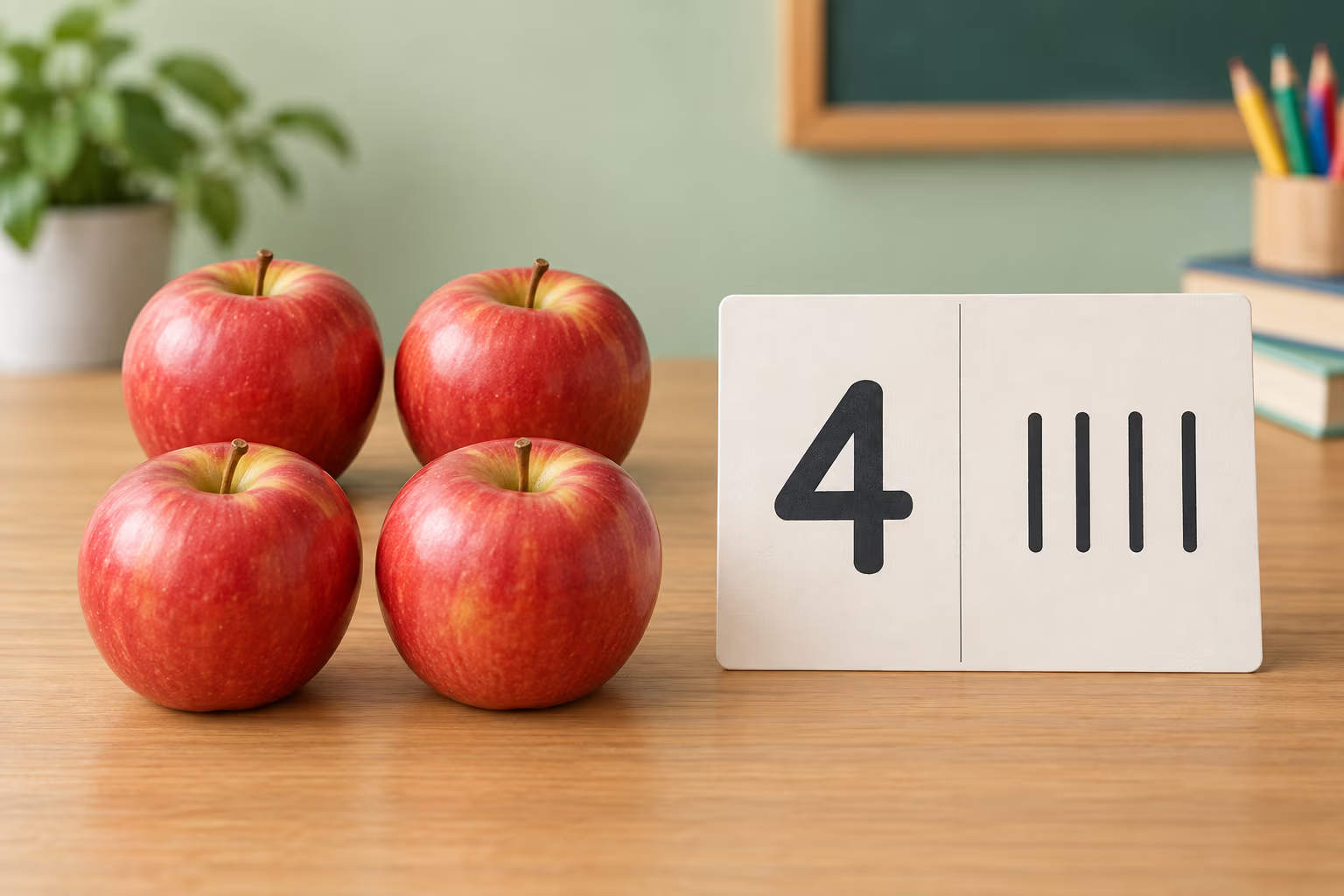
Numeration is the act or system of counting, numbering, or representing numbers with words and symbols. It includes the conventions that let people record a quantity and understand what a written numeral stands for. For example, the marks 4, four, and four objects can all communicate the same quantity in different forms. The word can also refer to reading a numeral aloud or writing its number name.
Numeration and arithmetic are related, but they are not the same. Numeration represents numbers; arithmetic uses numbers in operations such as addition, subtraction, multiplication, or division. A student might practice numeration by reading 326 as “three hundred twenty-six,” then use arithmetic to calculate 326 + 48.
How a Numeration System Works
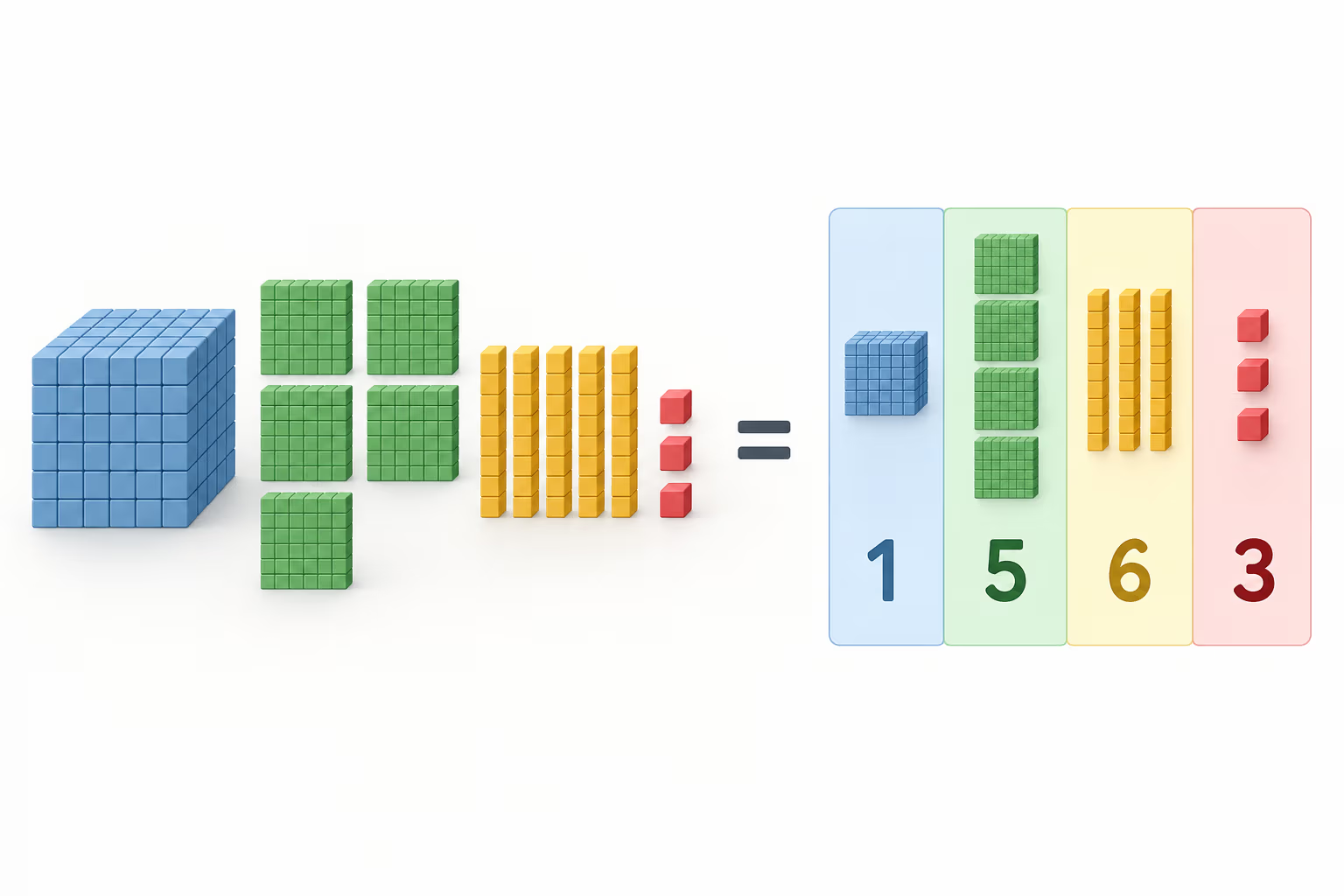
A numeration system is an organized set of symbols and rules for writing numbers. The decimal system used in everyday English-language writing is a base-ten positional system. It uses ten digits, 0 through 9, and a digit’s position tells you which power of ten it represents. Moving one place left makes the place value ten times larger; moving one place right makes it one tenth as large.
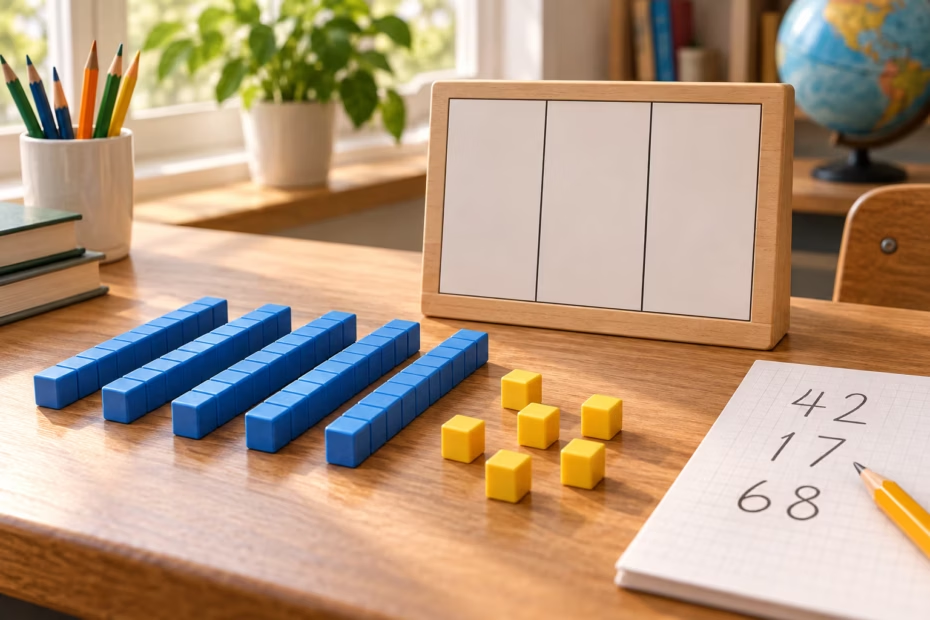
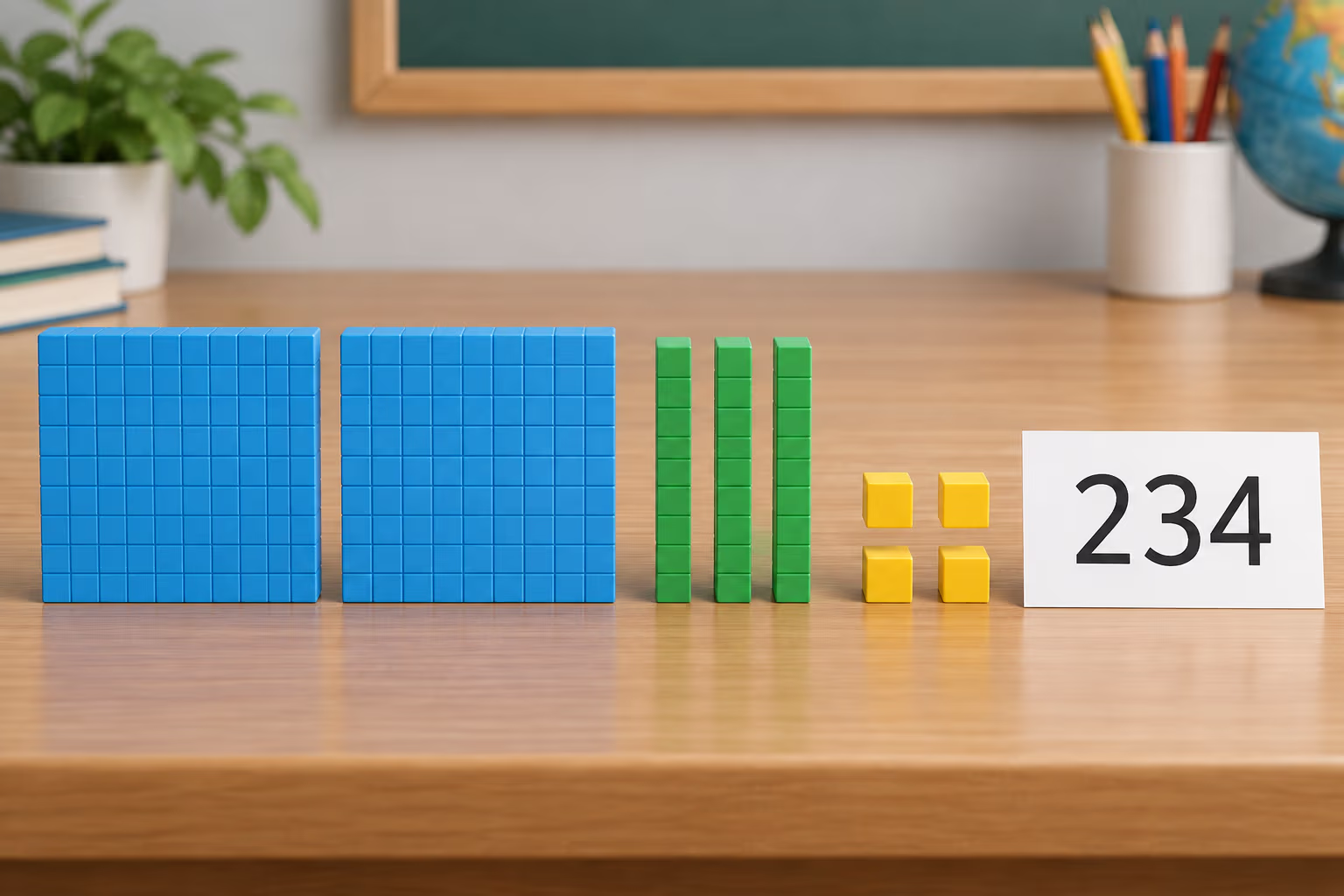
Take 234: the 2 is in the hundreds place, the 3 is in the tens place, and the 4 is in the ones place. The numeral represents 2 hundreds + 3 tens + 4 ones, or 200 + 30 + 4. A zero can hold a place, as in 204, where there are no tens. This is why 204 and 24 do not represent the same number.
Decimal is common, but other bases are useful
“Base” names how many different digit values a positional system uses before it carries to the next place. Base ten carries after nine; base two, or binary, uses only 0 and 1 and carries after 1. Thus the binary numeral 10 represents two in decimal, while decimal 10 represents ten. Computers use binary at a low level because electronic states can be represented as two alternatives. This is a different numeration system, not a different arithmetic operation.
Numeration Examples in Everyday Contexts
Numeration appears whenever a quantity is counted, written, read, or organized. The examples below show how the word fits in educational, technical, and practical writing.
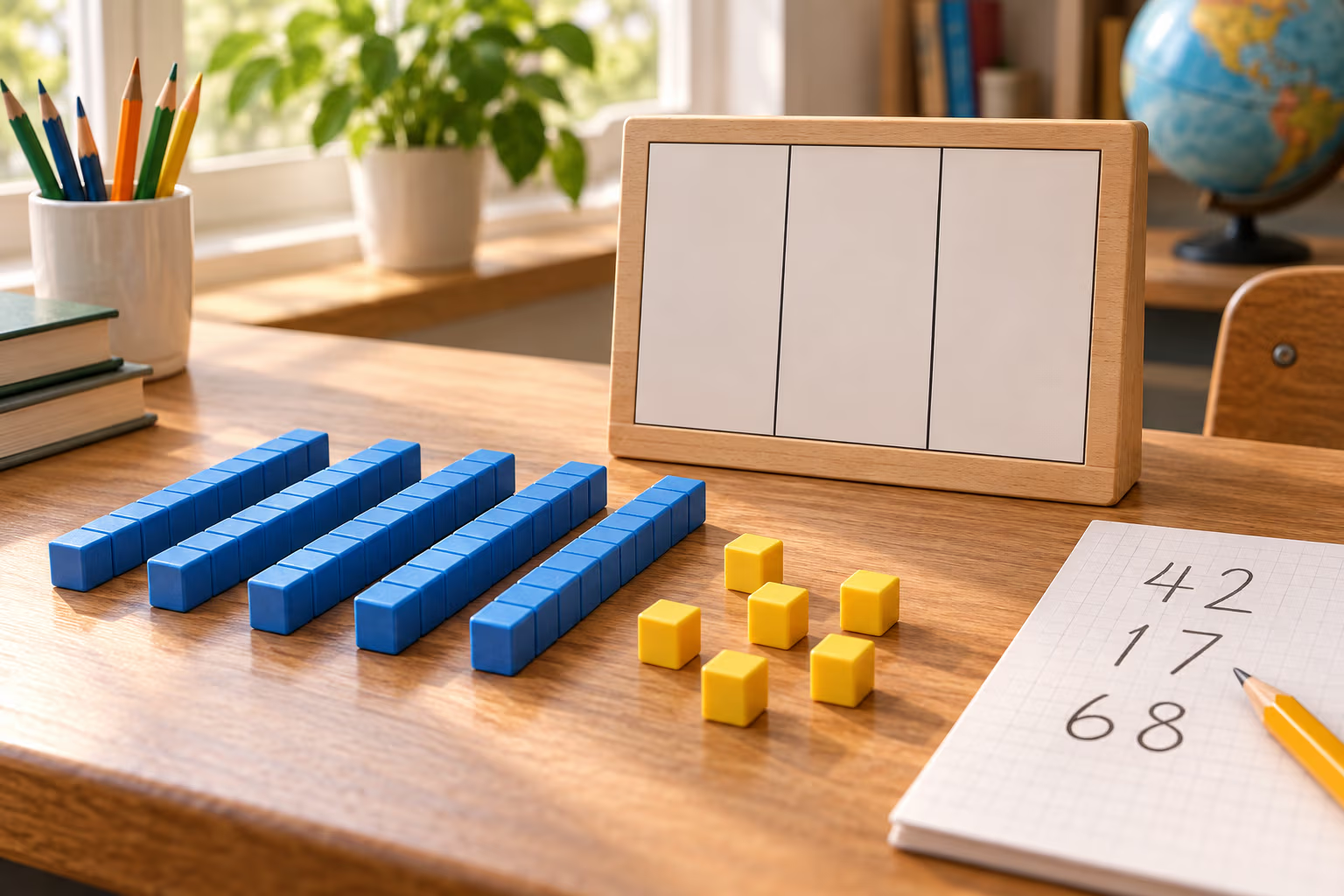
- The teacher used counters to connect a child’s spoken number names with written numeration.
- Our class compared the decimal numeration system with binary notation.
- The place-value chart helped Maya explain the numeration of 5,042.
- For the inventory, each box received a number through a simple numeration sequence.
- Students practiced numeration by matching number words to numerals and groups of objects.
- Before calculating the total, Leon checked that he had copied the numeration correctly.
- The museum label explained how Roman numeration represents values with letters.
- In the program, the team converted a decimal value to binary numeration.
These examples treat numeration as the representation or organization of numbers. If the sentence is about finding a sum or product, a more specific word such as calculation or arithmetic may be clearer.
How to Use “Numeration” in a Sentence
Because numeration is a formal, specialized noun, it is most natural in writing about mathematics, counting, records, or number systems. In everyday conversation, people often say counting, numbering, or writing the number instead.
- Name the task. Decide whether you mean counting a quantity, assigning numbers, reading a numeral, or using a number system.
- Use a clear companion verb. Phrases such as “practice numeration,” “a system of numeration,” and “read the numeration” can fit, depending on the intended sense.
- Add a concrete example. Give the number, object, or system so readers know what is being represented.
For instance, “The class studied numeration” is broad. “The class studied how place value represents 3,406 in decimal numeration” tells readers what the lesson covered. If you only mean counting the chairs in a room, “counting the chairs” will usually sound more direct than “numeration of the chairs.”
Common Usage Questions
Is numeration the same as numbering?
They overlap, but numbering often means assigning numbers in order, such as numbering pages. Numeration can refer more broadly to counting, representing numbers, or the system used to write them.
Is numeration the same as a numeral?
No. A numeral is a written symbol or group of symbols used to represent a number, such as 8 or VIII. Numeration refers to the act, process, or system of expressing numbers.
Can numeration be used outside mathematics?
Yes. It can describe numbering and counting in contexts such as inventories, records, or data. Still, the term sounds technical, so a simpler word may suit general audiences better.
Choosing the Clearest Word
Use numeration when the sentence is about a system or method for counting and representing numbers. Choose counting for finding how many items there are, numbering for assigning labels or sequence positions, and arithmetic for calculations. That small distinction makes sentences about math more precise.
Have you ever wondered what the term “numeration” means in mathematics? Numeration is a fundamental concept that involves the process of counting and expressing numbers in a systematic way.
In simple terms, numeration is the method used to represent numbers and perform arithmetic operations. It forms the basis for understanding and working with numerical values in various mathematical contexts.
7 Examples Of Numeration Used In a Sentence For Kids
- Numeration helps us count how many things we have.
- We can use numeration to tell how many apples are in the basket.
- Let’s practice numeration by counting the blocks.
- Counting with numeration is fun and helps us learn numbers.
- We can use numeration to count our friends in the classroom.
- Let’s write the numeration for how many balloons we see.
- Numeration is important for understanding how many toys we have.
14 Sentences with Numeration Examples
- The mathematics professor asked the students to practice their numeration skills by solving various problems.
- Understanding numeration is essential for successful completion of the engineering exam.
- The computer science students were required to write a program that could perform complex numeration operations.
- Numeration techniques play a crucial role in data analysis and interpretation.
- The business students were taught how to use statistical numeration methods to analyze financial data.
- The physics lab required precise numeration skills to measure and record experimental data accurately.
- The professor emphasized the importance of numeration accuracy when conducting laboratory experiments.
- Students in the statistics class were given a project that involved collecting and organizing data using numeration techniques.
- The engineering students used advanced numeration methods to solve complex problems in their design projects.
- Numeration is a fundamental concept that forms the basis for higher-level math courses.
- The math club organized a workshop to help students improve their numeration skills.
- The final exam included questions that tested the students’ understanding of numeration principles.
- The computer lab provided software that allowed students to practice different numeration techniques.
- The economics professor encouraged students to apply numeration skills in analyzing economic trends and forecasts.
How To Use Numeration in Sentences?
To use Numeration in a sentence, start by identifying the number or quantity you want to express. Then, choose the appropriate words or symbols to represent that number in written or spoken form. For example, instead of saying “five apples,” you can use numerals and say “I bought 5 apples.”
When writing a sentence with Numeration, it is important to remember the basic rules of formatting. For instance, numbers one to nine are usually spelled out (e.g., one, two, three), while numbers 10 and above are typically written as numerals (e.g., 10, 11, 12). In some cases, you may need to use a combination of words and numerals to express a number clearly (e.g., twenty-three).
Additionally, when using numerals, it is crucial to use the correct symbols for decimals, percentages, fractions, and other numerical expressions. For example, you would write “1.5” for one and a half, “25%” for twenty-five percent, and “3/4” for three-quarters.
Remember to use commas in large numbers for easier readability, such as writing “1,000” instead of “1000.”
By following these simple guidelines, you can effectively incorporate Numeration into your sentences to convey numbers accurately and clearly. Practice writing sentences with different numbers to improve your numeration skills and become more proficient in using numbers in written communication.
Conclusion
In conclusion, utilizing sentences with numeration is an effective tool for organizing information in a clear and concise manner. By incorporating numbers or bullet points, readers can easily follow the sequence of points being made and understand the hierarchy of ideas being presented. Whether outlining steps in a process, listing items in a series, or highlighting key points, numeration helps to break down complex information into manageable and easily digestible chunks.
Overall, sentences with numeration enhance readability, improve comprehension, and provide a structured format for conveying information. They serve as a practical strategy for emphasizing important details, creating a logical flow of ideas, and enhancing the overall coherence of written content. By incorporating numeration into writing, individuals can effectively communicate their thoughts and ideas in a way that is organized, straightforward, and easily understood by the audience.