
Orthodox usually means “conforming to an established belief, doctrine, or practice”; in everyday use it can also mean conventional or generally accepted. Use lowercase orthodox for this broad adjective. Capitalize Orthodox when it is part of a specific religious name or identity, such as Orthodox Judaism or the Eastern Orthodox Church. The right sense depends on context, and a tradition’s name does not imply that all its members think or practice alike.
Orthodox at a glance
- General meaning: accepted, established, or conventional within a named group, discipline, or setting.
- Religious use: may describe adherence to established doctrine, or appear capitalized in a specific tradition’s name.
- Capitalization: lowercase the generic adjective; capitalize a proper name or identity label as appropriate.
- Unorthodox: outside the usual or accepted approach in that context; it does not automatically mean incorrect.
How to use lowercase orthodox
In a sentence such as “The team chose an orthodox method,” the adjective says the method follows a recognized or conventional approach. To make that meaning clear, identify the reference point: orthodox in which field, community, or period? A practice can be standard in one setting and unusual in another. The word reports a relationship to a norm; it does not prove that the norm is best, true, or universal.
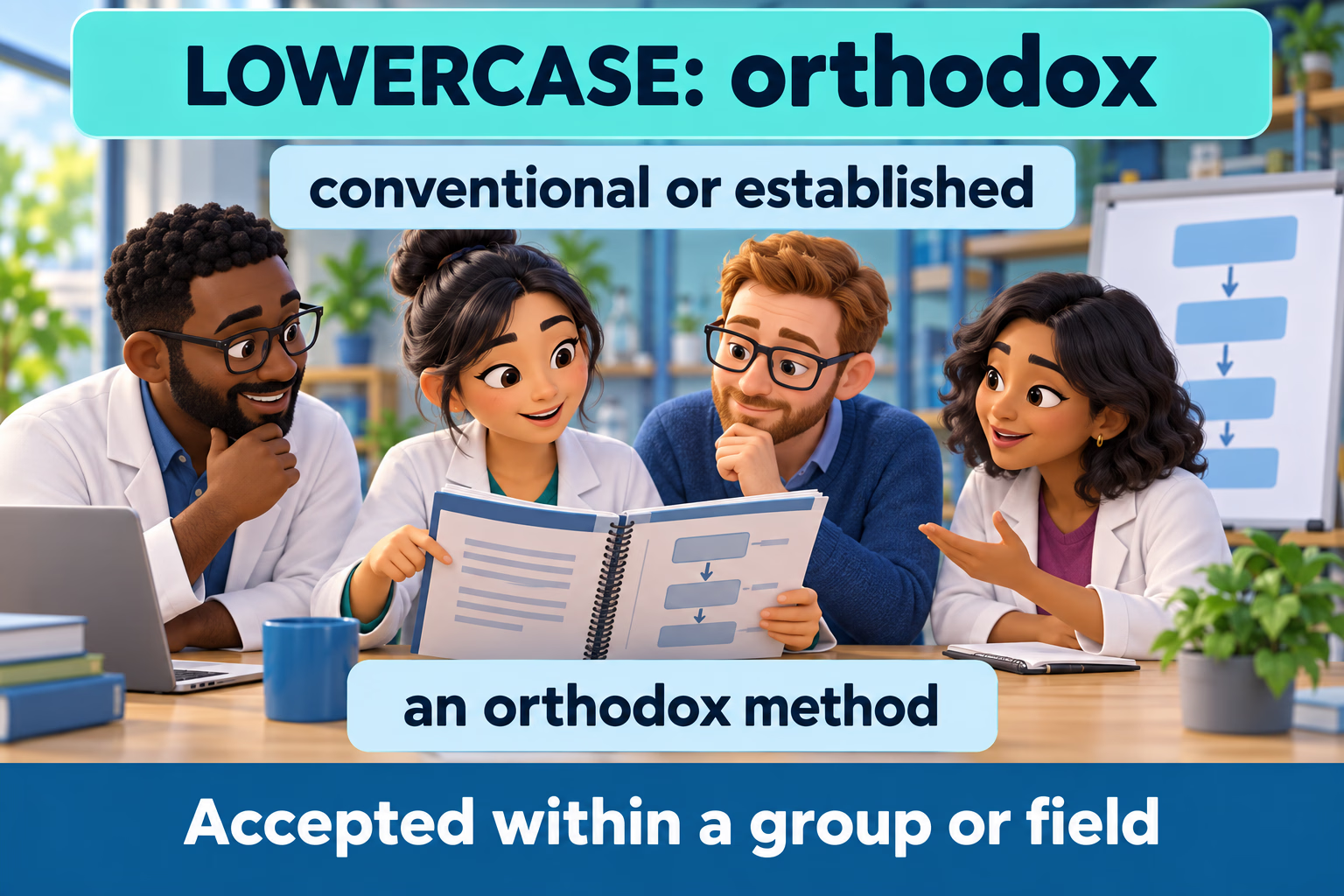
For example: “The researcher began with the orthodox explanation used in her field, then tested a different hypothesis.” Here, orthodox means established within the relevant field. It does not label the alternative as wrong. In careful writing, name the group or discipline whose convention you mean instead of using the adjective as a vague synonym for old-fashioned.
When is Orthodox capitalized?
Capitalize the word when it forms part of a proper name or a recognized religious identity, such as Orthodox Judaism or Eastern Orthodox Church. Merriam-Webster and Cambridge list the general adjective separately from religious senses; Oxford likewise distinguishes generally accepted practice from religious usage. In ordinary descriptive uses—“an orthodox interpretation” or “an orthodox approach”—the word is lowercase unless a style guide or proper name requires otherwise.
| Form | Example | What it signals |
|---|---|---|
| orthodox | “They followed an orthodox method for the initial analysis.” | A conventional or established method in the stated context. |
| Orthodox | “She studies Orthodox Judaism.” | A religious tradition or identity named with a capital. |
| Eastern Orthodox | “The museum exhibit covers Eastern Orthodox art.” | A specific Christian tradition; use the full label when that is what you mean. |
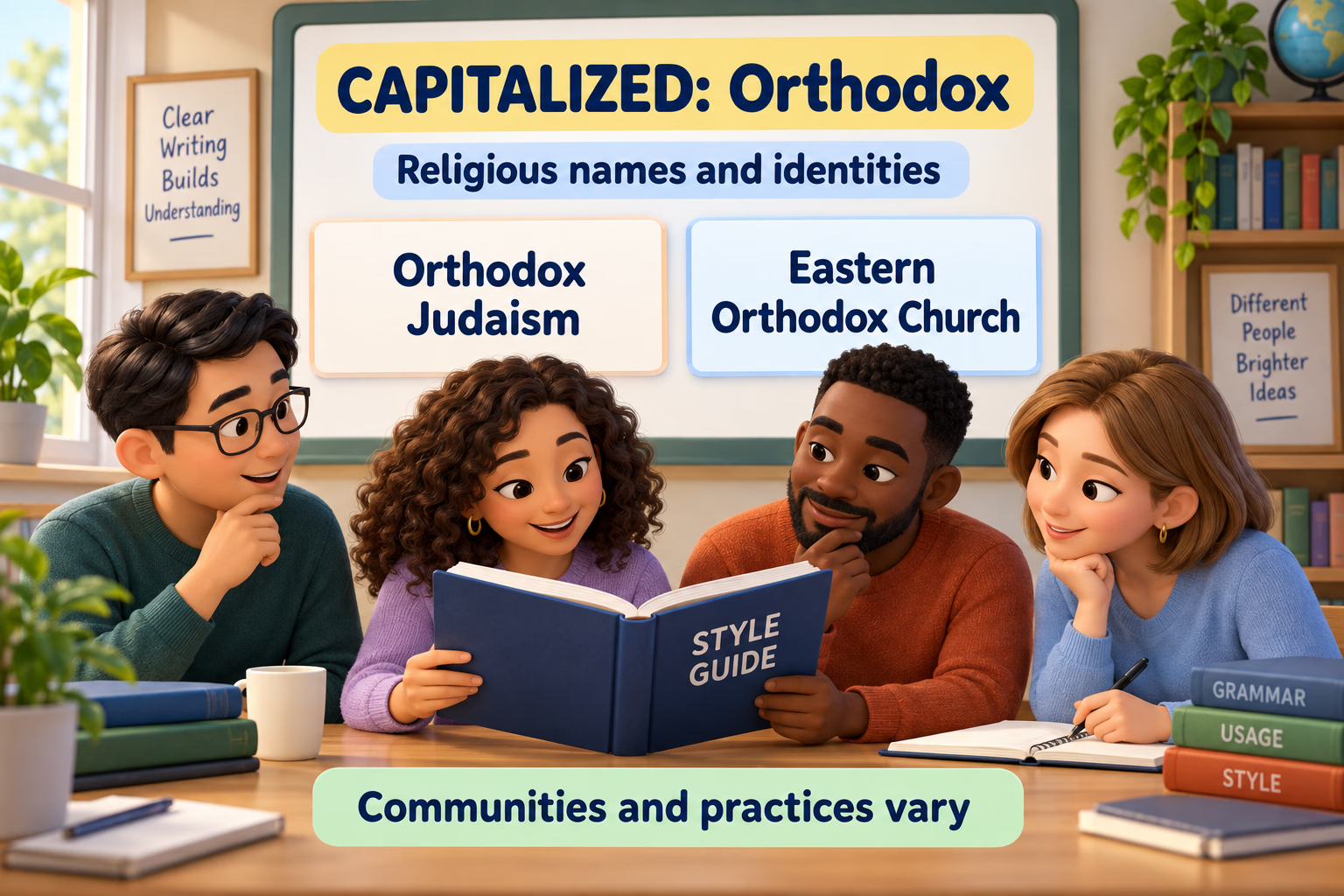
Capitalization helps signal the intended sense, but it cannot replace precise description. “Orthodox” traditions include distinct communities and institutions. Pew Research Center’s 2015 portrait of Orthodox Jews in the United States, for example, reports differences between Haredi and Modern Orthodox respondents; that U.S.-specific survey should not be generalized to all Jewish people. The Orthodox Church in America also describes multiple jurisdictions in North America, from its own institutional perspective. When a statement concerns a particular community, identify it accurately and use sources that speak to that community.
Orthodox and unorthodox in example sentences
- “The lab used an orthodox procedure before trying a new method.”
- “Her unorthodox solution worked, although it differed from the usual practice.”
- “The course compares orthodox and alternative interpretations of the text.”
- “The article refers specifically to Orthodox Judaism, not to Jewish people as a whole.”
- “The exhibit focuses on Eastern Orthodox icons from a named period and region.”

A quick usage check
- Ask whether you mean “established or conventional” or a particular religious name.
- Use lowercase for the broad adjective and the capital used by the proper name or identity label.
- Name the relevant group, field, place, or time period if the standard is not obvious.
- Do not treat orthodox as proof of correctness or unorthodox as proof of error.
- For claims about a living community, verify the claim with specific, reliable sources and avoid generalizing from one subgroup.
About the examples below: The original 21 sentences and the accompanying usage text are retained verbatim. They are language examples, not independently verified claims about India, clothing, professors, college rules, or any religious or cultural group. For factual writing, specify the community or field and support the claim with relevant evidence.

Have you ever come across the term “orthodox” and found yourself wondering what it truly means? In simple terms, orthodox refers to conforming to established beliefs or practices, particularly in religion or ideology.
In a more general sense, orthodox can also describe traditional or conventional approaches that have been widely accepted and practiced over time. Let’s explore how this term is used in various contexts and delve into its significance in shaping different aspects of our society.
7 Examples Of Orthodox Used In a Sentence For Kids
- In India, many families follow orthodox traditions.
- Some people wear orthodox clothes for special occasions.
- The temple has beautiful orthodox designs.
- Grandma makes delicious food following orthodox recipes.
- The priest recites orthodox prayers during worship.
- The festival includes an orthodox dance performance.
- Children learn about orthodox customs from their elders.
14 Sentences with Orthodox Examples
- Orthodox traditions often clash with modern ideas in college settings.
- Some colleges may have more orthodox rules and regulations compared to others.
- It can be challenging for students to navigate between their orthodox beliefs and academic freedom.
- In India, many parents have orthodox views on higher education and career choices.
- Students may feel pressured to conform to orthodox cultural norms within their college community.
- Orthodox professors may have different teaching methods that students need to adapt to.
- College debates can sometimes involve discussions on breaking away from orthodox practices.
- Some college events may include performances that challenge orthodox ideals.
- Students may find themselves questioning their own orthodox beliefs while in college.
- Balancing academic responsibilities with orthodox family expectations can be difficult for students.
- The college environment offers opportunities for students to explore beyond their orthodox upbringings.
- Students from orthodox backgrounds may face unique challenges in adapting to college life.
- It’s important for colleges to provide a safe space for students with orthodox beliefs.
- College campuses are a melting pot of diverse ideas, including both modern and orthodox perspectives.
How To Use Orthodox in Sentences?
Orthodox is used to describe beliefs, practices, or institutions that are generally accepted as being the standard or traditional within a specific religion or culture. When using the word Orthodox in a sentence, it is important to place it correctly to convey the intended meaning effectively.
For example:
– “He follows the Orthodox principles of Christianity.”
– “The Orthodox rabbi led the congregation in prayer.”
– “She belongs to the Orthodox sect of Judaism.”
– “The festival honors the Orthodox traditions of the community.”
In these sentences, the word Orthodox is used to signify adherence to traditional, established, or widely-accepted beliefs or customs within a particular context.
When constructing your own sentences using Orthodox, ensure that it is placed appropriately to indicate conformity with established practices or beliefs. Try to provide context to make the meaning clear to your audience.
Practice by incorporating Orthodox in sentences related to religions, cultures, or any context where traditional practices are significant. By using the word Orthodox correctly, you can effectively communicate your ideas and perspectives that align with established norms or conventions.
Conclusion
In conclusion, orthodox beliefs, practices, and teachings are central to many religious traditions around the world. The term “orthodox” is used to describe traditional and conventional doctrines that adhere closely to established teachings. In the context of religion, orthodox beliefs are considered fundamental and unchanged over time, serving as a foundation for followers to maintain faith and uphold spiritual principles.
Whether in Christianity, Judaism, Islam, or other faiths, orthodox principles provide guidance for adherents to follow prescribed rituals, uphold sacred texts, and remain steadfast in their religious convictions. The term “orthodox” signifies conformity to established norms and traditions within a given religious framework, emphasizing the importance of adherence to established beliefs and practices in fostering a sense of unity, continuity, and spiritual identity among believers.